

Online vs in person elective ultrasound training is not just a scheduling question. It is a skills question, and the answer shapes the quality of every scan session you run from opening day forward. Both formats exist, both are marketed, and the price gap between them can look very appealing if you are in the middle of a startup budget calculation. Before that price gap influences your decision, it is worth understanding exactly what each format delivers and what each one cannot.
This guide walks through both options clearly so you can make a decision based on what your business actually needs, not on what sounds convenient at the moment.
Online elective ultrasound training covers concepts and terminology but cannot teach hands-on scanning technique. In-person training with real clients on your actual equipment builds the practical skills that translate directly to confident studio sessions. For most operators, in-person training is the only format that prepares them for real scan conditions. Last Updated: May 2025
What Online Elective Ultrasound Training Actually Delivers
Online elective ultrasound training programs typically cover anatomy terminology, general machine function, the physics behind ultrasound imaging, and basic positioning theory through video content, slides, or recorded instruction. What they cannot deliver is the tactile, real-time skill development that comes from holding a probe, adjusting pressure, reading an actual image as it forms on a live machine, and learning to respond to the moment-by-moment changes in a real scan.
For someone with no prior hands-on ultrasound experience, online training produces conceptual awareness but not operational skill. Conceptual awareness tells you what a 3D image is. It does not tell you how to produce one consistently across different scan positions, different gestational ages, and different body types under real-session pressure when a family is watching the screen and hoping for something remarkable.
That gap matters more in elective ultrasound than it might in some other skills. Because you are working with live clients in an emotionally significant setting, inconsistent early results are not a private learning curve. They are experienced directly by paying customers who may write reviews, ask for refunds, or simply not return.
What In-Person Elective Ultrasound Training Delivers
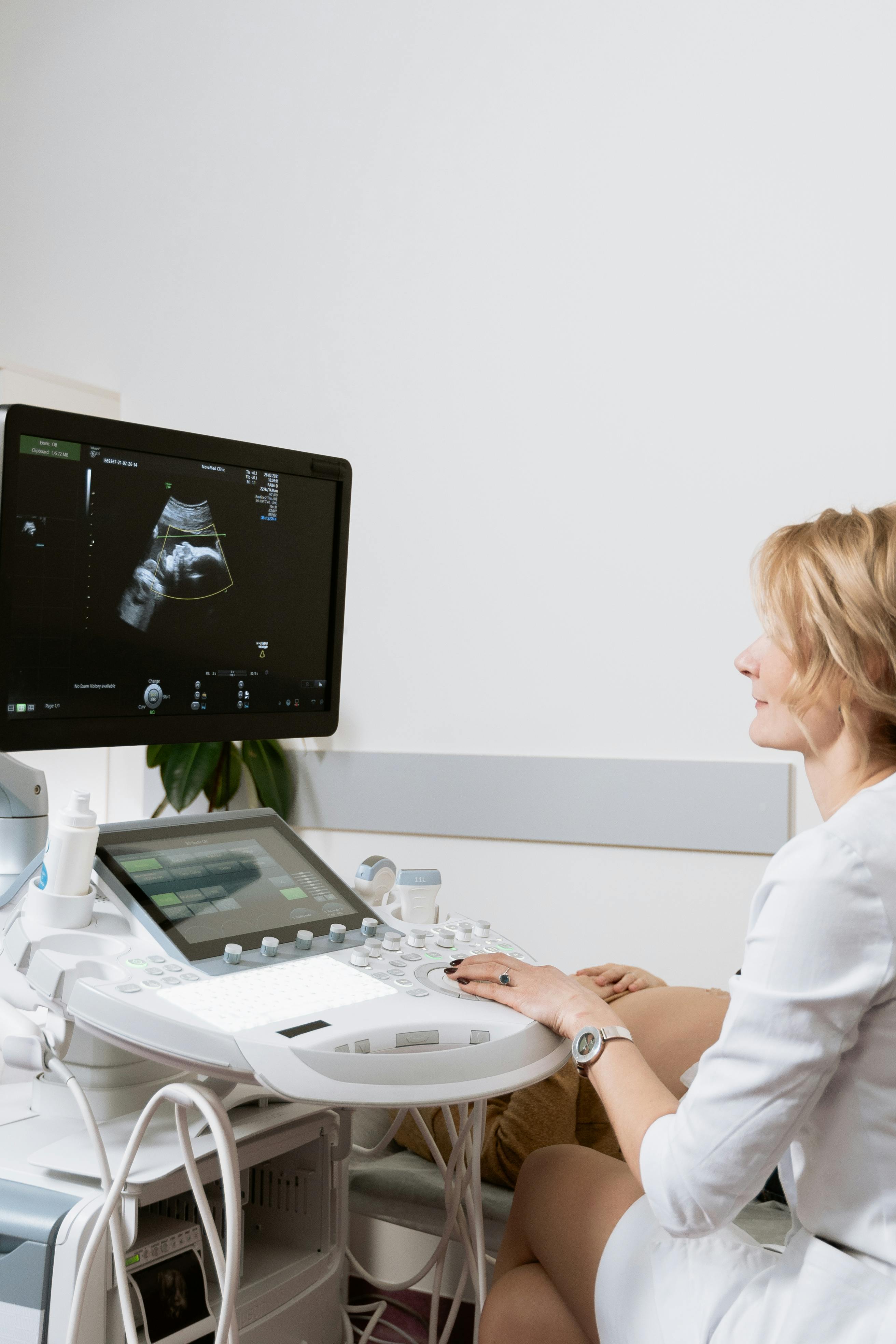
In-person training on your specific machine, in your actual studio setup, with real clients and direct instructor feedback, is what builds the kind of scanning confidence that shows in session quality from day one. The difference is not marginal. It is the difference between knowing how a probe should move and knowing how your probe moves on your machine to produce results your clients will react to the way you want them to.
Strong in-person programs cover machine operation, probe handling and positioning for 3D, 4D, and HD imaging, early gender determination technique, image optimization, session management, and client communication. Instruction that happens on your actual machine means every lesson applies directly to what you operate every day. You are not adapting from a training machine to your machine. You are building skills on the system you will use in every actual session.
What we have seen consistently from operators who completed robust on-site hands-on training is that their first real client sessions feel manageable rather than terrifying. They have practiced the awkward parts. They know what to adjust when an image is not coming together. They have been in that position before, with real feedback from someone experienced, and that memory is what steadies them when things are not ideal.
Comparing the Formats Side by Side
| What You Learn | Online Training | In-Person Training |
|---|---|---|
| Ultrasound physics and anatomy basics | Yes | Yes |
| Machine settings and controls | Conceptually only | Hands-on, real-time |
| Probe handling and scan positioning | No | Yes, with feedback |
| 3D/4D image optimization | No | Yes, on your machine |
| Early gender determination technique | No | Yes, with real practice |
| Client session management | Theory only | Practiced in real sessions |
| Instructor feedback on technique | No | Yes, real-time |
The Budget Argument, and Why It Usually Backfires
The most common reason operators choose online training over in-person is cost. Online programs are cheaper, sometimes dramatically so. At a point in the business where every dollar counts, the savings look meaningful.
Here is what we see from operators who make this trade. They complete the online program, open their studio, and discover in the first few weeks of real sessions that they do not have the hands-on skill the experience requires. The result is one of three outcomes: they close temporarily to get in-person training they should have started with, they continue with poor scan results that affect their early reputation, or they develop bad habits that require more intensive correction later.
The savings from online training are typically recovered and then exceeded by the cost of those outcomes. Additional training to correct course, client refunds, lost repeat business, and the slower review accumulation in the critical early months all have real dollar values attached. Starting with the right training costs more upfront and costs significantly less overall.
According to the Bureau of Labor Statistics, service businesses that invest in foundational skill development before launch consistently outperform those that rely on on-the-job learning for core technical competencies. Elective ultrasound is a technically demanding skill in a client-facing context. That principle applies directly.
What Strong In-Person Training Looks Like
The best elective ultrasound training programs are structured around producing a confident, capable operator at the end of the training period, not just an operator who understands the concepts. Indicators of a program built for real-world performance include instruction conducted on your specific machine, practice with real scan clients rather than only phantoms, direct feedback on technique during live scans, coverage of the scenarios that create difficulty in real sessions (challenging positions, early gender determination at the margin of visibility, optimizing for different body types), and post-training support that does not disappear when the training days end.
Programs that cover only theory, use only phantoms, or send instructors to a generic studio rather than your setup are providing a foundation that requires significant additional self-directed practice before it translates to real session confidence. That additional practice happens at the expense of paying clients in your actual studio. That is a cost that should not be underestimated.
The Recommendation
For any new elective ultrasound operator, in-person training on your specific machine is not the premium option. It is the baseline that gives your studio a real chance to perform well from day one. Online resources have a supplementary role. They are not a substitute for the skill development that only comes from guided, feedback-rich, hands-on practice in conditions that resemble what you will do every day.
If you are evaluating training options and want to understand what comprehensive in-person instruction covers, explore the training options at Ultrasound Trainers or reach out to discuss your specific situation. The format of your training is one of the most consequential decisions you make before opening.
Last Updated: May 2025
Get the Inside Track
Training tips, business advice, and exclusive deals delivered straight to your inbox.

How to Get More Bookings for Your Elective Ultrasound Studio in Montana
Struggling to fill your elective ultrasound booking calendar in Montana? This guide covers what actually[...]

Buying an Elective Ultrasound Machine for an Arkansas Studio: What Actually Matters
Ready to buy an elective ultrasound machine for your Arkansas studio? This guide covers the[...]

How to Build a Pre-Launch Marketing Campaign for Your Elective Ultrasound Studio: A 60-Day Countdown Plan
Pre-launch marketing for an elective ultrasound studio begins 60 days before opening. This 60-day countdown[...]

What Career Changers in Hawaii Need to Know About Elective Ultrasound Training
Considering ultrasound training for a career change in Hawaii? This Q&A guide covers what training[...]

How to Find and Recruit Volunteer Scan Models for Elective Ultrasound Practice
Finding volunteer models for elective ultrasound practice is a skill in itself. Learn where to[...]

How to Write an Elective Ultrasound Business Plan That Actually Works
Writing an elective ultrasound business plan? This guide covers what to include, how to build[...]

How to Open an Elective Ultrasound Business in Honolulu: A Practical Startup Guide
Open an elective ultrasound business in Honolulu with confidence. This guide covers training, startup costs,[...]

Adding Elective Ultrasound to an Existing Photography or Doula Practice in Montana
Montana birth photographers and doulas: adding an elective ultrasound add-on business in Montana to your[...]

Starting an Elective Ultrasound Business in Cheyenne, Wyoming: First-Mover Advantage in the Least-Crowded Market in the Country
Thinking about starting an elective ultrasound business in Cheyenne, Wyoming? This guide covers the F.E.[...]

Elective Ultrasound Training for Career Changers in Sweden
Considering a career change into elective ultrasound in Sweden? Find out what training involves, whether[...]

What Career Changers in Fayetteville Should Know About Elective Ultrasound Training
Thinking about elective ultrasound training in Fayetteville, Arkansas as a career changer? This Q&A guide[...]

The Biggest Mistake Las Vegas Elective Ultrasound Studios Make With Their Marketing
Elective ultrasound studio marketing in Las Vegas prioritizes trust and reviews over ad spend. Here's[...]
