

Career changers in Hawaii considering elective ultrasound training share a specific set of questions that beginners in other industries rarely ask, because the stakes feel higher when you are walking away from something stable. The questions are good ones. What does ultrasound training actually demand? Does your professional background help or hinder you? What does a realistic transition timeline look like in Hawaii specifically? This guide answers them plainly.
Ultrasound training for a career change in Hawaii does not require a medical background or any prior clinical experience. The core skills are learnable by people coming from healthcare, service industries, photography, education, and entirely unrelated fields. What matters more than background is how you engage during training and how seriously you build the business side of the operation alongside the scanning skills.
Last Updated: July 2025
Q: Does My Current Career Make Me More or Less Suited for This?
Ultrasound training for a career change in Hawaii works across a wide range of professional backgrounds, and the assumption that healthcare experience makes you dramatically better prepared is only partially true. Clinical sonographers know anatomy and scanning physics. But keepsake ultrasound is a client experience business as much as a technical one. The skills that drive bookings, referrals, and repeat visits are communication, warmth, professionalism, and the ability to run a business, not clinical credentials.
That said, some backgrounds do provide a head start. People who have worked in client-facing roles understand service dynamics. Healthcare professionals understand anatomy and are less likely to be rattled by clinical terminology. Photographers understand how to think about composition and framing, which translates surprisingly well to screen image optimization.
None of those backgrounds are required. They are advantages if you have them, not barriers if you do not.
Q: What Will Training Actually Demand From Me?
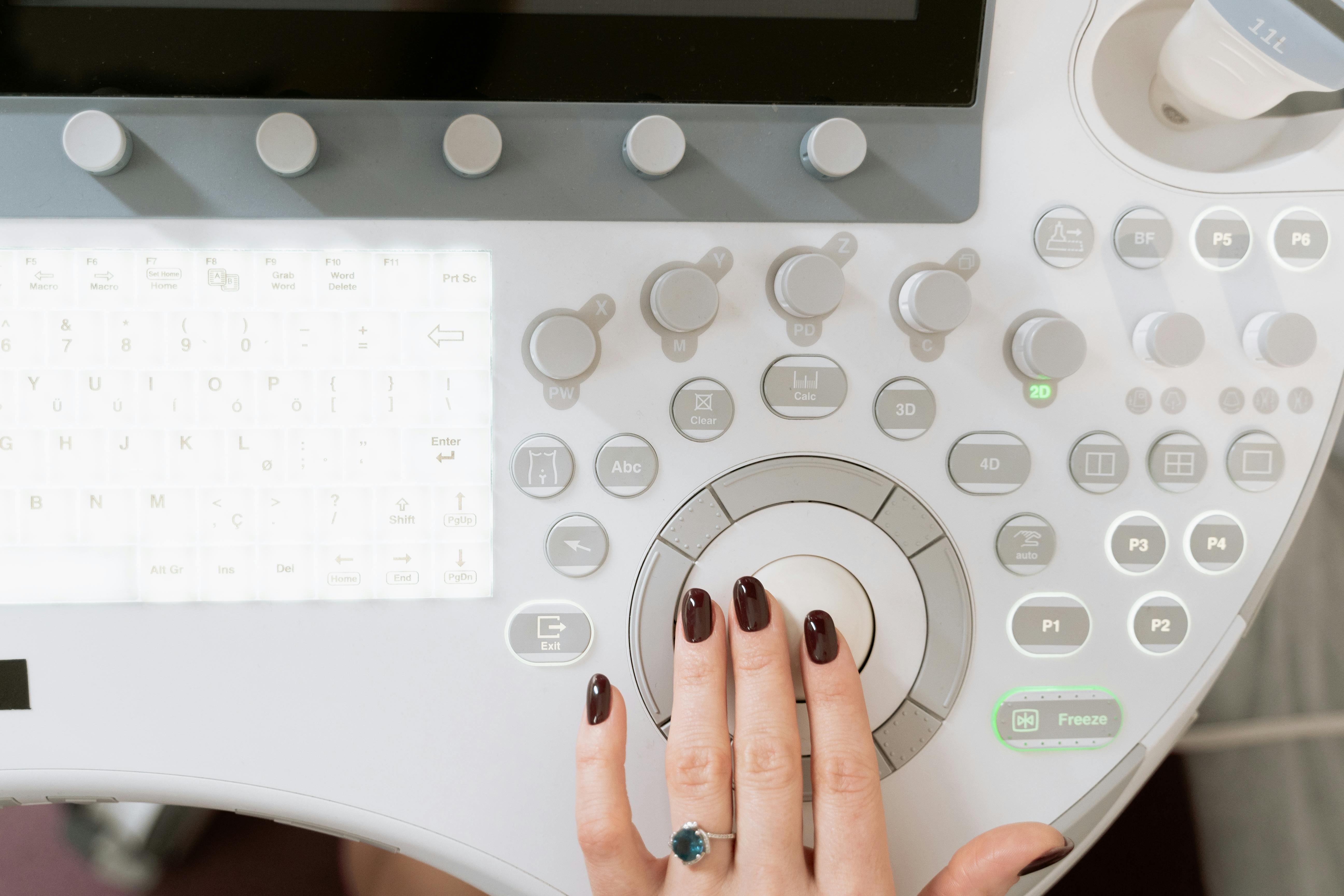
Strong in-person training programs run three to four days. They are intensive. You will spend time behind the machine with real clients, learning to read and optimize images in real time, not just watching demonstrations. You will also cover business setup fundamentals, how to price your services, and how to run client sessions professionally.
The technical learning curve for scanning varies by person. Some people develop a feel for probe positioning quickly. Others need more repetition to build that spatial intuition. Both paths are fine because strong programs give you practice time with varied clients, not just one ideal demo scenario.
What separates people who get more from their training is preparation. Know what 3D and 4D keepsake ultrasound actually is before you arrive. Understand the difference between elective scanning and diagnostic imaging. Have a rough idea of where you want to operate and what kind of studio you want to build. That context makes every training hour more valuable.
Q: What Is Different About Making This Transition in Hawaii?
Hawaii adds a few layers that mainland career changers skip.
First, the cost of living in Hawaii is significantly higher than the national average. According to the U.S. Census Bureau, Hawaii consistently ranks among the most expensive states for housing, transportation, and general living costs. Your business needs to generate enough revenue to cover studio overhead at Hawaii rent levels, not mainland averages. Build that into your pricing from day one.
Second, training options based in Hawaii are limited. Most serious programs require you to travel to the mainland. That means planning a training trip: flights, accommodation, and time away from your current job or family. The investment is real, but it is finite. Most in-person programs run three to four days, so the travel commitment is manageable.
Third, equipment arrives differently in Hawaii. If you plan to do on-site training at your Hawaii location using your own equipment, the machine needs to arrive before your training date. That requires ordering earlier than a mainland buyer would and accounting for Hawaii freight timelines.
Q: Do I Need a Medical License to Operate in Hawaii?
No. Elective keepsake ultrasound studios do not require a medical license in Hawaii. The service is positioned clearly as a bonding and keepsake experience, not a medical evaluation. You are not diagnosing, not producing clinical reports, and not advising clients on medical findings.
That positioning is not just a legal technicality. It shapes every interaction in your studio. When a client asks if the baby looks healthy, the correct and honest response is to redirect them warmly to their prenatal provider. Your studio creates a memorable experience. Their OB or midwife manages their prenatal care.
Hawaii does not currently have specific legislation regulating elective ultrasound studios as a separate business category. General business licensing applies: DBA registration, general excise tax registration, and appropriate liability insurance. Consult a local business attorney before opening rather than relying on training program guidance for regulatory accuracy.
Q: How Long Does the Full Transition Actually Take?
The scanning training itself is three to four days. Everything else takes longer.
A realistic timeline from deciding to pursue this to opening your studio to the public in Hawaii looks something like this: research and program selection takes two to four weeks if you are thorough. Scheduling and completing training, ordering equipment, and waiting for Hawaii delivery adds another four to eight weeks depending on your timing and the vendor’s logistics. Business setup, business licensing, insurance, and your website takes another two to four weeks if you are moving deliberately.
Three to four months from decision to opening day is realistic for someone who is organized and not trying to rush. Rushing the timeline typically means skipping steps that matter, especially on the business side.
According to the Bureau of Labor Statistics, small service businesses that open with adequate preparation and a defined client acquisition plan in place before launch achieve break-even faster than those that open first and figure out marketing afterward. That pattern holds for elective ultrasound studios.
Q: I’m Already in Healthcare in Hawaii. Does That Change Anything?
Yes, but perhaps not in the way you expect. Healthcare professionals in Hawaii, including nurses, midwives, doulas, and OB techs, bring familiarity with clinical environments and often a ready network of potential referral partners. That network is a real advantage in a small-community market like Hawaii.
The caution for healthcare professionals is over-clinicalizing the studio experience. Keepsake clients come for a celebration, not a medical appointment. The atmosphere, the language, and the interactions should feel warm and experiential, not clinical. Some healthcare professionals nail this immediately. Others need to consciously adjust the professional tone they default to.
We’ve worked with nurses and midwives who opened studios that became the strongest in their markets. The transition worked because they leaned into the warm, community-building side of the business rather than trying to replicate the clinical environments they came from.
Taking the Next Step From Where You Are
The Hawaii market is genuinely well-suited for career changers who prepare correctly. The competition is thin, the demand is real, and the cultural warmth of Hawaiian communities rewards businesses that invest in genuine client experience.
What it requires is taking the business side as seriously as the training side. A person who completes outstanding training and then builds their studio carelessly will underperform someone with the same scanning skills who launches with a real plan behind them.
Explore Your Next Steps With Ultrasound Trainers
Ultrasound Trainers works with career changers at every stage of the decision process, including people still figuring out whether this is the right move. If you are in Hawaii and exploring what elective ultrasound training would actually look like for your situation, reach out and start the conversation.
Get in TouchLast Updated: July 2025
Get the Inside Track
Training tips, business advice, and exclusive deals delivered straight to your inbox.

How to Get More Bookings for Your Elective Ultrasound Studio in Montana
Struggling to fill your elective ultrasound booking calendar in Montana? This guide covers what actually[...]

Buying an Elective Ultrasound Machine for an Arkansas Studio: What Actually Matters
Ready to buy an elective ultrasound machine for your Arkansas studio? This guide covers the[...]

How to Build a Pre-Launch Marketing Campaign for Your Elective Ultrasound Studio: A 60-Day Countdown Plan
Pre-launch marketing for an elective ultrasound studio begins 60 days before opening. This 60-day countdown[...]

What Career Changers in Hawaii Need to Know About Elective Ultrasound Training
Considering ultrasound training for a career change in Hawaii? This Q&A guide covers what training[...]

How to Find and Recruit Volunteer Scan Models for Elective Ultrasound Practice
Finding volunteer models for elective ultrasound practice is a skill in itself. Learn where to[...]

How to Write an Elective Ultrasound Business Plan That Actually Works
Writing an elective ultrasound business plan? This guide covers what to include, how to build[...]

How to Open an Elective Ultrasound Business in Honolulu: A Practical Startup Guide
Open an elective ultrasound business in Honolulu with confidence. This guide covers training, startup costs,[...]

Adding Elective Ultrasound to an Existing Photography or Doula Practice in Montana
Montana birth photographers and doulas: adding an elective ultrasound add-on business in Montana to your[...]

Starting an Elective Ultrasound Business in Cheyenne, Wyoming: First-Mover Advantage in the Least-Crowded Market in the Country
Thinking about starting an elective ultrasound business in Cheyenne, Wyoming? This guide covers the F.E.[...]

Elective Ultrasound Training for Career Changers in Sweden
Considering a career change into elective ultrasound in Sweden? Find out what training involves, whether[...]

What Career Changers in Fayetteville Should Know About Elective Ultrasound Training
Thinking about elective ultrasound training in Fayetteville, Arkansas as a career changer? This Q&A guide[...]

The Biggest Mistake Las Vegas Elective Ultrasound Studios Make With Their Marketing
Elective ultrasound studio marketing in Las Vegas prioritizes trust and reviews over ad spend. Here's[...]
