

There is a version of this story that ends well: you complete solid training, open your studio, and spend your days creating meaningful experiences for expecting families. There is another version where you spend months spinning in confusion about which program is legitimate, what the training actually covers, and whether you are wasting money on something that does not prepare you for the real job. The difference between those outcomes starts with what you know before you enroll.
Elective ultrasound training in Canada is not as straightforward to research as it should be. The industry is growing, but the training landscape is still fragmented. Some programs are thorough and practical. Others are short, surface-level, and leave graduates underprepared. Knowing what to look for before you commit saves you real time and money.
This post is for Canadians who are serious about entering the elective ultrasound industry and want to understand what quality training actually includes, how to evaluate programs, and what the path from enrolled to operating actually looks like.
What Does Elective Ultrasound Training Actually Cover?
Elective ultrasound training is not a sonography degree and it is not a diagnostic imaging course. It is a focused, practical program that teaches you how to operate a 3D and 4D ultrasound machine, produce high-quality keepsake images, provide a professional client experience, and run the technical side of a studio confidently.
A strong program will cover operating and optimizing a 3D/4D ultrasound machine, scanning technique for getting clear, detailed fetal images, early gender determination starting around 15 to 16 weeks, 2D imaging basics, working with real clients versus training phantoms, and the business fundamentals of running an elective studio. Programs that skip business education leave you technically capable but operationally unprepared.
Hands-On Training vs. Online-Only Programs: Why It Matters
This is the most consequential choice you will make when evaluating elective ultrasound training programs. Online content can teach concepts, terminology, and machine settings. It cannot teach you how to actually scan.
Ultrasound scanning is a physical skill. You learn it through repetition with a transducer in your hand, watching how small pressure adjustments and angle changes affect the image on screen, and developing the muscle memory to navigate a probe across different body positions. A purely online program cannot give you that. When you finish an online-only course and your first real client is lying on your table, you are going to feel the gap immediately.
Hands-on training conducted in person, at your location or at a training facility, gives you something far more valuable: actual scanning experience before you open. The difference in confidence and competence between a graduate of a hands-on program and a graduate of an online-only program is visible in their early sessions.
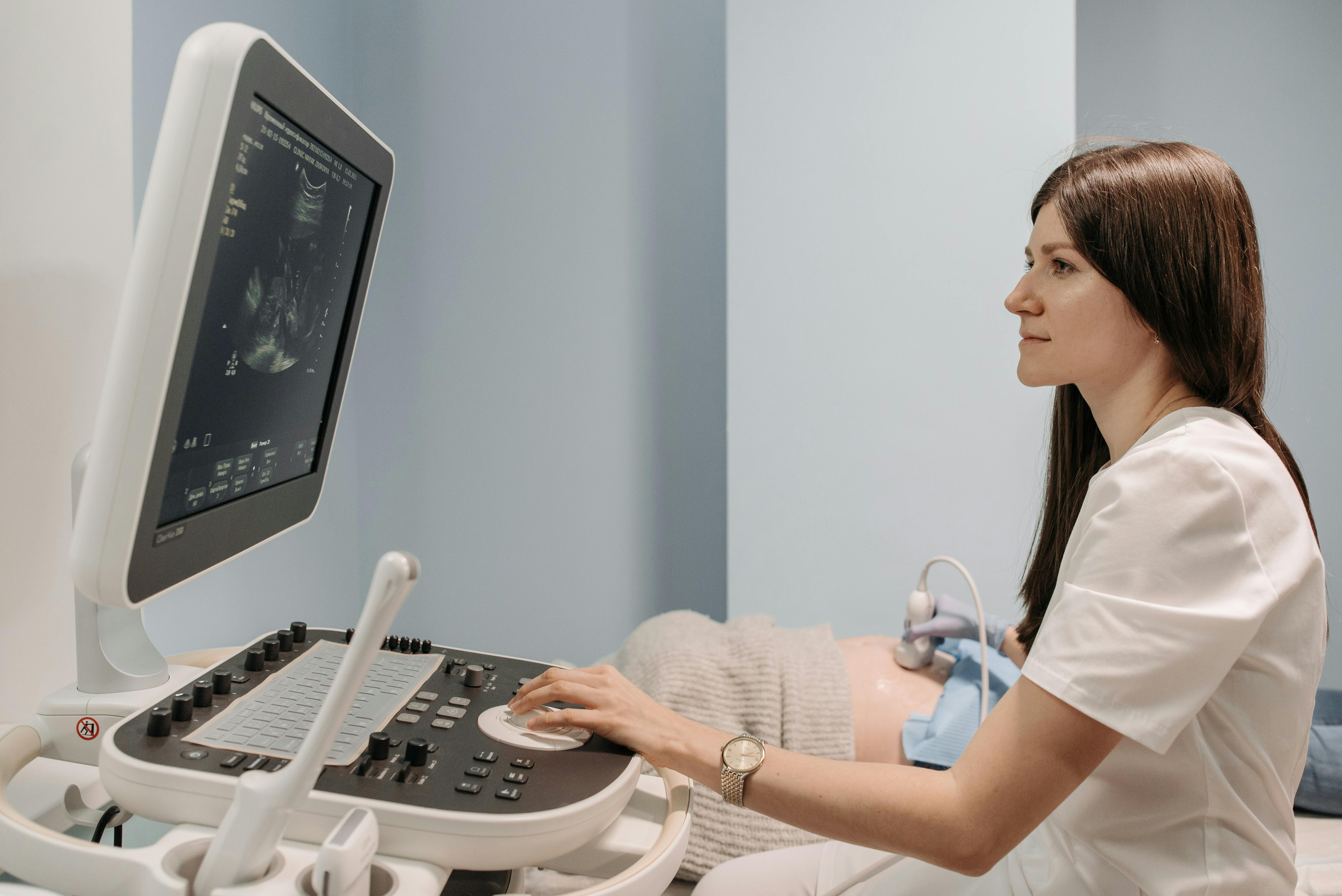
At Ultrasound Trainers, our Private Hands-On Ultrasound Training is a three-day program conducted at your location using your own equipment. That means you train in the exact environment where you will be working, on the exact machine you will use with clients. The contextual learning benefit of that approach is significant.
What to Look for When Evaluating a Training Program
Not every program that calls itself comprehensive actually is. Here is a practical framework for evaluating what you are being offered before you commit.
| What to Ask | What a Strong Program Offers | Red Flag |
|---|---|---|
| Training format | In-person, hands-on with real clients | Online-only or phantom-only |
| Duration | Three to four days minimum for solid coverage | One-day or weekend-only programs |
| Business education included? | Yes, covers operations, marketing, and startup basics | Technical scan training only |
| Post-training support | Ongoing support for questions after you open | No follow-up after training ends |
| Instructor experience | Active industry experience in elective studio operations | Clinical sonographer with no elective studio background |
Canadian Regulatory Context and Training
One area where training advice for Canadian students sometimes misses the mark is in the regulatory context. The rules governing who can perform elective ultrasound and under what conditions vary by province, and a quality training program should at least make you aware of this reality even if it cannot provide province-specific legal guidance.
Requirements can vary by province and business model, and readers should always check local regulations, licensing rules, and legal requirements before launching. What a training program can do is equip you with the scanning competence, business knowledge, and professional practices that support compliance in whichever regulatory environment you are operating in. But the program itself is not a substitute for reviewing your province’s specific rules.
How Long Does It Take to Feel Ready to Scan on Clients?
After a strong hands-on training program, most graduates feel reasonably confident with their basic scanning routine within the first few weeks of opening. What takes longer is developing the kind of fluid, adaptable technique you need when clients are in challenging positions, when fetal positioning makes imaging difficult, or when you are working under the time pressure of a full booking schedule.
We have seen graduates from thorough three-day hands-on programs open their studios and handle early client sessions with solid competence. We have also seen people who rushed through shorter programs struggle significantly in their first months. The investment in thorough training pays off in client satisfaction, referrals, and your own confidence during sessions when things do not go perfectly.
The bottom line is that scanning is a practiced skill, not a knowledge test. The more real-client time you get during training, the faster you reach genuine competence. Look for programs that prioritize that real-world practice time above all else.
Training Checklist for Canadian Students
People Also Ask
Can I get elective ultrasound training in Canada without a medical background?
Yes. Elective ultrasound training programs are designed for people without medical credentials. You do not need nursing, sonography, or clinical experience to enroll. The programs teach scanning technique, machine operation, and business basics from the ground up. Many successful Canadian studio owners came from business, photography, photography, or service-industry backgrounds.
How long does elective ultrasound training take?
Comprehensive hands-on programs typically run three to four days. Shorter programs exist but often sacrifice depth, particularly in areas like advanced scanning technique, machine optimization, and business operations. A three-day in-person hands-on program that includes real-client scanning time is widely considered the minimum for solid preparation.
Is elective ultrasound training available in Canada?
Some Canadian providers offer training, but options remain more limited than in the United States. Some Canadian students travel to the US for training, while others work with programs like Ultrasound Trainers that can travel to conduct training at the student’s location, eliminating the need to travel internationally.
What is the difference between elective ultrasound training and diagnostic sonography training?
Diagnostic sonography training is a multi-year clinical degree program that prepares graduates to work in hospitals and medical facilities performing medically ordered imaging. Elective ultrasound training is a focused program for people entering the keepsake and bonding ultrasound business. The two are distinct in scope, duration, and purpose. Elective training does not qualify you to perform diagnostic imaging, and diagnostic training does not automatically cover the business and client experience aspects of running an elective studio.
Do I need my own equipment before enrolling in training?
It depends on the program. Private hands-on training programs like the one offered by Ultrasound Trainers are conducted using your own equipment at your location, which means having your machine before training starts is part of the plan. Some programs can also provide training equipment during the session. If you are starting from scratch, turnkey packages that bundle equipment and training together can simplify the sequence significantly.
Last Updated: April 18, 2026. Provincial regulations vary. This content is informational and does not constitute legal or regulatory advice.
Get the Inside Track
Training tips, business advice, and exclusive deals delivered straight to your inbox.

How to Get More Bookings for Your Elective Ultrasound Studio in Montana
Struggling to fill your elective ultrasound booking calendar in Montana? This guide covers what actually[...]

Buying an Elective Ultrasound Machine for an Arkansas Studio: What Actually Matters
Ready to buy an elective ultrasound machine for your Arkansas studio? This guide covers the[...]

How to Build a Pre-Launch Marketing Campaign for Your Elective Ultrasound Studio: A 60-Day Countdown Plan
Pre-launch marketing for an elective ultrasound studio begins 60 days before opening. This 60-day countdown[...]

What Career Changers in Hawaii Need to Know About Elective Ultrasound Training
Considering ultrasound training for a career change in Hawaii? This Q&A guide covers what training[...]

How to Find and Recruit Volunteer Scan Models for Elective Ultrasound Practice
Finding volunteer models for elective ultrasound practice is a skill in itself. Learn where to[...]

How to Write an Elective Ultrasound Business Plan That Actually Works
Writing an elective ultrasound business plan? This guide covers what to include, how to build[...]

How to Open an Elective Ultrasound Business in Honolulu: A Practical Startup Guide
Open an elective ultrasound business in Honolulu with confidence. This guide covers training, startup costs,[...]

Adding Elective Ultrasound to an Existing Photography or Doula Practice in Montana
Montana birth photographers and doulas: adding an elective ultrasound add-on business in Montana to your[...]

Starting an Elective Ultrasound Business in Cheyenne, Wyoming: First-Mover Advantage in the Least-Crowded Market in the Country
Thinking about starting an elective ultrasound business in Cheyenne, Wyoming? This guide covers the F.E.[...]

Elective Ultrasound Training for Career Changers in Sweden
Considering a career change into elective ultrasound in Sweden? Find out what training involves, whether[...]

What Career Changers in Fayetteville Should Know About Elective Ultrasound Training
Thinking about elective ultrasound training in Fayetteville, Arkansas as a career changer? This Q&A guide[...]

The Biggest Mistake Las Vegas Elective Ultrasound Studios Make With Their Marketing
Elective ultrasound studio marketing in Las Vegas prioritizes trust and reviews over ad spend. Here's[...]
