

Elective ultrasound training in Vermont attracts people who have looked carefully at the state’s market gap and arrived at a logical conclusion: Vermont has no elective ultrasound studio, has a birth community with specific values around pregnancy experiences, and sits in a region — the Northeast — where health-conscious, community-oriented families are exactly the client base a keepsake studio serves well. The logic is sound. What career changers in Burlington and Montpelier sometimes arrive with are assumptions about training itself that don’t survive contact with how the skill actually develops.
Elective ultrasound training in Vermont is accessible to people without medical backgrounds and does not require clinical credentials to operate. What it requires is a hands-on program with supervised client scanning — not just online coursework — and a deliberate practice period before opening. Vermont’s natural birth community adds a specific positioning consideration: the service must be framed clearly as keepsake and bonding-focused, not clinical, to resonate with the values common among Vermont’s birth workers and their clients.
Last Updated: July 2025
What Elective Ultrasound Training Means in Practice
Elective ultrasound training in Vermont prepares you to run a keepsake and bonding scanning studio. Elective sessions let expecting families see their baby in 3D or 4D, capture images and video, and experience a pregnancy milestone together. This is not diagnostic imaging, does not evaluate fetal health for clinical purposes, and does not require a medical license to operate in Vermont. A quality training program builds both the physical scanning skill and the client management and business capability you need to run a studio professionally from day one.
Vermont has no specific state license required exclusively for elective ultrasound operators. Business licensing and zoning requirements vary by municipality — Burlington and other cities have their own registration processes — and should be confirmed with a local business attorney before you open. Always clarify to clients that elective sessions are keepsake experiences and not a substitute for prenatal care with their medical provider.
The Online Training Trap
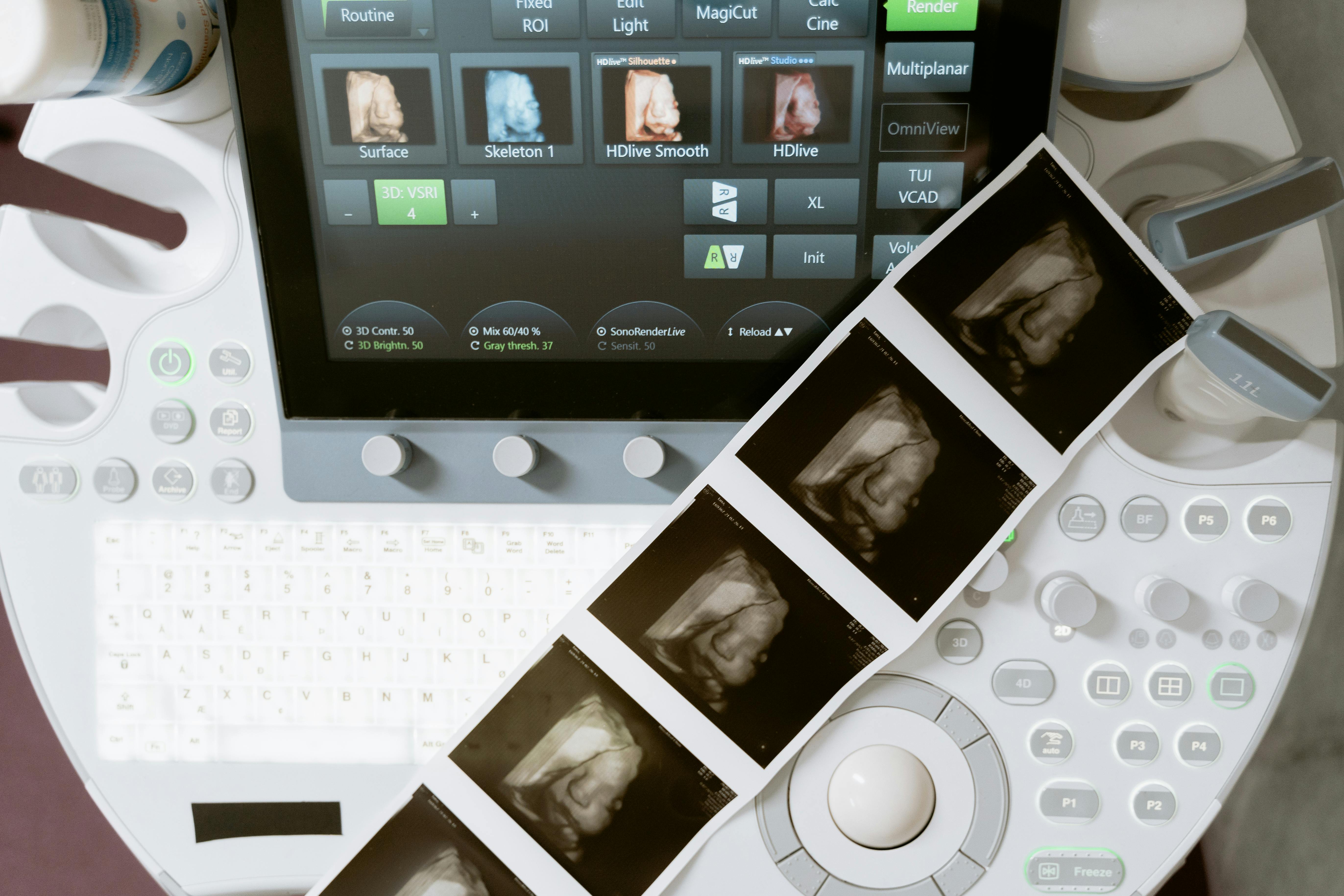
The most consistent pre-enrollment mistake Vermont career changers make is evaluating training programs primarily by cost and convenience — and landing on online-only programs that are cheaper and require no travel.
Online training delivers real value for foundational knowledge. Understanding how ultrasound technology works, what controls produce which image effects, why certain settings matter for 3D versus 4D rendering — that content translates to a screen. A motivated learner can absorb it.
What does not translate to a screen is the physical skill of scanning. The way a transducer sits in your hand, the degree of pressure that reads tissue without discomfort, the micro-adjustments you make when a baby shifts position mid-session, the calm of holding a technically difficult session together while managing a room full of excited family members — those capabilities develop through supervised practice with real clients, with real-time feedback, and through repetition.
Career changers who complete online-only programs and then try to open studios describe the same experience with enough consistency that the pattern is now predictable: they understood the material. They were not ready to deliver a professional session. The gap between knowledge and embodied skill in elective ultrasound is wider than most people expect, and it closes only one way.
Ultrasound Trainers’ training program is delivered on-site at your location, using your equipment, with real client scanning supervised throughout. That format compresses the gap between training completion and genuine professional readiness faster than any other approach.
Vermont’s Birth Culture and Why It Shapes Your Positioning
This is a Vermont-specific consideration that career changers from other states don’t always anticipate. Vermont has one of the most active natural birth communities in the country. Midwifery, homebirth, and holistic prenatal care have strong cultural roots here. The birth worker network — doulas, midwives, childbirth educators, birth photographers — is tightly connected and influential in how families make decisions about pregnancy services.
A keepsake ultrasound studio that positions itself carelessly — using clinical language, implying diagnostic capability, or failing to clearly distinguish itself from medical imaging — will find the Vermont birth community skeptical or dismissive. The same studio positioned accurately — as a bonding and keepsake experience that complements, rather than competes with, natural prenatal care — will find the birth community genuinely interested in recommending it to their clients.
This is not a theoretical distinction. It is the difference between a warm referral ecosystem and a cold one, and in a market as small as Vermont, the referral ecosystem determines your trajectory.
What the Vermont Market Realistically Looks Like
Vermont recorded approximately 5,400 births annually in recent reporting years, according to the U.S. Census Bureau. That is a modest absolute number by any national comparison. It needs context.
Vermont has no existing elective ultrasound studio. Families who want a keepsake session either drive to Albany, Boston, or Burlington-area New York — a significant barrier — or go without. A new studio in Burlington is not capturing a share of an existing market; it is activating demand that currently has no local outlet. The client who would have gone without is often the easiest conversion once access exists.
Montpelier, Vermont’s capital, is a small city of around 7,500 — too small to sustain an independent studio, but within a reasonable drive of Burlington for clients who treat the larger city as their destination for services. Vermont geography is not uniform; the I-89 corridor from Burlington to Montpelier is well-traveled, and families in the central Vermont region naturally look toward Burlington for services.
The state’s income profile also matters. Vermont’s median household income is above the national median, and the Burlington area specifically is home to the UVM professional community, technology sector workers, and healthcare employees whose household incomes support premium service pricing without friction.
Evaluating a Training Program as a Vermont Career Changer
- Supervised client scanning time: The single most predictive variable. Ask specifically how many hours of live scanning with real clients under instruction are included. If the answer is vague, that is the answer.
- On-site delivery: Training in your actual Burlington studio on your specific machine prepares you for real operating conditions. A trainer who has never been in your room with your equipment cannot calibrate instruction to your specific setup.
- Vermont market orientation: Does the program help you think through how to position the service for Vermont’s birth culture? Generic business curriculum that doesn’t account for market-specific dynamics is less useful than curriculum that does.
- Post-training support: Vermont’s small community means your early challenges — a session that didn’t go well, a referral relationship that isn’t developing, a pricing question — will arise in a context where there is no peer community of local studio operators to consult. A training program with genuine ongoing mentorship fills that gap.
Talk Through Your Vermont Training Path
Exploring This Path in Burlington or Montpelier?
Ultrasound Trainers works with career changers in first-mover markets where the path from training to viable studio requires more preparation than in established markets. Vermont is exactly that kind of opportunity. Reach out before you commit to a program — the questions to ask first matter.
Start the ConversationLast Updated: July 2025
Get the Inside Track
Training tips, business advice, and exclusive deals delivered straight to your inbox.

How to Get More Bookings for Your Elective Ultrasound Studio in Montana
Struggling to fill your elective ultrasound booking calendar in Montana? This guide covers what actually[...]

Buying an Elective Ultrasound Machine for an Arkansas Studio: What Actually Matters
Ready to buy an elective ultrasound machine for your Arkansas studio? This guide covers the[...]

How to Build a Pre-Launch Marketing Campaign for Your Elective Ultrasound Studio: A 60-Day Countdown Plan
Pre-launch marketing for an elective ultrasound studio begins 60 days before opening. This 60-day countdown[...]

What Career Changers in Hawaii Need to Know About Elective Ultrasound Training
Considering ultrasound training for a career change in Hawaii? This Q&A guide covers what training[...]

How to Find and Recruit Volunteer Scan Models for Elective Ultrasound Practice
Finding volunteer models for elective ultrasound practice is a skill in itself. Learn where to[...]

How to Write an Elective Ultrasound Business Plan That Actually Works
Writing an elective ultrasound business plan? This guide covers what to include, how to build[...]

How to Open an Elective Ultrasound Business in Honolulu: A Practical Startup Guide
Open an elective ultrasound business in Honolulu with confidence. This guide covers training, startup costs,[...]

Adding Elective Ultrasound to an Existing Photography or Doula Practice in Montana
Montana birth photographers and doulas: adding an elective ultrasound add-on business in Montana to your[...]

Starting an Elective Ultrasound Business in Cheyenne, Wyoming: First-Mover Advantage in the Least-Crowded Market in the Country
Thinking about starting an elective ultrasound business in Cheyenne, Wyoming? This guide covers the F.E.[...]
Elective Ultrasound Training for Career Changers in Sweden
Considering a career change into elective ultrasound in Sweden? Find out what training involves, whether[...]

What Career Changers in Fayetteville Should Know About Elective Ultrasound Training
Thinking about elective ultrasound training in Fayetteville, Arkansas as a career changer? This Q&A guide[...]
The Biggest Mistake Las Vegas Elective Ultrasound Studios Make With Their Marketing
Elective ultrasound studio marketing in Las Vegas prioritizes trust and reviews over ad spend. Here's[...]
