

The history of elective ultrasound United States is a story most people in the industry don’t know in full, and most people outside it have never been told. It’s also a story worth knowing, because understanding where this industry came from explains a great deal about where it is right now, how it’s perceived, and what the current generation of studio owners is actually building on.
From the earliest VHS recordings of fetal scans to today’s live HD imaging streamed to family members in the waiting room, the elective ultrasound industry has undergone a transformation that mirrors the broader evolution of consumer healthcare in America. The technology changed. The business model matured. The market grew. But the emotional core of what this service offers, families getting to see and connect with their baby before birth, has never changed at all.
The history of elective ultrasound United States traces from early VHS-era studios in the 1990s through the 3D/4D technology shift in the mid-2000s and into today’s HD Live and 5D imaging era. The industry grew organically around the emotional value of prenatal bonding, driven by advancing technology and falling equipment costs over three decades. Last Updated: June 2026
Where It Started: The 1990s and the Era of Tape and Curiosity
The history of elective ultrasound United States begins in the early 1990s, when diagnostic 2D ultrasound was already standard prenatal care. The technology already existed. What didn’t yet exist was the deliberate commercial offering of ultrasound as a keepsake experience, separate from clinical diagnosis. The earliest elective studios, mostly operating in shopping malls, offered grainy 2D images printed on thermal paper and, for the premium experience of that era, a VHS recording of the scan session. It was rudimentary by today’s standards. But the emotional response from families was immediate and real.
The fundamental insight that drove those early operators was simple: families loved seeing their baby, and they would pay for a better, more comfortable, more celebratory version of that experience than a clinical ultrasound appointment provided. That insight has never stopped being true.
According to the Bureau of Labor Statistics, consumer service businesses that build around a genuine emotional need rather than a convenience-based value proposition show stronger retention and word-of-mouth characteristics. Elective ultrasound was always the former.
The 3D Revolution: What Changed in the Late 1990s and Early 2000s
The introduction of 3D ultrasound technology changed the category fundamentally. The first commercial 3D ultrasound systems became available to non-clinical buyers in the late 1990s. Before this, elective studios offered 2D images that looked identical to what a clinical scan produced. The value proposition was primarily environmental: a better atmosphere, a longer session, keepsake packaging.
Three-dimensional imaging changed what the experience delivered. For the first time, families could see facial features, watch a baby yawn, see a hand reach up. The emotional impact was dramatically different from 2D. And that difference transformed the market.
“When 3D arrived, we started seeing something we hadn’t seen before: fathers who had been skeptical about booking a session becoming the most enthusiastic people in the room. The images connected differently.” This is a pattern that experienced operators across the industry observed consistently in those early years.
Studios that adopted 3D early built significant competitive advantages. Equipment was expensive and technically demanding, which meant not every operator could offer it. Early 3D studios essentially defined the category standard before it was widely accessible.
4D Goes Mainstream: The Mid-2000s Expansion
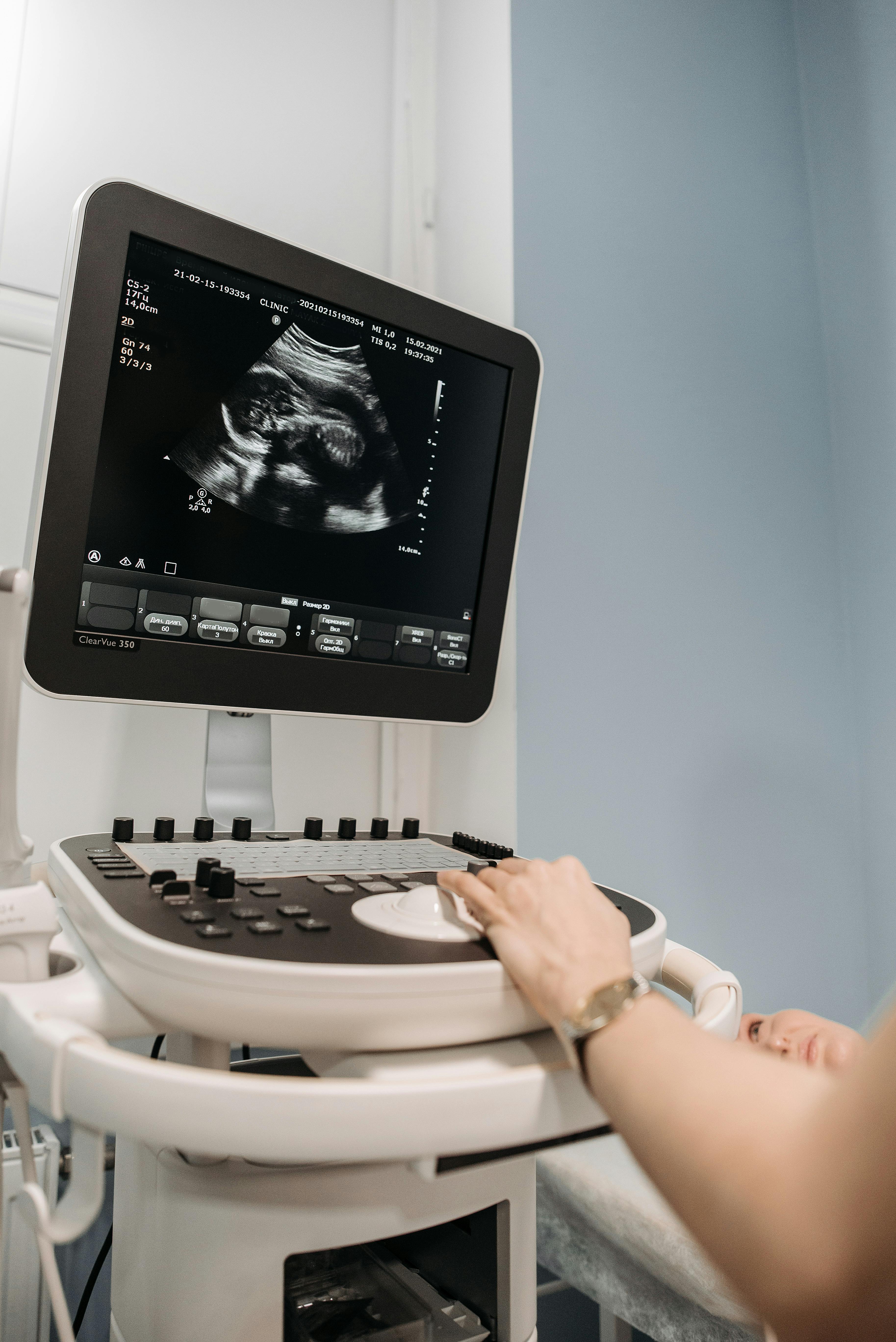
Four-dimensional imaging, real-time 3D motion, hit the elective market in earnest in the mid-2000s. The difference between 3D and 4D is experiential: with 4D, you’re watching, not just viewing. Families could see their baby move, respond, and gesture in real time. It was, for many parents, an overwhelming experience.
The mid-2000s also saw the business model clarify significantly. Studio formats became more standardized. The mall-based location model was well established. Pricing structures, package offerings, and client experience formats began to converge around practices that worked. The industry started accumulating operational knowledge that operators could learn from and build on.
This era also saw the first serious discussions about safety, professional standards, and the distinction between elective and diagnostic ultrasound. Organizations including the AIUM began developing guidance around non-diagnostic ultrasound use, acknowledging the industry’s existence and attempting to establish responsible practice principles. Those conversations continue today.
The Franchise Era and Independent Operators
As the market matured through the late 2000s and into the 2010s, two distinct business models emerged. Franchise operators offered branded systems with training, support, and established operational frameworks. Independent operators built their own brands, often with greater operational flexibility but also more responsibility for developing their own business infrastructure.
The franchise model appealed to entrepreneurs who wanted a proven system. The independent model appealed to operators who wanted control over their brand, pricing, and direction without ongoing royalty obligations. Both models produced successful studios. Both also produced failures, typically when operators underinvested in training, underpriced the service, or entered markets without adequate preparation.
Turnkey business packages, like those Ultrasound Trainers offers, represent an evolution of this dynamic: the structured support and business foundation of a turnkey approach without the royalty structure or ongoing franchise obligations. Operators own their business completely while benefiting from professional setup, training, and guidance.
Technology Leaps: HD Live and the Era of Photorealistic Imaging
HD Live imaging changed the category again. Where 3D and 4D produced sculptural, sometimes waxy-looking images, HD Live introduced soft lighting simulation and improved rendering that produced images many families described as looking like photographs of a newborn. The emotional impact was significant.
Then 5D imaging arrived, going further still in image rendering quality and processing speed. For studios investing in current-generation equipment, the gap in client experience between a modern HD Live session and a mid-2000s 4D session is substantial. Families today expect a different level of image quality than families did fifteen years ago, and the equipment can deliver it.
| Era | Technology | Key Characteristics |
|---|---|---|
| Early 1990s | 2D + VHS recording | Mall-based studios, thermal prints, basic keepsakes |
| Late 1990s | Early 3D systems | Facial features visible, premium pricing possible |
| Mid-2000s | 4D real-time | Live motion, business model standardization, franchise growth |
| 2010s | HD Live | Photorealistic rendering, strong social sharing, broader adoption |
| 2020s | 5D, HD Live enhanced | Advanced rendering, live streaming, gender determination add-ons |
What This History Means for Studio Owners Today
Here’s the practical takeaway from three decades of history: this industry is not new, not unproven, and not experimental. It is a mature service category built on a durable emotional value that technology has continued to enhance.
Studios that understand this history make better decisions. They invest in current equipment because they understand what happens to studios that fall behind the technology curve. They invest in training because they’ve seen what distinguishes studios that build lasting reputations from those that don’t. They position their service correctly because they understand why the non-diagnostic framing is not just a legal technicality but the honest description of what the service actually is.
The operators building studios today are standing on thirty years of accumulated industry learning. That’s a significant advantage, if they use it.
People Also Ask
When did elective ultrasound studios first appear in the United States?
The earliest commercial elective ultrasound studios in the United States appeared in the early 1990s, primarily in shopping mall locations. These early studios offered 2D imaging with VHS recordings and thermal paper prints as keepsakes. The category was small and largely informal until 3D imaging became commercially available in the late 1990s, which began the modern era of the industry.
What is the difference between 3D, 4D, and HD Live ultrasound?
Three-dimensional ultrasound produces a still three-dimensional image. Four-dimensional ultrasound adds real-time motion, allowing families to watch their baby move. HD Live is a rendering technology that adds sophisticated soft lighting simulation, producing more lifelike, almost photographic image quality. Modern 5D systems extend this further with improved processing and rendering speed. Each generation has produced a measurable improvement in the emotional impact and image quality of the keepsake experience.
How has the business model of elective ultrasound studios changed over time?
The model has evolved from simple mall-based kiosks with basic package pricing to professional studio environments with multiple service tiers, add-ons, gender reveal events, live streaming capabilities, and sophisticated marketing. The franchise model grew in the 2000s and 2010s. Turnkey independent studio launches have grown as training and business support became more accessible without ongoing royalty structures.
What does the AIUM say about elective ultrasound?
The American Institute of Ultrasound in Medicine (AIUM) has addressed non-diagnostic and keepsake ultrasound in its guidance documents over the years, distinguishing between diagnostic use and non-diagnostic applications. The AIUM has consistently emphasized that ultrasound should be used prudently and only when there is a medical indication when used diagnostically, while also acknowledging the separate category of non-diagnostic use. Studio operators should stay current with AIUM guidance at aium.org.
How did falling equipment costs change the elective ultrasound industry?
Falling equipment costs over the past two decades made studio entry accessible to a much wider range of entrepreneurs. When 3D and 4D systems cost $100,000 or more, only well-capitalized operators could participate. As prices dropped and leasing and financing options expanded, the barrier to entry lowered. This drove more studio openings and more market education, ultimately growing the overall industry, though it also created more competition for established operators.
The history of elective ultrasound United States is, at its core, a story about a service category that filled a real human need and kept improving its ability to fill it better. That story is still being written by the operators opening studios today.
If you’re building a keepsake ultrasound studio and want to enter the industry with the training, equipment, and business foundation that have proven effective across that history, Ultrasound Trainers is available to discuss your specific goals and situation.
Last Updated: June 2026
Get the Inside Track
Training tips, business advice, and exclusive deals delivered straight to your inbox.

How to Get More Bookings for Your Elective Ultrasound Studio in Montana
Struggling to fill your elective ultrasound booking calendar in Montana? This guide covers what actually[...]

Buying an Elective Ultrasound Machine for an Arkansas Studio: What Actually Matters
Ready to buy an elective ultrasound machine for your Arkansas studio? This guide covers the[...]

How to Build a Pre-Launch Marketing Campaign for Your Elective Ultrasound Studio: A 60-Day Countdown Plan
Pre-launch marketing for an elective ultrasound studio begins 60 days before opening. This 60-day countdown[...]

What Career Changers in Hawaii Need to Know About Elective Ultrasound Training
Considering ultrasound training for a career change in Hawaii? This Q&A guide covers what training[...]

How to Find and Recruit Volunteer Scan Models for Elective Ultrasound Practice
Finding volunteer models for elective ultrasound practice is a skill in itself. Learn where to[...]

How to Write an Elective Ultrasound Business Plan That Actually Works
Writing an elective ultrasound business plan? This guide covers what to include, how to build[...]

How to Open an Elective Ultrasound Business in Honolulu: A Practical Startup Guide
Open an elective ultrasound business in Honolulu with confidence. This guide covers training, startup costs,[...]

Adding Elective Ultrasound to an Existing Photography or Doula Practice in Montana
Montana birth photographers and doulas: adding an elective ultrasound add-on business in Montana to your[...]

Starting an Elective Ultrasound Business in Cheyenne, Wyoming: First-Mover Advantage in the Least-Crowded Market in the Country
Thinking about starting an elective ultrasound business in Cheyenne, Wyoming? This guide covers the F.E.[...]
Elective Ultrasound Training for Career Changers in Sweden
Considering a career change into elective ultrasound in Sweden? Find out what training involves, whether[...]

What Career Changers in Fayetteville Should Know About Elective Ultrasound Training
Thinking about elective ultrasound training in Fayetteville, Arkansas as a career changer? This Q&A guide[...]

The Biggest Mistake Las Vegas Elective Ultrasound Studios Make With Their Marketing
Elective ultrasound studio marketing in Las Vegas prioritizes trust and reviews over ad spend. Here's[...]
