

Equipment is one of the most consequential decisions a new elective ultrasound studio makes. In markets like St. Paul, Eagan, and across the broader Twin Cities metro, client expectations are high — and the machine you choose will shape both the quality of your sessions and the sustainability of your business from the start.
This buying guide covers what to evaluate when comparing 4D ultrasound machines, the questions to ask before committing, and how to align your equipment choice with your actual business goals rather than just the spec sheet.
Table of Contents
- Elective Ultrasound Machines vs. Diagnostic Equipment
- Image Quality: What Actually Matters
- Key Features to Evaluate
- New vs. Used Machines
- Understanding Total Cost of Ownership
- Questions to Ask Before You Buy
- Aligning Equipment Choice With Your Business Model
- Frequently Asked Questions
- Need Help Comparing Equipment?
Elective Ultrasound Machines vs. Diagnostic Equipment
An important distinction for anyone entering this industry: not every ultrasound machine is appropriate for an elective keepsake studio. Diagnostic ultrasound systems — the kind used in hospitals and OB-GYN offices — are designed for clinical evaluation and medical documentation. They often include features that are largely irrelevant for keepsake studio use and carry price points and support requirements to match.
For an elective studio in Minnesota, you need a machine that excels at producing high-quality 3D, 4D, and HD images suitable for presentation to expectant families. The criteria are different from clinical settings: aesthetics of the rendered image matter enormously, session workflow efficiency matters, and the ability to optimize images quickly — often with a family in the room watching the screen — matters more than clinical documentation features.
Choosing a machine that is genuinely well-suited to elective use is the first decision to get right.
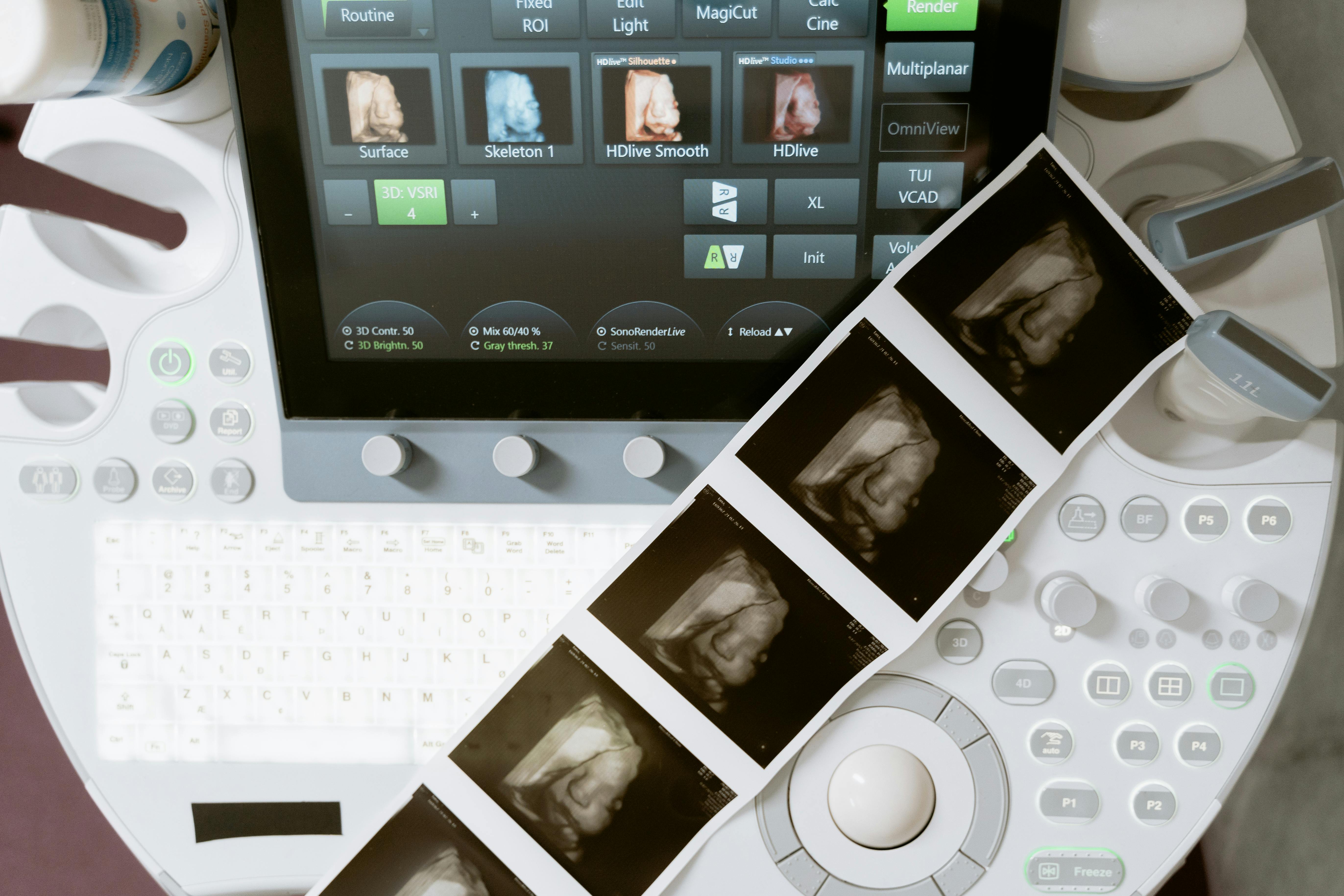
A 4D ultrasound machine suited to elective studio use should prioritize image rendering quality, workflow efficiency, and durability under regular client-facing use.
Image Quality: What Actually Matters
Image quality is the primary value proposition of a keepsake ultrasound studio. Families book sessions because they want to see their baby clearly — good images generate emotional responses, positive reviews, and word-of-mouth referrals. Poor or inconsistent image quality is among the most common reasons new studios struggle.
When evaluating image quality, consider:
- 3D rendering quality: How does the machine render surface detail in 3D mode? The skin texture and facial detail in static 3D images are what most families share with friends and family afterward.
- 4D frame rate: Frame rate in live 4D mode affects how smooth the real-time experience feels. Higher frame rates produce more fluid movement — which matters significantly for the live viewing experience.
- HD imaging capability: HD or HDlive modes — available on certain machines — produce significantly more detailed and lifelike images compared to standard 4D rendering. If you plan to offer HD portrait sessions as a premium tier, the machine must support it.
- Performance at different gestational ages: Some machines perform better than others at earlier or later gestational ages. A machine that produces excellent images at 28 to 32 weeks may struggle at 34 weeks with fetal positioning factors. Understanding the machine’s performance profile across gestational windows matters.
Key Features to Evaluate
Beyond raw image quality, several specific features affect how well a machine works in a client-facing elective studio environment.
| Feature | Why It Matters |
|---|---|
| Convex 3D/4D probe | Essential for elective scanning — ensure the machine includes a quality convex probe appropriate for abdominal scanning at relevant gestational ages |
| Digital image and video output | Clients expect digital deliverables — USB or cloud-based image transfer, and live streaming capability for families watching remotely |
| Thermal printer compatibility | Printed images remain popular with families — verify the machine supports thermal printer integration |
| Rendering presets and optimization controls | The ability to adjust gain, depth, angle, and rendering mode quickly during a session affects how efficiently you can deliver great images |
| Gender determination capability | Early gender determination (around 15 to 16 weeks) is a high-demand service — the machine and probe setup should support it |
| Durability and build quality | A studio machine is in regular use — build quality and probe durability affect how long the machine performs reliably without service issues |
New vs. Used Machines
Budget is a real constraint for most startup studios, and the price difference between new and used equipment can be substantial. Understanding the tradeoffs of each option is important.
New machines typically offer manufacturer warranties, current software versions, access to post-sale service and support, and the assurance that the machine has not been through unknown prior use. For a studio where the machine is the central tool of the business, that assurance has real value.
Used machines can offer meaningful cost savings — but they carry risks that deserve careful evaluation. Age, usage history, probe condition, and whether software updates are still available for older models are all factors that affect how well a used machine will serve you over time. Purchasing used equipment through a reputable source that can verify the machine’s history and condition is far safer than buying through a general marketplace without that vetting.
Ultrasound Trainers can help clients evaluate both new and pre-owned options, providing guidance on what to look for and how to assess value relative to your specific business needs. Learn more about elective ultrasound machine options to start comparing.

Understanding your machine’s controls deeply is part of delivering consistently high-quality sessions.
Understanding Total Cost of Ownership
The purchase price of the machine is not the only equipment cost to plan for. A complete accounting of equipment costs for a Minnesota studio should include:
- Machine and probe purchase price
- Thermal printer
- Display TV or projector and mounting hardware
- Computer or iPad for session management and digital delivery
- Cables, connectors, and power conditioning
- Gel warmers, spa towels, and session supplies
- Live streaming hardware if offering remote viewing
- Extended warranty or service agreements where available
For a full studio setup, these components together represent a significant investment. Building a realistic total equipment budget — not just a machine budget — before you commit to a purchase path is essential for avoiding surprises after the machine arrives.
If budget is a primary concern, equipment financing options may be worth exploring as part of your planning process.
Questions to Ask Before You Buy
Before committing to any machine purchase, work through these questions with the seller:
- What warranty is included, and what does it cover?
- What is the probe warranty, and what does probe replacement cost?
- Is the software version current, and are future updates available?
- What phone or remote support is available post-purchase?
- Does this machine support early gender determination at 15 to 16 weeks?
- Does it support live streaming output?
- What training is available on this specific machine?
- If purchasing used: what is the documented usage history?
Any seller who is not willing to answer these questions directly is a seller worth being cautious about.
Aligning Equipment Choice With Your Business Model
The best machine for a studio doing primarily 28-to-34-week bonding scans may not be the best machine for a studio focused on early gender determination and first-trimester imaging. Your intended service menu should directly inform your equipment selection — not the other way around.
Similarly, your projected client volume affects how much reliability matters relative to cost. A studio planning to run multiple sessions daily needs a machine that can perform consistently under that load. A studio starting with a lighter schedule has a bit more flexibility.
In the St. Paul and Eagan markets specifically — where families have ready access to multiple metro-area options — your machine and session quality will be compared against other studios both directly and through online reviews. Investing in equipment that consistently delivers excellent images is not optional in a competitive metro market; it is the foundation of your reputation.
Frequently Asked Questions
How much does a 4D ultrasound machine cost for an elective studio?
Pricing varies significantly by brand, model, age, and condition. New machines suited to elective use typically represent a substantial investment. Used equipment can reduce upfront costs but requires careful evaluation of condition and support availability. Contact Ultrasound Trainers for current pricing guidance based on your specific goals and budget.
Can I use any ultrasound machine for a keepsake studio?
Not every machine is well-suited to elective use. Machines that excel in diagnostic clinical settings may not produce the rendering quality or workflow efficiency that keepsake studios need. Equipment selection should be made with your specific service menu and client experience goals in mind.
How important is HD imaging capability?
HD imaging is increasingly expected in markets where clients have done any research before booking. Studios offering HD portrait sessions as a premium tier can command higher pricing. In a metro market like St. Paul, where client expectations are high, HD capability is worth factoring into your initial equipment decision.
What happens if my machine needs service?
Machine downtime directly affects your ability to run sessions and generate revenue. Understanding the service and support terms before you purchase is critical. Ask specifically about average service response times and what loaner or backup options exist in the event of an extended repair.
Should I buy equipment and training from the same source?
There are real advantages to doing so. Training on the specific machine you own means every hour of instruction directly applies to your studio. Ultrasound Trainers offers both equipment and training as a combined offering, which eliminates the learning curve of adapting training on one machine to a different machine in your studio.
Need Help Comparing Equipment?
If you are comparing 4D ultrasound machines for a Minnesota studio — whether in St. Paul, Eagan, or anywhere in the Twin Cities area — Ultrasound Trainers can help you evaluate your options and match equipment to your business goals. Our team understands both the equipment side and the operational realities of running a keepsake ultrasound studio.
Contact Ultrasound Trainers to discuss your equipment questions.
About This Content: Ultrasound Trainers is a Nashville-based company specializing in elective ultrasound training, turnkey studio startup packages, and equipment guidance for people opening keepsake ultrasound businesses across the United States. This content is for informational purposes and does not constitute medical, legal, or financial advice. Last Updated: April 2026.
Get the Inside Track
Training tips, business advice, and exclusive deals delivered straight to your inbox.

How to Get More Bookings for Your Elective Ultrasound Studio in Montana
Struggling to fill your elective ultrasound booking calendar in Montana? This guide covers what actually[...]

Buying an Elective Ultrasound Machine for an Arkansas Studio: What Actually Matters
Ready to buy an elective ultrasound machine for your Arkansas studio? This guide covers the[...]

How to Build a Pre-Launch Marketing Campaign for Your Elective Ultrasound Studio: A 60-Day Countdown Plan
Pre-launch marketing for an elective ultrasound studio begins 60 days before opening. This 60-day countdown[...]

What Career Changers in Hawaii Need to Know About Elective Ultrasound Training
Considering ultrasound training for a career change in Hawaii? This Q&A guide covers what training[...]

How to Find and Recruit Volunteer Scan Models for Elective Ultrasound Practice
Finding volunteer models for elective ultrasound practice is a skill in itself. Learn where to[...]

How to Write an Elective Ultrasound Business Plan That Actually Works
Writing an elective ultrasound business plan? This guide covers what to include, how to build[...]

How to Open an Elective Ultrasound Business in Honolulu: A Practical Startup Guide
Open an elective ultrasound business in Honolulu with confidence. This guide covers training, startup costs,[...]

Adding Elective Ultrasound to an Existing Photography or Doula Practice in Montana
Montana birth photographers and doulas: adding an elective ultrasound add-on business in Montana to your[...]

Starting an Elective Ultrasound Business in Cheyenne, Wyoming: First-Mover Advantage in the Least-Crowded Market in the Country
Thinking about starting an elective ultrasound business in Cheyenne, Wyoming? This guide covers the F.E.[...]
Elective Ultrasound Training for Career Changers in Sweden
Considering a career change into elective ultrasound in Sweden? Find out what training involves, whether[...]

What Career Changers in Fayetteville Should Know About Elective Ultrasound Training
Thinking about elective ultrasound training in Fayetteville, Arkansas as a career changer? This Q&A guide[...]
The Biggest Mistake Las Vegas Elective Ultrasound Studios Make With Their Marketing
Elective ultrasound studio marketing in Las Vegas prioritizes trust and reviews over ad spend. Here's[...]
