

Training programs for elective ultrasound vary enormously — in content depth, hands-on time, ongoing support, business education, and price. Choosing the wrong one does not just cost money. It can set a new studio owner back by months of rebuilding skills that a better program would have established correctly from the start.
Knowing what to look for in an elective ultrasound training program means evaluating six key factors: guaranteed hands-on scanning hours per student, whether business and operations education is included alongside technical training, the extent of post-training support, whether the training uses real clients or only phantoms, the instructor’s verifiable practical experience, and whether the program can be conducted at your location on your equipment. Any program that cannot answer these questions specifically should be evaluated with caution. Last Updated: June 2026
Factor 1: Guaranteed Hands-On Scanning Time
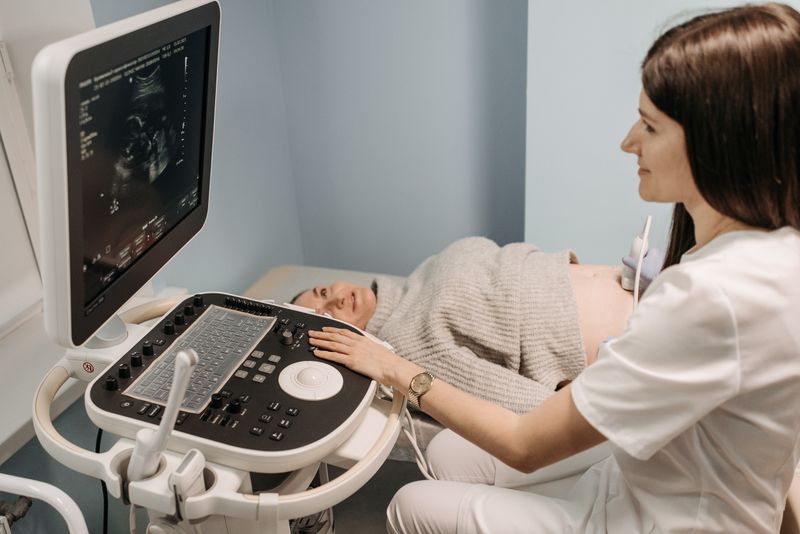
This is the single most important evaluation metric. Ask every program you consider: how many hours will I personally have probe in hand, performing supervised scans? Not observing. Not watching a demonstration. Actually scanning.
The American Institute of Ultrasound in Medicine consistently emphasizes that ultrasound scanning is a psychomotor skill — developed through repetitive hands-on practice, not didactic instruction. A program that delivers 20 hours of video content and 2 hours of hands-on time will not produce the same operator as one that delivers 15 hours of hands-on supervised scanning.
Factor 2: Real Clients vs Phantoms Only
Phantom scanning is valuable for learning basic probe control in a controlled environment. It is not a substitute for scanning real clients. Fetal ultrasound requires adapting to real fetal movement, real amniotic fluid variability, real maternal body composition, and real fetal positioning challenges that a phantom cannot replicate.
A strong program includes both: phantoms for foundational technique development and real volunteer clients for applied practice under instructor supervision. Evaluate how many real client scans each student performs during the program — this number tells you more about operational readiness than any other single metric.
Factor 3: Business and Operations Education
Scanning competency gets you through your first client session. Business competency determines whether your studio is still running in 18 months. The two are not the same, and a training program that covers only technical scanning does only half the job.
- Studio setup and room design guidance
- Pricing strategy and package development
- Client intake, consent forms, and non-diagnostic documentation
- Session workflow from booking to image delivery
- Marketing foundations: how to get your first clients
- Compliance awareness: what the elective/non-diagnostic distinction requires of you operationally
- Financial basics: what startup costs to expect and how to plan for them
Factor 4: Post-Training Support Structure
No new operator is fully confident after training ends. The weeks immediately following training completion are when the most skill-defining practice happens — and having access to your instructor during that period can be the difference between a question answered in 10 minutes and a week of practicing incorrect technique.
Ask every program: what support is available after training completion? Is there a defined period of access to the instructor? Can you submit scan footage for review? Is there a community or group where graduates share questions and feedback? Programs that invest in post-training support are demonstrating confidence in their graduates’ outcomes.
Factor 5: Instructor Verifiable Experience
The elective ultrasound industry is small enough that instructors’ backgrounds are verifiable. Ask about the instructor’s own studio operating experience, how many operators they have trained, and whether they can provide references from recent graduates. An instructor who has operated a successful elective ultrasound studio understands the practical realities of what you are about to do in a way that a purely academic trainer does not.
Factor 6: Location and Equipment Flexibility
Can the program come to you and train on your equipment? Can it adapt to your specific machine brand and model? Training that happens in your studio, on your machine, eliminates the translation step between “what I learned” and “how my machine works.” If on-site training is not available, ask whether the training facility uses machines comparable to yours.
The Evaluation Scorecard
| Evaluation Factor | Strong Program | Weak Program |
|---|---|---|
| Hands-on scanning hours | 10+ hours per student guaranteed | Vague or unspecified; observation-heavy |
| Real client scanning | 2+ real volunteer sessions per student | Phantom only or none specified |
| Business education | Explicitly included; covers pricing, compliance, operations | Technical scanning only; no business content |
| Post-training support | Defined period; instructor access; footage review | None; or unclear |
| Instructor experience | Active or former studio operator; verifiable graduate references | Academic or unverifiable; no student references available |
| Location flexibility | On-site option available; adapts to your machine | Facility-only; generic equipment |
A program that scores strong across all six factors is worth its price. One that scores weak across most is unlikely to produce an operator ready to serve clients confidently. For more on what Ultrasound Trainers’ programs include across all six dimensions, explore our training program details and elective 3D/4D training page.
Frequently Asked Questions
Ask for contact information for two or three recent graduates and call them. Ask the graduates specifically: how many hands-on scanning hours did you receive, did you feel ready to serve clients after training, and how available was the instructor for post-training questions? Direct feedback from people who went through the program is more informative than any marketing claim the program makes about itself.
Not automatically, but price and quality are correlated in training for a reason: qualified instructors, on-site visits, real client access, and ongoing support all cost money to provide. A program priced far below market should prompt specific questions about what is missing. A program priced at market should be evaluated on the six factors above regardless of price.
Ask: How many students will be in my training cohort? How many hours will I personally be scanning under supervision? How many real clients will I scan? What business and operations content is included? What post-training support is available and for how long? Can the training come to my location and use my equipment? Can I speak with a recent graduate? Any hesitation or vagueness in response to these questions is informative.
Find Out How Ultrasound Trainers Measures Up
We are happy to answer every question in this guide about our programs specifically. Explore our training options or reach out to discuss your situation directly.
Contact Ultrasound TrainersGet the Inside Track
Training tips, business advice, and exclusive deals delivered straight to your inbox.

How to Get More Bookings for Your Elective Ultrasound Studio in Montana
Struggling to fill your elective ultrasound booking calendar in Montana? This guide covers what actually[...]

Buying an Elective Ultrasound Machine for an Arkansas Studio: What Actually Matters
Ready to buy an elective ultrasound machine for your Arkansas studio? This guide covers the[...]

How to Build a Pre-Launch Marketing Campaign for Your Elective Ultrasound Studio: A 60-Day Countdown Plan
Pre-launch marketing for an elective ultrasound studio begins 60 days before opening. This 60-day countdown[...]

What Career Changers in Hawaii Need to Know About Elective Ultrasound Training
Considering ultrasound training for a career change in Hawaii? This Q&A guide covers what training[...]

How to Find and Recruit Volunteer Scan Models for Elective Ultrasound Practice
Finding volunteer models for elective ultrasound practice is a skill in itself. Learn where to[...]

How to Write an Elective Ultrasound Business Plan That Actually Works
Writing an elective ultrasound business plan? This guide covers what to include, how to build[...]

How to Open an Elective Ultrasound Business in Honolulu: A Practical Startup Guide
Open an elective ultrasound business in Honolulu with confidence. This guide covers training, startup costs,[...]

Adding Elective Ultrasound to an Existing Photography or Doula Practice in Montana
Montana birth photographers and doulas: adding an elective ultrasound add-on business in Montana to your[...]

Starting an Elective Ultrasound Business in Cheyenne, Wyoming: First-Mover Advantage in the Least-Crowded Market in the Country
Thinking about starting an elective ultrasound business in Cheyenne, Wyoming? This guide covers the F.E.[...]

Elective Ultrasound Training for Career Changers in Sweden
Considering a career change into elective ultrasound in Sweden? Find out what training involves, whether[...]

What Career Changers in Fayetteville Should Know About Elective Ultrasound Training
Thinking about elective ultrasound training in Fayetteville, Arkansas as a career changer? This Q&A guide[...]

The Biggest Mistake Las Vegas Elective Ultrasound Studios Make With Their Marketing
Elective ultrasound studio marketing in Las Vegas prioritizes trust and reviews over ad spend. Here's[...]
