

Ultrasound training for career changers in Rhode Island draws a specific kind of person: someone who’s good at what they currently do, has built a career on working with people, and has started asking whether there’s a path that combines that skill with something more independent, more meaningful, and more aligned with the life they actually want. For a growing number of people in the Providence and Cranston area, elective ultrasound is that answer.
Ultrasound training for career changers in Rhode Island is a practical, skills-based path into the elective ultrasound industry that does not require a medical license or clinical background. Most programs are structured as private three-day sessions covering hands-on scanning technique, machine operation, and business fundamentals — giving you the tools to launch a keepsake studio in the Providence and Cranston market.
Last Updated: May 2025
Why Career Changers in Rhode Island Are Choosing Elective Ultrasound
Ultrasound training for career changers in Rhode Island appeals because it offers a genuine business ownership opportunity in a market that’s currently underserved — without requiring the years of clinical schooling, licensing costs, or hospital employment that diagnostic imaging demands. For someone who already knows how to work with clients, manage a professional environment, and run their own schedule, the learning curve is primarily technical, not foundational.
Rhode Island’s demographics support this decision. According to the U.S. Census Bureau, the Providence metropolitan area has a population of more than 650,000 people, with strong concentrations of young families in Cranston, North Providence, Johnston, and the surrounding communities. That client base for keepsake ultrasound is consistent and largely untapped by existing studio competition.
The career change conversation in Rhode Island also has a practical dimension: the cost of living in the Providence area, while lower than Boston, still requires a certain income floor for most households. Elective ultrasound, structured correctly and marketed well, can meet that floor — but it requires honest planning rather than optimistic assumptions about how fast bookings will arrive.
What Ultrasound Training for Career Changers in Rhode Island Actually Leverages
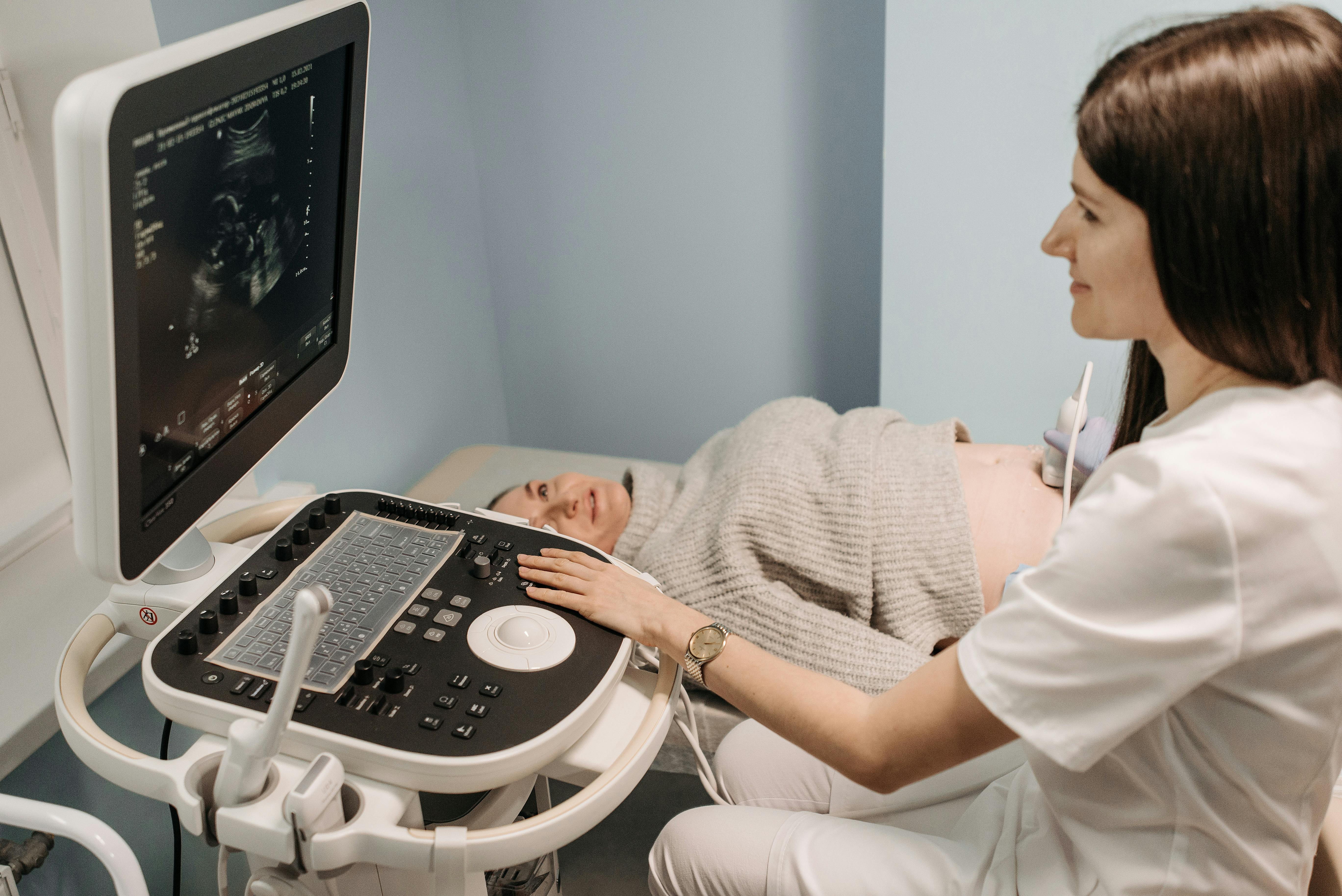
The assumption many career changers bring to elective ultrasound training is that they’re starting from zero — that their existing skills are irrelevant to this new field. That assumption is usually wrong. What you’ve built in your current career often translates directly into the parts of this business that are hardest to teach.
The table below shows how different career backgrounds tend to map to the elective ultrasound studio context:
| Career Background | What Transfers Directly | What Training Adds |
|---|---|---|
| Photography | Client management, visual composition intuition, lighting awareness, social media fluency | Scanning technique, machine operation, clinical positioning |
| Doula / Midwife Support | Comfort with pregnancy conversations, family dynamics, prenatal care context, trust-building | Machine operation, image optimization, scanning fundamentals |
| Nursing / Healthcare adjacent | Professional clinical environment comfort, anatomy basics, client communication in sensitive contexts | 3D and 4D elective scanning technique, business setup and operations |
| Customer service / Retail management | Appointment management, client experience design, complaint handling, scheduling systems | Scanning technique, machine operation, healthcare-adjacent positioning |
| Education / Early childhood | Family communication, patience with first-time parents, warm professional demeanor | Technical scanning skills, machine settings, image delivery workflow |
The pattern holds across backgrounds: what training provides is the technical foundation you don’t have yet. What you bring to training is the client-facing capability that takes most people years to develop in any professional context. That combination — your existing skills plus hands-on training — is what makes career changers competitive in this market from day one.
Does Your Background Affect How Quickly You’ll Learn?
Yes, but not in the direction people usually assume. Career changers often learn the client-facing elements of studio operation faster than people coming from clinical backgrounds, because they don’t have habits from diagnostic imaging environments that need to be unlearned. The keepsake ultrasound experience is warmer, more celebratory, and more relationship-oriented than clinical scanning — and that environment tends to feel natural to people whose careers were built on service and connection.
The technical elements — probe positioning, image optimization, machine settings — require focused practice regardless of background. Three days of hands-on instruction builds the foundation. What refines it is the continued practice that comes from actually scanning clients in your own studio after training ends. Most career changers describe a confidence curve that builds steadily through the first 30 to 60 client sessions.
We’ve observed this consistently across the career changer population we work with: the people who come in worried they’ll struggle with the technical side almost always surprise themselves. The people who struggle most tend to be the ones who underestimate the business side — the marketing, the booking management, the client experience design — and focus exclusively on scanning technique.
A Realistic Look at the Three-Day Private Training Format
Private hands-on training is the format that produces the best outcomes for career changers entering the elective ultrasound industry. The session is structured entirely around you — your learning pace, your equipment, your future studio environment — rather than a fixed curriculum delivered to a group of twelve people at different experience levels.
Day one covers machine orientation, 2D fundamentals, and initial probe technique. By the end of the first day, most trainees have completed their first real scanning sessions. Day two builds on that foundation with 3D and 4D techniques, early gender determination at 15 to 16 weeks, and the kinds of real-world client variables that can’t be replicated with training phantoms alone.
Day three covers business operations: client session management, appointment flow, service structure, pricing frameworks, and the administrative elements of running a studio. You leave with a practical operational foundation — not a plan to research further, but a working framework you can apply immediately.
The Providence and Cranston Market: Reading the Local Opportunity
Providence and Cranston together represent the densest concentration of Rhode Island’s population — and, for keepsake ultrasound, the most immediately accessible client base. The two cities share a geographic border and a community character that makes word-of-mouth marketing particularly effective: when a Cranston family has a great experience at a local studio, they’re likely to recommend it to people they actually know and see regularly.
The competitive picture in this market remains favorable for new entrants. Rhode Island has fewer established keepsake ultrasound studios per capita than comparable markets in Massachusetts or Connecticut. For a career changer who gets trained, sets up a studio in a well-chosen Providence or Cranston location, and invests in building local visibility before opening — the early-mover advantage is real and meaningful.
The Providence and Cranston corridor also benefits from the Rhode Island Hospital system, multiple OB-GYN practices, and a network of birth professionals who interact with expecting families throughout pregnancy. These relationships, when approached thoughtfully, can become referral sources that sustain a studio’s booking calendar without ongoing advertising spend. Explore ultrasound training options in Rhode Island to understand what the path looks like from where you’re standing now.
Financial Considerations Before Making the Career Change
Honest financial planning is the part of the career change decision that people most often skip in the excitement of researching the opportunity. The elective ultrasound industry can generate meaningful revenue — but not immediately, and not without the startup investment in training, equipment, space, and marketing that makes it possible.
The questions worth answering before you commit:
- How many months of runway do I have to cover personal expenses while the studio builds its client base?
- Do I need to keep my current job while training and setting up, or can I transition full-time?
- What is my total startup budget, and does it cover training, equipment, space, and marketing — not just the machine?
- What’s a realistic booking target for month three, and what revenue does that represent at my planned pricing?
- If bookings take longer to build than expected, what’s my contingency?
What Career Changers Get Wrong Most Often
The most common mistake is treating training as the finish line rather than the starting line. Completing three days of hands-on instruction gives you the skills to operate professionally. It doesn’t give you clients, reviews, a functioning website, a Google Business Profile, or any of the marketing infrastructure that turns those skills into a business. Plan for the 60 to 90 days after training as a setup and launch period — not as a waiting period.
The second most common mistake is comparing the elective ultrasound business to the career they’re leaving rather than evaluating it on its own terms. Someone leaving a salaried nursing position who expects the same guaranteed monthly income from day one of studio ownership will be disappointed. The upside is real — but it requires accepting that the first several months involve building the foundation that makes the upside possible.
The third mistake is underinvesting in the client experience. Ultrasound training for career changers in Rhode Island gives you the technical skills. What keeps clients coming back — and generates the referrals that drive sustainable bookings — is the warmth, professionalism, and quality of the experience from the moment they walk in to the moment they leave with their images. That’s the part of this business that career changers often already understand. Don’t deprioritize it once training is complete.
Thinking About a Career Change Into Elective Ultrasound in Rhode Island?
Ultrasound Trainers works with career changers across New England who are building keepsake ultrasound studios from scratch. If you want a clear-eyed conversation about what the path looks like for someone with your background and your situation, reach out and we’ll walk through it with you.
Start the ConversationGet the Inside Track
Training tips, business advice, and exclusive deals delivered straight to your inbox.

How to Get More Bookings for Your Elective Ultrasound Studio in Montana
Struggling to fill your elective ultrasound booking calendar in Montana? This guide covers what actually[...]

Buying an Elective Ultrasound Machine for an Arkansas Studio: What Actually Matters
Ready to buy an elective ultrasound machine for your Arkansas studio? This guide covers the[...]

How to Build a Pre-Launch Marketing Campaign for Your Elective Ultrasound Studio: A 60-Day Countdown Plan
Pre-launch marketing for an elective ultrasound studio begins 60 days before opening. This 60-day countdown[...]

What Career Changers in Hawaii Need to Know About Elective Ultrasound Training
Considering ultrasound training for a career change in Hawaii? This Q&A guide covers what training[...]

How to Find and Recruit Volunteer Scan Models for Elective Ultrasound Practice
Finding volunteer models for elective ultrasound practice is a skill in itself. Learn where to[...]

How to Write an Elective Ultrasound Business Plan That Actually Works
Writing an elective ultrasound business plan? This guide covers what to include, how to build[...]

How to Open an Elective Ultrasound Business in Honolulu: A Practical Startup Guide
Open an elective ultrasound business in Honolulu with confidence. This guide covers training, startup costs,[...]

Adding Elective Ultrasound to an Existing Photography or Doula Practice in Montana
Montana birth photographers and doulas: adding an elective ultrasound add-on business in Montana to your[...]

Starting an Elective Ultrasound Business in Cheyenne, Wyoming: First-Mover Advantage in the Least-Crowded Market in the Country
Thinking about starting an elective ultrasound business in Cheyenne, Wyoming? This guide covers the F.E.[...]

Elective Ultrasound Training for Career Changers in Sweden
Considering a career change into elective ultrasound in Sweden? Find out what training involves, whether[...]

What Career Changers in Fayetteville Should Know About Elective Ultrasound Training
Thinking about elective ultrasound training in Fayetteville, Arkansas as a career changer? This Q&A guide[...]

The Biggest Mistake Las Vegas Elective Ultrasound Studios Make With Their Marketing
Elective ultrasound studio marketing in Las Vegas prioritizes trust and reviews over ad spend. Here's[...]
