

The answer to whether you can open an elective ultrasound business without medical background is yes, and it is not a loophole or an edge case. It reflects how the industry is actually structured and who runs the majority of successful studios operating across the country. The assumption that you need a clinical credential or a healthcare background to enter this space keeps a lot of genuinely capable people from pursuing an opportunity that was built, in large part, for exactly them.
That said, the yes comes with real conditions. Not medical requirements, but practical ones. Here is what opening an elective ultrasound business without a clinical background actually involves.
You can open an elective ultrasound business without medical background in most states. Elective studios operate in the bonding and keepsake space, not medical care. What you need is proper elective ultrasound training, the right equipment, a clear business structure, and a marketing plan. Clinical credentials are not part of that equation in most cases. Last Updated: May 2025
Why Most Elective Studios Are Not Run by Clinicians
Opening an elective ultrasound business without medical background is not unusual. It is the norm. Most successful studio owners across the country came from backgrounds in business, photography, education, aesthetics, customer service, and dozens of other non-clinical fields. The elective ultrasound industry did not develop as an extension of the medical sonography profession. It developed as a consumer experience business, built around a technology that produces compelling visual bonding moments, and operated by entrepreneurs who learned to use that technology well.
Clinical sonographers who move into elective studio ownership exist and often do very well. But they are not the majority, and their clinical credential does not automatically translate into business success. A great scan quality in a hospital setting does not mean a great client experience in a boutique studio. Running a profitable studio requires marketing, pricing, client communication, and operational skills that clinical training does not address at all.
The people who do best in this industry tend to be those who are organized, client-focused, genuinely excited about the experience they are creating, and willing to invest in the training and systems the business requires. Medical background is not on that list.
What You Actually Need Instead of a Medical License
What replaces a clinical credential in this business is not a workaround. It is a different and entirely valid form of preparation. The three non-negotiables are training, equipment, and a business foundation.
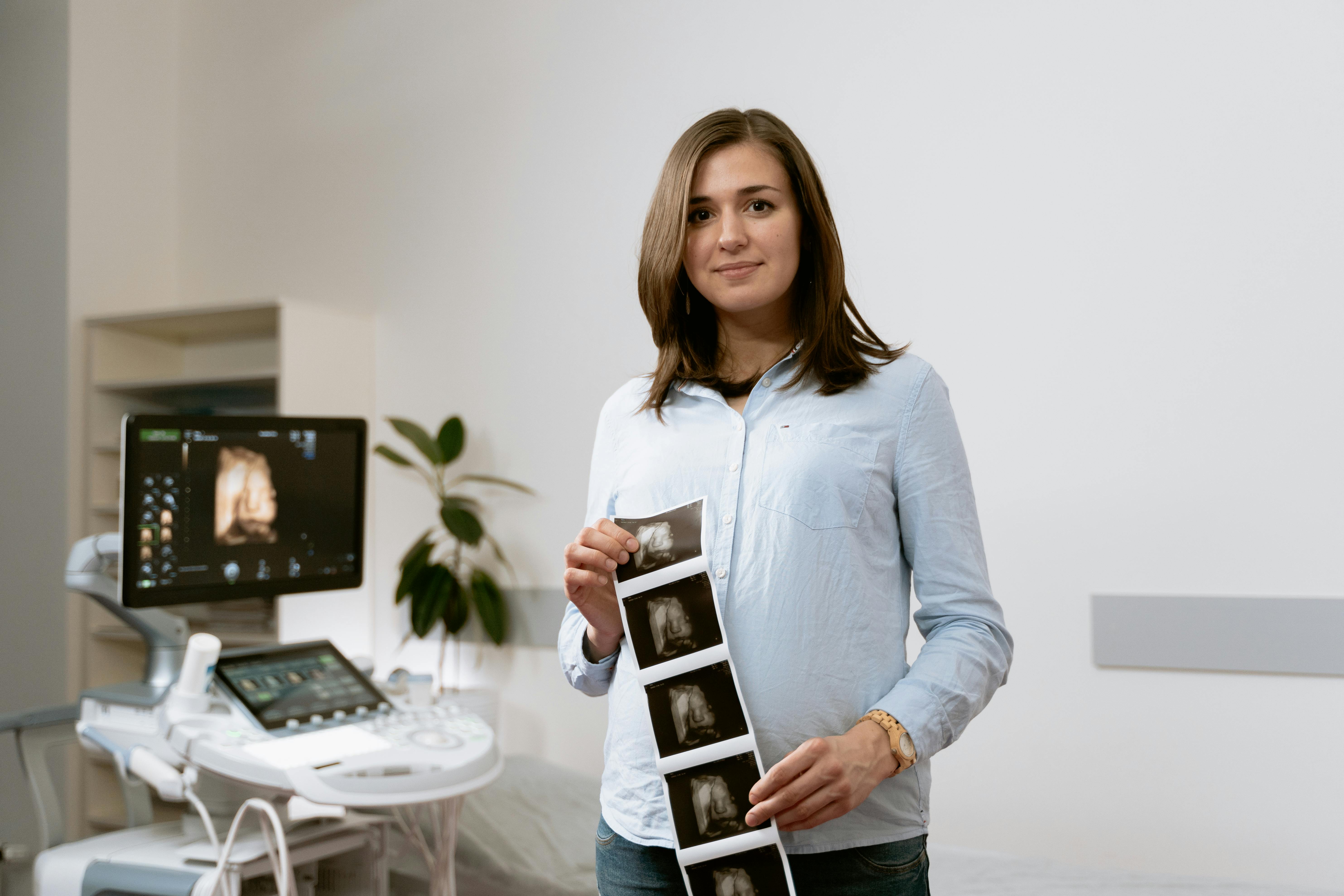
Hands-on elective ultrasound training. This is the foundational investment. Training that covers 3D and 4D scanning technique on your actual machine, early gender determination, machine optimization, and client session management gives you the applied skill the business requires. Online theory does not provide this. In-person instruction with real clients and direct feedback does.
The right equipment for elective use. A machine spec’d and configured for the keepsake context, with the probes and rendering software your service menu requires, is what makes your training transferable to daily operations. Equipment matched to your training, your services, and your budget is a separate decision from clinical machine selection.
A business structure that is legally and operationally sound. Business registration, insurance, a clear service scope that positions your studio as an elective and keepsake experience, client consent and disclosure processes, and a marketing foundation are what establish you as a credible and protected operator. None of this requires a healthcare license.
What State Regulations Actually Say
The regulatory landscape for elective ultrasound varies by state, and it is worth understanding clearly before you launch. Most states have not enacted specific legislation addressing elective ultrasound operators, which means elective studios operate without specific clinical credential requirements in those states. A smaller number of states have enacted or proposed guidance that addresses the elective category specifically.
What the majority of relevant regulatory frameworks do address is the distinction between elective and diagnostic imaging. Elective studios that position their services clearly as bonding and keepsake experiences, that do not make diagnostic claims, and that advise clients to continue with routine prenatal care, operate within the established framework in most states. Confirming the specific requirements in your state before opening is always the right step.
Professional legal guidance during the business setup stage is worth the investment. The cost of clarity at the start is far lower than the cost of navigating a compliance issue after you have been operating.
The Background That Actually Helps Most
Experience in customer-facing service businesses translates very well to elective studio ownership. Photographers, aestheticians, doulas, event planners, nurses and medical assistants who want to leave clinical environments, and entrepreneurs from completely unrelated fields have all built successful studios. What their backgrounds share is less important than what they do when they enter the industry.
According to the Small Business Administration, service businesses with strong client experience design and consistent quality outperform competitors regardless of the technical background of the owner. The client experience in an elective ultrasound studio, from the physical environment to the warmth of the session to the quality of the images families take home, is entirely within the reach of a skilled, trained operator without clinical credentials.
According to the American Institute of Ultrasound in Medicine, elective ultrasound providers should have appropriate training in the equipment and procedures they offer. That training requirement is met through proper elective ultrasound instruction, not clinical credentialing.
How Photographers and Doulas Are Already Doing This
Photographers who work with pregnant clients are one of the most naturally positioned groups to add elective ultrasound. They already have a client relationship with expectant families, an existing booking infrastructure, and skills in creating beautiful keepsake experiences. Adding a scan room to an existing photography studio or offering scan packages alongside maternity sessions is a natural extension for clients who already trust the operator.
Doulas bring a different set of advantages. Their relationship with expectant parents is deeply personal and ongoing. They understand the emotional landscape of pregnancy in ways that make the elective scan session something they can facilitate with genuine warmth and context. Adding elective ultrasound to a doula practice transforms a visit-based service into a studio-anchored business with a consistent revenue model.
Bottom Line: The Medical Background Myth
Opening an elective ultrasound business without a medical background is not just possible. It is the standard path. The industry was not built for clinical sonographers who want to moonlight. It was built for people who see a real opportunity to create something, learn a skill thoroughly, and serve clients in a meaningful and repeatable way.
What it requires is honest preparation. Training you take seriously, equipment you choose thoughtfully, and a business foundation you build correctly from the start. The clinical credential is not the gate. The preparation is.
If you are ready to think through what that preparation looks like for your specific situation, explore the startup guidance available at Ultrasound Trainers or reach out to talk through the path from where you are to opening day.
Last Updated: May 2025
Get the Inside Track
Training tips, business advice, and exclusive deals delivered straight to your inbox.

How to Get More Bookings for Your Elective Ultrasound Studio in Montana
Struggling to fill your elective ultrasound booking calendar in Montana? This guide covers what actually[...]

Buying an Elective Ultrasound Machine for an Arkansas Studio: What Actually Matters
Ready to buy an elective ultrasound machine for your Arkansas studio? This guide covers the[...]

How to Build a Pre-Launch Marketing Campaign for Your Elective Ultrasound Studio: A 60-Day Countdown Plan
Pre-launch marketing for an elective ultrasound studio begins 60 days before opening. This 60-day countdown[...]

What Career Changers in Hawaii Need to Know About Elective Ultrasound Training
Considering ultrasound training for a career change in Hawaii? This Q&A guide covers what training[...]

How to Find and Recruit Volunteer Scan Models for Elective Ultrasound Practice
Finding volunteer models for elective ultrasound practice is a skill in itself. Learn where to[...]

How to Write an Elective Ultrasound Business Plan That Actually Works
Writing an elective ultrasound business plan? This guide covers what to include, how to build[...]

How to Open an Elective Ultrasound Business in Honolulu: A Practical Startup Guide
Open an elective ultrasound business in Honolulu with confidence. This guide covers training, startup costs,[...]

Adding Elective Ultrasound to an Existing Photography or Doula Practice in Montana
Montana birth photographers and doulas: adding an elective ultrasound add-on business in Montana to your[...]

Starting an Elective Ultrasound Business in Cheyenne, Wyoming: First-Mover Advantage in the Least-Crowded Market in the Country
Thinking about starting an elective ultrasound business in Cheyenne, Wyoming? This guide covers the F.E.[...]
Elective Ultrasound Training for Career Changers in Sweden
Considering a career change into elective ultrasound in Sweden? Find out what training involves, whether[...]

What Career Changers in Fayetteville Should Know About Elective Ultrasound Training
Thinking about elective ultrasound training in Fayetteville, Arkansas as a career changer? This Q&A guide[...]

The Biggest Mistake Las Vegas Elective Ultrasound Studios Make With Their Marketing
Elective ultrasound studio marketing in Las Vegas prioritizes trust and reviews over ad spend. Here's[...]
