

What doctors think about elective ultrasound is, frankly, more nuanced than most studio owners realize, and more nuanced than most of the online noise suggests. You’ve heard the version that circulates: “doctors are against it,” “OB-GYNs never recommend it,” “the medical community is uniformly opposed.” That framing is wrong, and believing it keeps studio owners from building the referral relationships that could be their most valuable source of consistent bookings.
The reality is that medical professional opinion on keepsake ultrasound exists on a spectrum. Understanding that spectrum, and understanding why it exists, will make you significantly better at talking to physicians about your business.
What doctors think about elective ultrasound ranges from cautiously supportive to neutral to genuinely concerned, depending on the physician’s practice philosophy, their experience with specific studios, and whether they view the service as complementary to prenatal care or a potential distraction from it. Studios that position correctly and maintain clear non-diagnostic boundaries earn physician trust over time. Last Updated: June 2026
The OB-GYN Who Refers to Your Studio
What doctors think about elective ultrasound is shaped primarily by whether they view it as complementary to prenatal care or as something that might undermine it. OB-GYNs and midwives who have positive relationships with specific keepsake studios typically describe those studios as providing genuine emotional value to their patients, not creating clinical problems. These physicians don’t see a well-run keepsake studio as a competitor. They see it as something that strengthens their patients’ connection to the pregnancy, which most prenatal providers actively want.
The OB-GYN who refers to your studio tends to be someone who:
- Prioritizes the emotional wellbeing of their patients as part of comprehensive prenatal care
- Has a professional relationship with your studio, meaning they know what you offer and how you operate
- Trusts that your studio positions clearly as non-diagnostic and never encourages clients to substitute your service for clinical care
- Has either seen positive outcomes from keepsake sessions (patients who come to appointments more connected, more engaged) or has no negative experience to counterweigh the potential benefit
This physician is your referral target. They exist in large numbers. Most studio owners simply haven’t built the relationships to find them yet.
The OB-GYN Who Advises Against It
This is the physician whose advice your prospective clients sometimes hear: “I wouldn’t recommend that.” Understanding where this position comes from is more useful than dismissing it.
Several genuine concerns drive physician hesitation about keepsake ultrasound:
Concerns about unqualified operators. Some physicians have seen or heard about studios with poor technique, operators who overstayed scan sessions, or studios that made alarming comments about fetal images without any diagnostic training or authority. Those experiences create entirely reasonable caution. A poorly run studio creates real problems for clients and for the medical providers who refer to it. This is an argument for higher professional standards in the industry, not an argument against the service itself.
AIUM and professional society guidance. The American Institute of Ultrasound in Medicine (AIUM) has historically advised against ultrasound for non-medical purposes, citing the “as low as reasonably achievable” (ALARA) principle for diagnostic imaging. Many OB-GYNs are aware of this guidance and default to caution.
Client confusion about what the scan means. Some physicians have encountered patients who arrived at their clinical appointment having received a keepsake scan and become confused about what the keepsake images showed. “Everything looked normal on the other scan” is a response that creates real clinical communication challenges if a client is confusing a keepsake experience with a diagnostic evaluation.
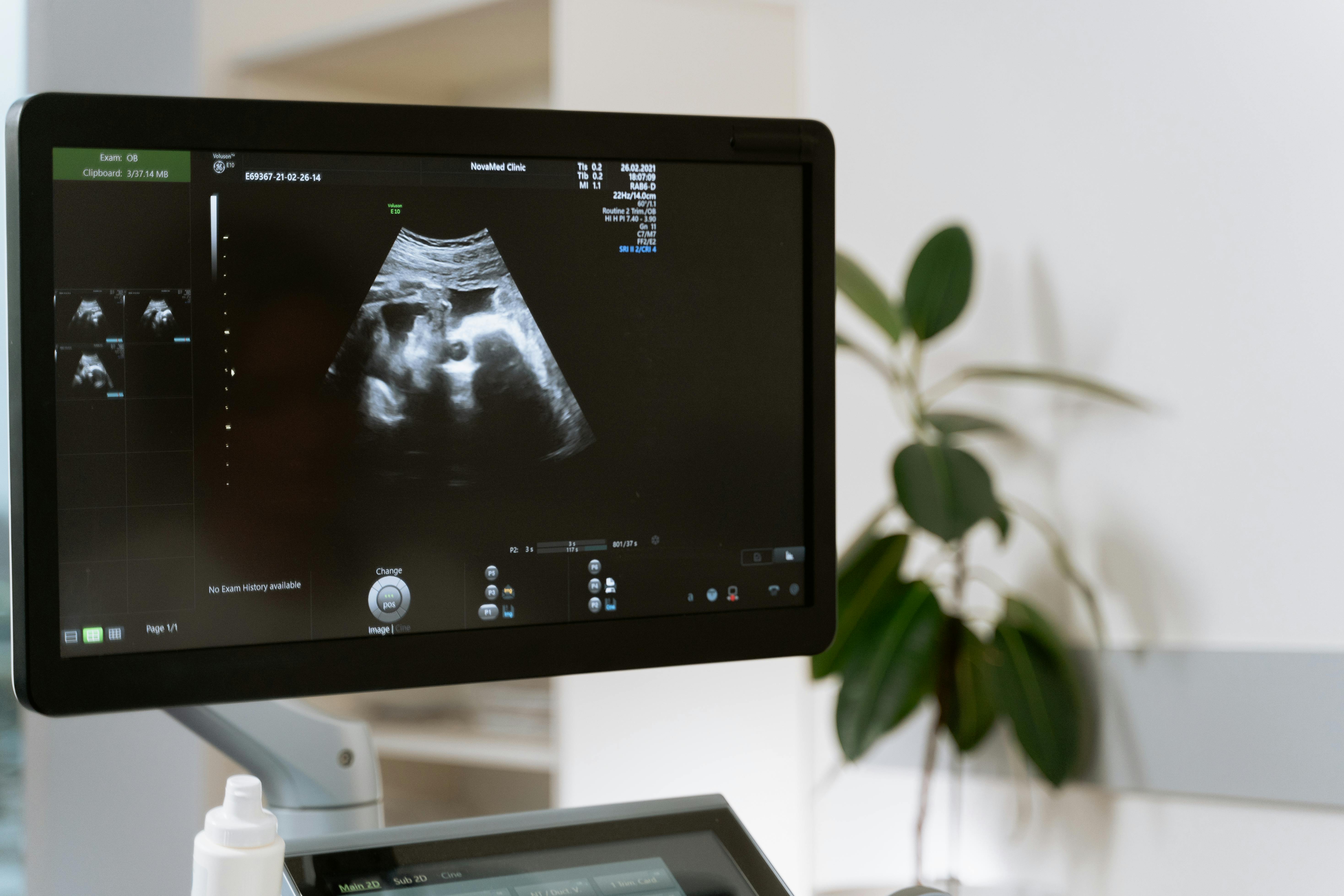
The Role of AIUM Guidance in Physician Opinion
It’s worth addressing the AIUM position directly, because studio owners hear it cited regularly. The AIUM’s concerns about non-diagnostic ultrasound center on the ALARA principle: ultrasound energy should be minimized to what is medically necessary. This is a reasonable principle for diagnostic imaging, where the clinical benefit justifies exposure and where the purpose is evaluation.
Keepsake ultrasound sessions, when conducted by properly trained operators using appropriate settings and reasonable session lengths, are not conducted at diagnostic power levels. This is an important distinction. The question of safety in keepsake ultrasound, when sessions are conducted professionally, is not the same as the question of safety in extended, high-power diagnostic scanning. Well-trained operators are specifically taught how to optimize image quality at appropriate output levels for a keepsake context.
The AIUM’s most recent published guidance has continued to evolve, acknowledging the reality of keepsake scanning while emphasizing the importance of qualified operators and appropriate technique. Studio owners who want to engage credibly with physician questions about safety should familiarize themselves with AIUM guidance at aium.org.
What We’ve Seen in Studios With Strong Physician Relationships
We’ve worked with studio owners across the country who have built genuinely strong relationships with local OB-GYN practices. The pattern is consistent: it starts with a professional, honest introduction and it’s maintained through consistent non-diagnostic positioning in every client interaction.
The studio owners who have physician referral partners are the ones who, without exception, have never tried to oversell the medical significance of what they offer. They tell clients clearly: this is a bonding experience. You still need your prenatal appointments. Your doctor sees things in a clinical context that we don’t and that we aren’t trying to.
That positioning builds trust. Over time, it builds referrals.
According to the Bureau of Labor Statistics analysis of service-sector business sustainability, businesses in health-adjacent categories that build professional referral networks alongside direct consumer marketing have significantly lower client acquisition costs and higher retention rates than those relying on paid advertising alone. The relationship investment is worth the time.
How to Approach a Local OB-GYN as a Studio Owner
The introduction matters. Here’s the framing that works:
You’re not asking a physician to endorse your service. You’re not asking them to verify anything medically. You’re informing them that your studio exists in their community, explaining clearly what it is and what it isn’t, and offering to be a resource for any patients who ask about keepsake ultrasound options.
The materials you bring should reflect professional presentation, because physicians are evaluating whether you are someone they’d be comfortable directing patients to. A clearly written one-page studio overview, your service descriptions with explicit non-diagnostic language, and a brief statement about your training and professional standards all contribute to a credible introduction.
Don’t ask for a referral in the first conversation. Ask if you can keep them informed as your studio opens, leave your materials, and follow up in a few weeks. Building the relationship properly takes more than one visit.
The Bottom Line on What Physicians Think
Medical professionals don’t have a single view on elective keepsake ultrasound. They have individual views shaped by their own clinical experience, their patients’ experiences, the quality of studios they’ve encountered, and their interpretation of professional guidance.
What you control is your studio’s professional standards, your non-diagnostic positioning, your client communication, and how you present yourself when you walk into a physician’s office. The OB-GYNs who refer to studios that have done those things well are genuinely enthusiastic about the value the service provides to their patients.
That’s the relationship you’re building toward. It starts with running a studio that deserves to be referred to.
Last Updated: June 2026
Get the Inside Track
Training tips, business advice, and exclusive deals delivered straight to your inbox.

How to Get More Bookings for Your Elective Ultrasound Studio in Montana
Struggling to fill your elective ultrasound booking calendar in Montana? This guide covers what actually[...]

Buying an Elective Ultrasound Machine for an Arkansas Studio: What Actually Matters
Ready to buy an elective ultrasound machine for your Arkansas studio? This guide covers the[...]

How to Build a Pre-Launch Marketing Campaign for Your Elective Ultrasound Studio: A 60-Day Countdown Plan
Pre-launch marketing for an elective ultrasound studio begins 60 days before opening. This 60-day countdown[...]

What Career Changers in Hawaii Need to Know About Elective Ultrasound Training
Considering ultrasound training for a career change in Hawaii? This Q&A guide covers what training[...]

How to Find and Recruit Volunteer Scan Models for Elective Ultrasound Practice
Finding volunteer models for elective ultrasound practice is a skill in itself. Learn where to[...]

How to Write an Elective Ultrasound Business Plan That Actually Works
Writing an elective ultrasound business plan? This guide covers what to include, how to build[...]

How to Open an Elective Ultrasound Business in Honolulu: A Practical Startup Guide
Open an elective ultrasound business in Honolulu with confidence. This guide covers training, startup costs,[...]

Adding Elective Ultrasound to an Existing Photography or Doula Practice in Montana
Montana birth photographers and doulas: adding an elective ultrasound add-on business in Montana to your[...]

Starting an Elective Ultrasound Business in Cheyenne, Wyoming: First-Mover Advantage in the Least-Crowded Market in the Country
Thinking about starting an elective ultrasound business in Cheyenne, Wyoming? This guide covers the F.E.[...]

Elective Ultrasound Training for Career Changers in Sweden
Considering a career change into elective ultrasound in Sweden? Find out what training involves, whether[...]

What Career Changers in Fayetteville Should Know About Elective Ultrasound Training
Thinking about elective ultrasound training in Fayetteville, Arkansas as a career changer? This Q&A guide[...]

The Biggest Mistake Las Vegas Elective Ultrasound Studios Make With Their Marketing
Elective ultrasound studio marketing in Las Vegas prioritizes trust and reviews over ad spend. Here's[...]
