

Elective ultrasound training in Fayetteville, Arkansas is drawing interest from a growing number of people who aren’t looking to stay in whatever field they started in. Teachers, real estate agents, medical assistants, photographers — the range of professional backgrounds walking into this industry is wider than most people expect. What connects them is a combination of entrepreneurial interest and a market that genuinely hasn’t filled up yet in northwest Arkansas.
Elective ultrasound training in Fayetteville, Arkansas is accessible to career changers regardless of medical background. The training focuses on 3D and 4D keepsake scanning technique, machine operation, and business basics — not clinical diagnosis. With hands-on instruction and the right preparation, most people from non-medical fields are fully capable of building a professional studio.
Last Updated: May 2025
Q: Does My Professional Background Matter for Elective Ultrasound Training?
Elective ultrasound training in Fayetteville, Arkansas is designed to work for people coming from a wide range of starting points, and medical experience is not a prerequisite. The service you’re training for — keepsake and bonding ultrasound — is distinct from diagnostic imaging. You’re not reading anatomy scans for clinical purposes. You’re helping families experience a meaningful moment and producing high-quality images as a keepsake.
That said, your background isn’t irrelevant. It shapes how you learn and where you’ll need to focus.
People from healthcare — nurses, medical assistants, radiologic techs, phlebotomists — tend to adapt quickly to the technical vocabulary and machine concepts. They often need more coaching on the client experience side: learning to slow down, communicate warmly, and run a session that feels welcoming rather than clinical.
Career changers from client-facing roles — photographers, hospitality workers, teachers — often adapt faster to the session environment and the emotional side of working with expecting families. Their learning curve is usually on the technical side: transducer handling, image optimization, and understanding what the machine is showing.
Neither group has an obvious advantage. Both can build excellent studios with serious training.
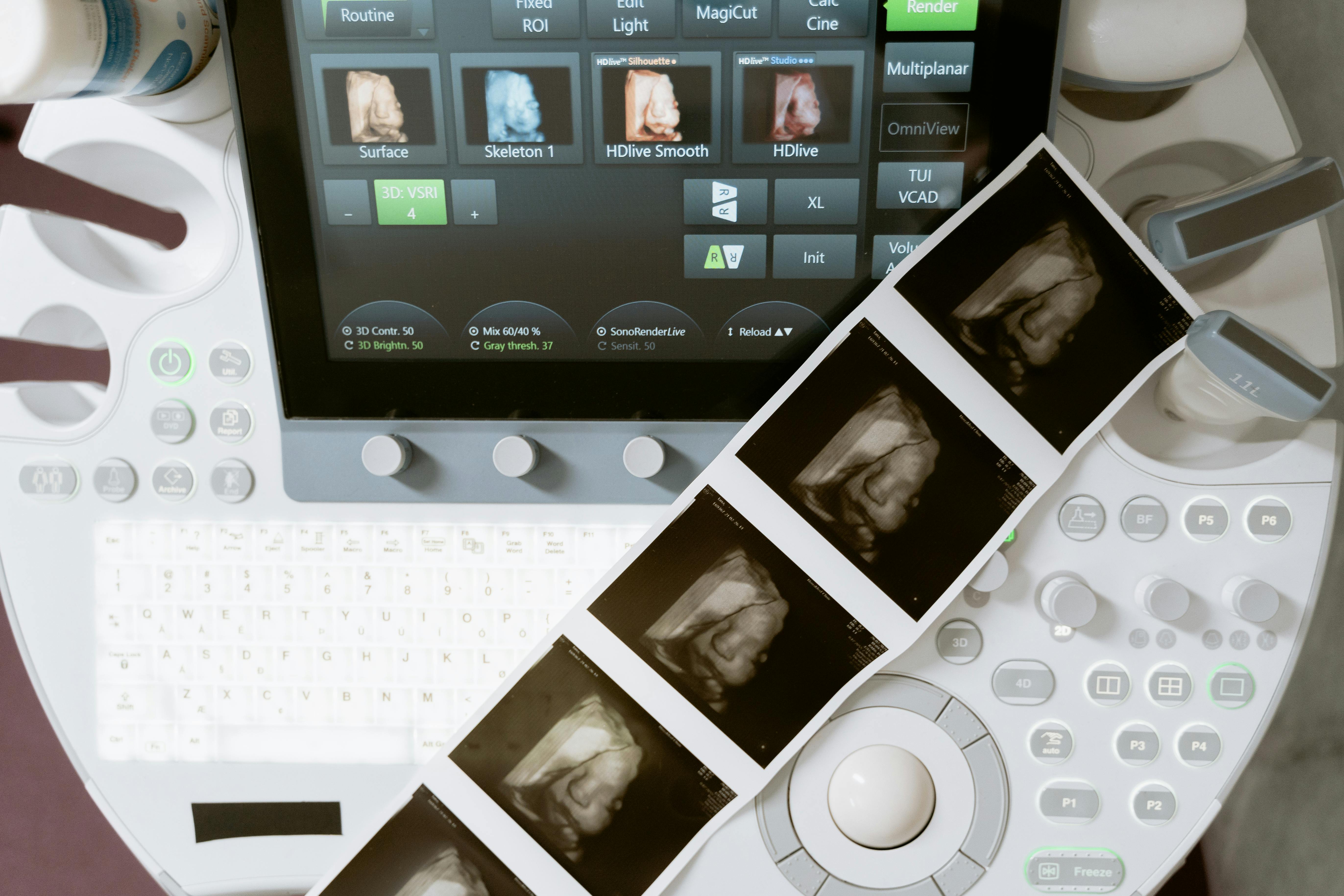
Q: What Does Elective Ultrasound Training Actually Involve?
Most career changers want to know what they’re walking into before they commit. Fair question.
Hands-on training covers probe technique and positioning, machine settings and image optimization, early gender determination (typically starting at 15 to 16 weeks), 2D scanning foundations, recognizing common imaging challenges, and session workflow. The private training program through Ultrasound Trainers runs three days at your location, using your own equipment.
Three days is concentrated. You’ll practice on real clients and training phantoms. You’ll make mistakes and get immediate correction. By the end, the goal is that you understand not just what to do but why — so you can troubleshoot when something unexpected comes up during an actual session.
Business guidance is also part of a strong program. Understanding how to structure sessions, price services, manage client expectations, and handle the operational side of a studio is as important as scanning skill. Studios that struggle usually aren’t failing because of technique — they’re failing because the business fundamentals weren’t built correctly from the start.
Q: Is Fayetteville Actually a Good Market for This Business?
Northwest Arkansas has been one of the fastest-growing regions in the country for the better part of a decade. Fayetteville, Springdale, Rogers, and Bentonville make up a continuous metro corridor with a combined population approaching 600,000 people — and that number has grown significantly since 2020.
According to the U.S. Census Bureau, the Fayetteville-Springdale-Rogers metro area has ranked among the top 10 fastest-growing metros in the country in recent years, driven by corporate expansion, a strong University of Arkansas presence, and in-migration from larger cities. Younger families make up a substantial portion of that growth, and that’s the primary client demographic for a keepsake ultrasound studio.
The competitive picture is thin. Established, professionally operated elective ultrasound studios are not dense in this market. For a career changer willing to invest in real training and take the business seriously, the Fayetteville metro represents an early-mover opportunity that won’t exist in five years the way it does today.
Q: How Long Does It Realistically Take to Go From Training to Open for Business?
That depends on how far along your planning is before training starts. People who come into training with equipment secured, a space identified, and a basic business structure in place can often open within four to eight weeks of completing training. People who use training as the starting gun — making all other decisions afterward — typically take three to five months from training to first booking.
The sequence that tends to work best: get serious about training, identify your equipment path, secure your space (or confirm a mobile setup if that’s your model), handle business formation, then schedule training for when you’ll actually be ready to practice and launch. Scheduling training too early — before you have equipment or a clear plan — means the practice period after training is wasted while you’re still solving logistics.
Q: What If I Have No Medical Background at All?
It’s a more common starting point than people assume.
We’ve worked with career changers from fields as varied as cosmetology, hospitality management, graphic design, and secondary education. None of those backgrounds disqualify someone from building a legitimate, professional elective ultrasound studio. The technical concepts involved in operating a 3D/4D machine for elective sessions are learnable with focused hands-on instruction — you don’t need a clinical imaging degree to understand probe angles and image optimization settings.
What you do need is a serious attitude toward the training itself. People who approach it as a checkbox to complete — rather than a skill to build — struggle. People who practice deliberately, ask questions, and take the post-training practice period seriously tend to feel ready within a few weeks of launch.
According to the Bureau of Labor Statistics, the service sector in Arkansas supports a significant proportion of the state’s small business formation, and health-adjacent wellness services continue to show consistent growth as consumer demand for personalized, experience-based services increases. The barrier to entry for elective ultrasound isn’t credentials — it’s quality of training and business preparation.

Q: How Do I Know If a Training Program Is Worth It?
Ask three things. First, how much of the training is hands-on versus classroom or video? Second, does training happen on your equipment, at your location — or somewhere else on unfamiliar machines? Third, what support exists after training ends?
A program that answers all three well — extensive hands-on time, on-site at your location, with post-training support — is built for operators who want to succeed. A program that struggles to answer those questions clearly is probably built for volume enrollment, not operator outcomes.
Ultrasound Trainers’ private training model is on-site, hands-on, and uses your equipment — with support available afterward. That structure reflects how people actually build confidence and competency, not just theoretical exposure.
Considering Elective Ultrasound Training in Fayetteville?
Ultrasound Trainers works with career changers at every stage — from initial research through launch. If you’re in the Fayetteville or Springdale area and want to understand what training involves and whether this is the right fit, reach out. Our team can walk you through the options without pressure.
Start the ConversationLast Updated: May 2025
Get the Inside Track
Training tips, business advice, and exclusive deals delivered straight to your inbox.

How to Get More Bookings for Your Elective Ultrasound Studio in Montana
Struggling to fill your elective ultrasound booking calendar in Montana? This guide covers what actually[...]

Buying an Elective Ultrasound Machine for an Arkansas Studio: What Actually Matters
Ready to buy an elective ultrasound machine for your Arkansas studio? This guide covers the[...]

How to Build a Pre-Launch Marketing Campaign for Your Elective Ultrasound Studio: A 60-Day Countdown Plan
Pre-launch marketing for an elective ultrasound studio begins 60 days before opening. This 60-day countdown[...]

What Career Changers in Hawaii Need to Know About Elective Ultrasound Training
Considering ultrasound training for a career change in Hawaii? This Q&A guide covers what training[...]

How to Find and Recruit Volunteer Scan Models for Elective Ultrasound Practice
Finding volunteer models for elective ultrasound practice is a skill in itself. Learn where to[...]

How to Write an Elective Ultrasound Business Plan That Actually Works
Writing an elective ultrasound business plan? This guide covers what to include, how to build[...]

How to Open an Elective Ultrasound Business in Honolulu: A Practical Startup Guide
Open an elective ultrasound business in Honolulu with confidence. This guide covers training, startup costs,[...]

Adding Elective Ultrasound to an Existing Photography or Doula Practice in Montana
Montana birth photographers and doulas: adding an elective ultrasound add-on business in Montana to your[...]

Starting an Elective Ultrasound Business in Cheyenne, Wyoming: First-Mover Advantage in the Least-Crowded Market in the Country
Thinking about starting an elective ultrasound business in Cheyenne, Wyoming? This guide covers the F.E.[...]

Elective Ultrasound Training for Career Changers in Sweden
Considering a career change into elective ultrasound in Sweden? Find out what training involves, whether[...]

What Career Changers in Fayetteville Should Know About Elective Ultrasound Training
Thinking about elective ultrasound training in Fayetteville, Arkansas as a career changer? This Q&A guide[...]

The Biggest Mistake Las Vegas Elective Ultrasound Studios Make With Their Marketing
Elective ultrasound studio marketing in Las Vegas prioritizes trust and reviews over ad spend. Here's[...]
