

Are 3D/4D/HD Ultrasounds Safe? What Science & Experts Say in 2025
One of the most common questions expecting parents ask is: “Are 3D, 4D, or HD Live ultrasounds safe?”
With elective ultrasound studios growing rapidly around the world, there’s more curiosity—and confusion—than ever. Some parents hear myths online, others worry about too much exposure, and many simply want reassurance before booking their first keepsake scan.
This comprehensive guide clears up all misunderstandings. We dive into what the science actually says, how ultrasound works, what studies have found over decades of research, and how elective ultrasound studios maintain safety every day.
This article is written for parents, healthcare professionals, and studio owners who want clear, factual, research-backed answers.
Understanding Ultrasound Safety: The Basics
Ultrasound is not like X-rays. It does not use radiation, ionization, or anything harmful. Instead, it uses sound waves—the same type of harmless sound waves you hear every day, just at a much higher frequency.
The ultrasound probe sends sound waves into the body, which bounce off tissue and return as echoes. The machine then converts these echoes into images.
Important Safety Facts:
- No radiation
- No ionizing energy
- No lasting heat when operated correctly
- No known harmful effects in routine prenatal use
- FDA-approved technology for fetal imaging
The physics behind ultrasound has been extensively studied, making it widely recognized as one of the safest forms of prenatal imaging.
What About 3D, 4D, or HD Live—Are They Different?
A big misunderstanding is that 3D, 4D, or HD Live uses stronger or more intense sound waves. That’s not true.
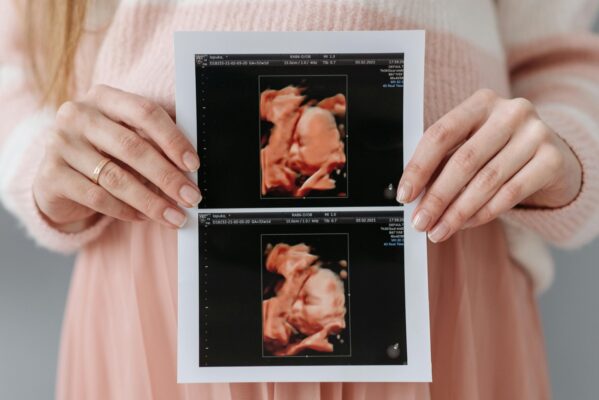
3D/4D imaging uses the same frequency and intensity as standard 2D ultrasound. The difference is how the machine processes the returning echoes.
Key Clarifications:
- 3D = still image made from many slices
- 4D = 3D image in motion (real-time)
- HD Live = 3D with advanced lighting & shading effects
None of these modes require higher power levels. They simply use more advanced software to render the images beautifully.
What the Research Says: 50+ Years of Study
Ultrasound safety has been studied across multiple decades, including:
- Long-term epidemiological studies
- Large-scale population studies
- Clinical trials
- Animal studies
- Thermal safety studies
- Cellular biology research
Across this body of evidence, ultrasound has consistently shown an excellent safety profile when used appropriately.
Major Research Conclusions Include:
- No increased risk of birth defects
- No increased risk of developmental delays
- No increased risk of hearing issues
- No link to miscarriage
- No association with behavioral or neurological disorders
These findings apply to both medical and elective ultrasound, since the technology is the same.
The ALARA Principle: Why Safety Depends on Technique
Every trained ultrasound professional follows ALARA:
This principle ensures:
- Power output is kept low
- Scanning time is controlled
- Safe presets are used
- Non-diagnostic operators stay within proper boundaries
Elective ultrasound studios using professional machines already have OB-safe presets built in, making ALARA compliance easy and automatic when properly trained.
Do Elective Ultrasounds Use Higher Power?
No—high-quality elective ultrasound machines (Samsung HS50/HS60, GE Voluson S8/S10, Mindray Z60/Z70) are designed with pregnancy in mind.
They include:
- Pre-programmed obstetric safety presets
- Automatic power control settings
- Thermal and mechanical index monitoring
- Safe depth penetration adjustments
In fact, elective ultrasound often uses less power than some diagnostic protocols because it doesn’t use Doppler—which is what produces higher energy pulses.
Addressing Common Myths About Ultrasound Safety
Myth #1 — “3D ultrasound uses stronger waves.”
Fact: It doesn’t.
3D is simply a different processing method—NOT higher energy.
Myth #2 — “Ultrasound heats the baby.”
Fact: Not with correct settings.
Professional machines are designed to keep thermal index (TI) extremely low during OB presets.
Myth #3 — “Elective ultrasound isn’t regulated.”
Fact: It is regulated—just differently.
Elective ultrasound is regulated by business law, imaging laws, equipment laws, and safety protocols such as ALARA.
Myth #4 — “Too many ultrasounds are harmful.”
Fact: No research confirms this.
The number of ultrasounds is less important than the quality of training and the safety of machine operation.
Who Ensures Ultrasound Safety?
Multiple agencies and organizations contribute to ultrasound safety guidelines, including:
- Professional training organizations (like Ultrasound Trainers)
- FDA equipment standards
- AIUM guidelines for safe ultrasound use
- State imaging regulations
- Machine manufacturers’ safety protocols
Even though elective ultrasound is non-diagnostic, the same safety principles still apply.
Why Elective Ultrasound Is Safe When Performed Correctly
A reputable elective ultrasound studio uses:
- High-quality FDA-approved machines
- Trained elective ultrasound sonographers
- Appropriate presets and depth levels
- Short, controlled scanning sessions
- Non-diagnostic procedures only
This is why proper training matters. Elective sonographers trained at a high standard consistently produce safe, beautiful imaging.
How Long Should an Elective Scan Be?
Typical elective ultrasound sessions last:
- 10–15 minutes for heartbeat scans
- 15–30 minutes for gender scans
- 20–40 minutes for 3D/4D or HD Live scans
These durations fall well within ALARA recommendations.
Special Considerations: When Parents Should Avoid Elective Ultrasound
Elective ultrasound is not a substitute for medical prenatal care. Parents should avoid elective scans temporarily if:
- They have not had any medical prenatal care
- Their medical provider advised against ultrasound
- They have a high-risk pregnancy requiring monitoring
Elective studios should always encourage parents to continue routine OB care and medical ultrasounds.
Safety Tips for Parents Choosing a Studio
If you’re an expecting parent, choose a studio that:
- Uses modern, FDA-approved machines
- Employs trained elective sonographers
- Follows ALARA safety guidelines
- Provides written non-diagnostic disclaimers
- Maintains a clean, professional environment
- Does not make medical claims
A reputable studio will happily answer any safety questions you have.
Safety Tips for Studio Owners
- Use only OB-safe presets
- Do not use Doppler in early pregnancy
- Control scan time—avoid long sessions
- Monitor TI (Thermal Index) and MI (Mechanical Index)
- Follow ALARA at all times
- Ensure your staff is trained professionally
Training programs like Ultrasound Trainers emphasize safety and technique to ensure compliance.
Frequently Asked Questions
Yes—when performed with proper training and OB-safe presets, elective ultrasound is considered very safe.
Does HD Live use more power?
No, HD Live uses the same sound waves—it only enhances how the image is rendered.
Can too many ultrasounds hurt the baby?
No research shows harm from multiple ultrasounds when performed according to ALARA.
Is elective ultrasound safe in the first trimester?
Yes, when kept short and performed using appropriate safety settings.
Do elective ultrasound techs need medical licenses?
Not in most states, but proper elective ultrasound training is essential for safe scanning.
Final Thoughts: Ultrasound Remains One of the Safest Prenatal Imaging Technologies
When done correctly, 3D, 4D, and HD Live ultrasounds are extraordinarily safe. They use the same technology as medical ultrasound, follow the same safety principles, and rely on decades of research supporting their use.
For families, elective ultrasound offers bonding, joy, and connection. For studios, safety is a foundation—not something optional. With proper training, professional equipment, and ALARA compliance, elective ultrasound remains a safe, beautiful way to experience pregnancy.
Join the Conversation
Do you have questions about ultrasound safety? Comment below! And if this guide helped you feel more confident, please share it with expecting parents and future studio owners.

Training Only vs Turnkey Ultrasound Business Package: Which Fits You?
Compare training only vs turnkey ultrasound business package options to see which path fits your[...]

How Sonographers Can Start Their Own Elective Ultrasound Studio
Sonographers have strong technical skills but often misunderstand what owning an elective studio requires. This[...]
Average Revenue of a 4D Ultrasound Business: A Complete Planning Reference
What's the average revenue of a 4D ultrasound business? This complete guide covers revenue variables,[...]

Best Portable 4D Ultrasound Machines for Elective Ultrasound Startups: What to Know
Considering a portable 4D ultrasound machine for your elective startup? This guide separates the myths[...]

Hands-On vs Online Elective Ultrasound Training: Which One Fits You?
Compare hands-on vs online elective ultrasound training for future studio owners. See what each format[...]

Why Your 3D 4D Ultrasound Images Look Blurry and How to Fix It
Struggling with blurry 3D 4D ultrasound images? This step-by-step guide covers the most common causes[...]
Who Can Legally Own an Elective Ultrasound Business? What the Rules Actually Say
The legal ownership question for elective ultrasound businesses is more open than most people assume.[...]
Starting an Elective Ultrasound Business Part-Time: A Realistic Guide
Starting an elective ultrasound business while keeping another income source is a smart approach for[...]

How to Finance an Elective Ultrasound Machine: A Step-by-Step Guide for Studio Owners
Learn exactly how to finance an elective ultrasound machine. This step-by-step guide covers loan types,[...]

Can a Med Spa Add Elective Ultrasound Services? What It Actually Takes
Med spas considering elective ultrasound as an add-on service need to understand training, equipment, compliance,[...]

Ultrasound Business Income Breakdown by Location and Pricing: What Changes Your Monthly Revenue
Ultrasound business income breakdown by location and pricing. See how market, packages, overhead, and positioning[...]
How Profitable Is a Keepsake Ultrasound Business? What Really Drives Profit
How profitable is a keepsake ultrasound business? See what affects revenue, margins, overhead, and long-term[...]
