

Elective ultrasound training in Hawaii draws a specific kind of person: someone who sees the state’s tourism-driven economy, its high concentration of expectant military families, and its genuinely underserved elective imaging market as a real business opportunity, not just a backup plan. Before you enroll in any program, the decisions you make in the next few weeks will shape whether you open a studio that books consistently or one that struggles to find its footing.
Elective ultrasound training in Hawaii equips you to operate a keepsake 3D/4D ultrasound studio for bonding and prenatal memory purposes. Programs cover machine operation, image optimization, and business basics. No medical license is required to offer elective scanning, but program quality and hands-on practice time vary significantly. Research both before committing.
Last Updated: July 2025
What Elective Ultrasound Training in Hawaii Actually Covers
Elective ultrasound training in Hawaii prepares you to operate a keepsake scanning studio, not a clinical facility. The training focuses on 3D and 4D imaging for expectant families who want a bonding experience and a visual memory of their pregnancy. You learn to work the equipment, optimize images for different gestational windows, and run sessions professionally. Nothing in this training qualifies you to diagnose, interpret clinically, or replace the prenatal care a client receives from their OB or midwife.
That distinction matters more in Hawaii than in many mainland states. The Hawaiian market attracts clients who already have strong cultural connections to pregnancy ceremonies and family milestones. They come in expecting a warm, professional experience. If your training leaves you uncertain behind the machine, that shows immediately.
Good programs go beyond machine buttons. They build your confidence with real clients, teach you how to handle difficult imaging situations (high BMI, posterior placenta, active babies), and give you the business vocabulary to price your packages, explain your service clearly, and convert a curious inquiry into a booked appointment.

Why the Hawaii Market Rewards Well-Trained Operators
According to the U.S. Census Bureau, Hawaii has one of the highest median household incomes in the nation and a population that spends more per capita on experiences than the national average. Families here are not looking for the cheapest option. They are looking for someone who knows what they are doing and creates an experience worth the price.
The state’s military population adds another consistent demand layer. Joint Base Pearl Harbor-Hickam, Schofield Barracks, Marine Corps Base Hawaii, and Camp Smith together represent tens of thousands of active-duty families cycling through Oahu alone. Military families are young, frequently pregnant, and highly social, meaning word-of-mouth travels fast through those communities.
None of that market potential matters if you arrive undertrained. The expectation gap between what clients pay and what an undertrained operator delivers is where studios lose their Google reviews before they have ten of them.
What to Look For in a Training Program Before You Sign
The program format is the first thing to scrutinize. Online-only training produces operators who can pass a knowledge quiz but freeze when a client is on the table and the image is poor. Hands-on, in-person instruction with real clients and diverse scanning scenarios is what actually builds competence.
Ask every program you consider these questions:
- How many live-client scanning sessions are included?
- Does the instruction cover image optimization across different gestational ages, not just ideal conditions?
- Is business setup included, or do you get scanning skills and nothing else?
- What ongoing support exists after training ends?
- Does the program train you on equipment comparable to what you plan to purchase?
A program that checks every technical box but offers nothing on business operations will leave you competent behind the machine and completely unprepared to run a profitable studio. The two go together.
The Regulatory Reality for Elective Studios in Hawaii
Hawaii does not require a medical license to operate an elective keepsake ultrasound studio. The distinction between elective scanning for bonding purposes and diagnostic ultrasound performed for medical evaluation is the line that keeps non-clinical operators within legal boundaries. Elective studios do not diagnose. They do not produce reports. They do not advise on clinical findings.
That said, regulatory environments shift. Before opening, consult a Hawaii-licensed attorney or business compliance advisor who understands healthcare-adjacent service businesses. Requirements around business licensing, liability insurance, and professional scope of practice can evolve, and what a training program tells you about regulations reflects the environment when the program was written, not necessarily today.
In-Person Training vs. Online-Only: What the Gap Actually Costs You
According to the Bureau of Labor Statistics, the average diagnostic medical sonographer completes a two-year accredited program with significant hands-on clinical hours. Elective ultrasound training is not held to the same standard, which means the floor for program quality is very low.
Online-only programs are cheaper and convenient. They are also the reason some studios produce poor image quality for the first year of operation. Poor image quality means disappointed clients. Disappointed clients do not refer their pregnant friends.
In-person training is a higher upfront investment, but the return shows up in your scan results and your confidence with paying clients on day one. We’ve worked with studio owners across multiple markets and the pattern holds: operators who trained hands-on book repeat visits and generate stronger word-of-mouth than those who learned on video alone.
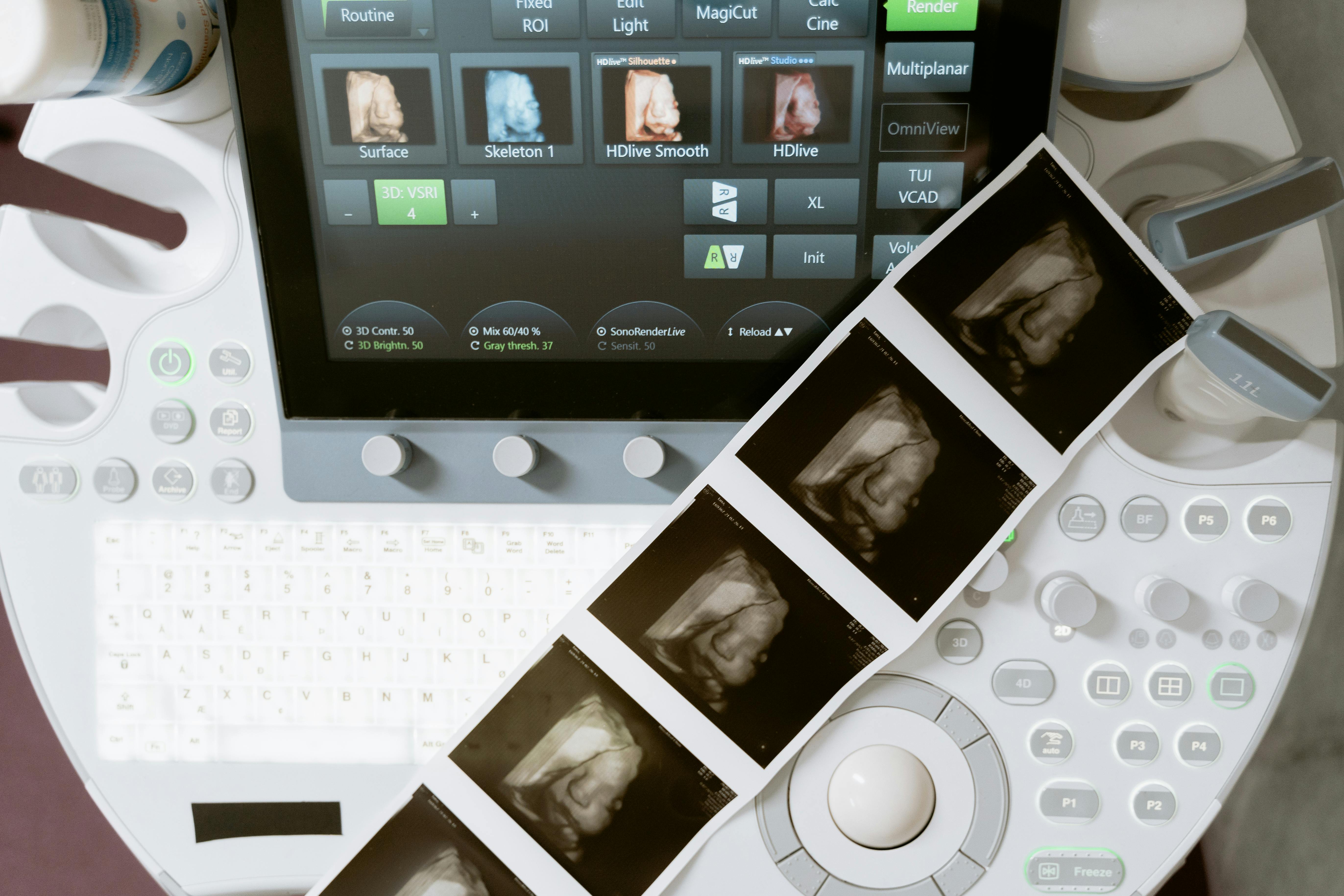
Moving From Training Into a Hawaii Ultrasound Studio
Training completion is not a business launch. Between finishing your program and opening to the public, you still need to secure a commercial space or mobile operation setup, purchase equipment, sort your business licensing, get your liability insurance in place, build out your booking system, and start building local awareness.
Hawaii adds one layer most mainland markets skip: the cost of equipment logistics. Shipping ultrasound equipment to Hawaii, particularly to neighbor islands, involves longer lead times and higher freight costs than continental US locations. Build that into your timeline and your budget before you assume you can open three weeks after training ends.
A training program that includes business planning, site selection guidance, and startup support compresses the gap between training completion and first paying client. That compression has real financial value, because every month between training and opening is a month of overhead with no revenue.
Frequently Asked Questions
Do I need a medical background to enroll in elective ultrasound training in Hawaii?
No medical background is required. Elective ultrasound programs are designed specifically for non-clinical operators. Your ability to create a professional experience and learn the equipment correctly matters far more than whether you have prior healthcare experience.
How long does elective ultrasound training typically take?
Most in-person programs run three to four days. That concentrated format is practical for people traveling from Hawaii to complete training on the mainland, which many Hawaii-based operators do. The quality of what happens in those days matters more than the day count.
Is there local elective ultrasound training available in Hawaii?
Established training programs based in Hawaii are limited. Most serious training happens on the mainland. Some providers offer on-site instruction at your location if you already have equipment, which can be practical for Hawaii operators who want to train without a long-distance trip.
What does elective ultrasound training typically cost?
Training costs vary significantly by program. Hands-on private instruction is priced at a premium compared to online-only options. When you are evaluating cost, factor in what you get: live client practice, business guidance, and ongoing support have direct value that online videos do not replicate.
Ready to Explore Elective Ultrasound Training in Hawaii?
The Hawaii market is genuinely well-positioned for elective ultrasound studios that know what they are doing. The demand is there. The competitive density is low. The clients are willing to pay for a quality experience.
What separates the studios that thrive from those that stall is almost always the quality of the training behind the operator. Get that part right and the rest of the business is buildable.
Explore Your Training Options With Ultrasound Trainers
If you are evaluating elective ultrasound training programs for a Hawaii studio, Ultrasound Trainers can help you understand what strong training actually looks like, what questions to ask, and how to pair the right program with your business goals. Reach out to start the conversation.
Contact Ultrasound TrainersLast Updated: July 2025
Get the Inside Track
Training tips, business advice, and exclusive deals delivered straight to your inbox.

How to Build a Pre-Launch Marketing Campaign for Your Elective Ultrasound Studio: A 60-Day Countdown Plan
Pre-launch marketing for an elective ultrasound studio begins 60 days before opening. This 60-day countdown[...]

What Career Changers in Hawaii Need to Know About Elective Ultrasound Training
Considering ultrasound training for a career change in Hawaii? This Q&A guide covers what training[...]

How to Find and Recruit Volunteer Scan Models for Elective Ultrasound Practice
Finding volunteer models for elective ultrasound practice is a skill in itself. Learn where to[...]

How to Write an Elective Ultrasound Business Plan That Actually Works
Writing an elective ultrasound business plan? This guide covers what to include, how to build[...]

How to Open an Elective Ultrasound Business in Honolulu: A Practical Startup Guide
Open an elective ultrasound business in Honolulu with confidence. This guide covers training, startup costs,[...]

Adding Elective Ultrasound to an Existing Photography or Doula Practice in Montana
Montana birth photographers and doulas: adding an elective ultrasound add-on business in Montana to your[...]

Starting an Elective Ultrasound Business in Cheyenne, Wyoming: First-Mover Advantage in the Least-Crowded Market in the Country
Thinking about starting an elective ultrasound business in Cheyenne, Wyoming? This guide covers the F.E.[...]
Elective Ultrasound Training for Career Changers in Sweden
Considering a career change into elective ultrasound in Sweden? Find out what training involves, whether[...]

What Career Changers in Fayetteville Should Know About Elective Ultrasound Training
Thinking about elective ultrasound training in Fayetteville, Arkansas as a career changer? This Q&A guide[...]

The Biggest Mistake Las Vegas Elective Ultrasound Studios Make With Their Marketing
Elective ultrasound studio marketing in Las Vegas prioritizes trust and reviews over ad spend. Here's[...]

Mobile Elective Ultrasound for Baby Shower Events: Packages, Pricing, and Logistics
Mobile ultrasound baby shower events guide for elective studio operators. Covers package structure, pricing frameworks,[...]
Birth Center and Midwife Referral Partnerships: Building a Consistent Lead Pipeline for Your Studio
A birth center referral partnership for an elective ultrasound studio builds a consistent, high-converting lead[...]
