
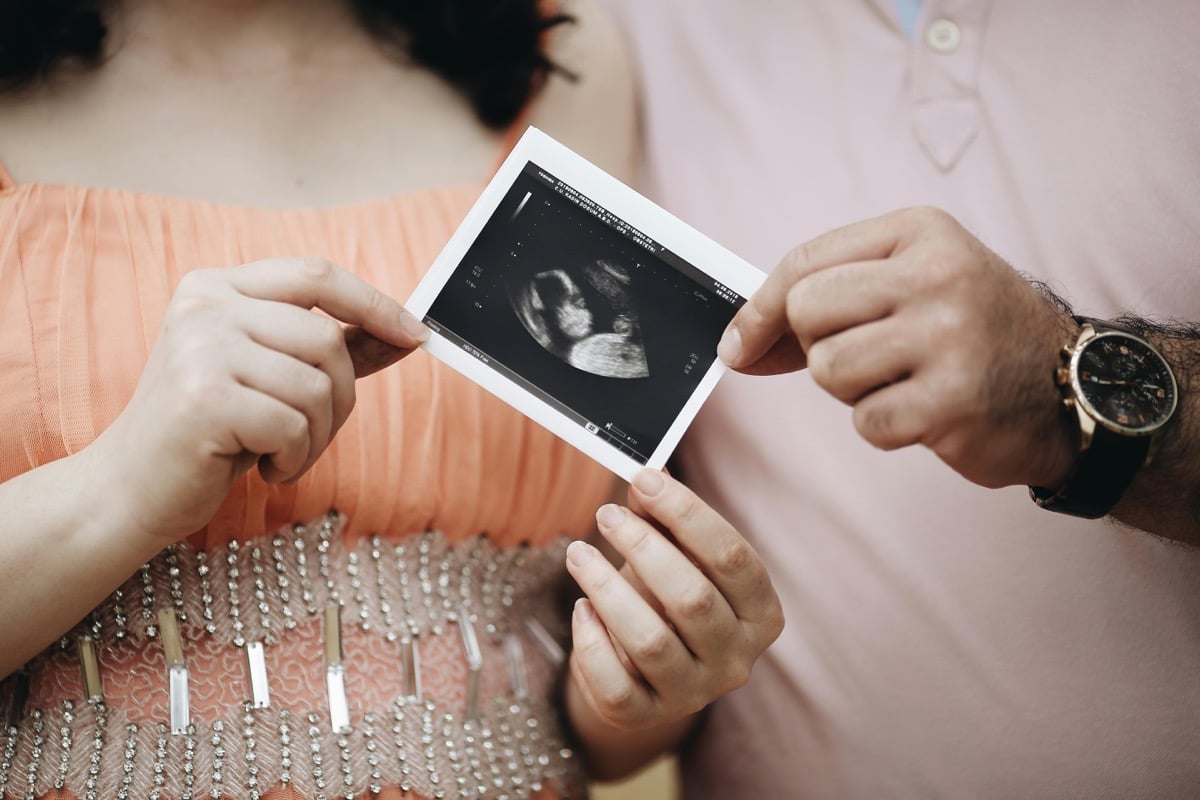
If you are researching elective ultrasound training, one of the first decisions you will face is this: do you want a program that trains you on scanning phantoms, or one that puts you in front of real pregnant clients during the learning process? It sounds like a clear choice on the surface — but the right answer depends on your learning goals, your timeline, and what your studio actually needs you to be ready for on day one.
Both formats exist for legitimate reasons. Phantoms are useful for introducing probe mechanics and basic spatial orientation without the pressure of a live human session. Real-client training covers the full range of variables that actually define elective scanning — movement, positioning, amniotic fluid behavior, emotional dynamics, and the unpredictable human anatomy that phantoms simply cannot replicate. Understanding what each format teaches — and what it does not — is how you make the right call for your situation.
| Factor | Phantom-Based Training | Real-Client Training |
|---|---|---|
| Scanning realism | Limited — phantom tissue does not behave like live anatomy | Full — real amniotic fluid, fetal movement, client interaction |
| Image variability | Consistent, predictable output | Variable, mirrors real studio conditions |
| Stress preparation | Low — no client expectations involved | High — builds composure under real conditions |
| Technique correction | Possible, but feedback is limited | Immediate, real-world feedback on results |
| Prerequisite knowledge | Minimal — suitable for absolute beginners | More productive after basic probe mechanics are established |
| Client management skills | Not covered | Integrated — positioning, communication, expectation setting |
| Suitability for studio launch | Lower — additional practice needed before live sessions | Higher — directly mirrors the work of opening sessions |
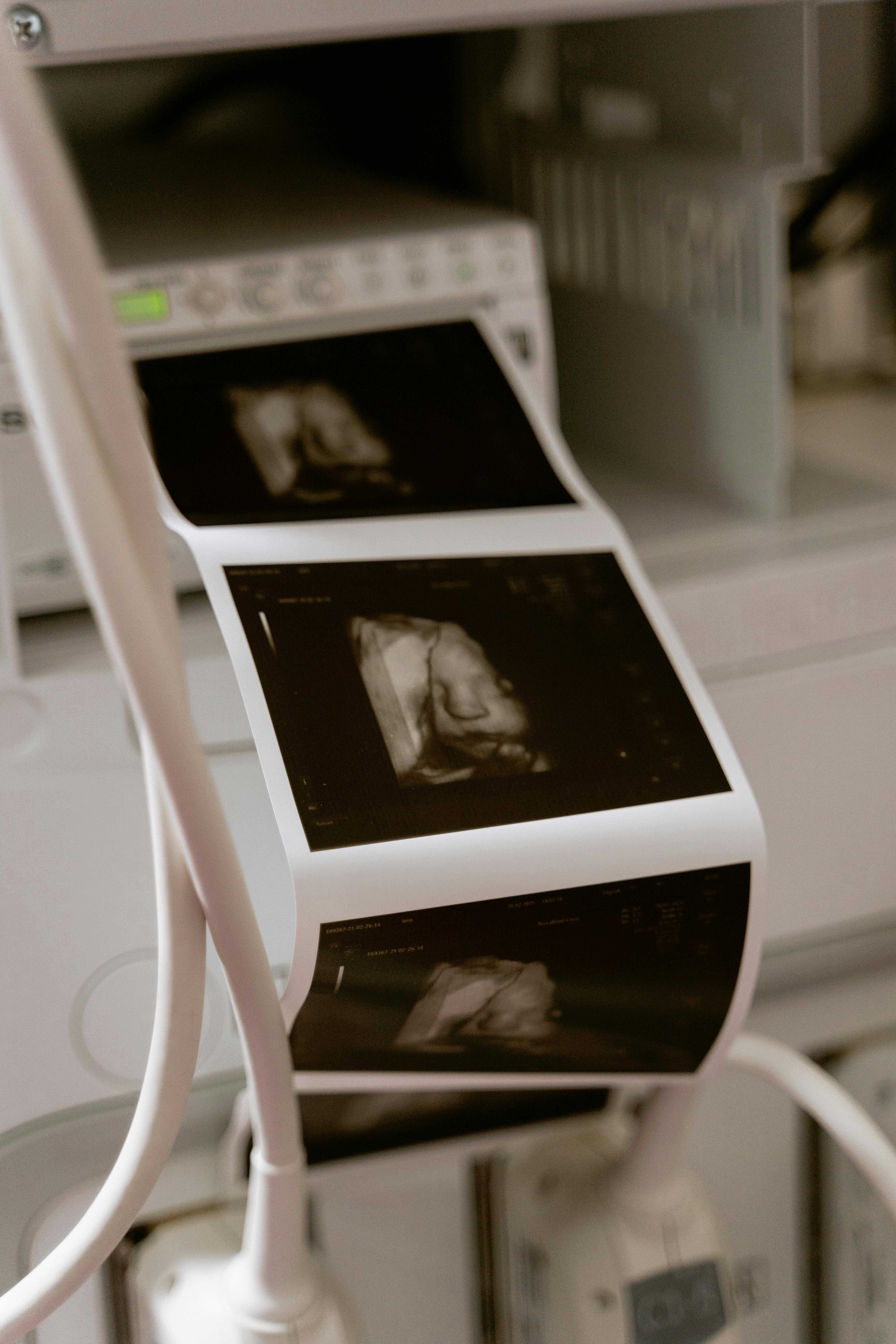
What Phantom-Based Ultrasound Training Offers
Scanning phantoms are structured models designed to simulate the acoustic properties of human tissue and allow probe practice without a live subject. They are commonly used in hospital and clinical training programs as a first exposure to probe mechanics, image orientation, and basic scanning protocol. The benefit is predictability: the phantom behaves the same way every time, which allows focused repetition without the variable of a real client’s anatomy, positioning, or comfort level.
For complete beginners who have never held a probe, phantom training removes some of the early anxiety of the learning process. You can practice holding the probe correctly, adjusting gain, and interpreting a basic image without worrying about a client’s experience in the room. That is a legitimate use case, especially if the alternative is jumping directly into a live session with no mechanical preparation at all.
What phantom training does not offer is the full range of challenges that define real elective scanning. A phantom has no amniotic fluid, no fetal movement, no maternal body habitus variation, no moments where the baby’s face is pressed against the uterine wall, and no client who is emotionally invested in the quality of the image. Phantom-trained operators who move directly into live sessions frequently discover that the controlled learning environment left significant gaps in their practical readiness.
What Hands-On Training with Real Pregnant Clients Provides
Real-client training puts the trainee in the actual conditions of elective ultrasound practice — scanning a live pregnant client, interpreting the image in real time, navigating fetal positioning, managing client expectations, and producing results under the same emotional and environmental pressures that a real studio session involves. This format does not remove difficulty. It introduces difficulty deliberately, because difficulty is what produces durable competence.
The learning that happens in a real-client session is qualitatively different from phantom practice. When the baby moves and the image changes, the trainee has to respond. When the fetal face is blocked by a limb, the trainee has to find a different approach. When the client asks why the image looks different from what they saw online, the trainee has to manage that conversation without losing focus on the scan. None of those skills are developed in phantom training. All of them are developed in real-client sessions.
The tradeoff is that real-client training requires some foundational preparation to be productive. Walking into a live session with no prior probe experience is overwhelming in a different way — too many new variables at once. The most effective programs combine phantom-assisted introduction with real-client practice, structured so that the foundational mechanics are established before the trainee is placed in front of a live subject.
Who Real-Client Training Is Right For
If you are preparing to open an elective ultrasound studio and you are training yourself or your staff for live sessions, real-client training is the format most directly aligned with what your business needs. You are not training for an exam or a clinical certification. You are training to deliver a consistent, professional client experience from your very first appointment. That readiness comes from practicing the actual activity, not a simplified version of it.
Career changers who want to move into elective scanning with no prior medical or imaging background benefit most from a combined format: foundational probe instruction followed by real-client practice under supervised conditions. Healthcare professionals who already have scanning experience from clinical settings often adapt faster in real-client environments because they already have baseline probe comfort and can focus on the elective-specific nuances — client communication, imaging for bonding and keepsake purposes, and the aesthetic quality expectations that differ from diagnostic scanning.
Who Phantom Training Is Right For
Phantom training is a reasonable entry point for someone who has never touched a probe and needs to build basic confidence before stepping into a real-client environment. It is also useful for specific skill repetition — practicing image orientation, understanding gain response, or learning probe mechanics — in a controlled, zero-pressure context. If you are adding an additional operator to a team that already has an experienced scanner available for mentorship, starting with phantom practice before supervised real-client sessions is a reasonable progression.
Phantom training is not a complete preparation for elective studio work on its own. If a training program’s primary or only practical component is phantom practice, you should ask specifically how the curriculum bridges from phantom work to real-client performance before completing training.
People Also Ask
Is it possible to learn elective ultrasound without any phantom training?
Yes. Many programs — including private on-site training formats — focus primarily or exclusively on real-client and training phantom combinations, covering foundational mechanics through both. The key is having supervised real-client practice as a component of the program, not phantom-only training that never bridges to live scanning.
How many real-client scans does it take to feel confident?
The number varies by the individual’s background and how quickly they develop probe confidence and image recognition. Most operators who complete structured training with real-client practice have enough foundation to handle their early studio sessions. Continued practice during those first weeks of live operation is where lasting confidence actually builds — the training program prepares you to learn from real sessions, not to be finished learning before them.
Can pregnant models be arranged through a training program?
Some private on-site programs include real-client components using pregnant clients arranged by the training provider as part of the session structure. This is something to confirm specifically with any program you evaluate. Ultrasound Trainers conducts training using both training phantoms and real clients to ensure trainees practice across the full range of real-world conditions.
Does training with a real client change what you learn compared to a phantom?
Yes, significantly. Real clients introduce fetal movement, variable positioning, amniotic fluid dynamics, maternal body habitus differences, and the emotional weight of a client who has expectations for the session. These variables are absent in phantom training. Learning to manage them is a core part of developing real-world elective scanning competence.
Ready to Train on Real Cases?
Ultrasound Trainers provides private hands-on training that includes real-client scanning practice. If you want to understand what the training involves and whether it is the right fit for your goals, contact our team to talk through your situation and training objectives.
Ultrasound Trainers offers private on-site elective ultrasound training for individuals and studio teams. Training is conducted at your location, on your equipment, and includes real-client scanning components designed to prepare you for live studio sessions from the start.
Last Updated: March 2026

How to Get More Bookings for Your Elective Ultrasound Studio in Montana
Struggling to fill your elective ultrasound booking calendar in Montana? This guide covers what actually[...]

Buying an Elective Ultrasound Machine for an Arkansas Studio: What Actually Matters
Ready to buy an elective ultrasound machine for your Arkansas studio? This guide covers the[...]

How to Build a Pre-Launch Marketing Campaign for Your Elective Ultrasound Studio: A 60-Day Countdown Plan
Pre-launch marketing for an elective ultrasound studio begins 60 days before opening. This 60-day countdown[...]

What Career Changers in Hawaii Need to Know About Elective Ultrasound Training
Considering ultrasound training for a career change in Hawaii? This Q&A guide covers what training[...]

How to Find and Recruit Volunteer Scan Models for Elective Ultrasound Practice
Finding volunteer models for elective ultrasound practice is a skill in itself. Learn where to[...]

How to Write an Elective Ultrasound Business Plan That Actually Works
Writing an elective ultrasound business plan? This guide covers what to include, how to build[...]

How to Open an Elective Ultrasound Business in Honolulu: A Practical Startup Guide
Open an elective ultrasound business in Honolulu with confidence. This guide covers training, startup costs,[...]

Adding Elective Ultrasound to an Existing Photography or Doula Practice in Montana
Montana birth photographers and doulas: adding an elective ultrasound add-on business in Montana to your[...]

Starting an Elective Ultrasound Business in Cheyenne, Wyoming: First-Mover Advantage in the Least-Crowded Market in the Country
Thinking about starting an elective ultrasound business in Cheyenne, Wyoming? This guide covers the F.E.[...]

Elective Ultrasound Training for Career Changers in Sweden
Considering a career change into elective ultrasound in Sweden? Find out what training involves, whether[...]

What Career Changers in Fayetteville Should Know About Elective Ultrasound Training
Thinking about elective ultrasound training in Fayetteville, Arkansas as a career changer? This Q&A guide[...]

The Biggest Mistake Las Vegas Elective Ultrasound Studios Make With Their Marketing
Elective ultrasound studio marketing in Las Vegas prioritizes trust and reviews over ad spend. Here's[...]
Sign up for our newsletter
Sign up for our newsletter and be the first to get the latest updates and exclusive discounts delivered directly to your inbox!
Explore all training formats, durations, and programs in our complete elective ultrasound training guide.
