

When you are responsible for getting your team ready, the training program you choose does not just teach someone to scan — it sets the ceiling for what your studio can actually deliver.
Private on-site ultrasound training for staff is not a one-size-fits-all decision. The format, the instructor experience, the equipment your team trains on, and the structure of the curriculum all shape what they walk away knowing. In elective ultrasound, confidence behind the probe is not just a nice quality to have. It directly affects client satisfaction, image results, and the reputation your studio builds from the very first appointment.
The question most studio owners and practice managers ask first is where to go. The better question is what to actually look for when evaluating your options. This post covers what private on-site ultrasound training for staff involves, what separates a strong program from a forgettable one, and how to make a decision that serves your business for the long term — not just for the three days the instructor is in the room.
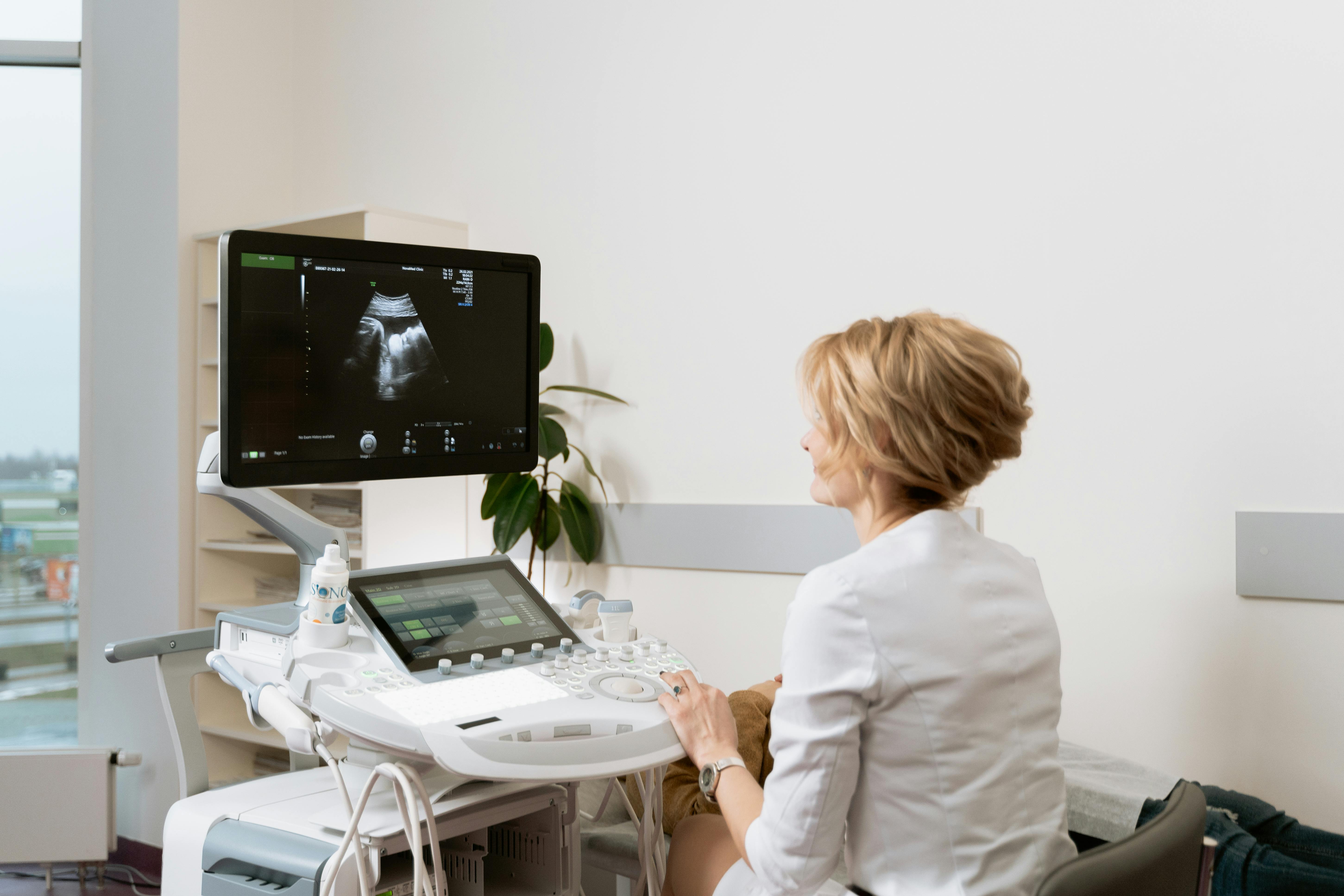
Why On-Site Training Produces Different Results Than Off-Site Programs
The difference between traveling to a training facility and having an instructor come to your location is not just a matter of convenience. When training happens on your actual equipment, in your actual room, with your actual workflow in the background, the learning transfers differently and more completely.
Off-site programs often train on machines that are not yours. That means your staff learns scanning technique on hardware they will never use again the moment training ends. When they return to your studio and sit down at your equipment, the settings look unfamiliar. The image response behaves differently. The muscle memory built during two or three training days has to be recalibrated on the fly, under the pressure of real client sessions.
Private on-site ultrasound training for staff eliminates that gap. The instructor optimizes your machine during the session itself. Your team learns the presets, the probe mechanics, and the scanning workflow on the exact system they will use every single day. That is fundamentally different learning, and it tends to produce faster real-world results — especially in the critical first few weeks when your team is building live-session confidence.
What a Strong On-Site Training Program Actually Covers
Not all training programs are structured the same. Some are heavy on theory and light on practice. Others give your team plenty of hands-on time but skip the professional side of running sessions well. A genuinely effective private on-site program for elective ultrasound staff should address several layers.
The technical side includes 3D and 4D scanning fundamentals, machine setup and image optimization, probe positioning, gain and depth adjustments, and how to capture the kinds of images clients actually want from a keepsake experience. This is not diagnostic training. The goal is to produce clear, emotionally resonant images that families will treasure — and to do that consistently, session after session.
Most strong programs also include gender determination training. This means learning the specific technique for early gender scanning at 15 to 16 weeks, including how to recognize fetal positioning, manage variables like gestational age and maternal body composition, and coach the client through repositioning when needed. This is one of the most requested elective services, and getting it right under real conditions requires more than a quick demonstration.
Beyond pure scanning skills, a well-rounded program teaches your team how to run a session professionally. How to explain what is happening on the screen without causing confusion or alarm. How to manage client expectations about image quality when positioning is not ideal. How to handle a scan that is not going smoothly without making the room anxious. These are the soft skills that turn a technically capable operator into someone who creates genuinely memorable experiences.
The Value of Training on Real Clients
“Practicing on a phantom teaches you where to place the probe. Practicing on a real pregnant client teaches you how to think on the fly, communicate clearly, and keep the session moving when the baby decides not to cooperate.”
There is a meaningful difference between training with a phantom model and training with actual pregnant volunteers. Phantoms are useful for learning the basic mechanics of probe movement and image adjustment. They do not, however, breathe, shift position unexpectedly, or require you to explain anything to a nervous mother while simultaneously optimizing your gain settings.
Real clients introduce variables that no phantom can replicate. The baby moves. The positioning changes. The family is watching the screen and asking questions in real time. Your staff has to scan and communicate simultaneously while managing the room’s energy. That is the real skill set behind a successful elective ultrasound session, and it only develops through actual practice with real people.
When evaluating any private on-site program, ask directly whether real client practice is included or whether the training relies solely on phantom use. If the answer is phantom only, find out how the provider plans to bridge that gap before your team runs their first live session. That bridge matters more than most training providers acknowledge.
What to Ask Before You Book
Before committing to any private on-site training program for your staff, ask about the instructor’s specific background in elective, non-diagnostic ultrasound. Medical ultrasound experience and elective ultrasound experience are related but not the same. An instructor with years in hospital-based diagnostic imaging may know equipment well but may not fully understand the specific techniques, client management approach, and business context that make elective sessions successful.
Ask what happens after the training ends. Some programs finish on day three and leave your team to sort out the rest independently. Others provide ongoing phone or email access for questions that come up once your staff is running live sessions. Post-training support often matters as much as the training itself, especially during the first 60 to 90 days when your team is building real-world consistency.
Ask about documentation and reference materials. A strong training program does not send your staff home empty-handed. Look for written guides your team can return to when they hit a specific challenge on a scan: positioning reference sheets, machine optimization notes, scanning workflow checklists. These are what prevent regression between training and the first busy week of live appointments.
Matching the Training to Your Studio’s Specific Needs
The program that is right for one studio may not be right for yours. A team of three with no prior imaging experience has very different needs than a solo operator who already holds clinical credentials and wants to make the transition to elective work.
Think about your staff’s actual starting point. If you are training people with no imaging background whatsoever, the program needs to allocate time to foundational understanding before getting into technique. If your team already has some scanning experience from a clinical context, a strong instructor will assess where they actually are and adjust — rather than running through a fixed script regardless of the room’s ability level.
Think also about the scope of services your studio plans to offer. If you are focused primarily on HD imaging and early gender scans, the training should emphasize those specific capabilities. If you plan to offer a broader range of elective sessions — heartbeat records, 2D anatomy views, late-pregnancy 4D sessions — the program needs to cover all of those scenarios with real practice time built in for each one.
How Ultrasound Trainers Structures Private On-Site Training
The private hands-on training program at Ultrasound Trainers is conducted at the client’s location, using the client’s own equipment. The session runs over three days and covers 3D and 4D scanning technique, early gender determination, 2D methods, image optimization specific to your machine, and hands-on practice with real clients and training phantoms. The goal is not a certificate. It is a team that can run full sessions independently with genuine confidence.
The question we hear most often from studio owners preparing for training is whether three days is enough. The honest answer is that three days of structured, hands-on instruction on your own equipment, with real client practice built in, can build a strong working foundation. What turns that foundation into real-world mastery is consistent practice in your first weeks of live sessions — with support available when specific questions come up along the way.
If you are at the stage of evaluating private on-site training, do not let price be your primary filter. Evaluate programs based on what your staff will actually be able to do when the instructor walks out the door on day three. That is the only metric that matters for your studio and your clients.
Ready to Talk About Training for Your Team?
If you want to understand what private on-site ultrasound training would look like for your specific studio, staff setup, and equipment, reach out to the Ultrasound Trainers team. We can walk you through the program structure, help you figure out the right timing, and answer questions about what to expect before, during, and after training.
People Also Ask
How long does private on-site ultrasound training for staff take?
Most private on-site elective ultrasound training programs run two to four days, depending on the provider and the curriculum scope. The Ultrasound Trainers private program is structured as a three-day on-site session. The right duration for your team depends on their starting skill level, how many people are being trained at once, and how broad the range of services your studio intends to offer. A program that feels rushed rarely produces the scan confidence your team needs before their first live client.
Can my staff be trained without any prior medical or imaging experience?
Yes. Many successful elective ultrasound studios have trained staff with no prior medical background. Elective ultrasound is not diagnostic imaging, and the skills involved are learnable by people without clinical credentials when the training is structured appropriately and gives adequate hands-on practice time. The key is a program that builds foundational understanding before moving into technique and provides post-training support as your team gains real-world experience.
Is it better to bring a trainer to my location or send staff to a training site?
For most elective ultrasound studios, bringing the training to your location produces better practical results. When training happens on your actual machine in your actual space, your staff builds habits and muscle memory specific to the equipment they will use every day. That eliminates the translation gap that happens when people train on unfamiliar hardware and then have to adapt back to their own system under the pressure of real appointments.
What should private on-site ultrasound training cover for a keepsake studio?
A well-structured program for a keepsake elective ultrasound studio should cover 3D and 4D scanning technique, image optimization for your specific machine, early gender determination training, 2D scanning fundamentals, hands-on practice with real clients and phantoms, and the client communication skills that make sessions run smoothly. Programs that skip the professional communication side often produce technically capable operators who struggle to create the experience clients are actually coming for.
How do I verify that a training provider has real elective ultrasound experience?
Ask directly about their specific background in non-diagnostic, elective scanning. Ask how many studios they have trained, what types of businesses those studios serve, and whether they have operated or supported an elective ultrasound studio themselves. Elective ultrasound is a distinct environment from clinical or hospital-based diagnostic scanning, and genuinely experienced trainers understand both the technical side and the business context that surrounds it.
Does the equipment matter during training?
Yes, significantly. The machine your staff trains on shapes the specific settings awareness, probe handling habits, and workflow patterns they develop. Training on a different machine than the one they will use every day means they need to relearn portions of that workflow when they return to your studio. This is the primary reason private on-site training — conducted on your own equipment — tends to produce faster readiness for live sessions than off-site programs using unfamiliar systems.
What kind of follow-up support should I look for after training?
At minimum, look for a provider who makes themselves available for phone or email questions in the weeks after training ends. The questions that matter most often come up during your first real client sessions, not during the training itself. Access to guidance during that first adjustment period significantly reduces the time it takes for your team to build genuine consistency and confidence in their technique.
How much does private on-site ultrasound training cost?
Pricing varies by provider and program scope. The Ultrasound Trainers private hands-on training program is priced at $10,000 for a three-day on-site session. When evaluating cost, think about what is included: curriculum depth, actual probe time per staff member, real client access, and post-training support all affect the total value. A lower-priced program that leaves your team underprepared for live sessions is not actually the better deal.
Ultrasound Trainers is a leading resource for elective ultrasound training, studio startup support, and equipment guidance. The team has worked with career changers, healthcare professionals, photographers, and entrepreneurs across the country who want to build successful elective ultrasound businesses. Training programs are designed to produce real scanning confidence and practical readiness, not just familiarity with the process. Learn more about the training program.
Last Updated: March 2026

How to Get More Bookings for Your Elective Ultrasound Studio in Montana
Struggling to fill your elective ultrasound booking calendar in Montana? This guide covers what actually[...]

Buying an Elective Ultrasound Machine for an Arkansas Studio: What Actually Matters
Ready to buy an elective ultrasound machine for your Arkansas studio? This guide covers the[...]

How to Build a Pre-Launch Marketing Campaign for Your Elective Ultrasound Studio: A 60-Day Countdown Plan
Pre-launch marketing for an elective ultrasound studio begins 60 days before opening. This 60-day countdown[...]

What Career Changers in Hawaii Need to Know About Elective Ultrasound Training
Considering ultrasound training for a career change in Hawaii? This Q&A guide covers what training[...]

How to Find and Recruit Volunteer Scan Models for Elective Ultrasound Practice
Finding volunteer models for elective ultrasound practice is a skill in itself. Learn where to[...]

How to Write an Elective Ultrasound Business Plan That Actually Works
Writing an elective ultrasound business plan? This guide covers what to include, how to build[...]

How to Open an Elective Ultrasound Business in Honolulu: A Practical Startup Guide
Open an elective ultrasound business in Honolulu with confidence. This guide covers training, startup costs,[...]

Adding Elective Ultrasound to an Existing Photography or Doula Practice in Montana
Montana birth photographers and doulas: adding an elective ultrasound add-on business in Montana to your[...]

Starting an Elective Ultrasound Business in Cheyenne, Wyoming: First-Mover Advantage in the Least-Crowded Market in the Country
Thinking about starting an elective ultrasound business in Cheyenne, Wyoming? This guide covers the F.E.[...]

Elective Ultrasound Training for Career Changers in Sweden
Considering a career change into elective ultrasound in Sweden? Find out what training involves, whether[...]

What Career Changers in Fayetteville Should Know About Elective Ultrasound Training
Thinking about elective ultrasound training in Fayetteville, Arkansas as a career changer? This Q&A guide[...]

The Biggest Mistake Las Vegas Elective Ultrasound Studios Make With Their Marketing
Elective ultrasound studio marketing in Las Vegas prioritizes trust and reviews over ad spend. Here's[...]
Sign up for our newsletter
Sign up for our newsletter and be the first to get the latest updates and exclusive discounts delivered directly to your inbox!
Explore all training formats, durations, and programs in our complete elective ultrasound training guide.
