

If you’re a nurse, sonographer, or other healthcare professional thinking about how to open an elective ultrasound studio in Waukesha, you’re weighing several big decisions at once: turnkey package or piece it together yourself, home-based or retail, part-time or full commitment. This guide compares the realistic paths side by side — with Waukesha’s specific market in mind.
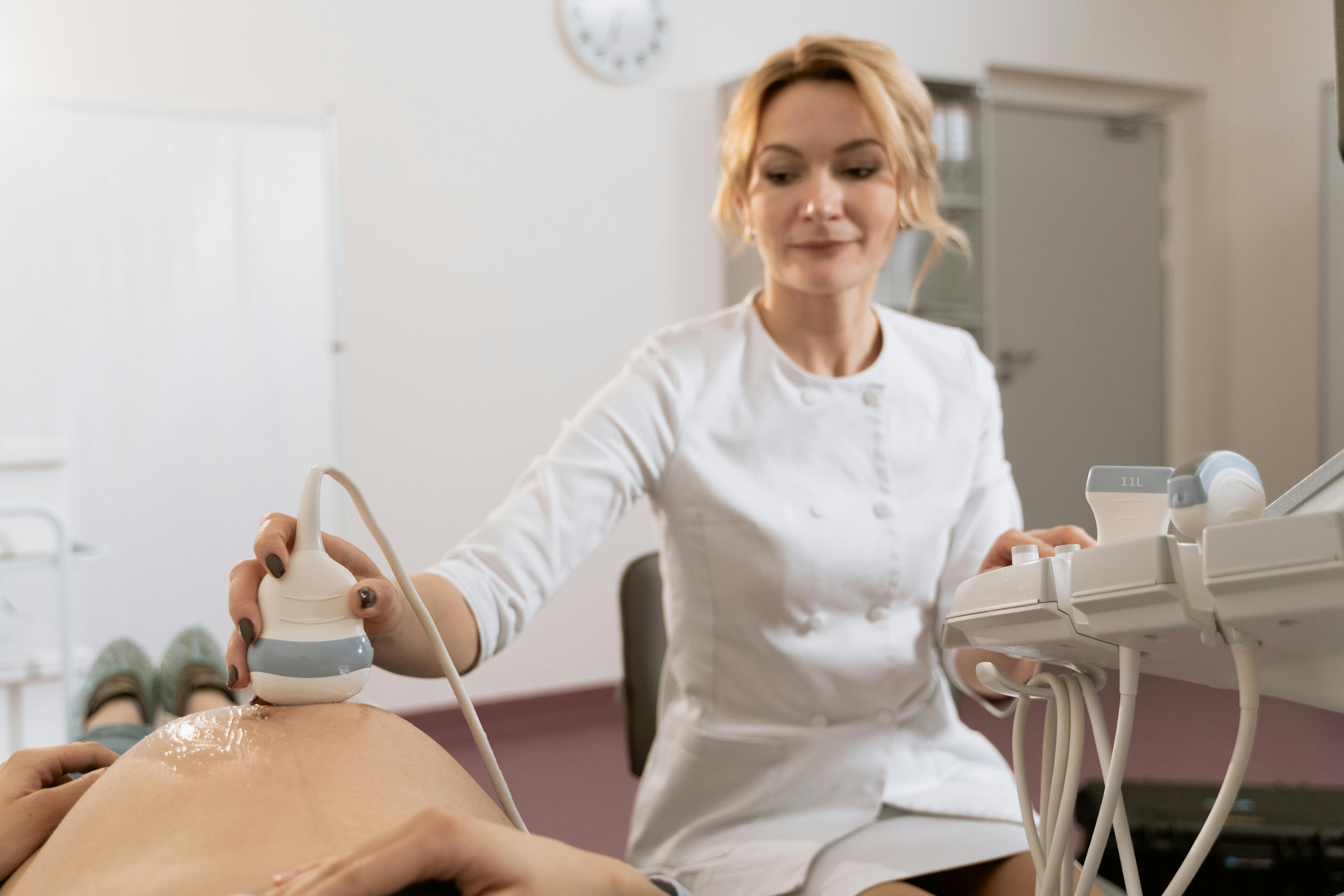
To open an elective ultrasound studio in Waukesha, healthcare professionals typically choose between three launch paths: a turnkey package (fastest, $55,000 to $95,000 all-in), DIY assembly (cheapest but slowest, $35,000 to $65,000), or a hybrid with training plus self-sourced equipment ($45,000 to $75,000). For most nurses and sonographers pivoting careers, the turnkey route in a small retail suite is the cleanest launch.
Why Waukesha Works for Healthcare Professionals
Waukesha sits in a sweet spot for someone making the jump from clinical work to studio ownership. It’s close enough to Milwaukee to draw from the full metro, but distinct enough to be its own market. Waukesha County is one of the most affluent counties in Wisconsin, with a strong young-family demographic that’s the core audience for elective ultrasound services. And it’s large enough to support a dedicated studio without being so saturated that you’re fighting three existing operators on day one.
For healthcare professionals specifically, Waukesha has another advantage: the existing medical presence in the area — ProHealth, Aurora, Froedtert — means there’s a deep bench of nurses, sonographers, and medical support staff in the region. If you’re part of that community, you already have referral pathways and credibility that take outsiders years to build.
Healthcare professionals often underestimate their biggest asset when opening an elective studio: trust. A credential plus a warm manner at the bedside translates directly into five-star reviews in this business.
Comparison #1: Turnkey vs DIY vs Hybrid Launch
This is the first decision you should make, because it shapes every other one. Here’s how the three paths compare for a Waukesha launch.
| Factor | Turnkey Package | DIY Assembly | Hybrid |
|---|---|---|---|
| All-in cost | $55,000–$95,000 | $35,000–$65,000 | $45,000–$75,000 |
| Time to open | 8–12 weeks | 5–9 months | 3–5 months |
| Training included | Yes, hands-on | Must source separately | Yes, hands-on |
| Equipment vetting | Done for you | Your responsibility | Partially |
| Brand/marketing | Template + guidance | Build from scratch | Partial support |
| Best for | Career changers, busy clinicians | Experienced business owners | Hands-on learners with time |
For a healthcare professional still working clinical hours while planning a pivot, the turnkey path is almost always the right answer. You’re buying back time, and you’re protecting yourself from the equipment-vetting mistakes that cost DIY operators tens of thousands of dollars when they buy the wrong machine from the wrong source.
Comparison #2: Home-Based vs Retail Studio in Waukesha
The second big decision is where your studio actually lives. Waukesha has real options at both ends. Here’s how they compare for a healthcare professional launching a new studio.
| Factor | Home-Based | Retail Suite |
|---|---|---|
| Monthly overhead | $0–$200 utilities add-on | $1,400–$2,800 (Waukesha area) |
| Zoning complexity | Check Waukesha home occupation rules | Straightforward commercial |
| Client perception | Mixed — depends on setup | Professional, polished |
| Growth ceiling | Limited by hours and space | Higher — can add staff |
| Privacy | Your home address on file | Separation maintained |
| Breakeven volume | Very low — 4–6 sessions/month | Moderate — 14–20 sessions/month |
A home-based launch in Waukesha is genuinely viable, especially for someone testing the waters part-time. The trade-off is real though: clients entering your home have a different expectation than clients entering a professional suite, and your growth is capped by the physical footprint you’ve carved out.
Most healthcare professionals we see succeed long-term end up in a small retail suite — often 600 to 900 square feet in a strip center along Sunset Drive, Highway 164, or out near Meadowbrook. The overhead feels scary at first, but once you hit 18 to 22 sessions per month, the retail environment starts paying for itself through both pricing power and review quality.
Comparison #3: Part-Time vs Full-Time Launch
This is the question almost every clinician asks first: can I do this on the side while I keep my nursing or sonography job? The answer is yes, but the shape of the business changes meaningfully based on the choice.
Part-Time Launch Profile
- Evening and weekend hours — typically Tuesday through Thursday evenings plus Saturdays
- 6 to 14 sessions per month, scaling with word of mouth
- Home-based or shared-space model usually makes more sense
- Keeps a stable income while the business builds
- Slower growth, but much lower risk profile
- Best for clinicians 2 to 5 years from fully transitioning
Full-Time Launch Profile
- Six-day schedule, typically Tuesday through Sunday
- 20 to 40 sessions per month within the first year for well-run studios
- Retail suite makes more sense given the hours
- Requires 6 to 9 months of personal runway in savings
- Faster growth, higher ceiling, higher stress
- Best for clinicians ready to leave clinical work entirely
For healthcare professionals in Waukesha, the pattern we see most often is a six-month to one-year part-time runway followed by a full-time transition once the appointment book is consistently full. That path de-risks the launch, lets you calibrate your pricing and packages with real Waukesha clients, and gives you confidence before you walk away from a reliable paycheck.
The Credential Advantage (and How Not to Lean on It Too Hard)
Healthcare credentials are an advantage in this business, but it’s important to frame them correctly. Elective ultrasound is a keepsake and bonding service — it is not a diagnostic medical imaging service. Your RN, RDMS, or sonographer credential gives clients confidence that their session will be conducted safely and professionally, but the service itself is recreational and explicitly non-diagnostic.
Most successful clinician-owned studios in Waukesha handle this by mentioning credentials matter-of-factly in the bio and the about page, not by leaning on them as a primary marketing angle. Registered Nurse, trained in 3D/4D keepsake imaging” reads professionally. “Medical-grade bonding sessions with a licensed nurse” reads like something that could get you in trouble with the Wisconsin Department of Safety and Professional Services.
For federal context on regulations around elective ultrasound, the FDA’s public guidance through the FDA consumer update on keepsake images is a useful reference for language choices on your website and consent forms.
What the First Year Typically Looks Like in Waukesha
Here’s a realistic first-year revenue picture for a turnkey launch in a small retail suite in Waukesha, run by a healthcare professional working the business full-time:
| Quarter | Monthly Sessions | Avg. Package | Monthly Revenue |
|---|---|---|---|
| Q1 (months 1–3) | 8–14 | $180 | $1,440–$2,520 |
| Q2 (months 4–6) | 14–22 | $195 | $2,730–$4,290 |
| Q3 (months 7–9) | 20–30 | $210 | $4,200–$6,300 |
| Q4 (months 10–12) | 24–38 | $215 | $5,160–$8,170 |
Those numbers assume a disciplined operator who invests in consistent social media presence, responds quickly to inquiries, and delivers a memorable in-studio experience. Waukesha’s demographics support the higher end of these ranges for studios that execute well.
Making the Decision: A Simple Framework
If you’re still circling the three comparisons above, here’s a framework that helps most healthcare professionals make a clean decision.
Pick turnkey if: You’re still working clinical shifts, you’ve never run a business, you don’t want to spend six months researching ultrasound machines, or you value speed of launch over saving the last $10,000.
Pick home-based if: You’re starting part-time, your home layout genuinely accommodates it, your Waukesha neighborhood zoning allows it, and you’re comfortable with clients coming to your address.
Pick part-time first if: You have a stable income you’re not ready to give up, you want to validate demand in Waukesha with real clients before committing fully, or you’re within two years of a natural career pivot moment.
The most common successful path we see for healthcare professionals in Waukesha: turnkey launch + home-based first year + part-time schedule + transition to retail suite and full-time at the 12 to 18 month mark. That’s a deliberately conservative launch that produces durable businesses.
Ready to compare training paths for your Waukesha studio launch?
We work with healthcare professionals across southeastern Wisconsin — private hands-on training, turnkey packages, and the exact support a clinician needs for a clean pivot into studio ownership.
Talk to Us About Your Waukesha Launch →For more on elective ultrasound training, equipment packages, and studio support specific to Wisconsin operators, visit our Wisconsin ultrasound training page.
People Also Ask
Can a nurse legally open an elective ultrasound studio in Waukesha?
Yes. Elective ultrasound is a non-diagnostic keepsake service and does not require a medical license to operate in Wisconsin, though a nursing or sonography background is a strong trust asset. Make sure your marketing language stays on the keepsake and bonding side rather than medical diagnosis.
How much does a turnkey Waukesha studio launch actually cost?
For a well-equipped Waukesha turnkey launch, plan on $55,000 to $95,000 all-in. That covers the 3D/4D machine, hands-on training, buildout of a small retail suite, initial marketing, and working capital for the first three months.
Is Waukesha too close to Milwaukee to support its own studio?
No — Waukesha County has its own strong demographic base and affluent young-family population. Plenty of Waukesha clients prefer to stay local rather than drive into Milwaukee, which gives a Waukesha-based studio a real geographic moat.
Can I start part-time from home and transition later?
Yes, and it is one of the most common paths for healthcare professionals. Check Waukesha’s home occupation rules, start with evenings and weekends, and plan the retail transition for when you’re consistently at 18 plus sessions per month.
How long does training typically take?
Private hands-on training is typically three days on-site. For healthcare professionals with prior imaging background, that’s usually sufficient to reach confident scanning proficiency for elective 3D/4D sessions.
What’s the biggest mistake healthcare professionals make opening an elective studio?
Leaning too hard on medical credentials in marketing, which creates regulatory risk. The service is keepsake and bonding — credentials support the trust story but shouldn’t position the studio as a medical or diagnostic provider.
When is the right time to hire help?
Once you’re consistently at 25 plus sessions per month and turning away bookings, that’s the signal to add a part-time scanner. Most Waukesha operators reach that point somewhere between months 9 and 15.
About This Guide
Written by the Ultrasound Trainers team — specialists in elective 3D/4D ultrasound training, equipment, and turnkey studio launches across Wisconsin and nationwide. We work regularly with healthcare professionals in Waukesha County and throughout southeastern Wisconsin. Last updated: April 17, 2026.
Get the Inside Track
Training tips, business advice, and exclusive deals delivered straight to your inbox.

How to Get More Bookings for Your Elective Ultrasound Studio in Montana
Struggling to fill your elective ultrasound booking calendar in Montana? This guide covers what actually[...]

Buying an Elective Ultrasound Machine for an Arkansas Studio: What Actually Matters
Ready to buy an elective ultrasound machine for your Arkansas studio? This guide covers the[...]

How to Build a Pre-Launch Marketing Campaign for Your Elective Ultrasound Studio: A 60-Day Countdown Plan
Pre-launch marketing for an elective ultrasound studio begins 60 days before opening. This 60-day countdown[...]

What Career Changers in Hawaii Need to Know About Elective Ultrasound Training
Considering ultrasound training for a career change in Hawaii? This Q&A guide covers what training[...]

How to Find and Recruit Volunteer Scan Models for Elective Ultrasound Practice
Finding volunteer models for elective ultrasound practice is a skill in itself. Learn where to[...]

How to Write an Elective Ultrasound Business Plan That Actually Works
Writing an elective ultrasound business plan? This guide covers what to include, how to build[...]

How to Open an Elective Ultrasound Business in Honolulu: A Practical Startup Guide
Open an elective ultrasound business in Honolulu with confidence. This guide covers training, startup costs,[...]

Adding Elective Ultrasound to an Existing Photography or Doula Practice in Montana
Montana birth photographers and doulas: adding an elective ultrasound add-on business in Montana to your[...]

Starting an Elective Ultrasound Business in Cheyenne, Wyoming: First-Mover Advantage in the Least-Crowded Market in the Country
Thinking about starting an elective ultrasound business in Cheyenne, Wyoming? This guide covers the F.E.[...]

Elective Ultrasound Training for Career Changers in Sweden
Considering a career change into elective ultrasound in Sweden? Find out what training involves, whether[...]

What Career Changers in Fayetteville Should Know About Elective Ultrasound Training
Thinking about elective ultrasound training in Fayetteville, Arkansas as a career changer? This Q&A guide[...]

The Biggest Mistake Las Vegas Elective Ultrasound Studios Make With Their Marketing
Elective ultrasound studio marketing in Las Vegas prioritizes trust and reviews over ad spend. Here's[...]
Ready to open your own studio? Get the complete roadmap at our Start Your Own 3D/4D Ultrasound Studio page.
