

Buying an elective ultrasound machine is not like buying most business equipment. The stakes are high, the variables are numerous, and the cost of getting it wrong is substantial. A machine that underperforms for your use case, comes with inadequate support, or deteriorates faster than expected puts a studio in a difficult position at exactly the moment when it most needs operational stability.
This guide gives you a practical evaluation framework for how to assess an elective ultrasound machine before you commit to a purchase, whether you are looking at a new system, a refurbished unit, or comparing options across brands. The questions and assessment steps here are drawn from what experienced elective studio operators actually look at when they make equipment decisions.
Start With Your Service Menu, Not the Machine Spec Sheet
The first evaluation step is understanding what services you will actually offer and what technical capabilities those services require from a machine. Elective studios offering standard 3D, 4D, and gender determination sessions have different requirements than studios adding HD or 5D imaging, heartbeat services, or live streaming to a large display.
Map your intended services to machine requirements before you evaluate specific systems. 3D and 4D imaging requires a volume probe and software rendering capabilities. HD or 5D imaging requires the specific rendering software for those modes. Live streaming to a large display requires video output compatibility. Early gender determination at 14 to 16 weeks requires sufficient 2D resolution at shallow depth settings. None of these are exotic requirements, but verifying that a specific machine handles each of them before purchase prevents discovering a gap after you have already committed.
Image Quality Evaluation: What to Look for in a Demo
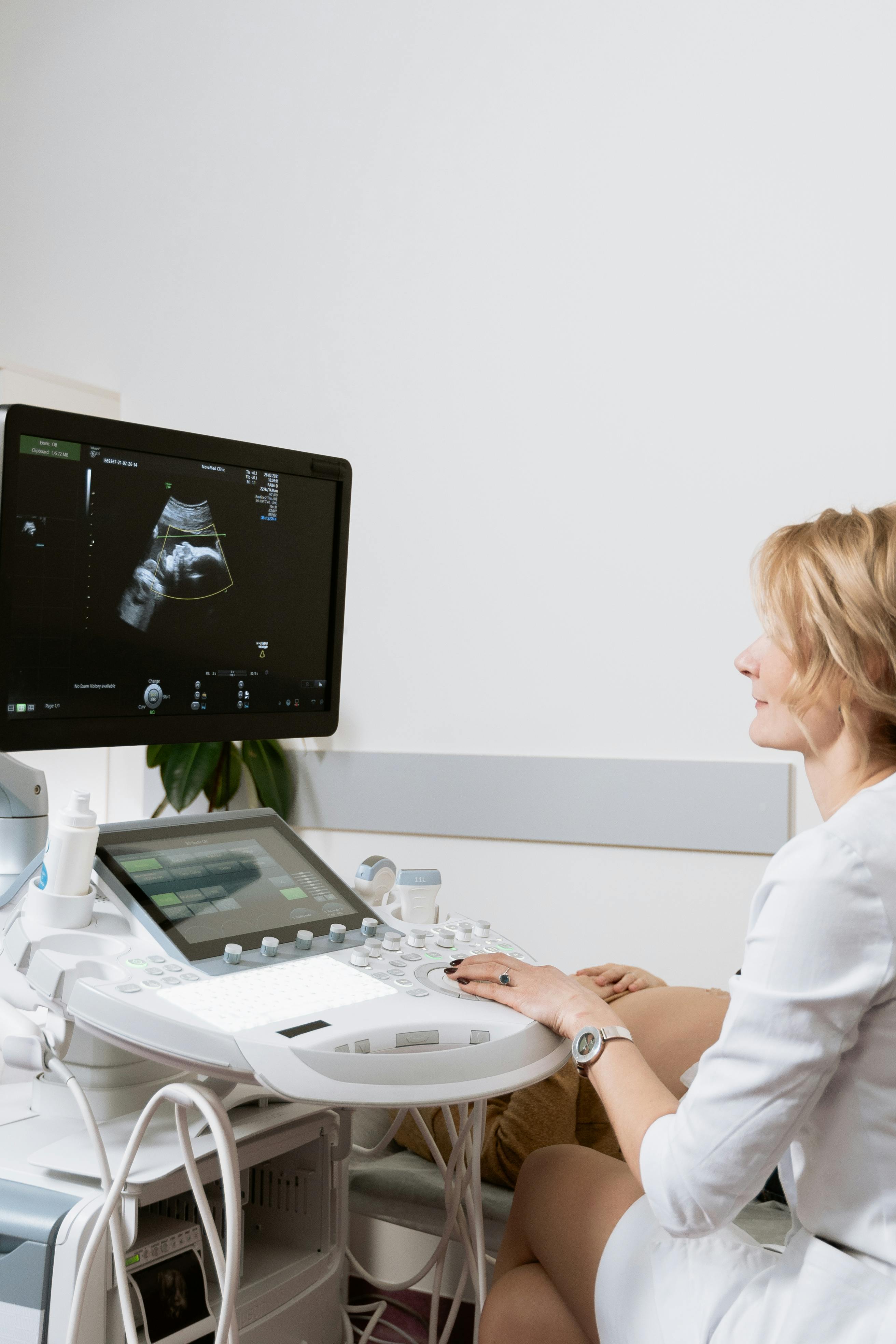
Every machine evaluation should include a live imaging demonstration, ideally on a real client or a high-quality phantom, not just still images or marketing materials. Still images and videos can be optimized, filtered, or captured under ideal conditions that do not represent typical session performance. A live demo shows you how the machine actually behaves in real use.
During a demo, assess: how quickly the machine produces a usable 3D or 4D image after the operator identifies the acquisition window; how the image quality holds when conditions are less than ideal; how the rendering preset affects the image when the operator makes live adjustments; and how the face image looks at different depths and fetal positions. You are not looking for perfection in a demo. You are looking for a machine that gives a skilled operator meaningful quality to work with across a range of conditions.
Evaluating a Refurbished Machine: The Critical Checklist
Most elective studios access premium equipment through the refurbished market. The range of quality in refurbished ultrasound machines is wide, and the evaluation process is more involved than for a new unit because you need to assess not just the machine’s capability but its current condition and remaining service life.
Probe Condition and Age
Probes are the most performance-critical and most expensive-to-replace component of an ultrasound system. Ask for documentation of probe age, usage hours if available, and any prior repairs or replacements. Have the probes scanned in live demonstration to assess image quality across depth and frequency ranges. Degraded probes produce degraded images regardless of how well-maintained the console is.
Software Version and Update Eligibility
Software version matters for both available features and ongoing support eligibility. Older software versions may lack rendering modes that newer versions include, and some manufacturer support programs require machines to be on current or recent software versions for service eligibility. Ask specifically what version the unit is running and whether it is eligible for software updates under the manufacturer’s current support programs.
Service History Documentation
A refurbished machine with documented service history is more trustworthy than one sold “as refurbished” with no supporting records. Ask for: prior service records, any major component replacements, the nature and scope of the refurbishment process, and what certifications or quality checks the machine underwent before sale. Legitimate refurbishers can produce this documentation. Vendors who cannot should be evaluated with corresponding caution.
Warranty Terms on the Refurbished Unit
As discussed in detail in the equipment guidance resources from Ultrasound Trainers, warranty terms on refurbished equipment vary significantly by vendor. Minimum expectations are 90 days parts and labor. Twelve months is stronger. Verify whether probes are covered under the same terms as the console, and confirm on-site versus depot service provisions.
Vendor Evaluation: Questions That Reveal What You Need to Know
The vendor from whom you purchase an elective ultrasound machine matters as much as the machine itself. A good machine with poor post-sale support creates operational risk that a lesser machine with strong support does not. Evaluate vendors on these dimensions before committing:
Do they understand the elective ultrasound market specifically? A vendor whose primary customer base is hospitals and clinics evaluates machines against different criteria than a vendor who works primarily with elective studios. Elective-specific knowledge means understanding what image quality features matter for keepsake imaging, what probe configurations support elective use, and what training and ongoing support looks like for operators who are new to the equipment.
Can they provide references from elective studio clients who purchased similar equipment? A vendor confident in their product and service quality should be able to connect you with past clients who can speak to the purchase experience and post-sale support. Vendors who cannot or will not provide references are telling you something.
According to the SBA’s guidance on startup planning, evaluating major capital equipment purchases thoroughly, including vendor due diligence, is a core component of responsible business preparation.
Comparing Multiple Machines: A Decision Framework
| Evaluation Factor | Why It Matters |
|---|---|
| 3D/4D rendering quality in live demo | Core product quality; drives client satisfaction and word of mouth |
| Probe condition and remaining life | Most expensive single component; directly affects image quality |
| Software version and update eligibility | Affects feature access and long-term support eligibility |
| Warranty terms (parts, labor, probes) | Determines post-purchase cost exposure in first year |
| Vendor elective-market experience | Determines quality of post-sale support and operational guidance |
| Loaner machine availability | Determines revenue continuity during service events |
| Total cost of ownership (purchase + support) | True equipment cost over a 3-5 year period |
Frequently Asked Questions
How do I evaluate an elective ultrasound machine before buying?
Start by mapping your intended service menu to required technical capabilities. Request a live imaging demonstration on a phantom or real client. For refurbished machines, evaluate probe condition, software version, service history, and warranty terms. Assess the vendor’s elective-market expertise and post-sale support structure. Compare total cost of ownership, not just purchase price.
What is the most important thing to check on a refurbished ultrasound machine?
Probe condition is the single most important factor to verify on a refurbished machine. Probes degrade with use, and probe replacement is one of the most significant equipment costs a studio can face. Have probes demonstrated in live imaging across depth and frequency ranges, and ask for documentation of probe age and any prior service or replacement history.
Should I request a live demo before buying an ultrasound machine?
Yes. A live imaging demonstration is essential for a meaningful machine evaluation. Still images and videos do not represent real-world performance reliably because they can be produced under optimized conditions. A live demo on a phantom or real client shows you how the machine behaves during actual session conditions, which is the information that actually matters.
How important is the vendor when buying an elective ultrasound machine?
Very important. The vendor’s elective-market expertise, support infrastructure, and post-sale availability determine how well you are supported during the first year of ownership when questions and occasional issues are most frequent. A well-sourced machine from a knowledgeable vendor with strong support is a meaningfully different purchase than the same machine from a vendor without elective-market context.
What software version should an elective ultrasound machine be running?
Current or recent software versions are preferable for both feature access and support eligibility. Older software versions may lack rendering modes available in newer releases, and some manufacturer support programs require units to be on current software for service eligibility. Ask specifically what version a prospective machine is running and whether it is eligible for updates.
Need Help Evaluating an Elective Ultrasound Machine?
Ultrasound Trainers provides equipment guidance that is grounded in elective studio operation, not just clinical spec comparison. If you are evaluating a specific machine and want a second perspective, reach out to our team.
Get in TouchThis post was developed by the team at Ultrasound Trainers, a company that provides hands-on elective ultrasound training, turnkey studio launch packages, and equipment guidance for studio owners across the country.
Last Updated: April 28, 2026
Get the Inside Track
Training tips, business advice, and exclusive deals delivered straight to your inbox.

How to Get More Bookings for Your Elective Ultrasound Studio in Montana
Struggling to fill your elective ultrasound booking calendar in Montana? This guide covers what actually[...]

Buying an Elective Ultrasound Machine for an Arkansas Studio: What Actually Matters
Ready to buy an elective ultrasound machine for your Arkansas studio? This guide covers the[...]

How to Build a Pre-Launch Marketing Campaign for Your Elective Ultrasound Studio: A 60-Day Countdown Plan
Pre-launch marketing for an elective ultrasound studio begins 60 days before opening. This 60-day countdown[...]

What Career Changers in Hawaii Need to Know About Elective Ultrasound Training
Considering ultrasound training for a career change in Hawaii? This Q&A guide covers what training[...]

How to Find and Recruit Volunteer Scan Models for Elective Ultrasound Practice
Finding volunteer models for elective ultrasound practice is a skill in itself. Learn where to[...]

How to Write an Elective Ultrasound Business Plan That Actually Works
Writing an elective ultrasound business plan? This guide covers what to include, how to build[...]

How to Open an Elective Ultrasound Business in Honolulu: A Practical Startup Guide
Open an elective ultrasound business in Honolulu with confidence. This guide covers training, startup costs,[...]

Adding Elective Ultrasound to an Existing Photography or Doula Practice in Montana
Montana birth photographers and doulas: adding an elective ultrasound add-on business in Montana to your[...]

Starting an Elective Ultrasound Business in Cheyenne, Wyoming: First-Mover Advantage in the Least-Crowded Market in the Country
Thinking about starting an elective ultrasound business in Cheyenne, Wyoming? This guide covers the F.E.[...]
Elective Ultrasound Training for Career Changers in Sweden
Considering a career change into elective ultrasound in Sweden? Find out what training involves, whether[...]

What Career Changers in Fayetteville Should Know About Elective Ultrasound Training
Thinking about elective ultrasound training in Fayetteville, Arkansas as a career changer? This Q&A guide[...]
The Biggest Mistake Las Vegas Elective Ultrasound Studios Make With Their Marketing
Elective ultrasound studio marketing in Las Vegas prioritizes trust and reviews over ad spend. Here's[...]
