

You do not need a nursing degree, a sonography certificate, or a single day of clinical experience to open a profitable elective ultrasound studio. That surprises most people who look into this industry for the first time — and it stops a meaningful number of capable entrepreneurs from ever taking the next step.
Elective ultrasound training for entrepreneurs without a medical background is specifically designed for people who have no prior clinical or imaging experience, covering probe technique, image optimization, fetal positioning, early gender determination, and the business and operational knowledge to run a studio professionally — all without requiring any prerequisite medical training or licensure in most U.S. states. The training is intensive and hands-on, typically completed in three to four days, and is designed to take someone from zero to operational readiness within a structured learning environment. Last Updated: June 2026
The Three Myths That Stop Non-Medical Entrepreneurs
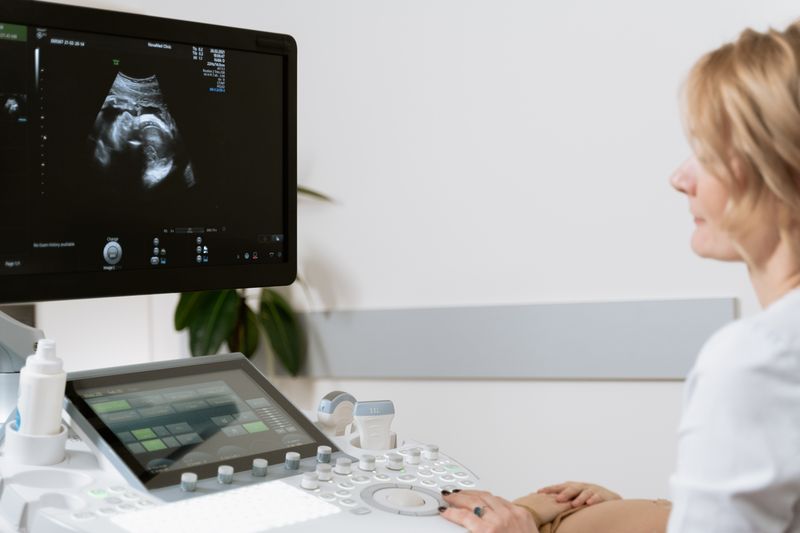
Elective ultrasound training programs designed for entrepreneurs teach scanning technique from first principles. You do not arrive expected to understand anatomy at a clinical level — the training builds what you need. Many of the most successful elective ultrasound studio owners we work with at Ultrasound Trainers came from completely unrelated fields: real estate, cosmetology, retail management, and photography.
In the majority of U.S. states, there is no medical licensure requirement for operating an elective, non-diagnostic ultrasound studio. Requirements vary by state — some states have specific regulations, others have none. Research your specific state’s current rules and consult a local business attorney before opening, but do not assume a license is required before you have confirmed it.
Elective ultrasound is not a diagnostic service. Your role is not to identify or assess medical conditions — it is to provide a keepsake experience. Good training teaches you how to communicate clearly that your studio provides bonding and keepsake imaging only, how to handle client questions that cross into medical territory, and when to direct a client to their healthcare provider. This is not a medical skill gap — it is a communication skill that training addresses directly.
What the Training Covers for Non-Medical Entrepreneurs
A well-designed training program for entrepreneurs without medical backgrounds covers four distinct knowledge areas:
- Ultrasound physics and equipment basics: How ultrasound works, how to operate your specific machine, and how to optimize image settings — taught from the operator perspective, not the clinical perspective
- Scanning technique: Probe placement, pressure, angle control, image acquisition for 2D, 3D, 4D, and HD modes; fetal position identification; early gender determination at 15 to 16 weeks
- Client communication and session management: How to conduct a professional, warm session; managing expectations around fetal position; consent and non-diagnostic positioning language
- Business and operations: Studio setup, pricing, client intake, session workflow, compliance awareness, and marketing fundamentals
Ultrasound Trainers’ training programs are built specifically for this profile — we train operators from every background and design the curriculum so that no prior medical knowledge is assumed or required.
What the Training Does Not Cover
Understanding what you are not learning matters as much as understanding what you are. Elective ultrasound training for entrepreneurs does not cover clinical anatomy assessment, fetal biometry measurement for diagnostic purposes, identification of pathological findings, or any service that could be construed as medical diagnosis. This scope boundary is intentional — your studio provides keepsake experiences, and your training prepares you precisely for that scope.
This is also a legal protection. Operating clearly within the elective, non-diagnostic scope means you are not performing a service that requires clinical licensure — and your training, your consent forms, and your marketing language should all consistently reflect that scope.
How to Evaluate Whether Training Will Work for You Specifically
Before enrolling in any elective ultrasound training program as a non-medical entrepreneur, the most important questions to ask are not about the curriculum — they are about hands-on access. According to the American Institute of Ultrasound in Medicine, practical competency in ultrasound scanning requires supervised hands-on scanning time, not just classroom instruction. A training program for entrepreneurs that delivers primarily online video content without real hands-on supervised practice hours is not adequate preparation for operating a studio.
Ask specifically: How many hours of hands-on scanning time with actual clients or training phantoms does the program include? How many supervised scans will I perform before the training is complete? Is there any follow-up support or access to the trainer after the program ends?
The Learning Curve Is Real — Plan for It
Most non-medical entrepreneurs who complete a solid training program are capable of performing basic sessions with confidence by their training completion. They are not yet at the level of an experienced operator. That gap closes through practice — specifically, the deliberate practice described in our guide to building scanning skills between training sessions.
Plan your studio’s first 30 to 60 days with a realistic ramp: lower session volume, appropriate pricing for an early-stage operator, and a commitment to ongoing skill development. Studios that struggle in the early months are often those that overpromised their capability before it was fully developed. Studios that succeed set honest expectations, deliver well, and improve steadily.
Frequently Asked Questions
Not in the way most people expect. The medical knowledge gap that non-clinical trainees worry about turns out to be largely irrelevant — elective ultrasound training does not require clinical anatomy expertise. The real learning curve for non-medical trainees is the physical, hands-on skill of probe control and image optimization, which takes repetitive practice regardless of whether you have medical experience. Clinical professionals do not have a significant advantage here — scanning technique is learned by doing, not by knowing.
You should make clear, through your intake forms, your marketing language, and your verbal communication, that your studio provides elective, non-diagnostic ultrasound for keepsake and bonding purposes only — and that all prenatal medical care should continue with the client’s medical provider. Whether you disclose your specific background is a business decision, but the non-diagnostic nature of your service must always be clear.
This will happen, and good training prepares you for it. The correct response is warm, direct, and clear: “That is a great question for your OB or midwife — I am not able to provide medical assessments or interpretations, but your provider will have the right answer.” Clients who receive this response professionally and warmly almost always accept it without frustration. Clients who receive it awkwardly or apologetically sometimes push further.
Training Built for Entrepreneurs, Not Just Clinicians
Ultrasound Trainers has trained operators from every background — with programs specifically designed for entrepreneurs who are starting without clinical experience. Explore your training options today.
Explore Training ProgramsGet the Inside Track
Training tips, business advice, and exclusive deals delivered straight to your inbox.

How to Get More Bookings for Your Elective Ultrasound Studio in Montana
Struggling to fill your elective ultrasound booking calendar in Montana? This guide covers what actually[...]

Buying an Elective Ultrasound Machine for an Arkansas Studio: What Actually Matters
Ready to buy an elective ultrasound machine for your Arkansas studio? This guide covers the[...]

How to Build a Pre-Launch Marketing Campaign for Your Elective Ultrasound Studio: A 60-Day Countdown Plan
Pre-launch marketing for an elective ultrasound studio begins 60 days before opening. This 60-day countdown[...]

What Career Changers in Hawaii Need to Know About Elective Ultrasound Training
Considering ultrasound training for a career change in Hawaii? This Q&A guide covers what training[...]

How to Find and Recruit Volunteer Scan Models for Elective Ultrasound Practice
Finding volunteer models for elective ultrasound practice is a skill in itself. Learn where to[...]

How to Write an Elective Ultrasound Business Plan That Actually Works
Writing an elective ultrasound business plan? This guide covers what to include, how to build[...]

How to Open an Elective Ultrasound Business in Honolulu: A Practical Startup Guide
Open an elective ultrasound business in Honolulu with confidence. This guide covers training, startup costs,[...]

Adding Elective Ultrasound to an Existing Photography or Doula Practice in Montana
Montana birth photographers and doulas: adding an elective ultrasound add-on business in Montana to your[...]

Starting an Elective Ultrasound Business in Cheyenne, Wyoming: First-Mover Advantage in the Least-Crowded Market in the Country
Thinking about starting an elective ultrasound business in Cheyenne, Wyoming? This guide covers the F.E.[...]

Elective Ultrasound Training for Career Changers in Sweden
Considering a career change into elective ultrasound in Sweden? Find out what training involves, whether[...]

What Career Changers in Fayetteville Should Know About Elective Ultrasound Training
Thinking about elective ultrasound training in Fayetteville, Arkansas as a career changer? This Q&A guide[...]

The Biggest Mistake Las Vegas Elective Ultrasound Studios Make With Their Marketing
Elective ultrasound studio marketing in Las Vegas prioritizes trust and reviews over ad spend. Here's[...]
