

This is the question that stops more Ontario residents in their tracks than almost any other. You have seen the studios. You have done some searching online. And somewhere in your research you have hit a wall of uncertainty about whether this business is even legal if you do not have nursing or sonography credentials.
Here is what you actually need to understand: elective ultrasound studios in Ontario operate as private businesses offering a non-diagnostic, keepsake experience. They are not medical clinics. They do not provide diagnostic imaging services. That distinction is meaningful when it comes to how Ontario’s regulatory framework applies to them, and it is why you see established studios operating across the province right now.
This post is a direct answer to the licensing question, along with a practical look at what you do need to open legally and professionally in Ontario.
What Does “Without a Medical License” Actually Mean Here?
Operating an elective ultrasound studio in Ontario without a medical license means opening a business as a private entrepreneur offering non-diagnostic, bonding ultrasound experiences to expecting families. You are not practicing medicine. You are not interpreting clinical findings. You are not providing any service that would require you to hold credentials under the Regulated Health Professions Act (RHPA).
The RHPA governs controlled acts performed by regulated health professionals. Diagnostic imaging performed for clinical purposes is within that framework. Elective ultrasound conducted for bonding and keepsake purposes, without any diagnostic claim or clinical interpretation, exists in a different category. Ontario elective studios have been operating on this basis for years.
What You Do Need to Open an Ontario Elective Ultrasound Studio
Not needing a medical license does not mean you can skip business fundamentals. The legal and operational requirements for a proper Ontario studio are real. Here is what you actually need to have in order.
Business registration. Ontario businesses must be registered under the Business Names Act if you are operating under a name other than your personal name. If you are incorporating, you will register federally or provincially through the appropriate Ontario corporate registry. This establishes your legal business entity and is a prerequisite for opening a business bank account, signing a commercial lease, and getting insurance.
HST registration. Once your revenue exceeds the small supplier threshold (currently $30,000 CAD in four consecutive calendar quarters), you are required to register for HST. Most studios plan to exceed this quickly, so setting up HST registration before you hit the threshold is smart. Work with an accountant to structure your HST setup correctly from the start.
Commercial liability insurance. You will need general liability insurance and likely a commercial property policy. Because you are operating a health-adjacent business, your insurer needs to understand the non-diagnostic, elective nature of your services. Not all business insurance brokers have experience placing coverage for this type of business. Look for brokers with experience in wellness, spa, or health-adjacent service businesses.
A commercial lease or business address. Your studio location needs a commercial lease appropriate for client-facing businesses. Health-adjacent service businesses often look at clinic-adjacent buildings, shopping centers near maternity retailers, or standalone commercial units. Location affects your foot traffic and referral access significantly.
Hands-on training. You do not need a college degree to open an elective studio in Ontario, but you do need genuine scanning competence. Operating a 4D ultrasound machine without proper training produces poor image quality and poor client experiences. A formal, hands-on training program is the professional and practical standard for anyone serious about building a quality studio.
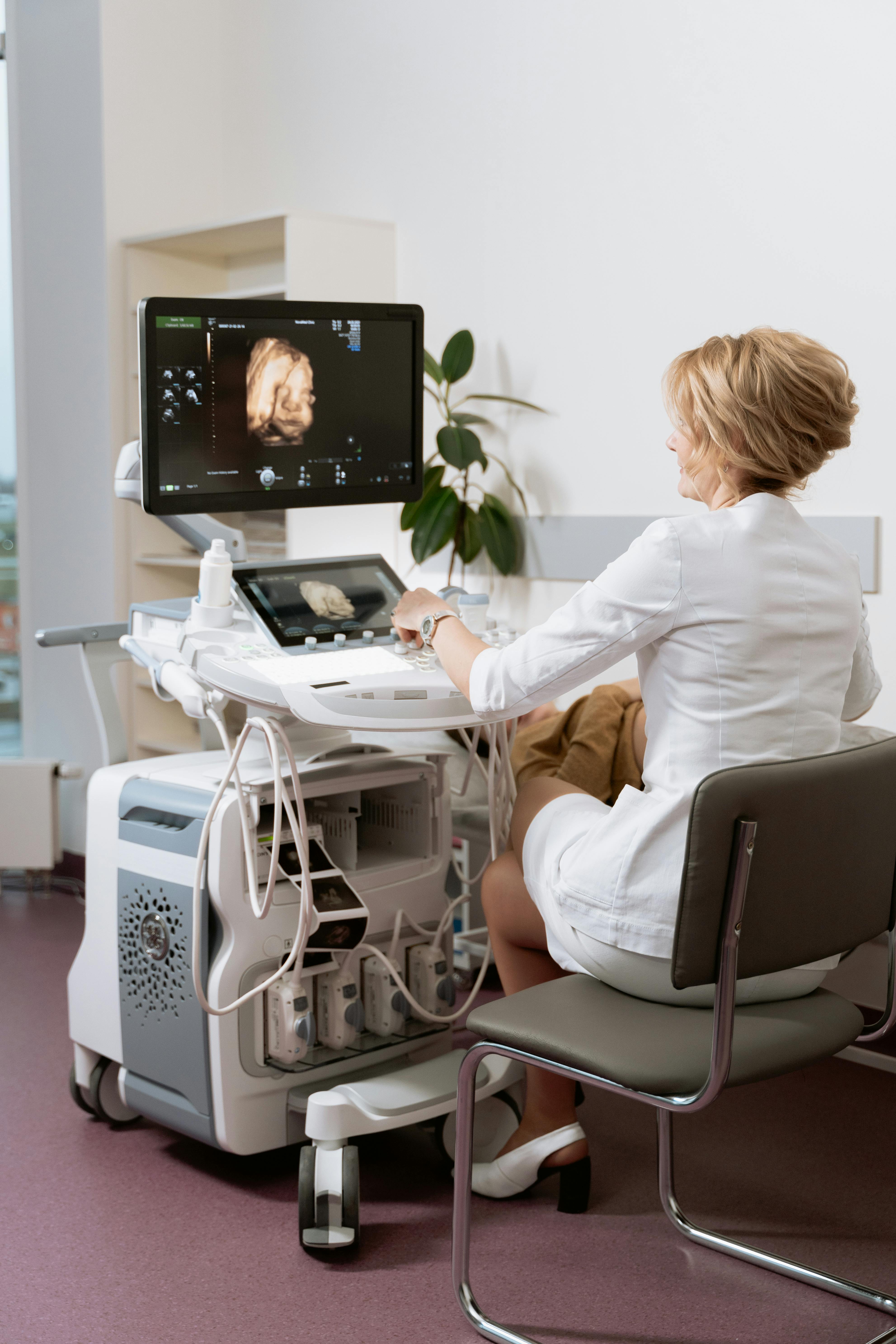
The question we hear most consistently from Ontario students in our training programs is whether their provincial regulatory environment will cause problems for them specifically. The answer, with appropriate caveats, is that Ontario has a functioning elective studio market precisely because the elective non-diagnostic model is distinct from regulated medical imaging. What creates problems for operators is claiming diagnostic capability or framing their services in ways that blur that distinction.
The Distinction That Protects You: Non-Diagnostic Positioning
Every elective studio in Ontario, and across Canada, depends on one foundational operating principle: you are not performing diagnostic imaging. This is not a technicality. It is the core of what makes the business legally distinct from medical practice.
Practically, this means your client waivers and intake forms explicitly state that the session is elective and non-diagnostic. Your marketing materials position the experience as a bonding and keepsake visit, not a health check. Your verbal communication during sessions avoids making any clinical observation or assessment. You remind clients that elective ultrasound is not a substitute for their prenatal care and that they should continue regular appointments with their medical provider.
This is not just about legal protection, though that matters. It is also about building the right client expectations from the start. Families who book with a clear understanding of what an elective session is and is not have better experiences and generate better reviews than families who arrive expecting something different.
Ontario Market Overview: Is the Competition Too High?
Ontario is Canada’s most populous province and has the most developed elective ultrasound market in the country. Toronto and the GTA have multiple established studios. Larger cities like Ottawa, Hamilton, London, and Kitchener-Waterloo each have some coverage. But Ontario’s secondary markets, and the large geography of communities outside the major urban corridors, remain underserved.
If you are in Barrie, Sudbury, Thunder Bay, Kingston, Peterborough, Belleville, or dozens of other Ontario communities, the competitive landscape may look quite different from what you would face in downtown Toronto. Many of these markets have strong birth rates, a growing middle-class client base, and limited or no direct competition in elective ultrasound.
The right question is not whether Ontario is too competitive. It is whether your specific market has room for a well-run studio. In many Ontario communities, the answer is clearly yes.
People Also Ask
Is it legal to open an elective ultrasound studio in Ontario without a medical license?
Operating an elective, non-diagnostic ultrasound studio in Ontario without medical credentials is currently practiced by studio owners across the province. The business operates as a private consumer experience distinct from regulated medical imaging. However, the specific legal and regulatory landscape in Ontario can involve nuance, and consulting a local business attorney before opening is strongly recommended. Requirements can vary by circumstances and regulations can change.
Does the RHPA apply to elective ultrasound studios in Ontario?
The Regulated Health Professions Act governs controlled acts performed by regulated health professionals. Elective studios that operate clearly within the non-diagnostic, bonding-experience model do not perform controlled acts as defined under the RHPA. The critical operating principle is that the studio does not perform clinical interpretation, does not make diagnostic claims, and positions its services explicitly as elective and non-medical.
What insurance do I need for an elective ultrasound studio in Ontario?
General commercial liability insurance and a commercial property policy are baseline requirements. Because the business is health-adjacent, work with an insurance broker who has experience placing coverage for wellness, spa, or non-diagnostic health service businesses. Ensure your policy clearly covers your specific type of operation and that the insurer understands the non-diagnostic nature of the service.
Where in Ontario are the best markets for an elective ultrasound studio?
Ontario’s strongest markets for new studios tend to be mid-size cities and suburban communities with high birth rates, growing populations, and limited existing competition. Communities like Barrie, Sudbury, Kingston, Peterborough, and the suburbs of major metro areas often present better market entry conditions than downtown Toronto or Ottawa, where competition is higher. Evaluate your specific city’s birth rate data, income demographics, and existing competition before committing to a location.
Do I need to register my elective ultrasound business in Ontario?
Yes. If you operate under a business name other than your own, you must register that name under Ontario’s Business Names Act. If you are incorporating, you will register provincially or federally. You will also need to register for HST once your revenue approaches the threshold. Proper business registration is a prerequisite for your commercial lease, bank account, and insurance.
How do I avoid making medical claims in my Ontario studio marketing?
Focus all marketing language on the bonding experience, keepsake imaging, and family memories rather than health assessment or reassurance. Never use language suggesting clients can check on baby’s health, confirm pregnancy progress, or receive medical peace of mind from an elective session. Always direct clients to their midwife or OB-GYN for actual prenatal care. This framing protects your legal positioning and sets accurate client expectations.
Thinking about opening an elective ultrasound studio in Ontario? Ultrasound Trainers can help you work through training, equipment, startup planning, and the practical questions that come up when you are getting started. Our programs have helped studio owners across North America launch with confidence.
Reach out to Ultrasound TrainersLast Updated: April 18, 2026. This content is informational and does not constitute legal or regulatory advice. Consult a licensed attorney in Ontario before making business decisions.
Get the Inside Track
Training tips, business advice, and exclusive deals delivered straight to your inbox.

How to Get More Bookings for Your Elective Ultrasound Studio in Montana
Struggling to fill your elective ultrasound booking calendar in Montana? This guide covers what actually[...]

Buying an Elective Ultrasound Machine for an Arkansas Studio: What Actually Matters
Ready to buy an elective ultrasound machine for your Arkansas studio? This guide covers the[...]

How to Build a Pre-Launch Marketing Campaign for Your Elective Ultrasound Studio: A 60-Day Countdown Plan
Pre-launch marketing for an elective ultrasound studio begins 60 days before opening. This 60-day countdown[...]

What Career Changers in Hawaii Need to Know About Elective Ultrasound Training
Considering ultrasound training for a career change in Hawaii? This Q&A guide covers what training[...]

How to Find and Recruit Volunteer Scan Models for Elective Ultrasound Practice
Finding volunteer models for elective ultrasound practice is a skill in itself. Learn where to[...]

How to Write an Elective Ultrasound Business Plan That Actually Works
Writing an elective ultrasound business plan? This guide covers what to include, how to build[...]

How to Open an Elective Ultrasound Business in Honolulu: A Practical Startup Guide
Open an elective ultrasound business in Honolulu with confidence. This guide covers training, startup costs,[...]

Adding Elective Ultrasound to an Existing Photography or Doula Practice in Montana
Montana birth photographers and doulas: adding an elective ultrasound add-on business in Montana to your[...]

Starting an Elective Ultrasound Business in Cheyenne, Wyoming: First-Mover Advantage in the Least-Crowded Market in the Country
Thinking about starting an elective ultrasound business in Cheyenne, Wyoming? This guide covers the F.E.[...]
Elective Ultrasound Training for Career Changers in Sweden
Considering a career change into elective ultrasound in Sweden? Find out what training involves, whether[...]

What Career Changers in Fayetteville Should Know About Elective Ultrasound Training
Thinking about elective ultrasound training in Fayetteville, Arkansas as a career changer? This Q&A guide[...]
The Biggest Mistake Las Vegas Elective Ultrasound Studios Make With Their Marketing
Elective ultrasound studio marketing in Las Vegas prioritizes trust and reviews over ad spend. Here's[...]
