

Last Updated: April 15, 2026
Pricing elective ultrasound packages for profit requires knowing your actual costs per session, researching your local market, and structuring packages that guide clients toward higher-value options. Most studios find that a three-tier package system — entry, standard, and premium — combined with thoughtful add-ons, drives the best average transaction value and client satisfaction.
Getting pricing right in an elective ultrasound studio is not just about what the market will bear — it is about understanding what your sessions actually cost and building a package structure that supports a viable business over time. Studios that price too low fill appointments but struggle to cover overhead. Studios that price too high without clear value justification lose bookings to competitors. The goal is the middle: pricing that reflects your quality, your market, and your costs, structured in a way that naturally guides clients toward higher-value options.
Here is how to think through pricing for your elective ultrasound packages, from the cost math to the menu structure.
Step 1: Know Your Actual Cost Per Session
Before you can price profitably, you need to know what each session costs you to deliver. This includes direct costs — supplies, gel, thermal paper, disposable table covers — plus a proportional share of your fixed costs: rent, utilities, insurance, equipment payments, software subscriptions, and any staff labor allocated to the session. Divide your total monthly fixed overhead by the number of sessions you expect to run per month, then add direct supply costs per session. That number is your floor — the price below which you lose money.
Most new studio owners underestimate their per-session costs because they are looking at supply costs only and not including fixed overhead. A session that costs $8 in supplies but requires $40 in allocated overhead is a $48 cost session. If you are pricing that session at $59, your margin is slim and leaves no room for slow weeks, refunds, or re-scans.
Rent, utilities, equipment payments, insurance, software, and any allocated labor. Divide by your expected monthly session volume to get fixed cost per session.
Gel, thermal paper, table cover, gloves, and any consumable used per appointment. This is typically in the $5 to $15 range depending on what add-ons are included.
This is the number your pricing must exceed consistently. Factor in a target margin — most service businesses aim for 40 to 60 percent gross margin as a starting point.
Step 2: Research Your Local Market
Pricing does not exist in a vacuum. What elective ultrasound studios in your market are charging shapes client expectations, even if those studios are not direct competitors. Spend time on the websites and social media accounts of studios within your market radius. Note what packages they offer, what price points they advertise, and what each package includes. Do not assume you need to match their lowest price — but understand where the range falls and what your positioning within that range will be.
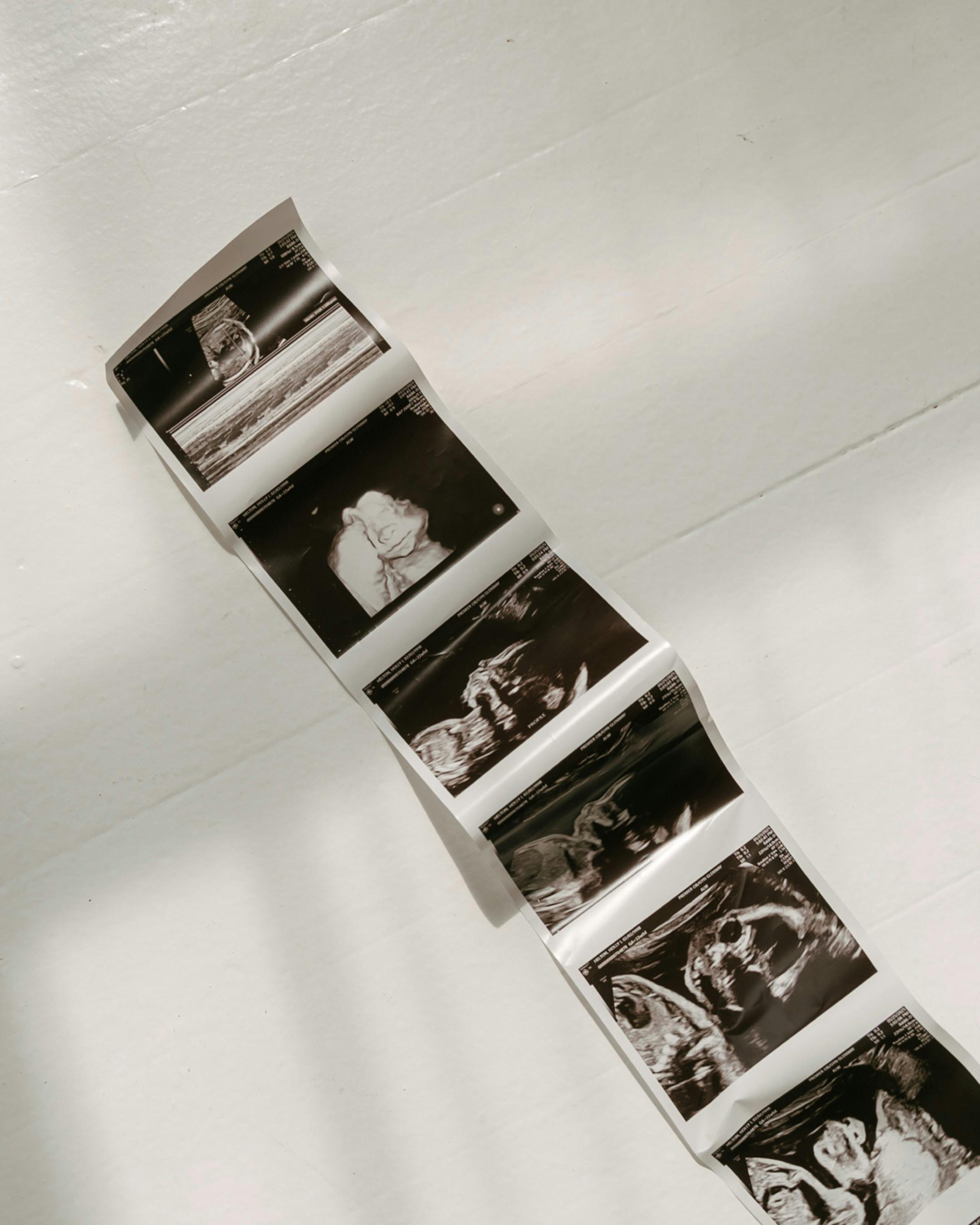
Market research also reveals what clients in your area are accustomed to paying. A studio in a suburban area with a strong middle-income household base may find clients comfortable at a different price point than a studio in a dense urban market with high income variance. Local market awareness informs your starting price assumptions and helps you position the value of higher-tier packages effectively.
Step 3: Build a Three-Tier Package Structure
The most effective menu structure for an elective ultrasound studio is three tiers: an entry-level option, a mid-tier standard option, and a premium experience. This structure works because it does two things simultaneously: it gives price-sensitive clients a door to enter, and it anchors the mid-tier as the default choice by making the premium feel aspirational and the entry feel limited.
A shorter session, 2D only or minimal 3D capture, basic printout. Priced to be accessible. The goal is not to upsell from this tier — it is to give first-time or budget-limited clients a way to book and experience your studio.
A full 3D/4D session with a set number of printed images, a digital USB or gallery, and the wall display viewing experience. This is your volume driver — most clients will book here when the entry feels too limited and the premium feels optional.
Extended session time, HD or advanced imaging mode, a heartbeat recording or stuffed animal, an expanded image gallery, and possibly gender reveal packaging. Priced to reflect the full experience. A meaningful portion of your clients will choose this when they understand what it includes.
Step 4: Price Your Add-Ons Intentionally
Add-ons are where elective ultrasound studios often leave significant revenue on the table. Heartbeat stuffed animals, gender reveal packaging, DVD or USB recordings, additional printed images, and live stream access for remote family members are all add-ons that clients are often happy to purchase — if they are offered clearly and confidently at the right moment.
Price add-ons with a clear margin in mind, not just at cost-plus. A heartbeat stuffed animal that costs you $8 might retail at $35 to $45 in an elective studio context — clients are paying for the experience and the memory, not just the object. The add-on conversation is best handled naturally during the booking process or at the start of the session, not as an afterthought after the scan is complete.
Step 5: Set Your Price Point Anchors
Price anchoring is the principle that the first number a client sees shapes how they perceive everything else. If your premium package is listed first on your menu at $175 and your standard package appears next at $120, the standard feels like a reasonable middle ground. If your entry package is listed first at $79 and the premium appears last, the premium may feel expensive by comparison even if both menus list the same three options.
Most studios benefit from listing premium first or centering the standard package visually. The goal is to guide attention toward the options that drive the most sustainable revenue per session, not toward the cheapest available entry point.
Step 6: Test, Monitor, and Adjust
No pricing structure is permanent. Track what clients are actually booking and compare it against what you hoped they would book. If the entry tier is dominating, your standard tier may not be differentiated enough or priced attractively enough to justify the step up. If almost every booking is premium, you may have room to push that price point higher. Use real booking data to make adjustments rather than intuition alone.
Seasonal factors also matter. Studios near major hospital systems in areas with high birth rates can often sustain stronger pricing year-round. Slower summer or holiday periods might warrant a targeted promotion that brings clients in rather than a permanent price reduction that trains your market to wait for deals.
Pricing Comparison: Common Studio Models
| Package Type | Typical Inclusions | Common Price Range |
|---|---|---|
| Entry / Basic | Short session, 2D, limited images | $59 – $89 |
| Standard / Classic | Full 3D/4D session, prints, digital gallery | $109 – $149 |
| Premium / Deluxe | Extended time, HD mode, heartbeat animal, expanded gallery | $159 – $219 |
| Gender Reveal Add-On | Early gender determination session, gender reveal packaging | $69 – $99 standalone or bundled |
| Add-Ons (typical) | Heartbeat animal, USB, extra prints, live stream | $25 – $55 each |
Price ranges are general market observations and will vary by region, market demographics, studio experience level, and service inclusions. Use your cost floor and local market research to set prices appropriate for your specific situation.
Pricing Readiness Checklist
Frequently Asked Questions
What is the average price for an elective ultrasound package?
Pricing varies by market, but most studios price their core 3D/4D session in the $100 to $150 range. Premium packages with extended time and add-ons often run $160 to $220 or higher in stronger markets. Entry-level sessions can start as low as $59 to $79. Your specific pricing should be driven by your cost floor and local market, not general averages.
Should I charge separately for gender determination or bundle it into packages?
Both approaches work. A standalone early gender session (typically offered at 15 to 16 weeks) can be an entry point for clients who are not yet in the 3D/4D window and then return later for a full session. Bundling it into packages works well for studios that offer a combined experience. A hybrid approach — gender available as a standalone add-on or included in higher-tier packages — is common and flexible.
How do I know if I am pricing too low?
Signs of underpricing include near-zero resistance to your pricing at booking, consistently high session volume that still does not translate to meaningful profit, and clients frequently commenting that your prices are “so affordable” rather than “fair” or “worth it.” Underpricing also makes it harder to invest back in your studio and tends to attract clients who are more price-sensitive, which can complicate future price increases.
How do I raise prices without losing existing clients?
Communicate increases as far in advance as practical. Frame the increase around value — improved equipment, enhanced experience, new offerings — rather than just announcing a higher number. Offering existing clients a grace period at the old price before the new pricing takes effect is a goodwill gesture that most studios find worth the short-term margin trade-off.
Should I offer discounts or promotions for a new studio?
A carefully framed opening promotion can drive early bookings and reviews. The risk is training your local market to wait for deals. Time-limited offers with a clear end date (“opening month pricing through May 31”) work better than ongoing discounts that become expected. Avoid positioning your studio as a budget option at launch — it is hard to move the market’s perception of your pricing upward later.
What add-ons generate the most revenue for elective ultrasound studios?
Heartbeat stuffed animals and USB or digital gallery upgrades are consistently high-conversion add-ons because they have clear emotional value and low fulfillment complexity. Gender reveal packaging adds well when offered as a supplement to an existing session. Live stream access for remote family members is a lower-cost add-on that clients often appreciate and that costs very little to deliver.
Does pricing elective ultrasound packages for profit require a business background?
No formal business background is needed. The fundamentals — knowing your costs, understanding your market, and structuring offerings that guide clients toward good value choices — are learnable. Business training as part of your overall elective ultrasound preparation helps significantly, which is one reason Ultrasound Trainers integrates business management into the training curriculum rather than treating it as separate from the scanning side.
Pricing is one piece of the larger business puzzle. If you are building a new studio and want to think through your full launch strategy — training, equipment, operations, and marketing together — the team at Ultrasound Trainers can help you plan it properly from the start. See how to open an elective ultrasound business with full consulting support.
Reach out to Ultrasound TrainersAbout This Content: Ultrasound Trainers supports people entering the elective ultrasound industry with training, consulting, and equipment guidance. This article is for informational purposes and does not guarantee specific revenue or profitability outcomes. Pricing decisions should be based on your specific cost structure, market, and business model. Revenue potential varies based on operations, marketing, local demand, and service mix. Please consult appropriate business and financial advisors for guidance specific to your situation. The Small Business Administration at sba.gov also provides useful resources for small business owners managing pricing and operations.
Get the Inside Track
Training tips, business advice, and exclusive deals delivered straight to your inbox.

How to Get More Bookings for Your Elective Ultrasound Studio in Montana
Struggling to fill your elective ultrasound booking calendar in Montana? This guide covers what actually[...]

Buying an Elective Ultrasound Machine for an Arkansas Studio: What Actually Matters
Ready to buy an elective ultrasound machine for your Arkansas studio? This guide covers the[...]

How to Build a Pre-Launch Marketing Campaign for Your Elective Ultrasound Studio: A 60-Day Countdown Plan
Pre-launch marketing for an elective ultrasound studio begins 60 days before opening. This 60-day countdown[...]

What Career Changers in Hawaii Need to Know About Elective Ultrasound Training
Considering ultrasound training for a career change in Hawaii? This Q&A guide covers what training[...]

How to Find and Recruit Volunteer Scan Models for Elective Ultrasound Practice
Finding volunteer models for elective ultrasound practice is a skill in itself. Learn where to[...]

How to Write an Elective Ultrasound Business Plan That Actually Works
Writing an elective ultrasound business plan? This guide covers what to include, how to build[...]

How to Open an Elective Ultrasound Business in Honolulu: A Practical Startup Guide
Open an elective ultrasound business in Honolulu with confidence. This guide covers training, startup costs,[...]

Adding Elective Ultrasound to an Existing Photography or Doula Practice in Montana
Montana birth photographers and doulas: adding an elective ultrasound add-on business in Montana to your[...]

Starting an Elective Ultrasound Business in Cheyenne, Wyoming: First-Mover Advantage in the Least-Crowded Market in the Country
Thinking about starting an elective ultrasound business in Cheyenne, Wyoming? This guide covers the F.E.[...]

Elective Ultrasound Training for Career Changers in Sweden
Considering a career change into elective ultrasound in Sweden? Find out what training involves, whether[...]

What Career Changers in Fayetteville Should Know About Elective Ultrasound Training
Thinking about elective ultrasound training in Fayetteville, Arkansas as a career changer? This Q&A guide[...]

The Biggest Mistake Las Vegas Elective Ultrasound Studios Make With Their Marketing
Elective ultrasound studio marketing in Las Vegas prioritizes trust and reviews over ad spend. Here's[...]
Learn about financing options, startup costs, and payment plans on our ultrasound financing page.
