

Last Updated: April 15, 2026
Your ultrasound machine is the entire business — and what happens when it stops working will either cost you a predictable monthly fee or an unpredictable four-figure repair bill at the worst possible time.
Most first-time elective ultrasound studio owners think about the machine purchase in depth — the model, the image quality, the probe, the price. The service contract question often gets a much shorter conversation. That is understandable. When you are excited about launching a business, maintenance agreements feel like fine print. But the fine print in a service contract is exactly what determines whether a machine failure is a manageable inconvenience or a week of canceled appointments and emergency repair costs that wipe out a month of revenue.
The good news is that service contracts are not complicated once you understand what you are evaluating. This piece covers the key terms, what to compare, and the questions you should ask before you sign anything — whether you are buying new, buying refurbished, or evaluating an agreement for equipment you already own.
| Service Contract Type | What It Covers |
| Full Coverage | Parts, labor, and often preventive maintenance |
| Parts Only | Parts at no charge but labor billed separately |
| Labor Only | Technician time covered, parts billed separately |
| Time and Materials | No contract — pay per incident, no coverage guarantee |
What a Service Contract Actually Covers
The scope varies significantly between providers. A full-coverage service contract typically includes parts and labor for all mechanical and electronic failures, preventive maintenance visits on a scheduled basis, and some level of response time guarantee — meaning the provider commits to having a technician on-site or a resolution underway within a defined window. Parts-only agreements cover the cost of replacement components but charge separately for the technician’s time. Labor-only agreements are the inverse.
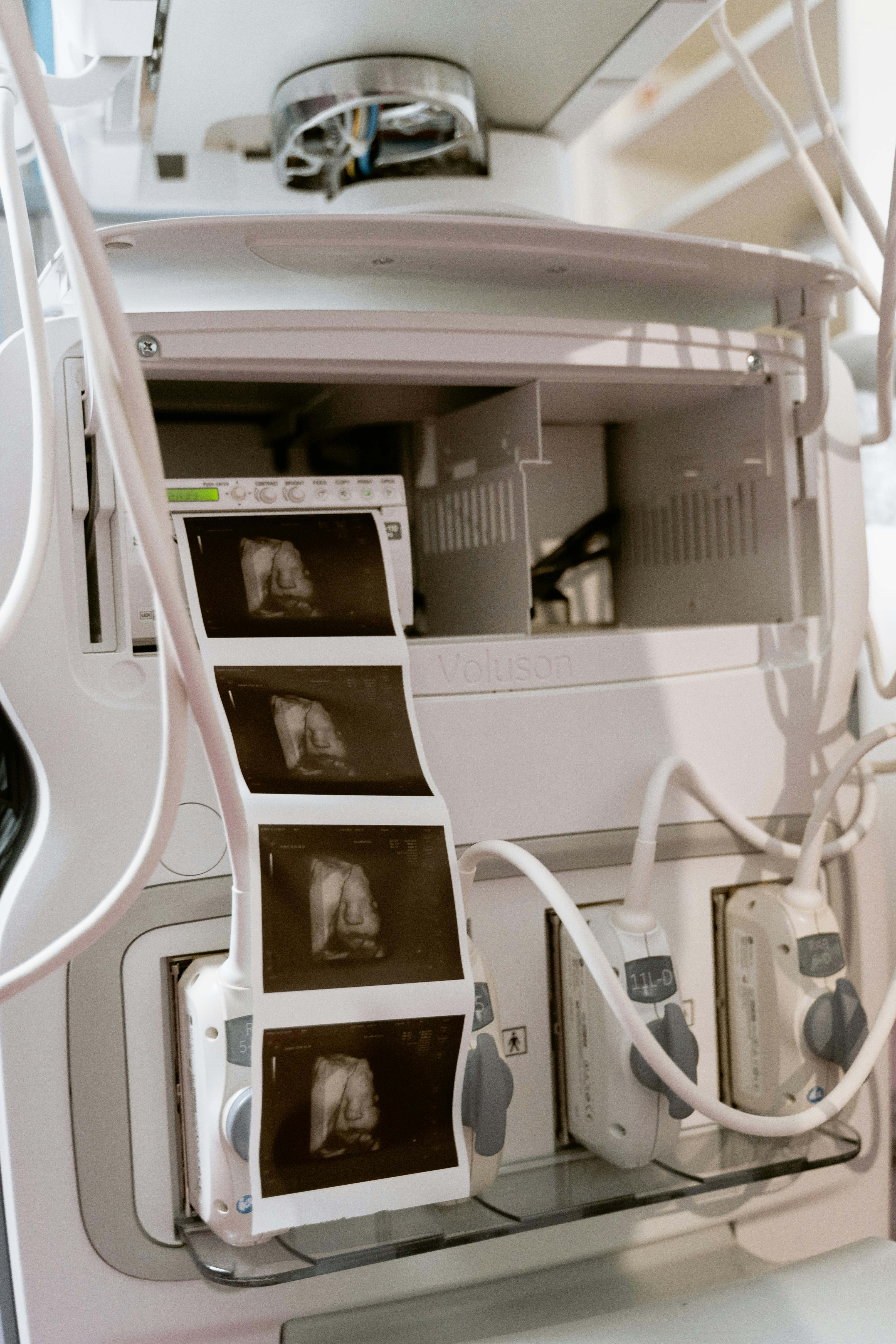
The most important distinction for a studio owner is whether the contract covers the transducer (probe) as well as the main unit. Probes are high-wear components in frequent clinical use. In an elective studio setting they experience less volume than a hospital system, but transducer failure still happens — and transducer replacement can run several thousand dollars. Confirm explicitly whether probe coverage is included, excluded, or available as a rider.
Response Time and What It Actually Means for Your Business
A service contract’s response time commitment tells you how quickly the provider will respond when something goes wrong. The standard formats are next business day, 48 hours, or same day for critical failures. For an elective ultrasound studio, response time matters because the machine is revenue. A two-day turnaround on a repair means two days of appointment cancellations, refunds or credits for displaced clients, and the reputational friction of last-minute changes.
A machine that is down for four days at a studio booking 15 appointments per week is not a minor inconvenience — it is a meaningful revenue disruption and a client trust problem. What the service contract says about response time is one of the most operationally significant clauses in the agreement.
Read the fine print on what counts as a “business day” for response purposes, whether weekends and holidays are included, and whether the response time refers to the first contact or the actual repair. A contract can promise 24-hour response while defining “response” as an email acknowledgment rather than a technician appearing at your door.
New Equipment vs. Refurbished Equipment Service Agreements
New machines from major manufacturers typically come with a manufacturer’s warranty covering parts and sometimes labor for the first year. After that, you are either purchasing a service contract from the manufacturer, an authorized service center, or an independent third-party provider. Manufacturer service contracts tend to cost more but come with original parts and factory-trained technicians.
Refurbished equipment presents a different situation. The machine has a service history. The original manufacturer warranty has expired. Coverage options depend on who refurbished the unit and what they offer post-sale. This is an area where the reputation and terms of the equipment seller matter significantly. A refurbished machine sold without any post-sale support commitment puts the entire maintenance risk on the buyer from day one.
Questions to Ask Before Signing a Service Contract
Before committing to any service agreement, get specific answers to these questions. Vague assurances are not the same as written contract terms — make sure what you discuss verbally is reflected in the document.
Does the contract cover the transducer, or is probe replacement separate? What is the exact definition of the response time guarantee, and does it apply on weekends? Are parts stocked locally or does a repair require shipping a component from a central warehouse? Who performs the service — a manufacturer-trained technician or a third-party contractor? What is excluded from coverage? What is the cancellation policy if the machine is replaced or sold?
Getting clear answers before signing protects you from surprises later. A service contract that leaves major failure scenarios uncovered may cost you less monthly but costs significantly more when the situation it was supposed to cover actually occurs.
Frequently Asked Questions
Is an ultrasound machine service contract required for an elective studio?
There is no legal requirement to carry a service contract, but the practical risk of operating without one is significant. A major failure on an uncovered machine can cost thousands of dollars in repair costs plus the revenue lost during downtime. For most studio owners, the monthly cost of a contract is far more manageable than absorbing a large unplanned repair expense.
How much does an ultrasound machine service contract typically cost?
Costs vary widely based on the machine model, the scope of coverage, and the provider. Full-coverage agreements on a premium 3D/4D machine can run several hundred dollars per month or several thousand per year. Parts-only or limited-scope agreements cost less. The calculation to make is: what would one major repair cost out of pocket compared to 12 months of contract payments?
Does a new ultrasound machine come with a service contract?
New machines typically include a manufacturer’s warranty, usually covering parts and sometimes labor for one year. After the warranty period, you will need to arrange ongoing coverage. Manufacturer service contracts, authorized service center agreements, and independent third-party contracts are all options depending on the brand and model.
What happens if my machine breaks down and I do not have a service contract?
You pay for parts and labor at market rates, which can be substantial for ultrasound equipment repairs. You also absorb the full cost of appointment cancellations and client rebooking during any downtime. Response time is not guaranteed, which means repairs can take longer than they would under a service agreement with priority response terms.
Are transducer failures covered under standard ultrasound service contracts?
Not always. Probe coverage is often excluded from base service agreements or available as an add-on at additional cost. Always ask explicitly whether the transducer is included and what the coverage terms are for probe failure versus the main unit.
Can I get a service contract for refurbished ultrasound equipment?
Yes, though the options depend on the machine’s age, model, and the availability of technicians trained on that platform. Third-party service providers often cover refurbished units that manufacturer programs will not. Confirm that whoever you are buying from can also tell you clearly what support options exist for the specific unit before you purchase.
How do I find a reliable service provider for my elective ultrasound machine?
Start with the manufacturer’s authorized service network. For machines outside of manufacturer support, look for biomedical equipment service companies that specialize in diagnostic imaging equipment — many have experience servicing elective ultrasound machines as well. Ask other studio owners in your market who they use, and read any contract carefully before signing.
The American Institute of Ultrasound in Medicine provides guidance on safe ultrasound equipment practices that can inform your understanding of equipment maintenance standards and expectations.
Questions About Equipment and Support?
Ultrasound Trainers can help you evaluate elective ultrasound machine options and understand what post-sale support looks like before you commit. Reach out to talk through what you are looking for.
Get in TouchAbout This Content: Ultrasound Trainers provides training, equipment guidance, and business consulting for elective ultrasound studio owners. This article is for informational purposes and does not constitute legal or financial advice. Service contract terms vary by provider and equipment — always review contract language carefully before signing.
Get the Inside Track
Training tips, business advice, and exclusive deals delivered straight to your inbox.

How to Get More Bookings for Your Elective Ultrasound Studio in Montana
Struggling to fill your elective ultrasound booking calendar in Montana? This guide covers what actually[...]

Buying an Elective Ultrasound Machine for an Arkansas Studio: What Actually Matters
Ready to buy an elective ultrasound machine for your Arkansas studio? This guide covers the[...]

How to Build a Pre-Launch Marketing Campaign for Your Elective Ultrasound Studio: A 60-Day Countdown Plan
Pre-launch marketing for an elective ultrasound studio begins 60 days before opening. This 60-day countdown[...]

What Career Changers in Hawaii Need to Know About Elective Ultrasound Training
Considering ultrasound training for a career change in Hawaii? This Q&A guide covers what training[...]

How to Find and Recruit Volunteer Scan Models for Elective Ultrasound Practice
Finding volunteer models for elective ultrasound practice is a skill in itself. Learn where to[...]

How to Write an Elective Ultrasound Business Plan That Actually Works
Writing an elective ultrasound business plan? This guide covers what to include, how to build[...]

How to Open an Elective Ultrasound Business in Honolulu: A Practical Startup Guide
Open an elective ultrasound business in Honolulu with confidence. This guide covers training, startup costs,[...]

Adding Elective Ultrasound to an Existing Photography or Doula Practice in Montana
Montana birth photographers and doulas: adding an elective ultrasound add-on business in Montana to your[...]

Starting an Elective Ultrasound Business in Cheyenne, Wyoming: First-Mover Advantage in the Least-Crowded Market in the Country
Thinking about starting an elective ultrasound business in Cheyenne, Wyoming? This guide covers the F.E.[...]

Elective Ultrasound Training for Career Changers in Sweden
Considering a career change into elective ultrasound in Sweden? Find out what training involves, whether[...]

What Career Changers in Fayetteville Should Know About Elective Ultrasound Training
Thinking about elective ultrasound training in Fayetteville, Arkansas as a career changer? This Q&A guide[...]

The Biggest Mistake Las Vegas Elective Ultrasound Studios Make With Their Marketing
Elective ultrasound studio marketing in Las Vegas prioritizes trust and reviews over ad spend. Here's[...]
