

Last Updated: April 15, 2026
When you start thinking seriously about growing an elective ultrasound studio, two growth strategies come up most often. One focuses on getting existing clients to come back — booking multiple sessions across a pregnancy, returning for a subsequent pregnancy, coming back as a gift for a friend. The other focuses on referrals — building enough goodwill and network connections that each client generates one or two new clients through word of mouth and professional referrals.
Both are real, viable growth paths. The question is where to focus your energy and resources, especially in the first two years when you are building the business. This guide compares the two approaches directly and tells you which is right for which kind of studio — and which combination gives most owners the best results.
Comparison: Repeat Visit Strategy vs. Referral Growth Strategy
| Factor | Repeat Visit Strategy | Referral Growth Strategy |
|---|---|---|
| Revenue per client | Higher — 2 to 3 sessions per pregnancy window | Standard — one session per new client |
| Acquisition cost | Low — client already knows and trusts you | Low if organic; higher if paid channels involved |
| Scalability | Limited by pregnancy window and birth rate | Strong — each satisfied client can generate multiple new ones |
| Time to see results | Fast — existing clients can rebook immediately | Slower — network effects build over months |
| Required effort | Consistent follow-up, package design, timing awareness | Relationship building, referral system, partner outreach |
| Best for | Studios in high-birth-rate markets with strong first impressions | Studios in smaller markets or those looking to scale beyond local limits |
The most effective elective ultrasound studio client retention strategies are not an either/or choice. In the early months, repeat visits provide the fastest revenue path because they require no new audience-building. As the studio matures, referral growth becomes the primary driver of new client acquisition. Building both simultaneously — with different systems for each — is the long-term winning approach.
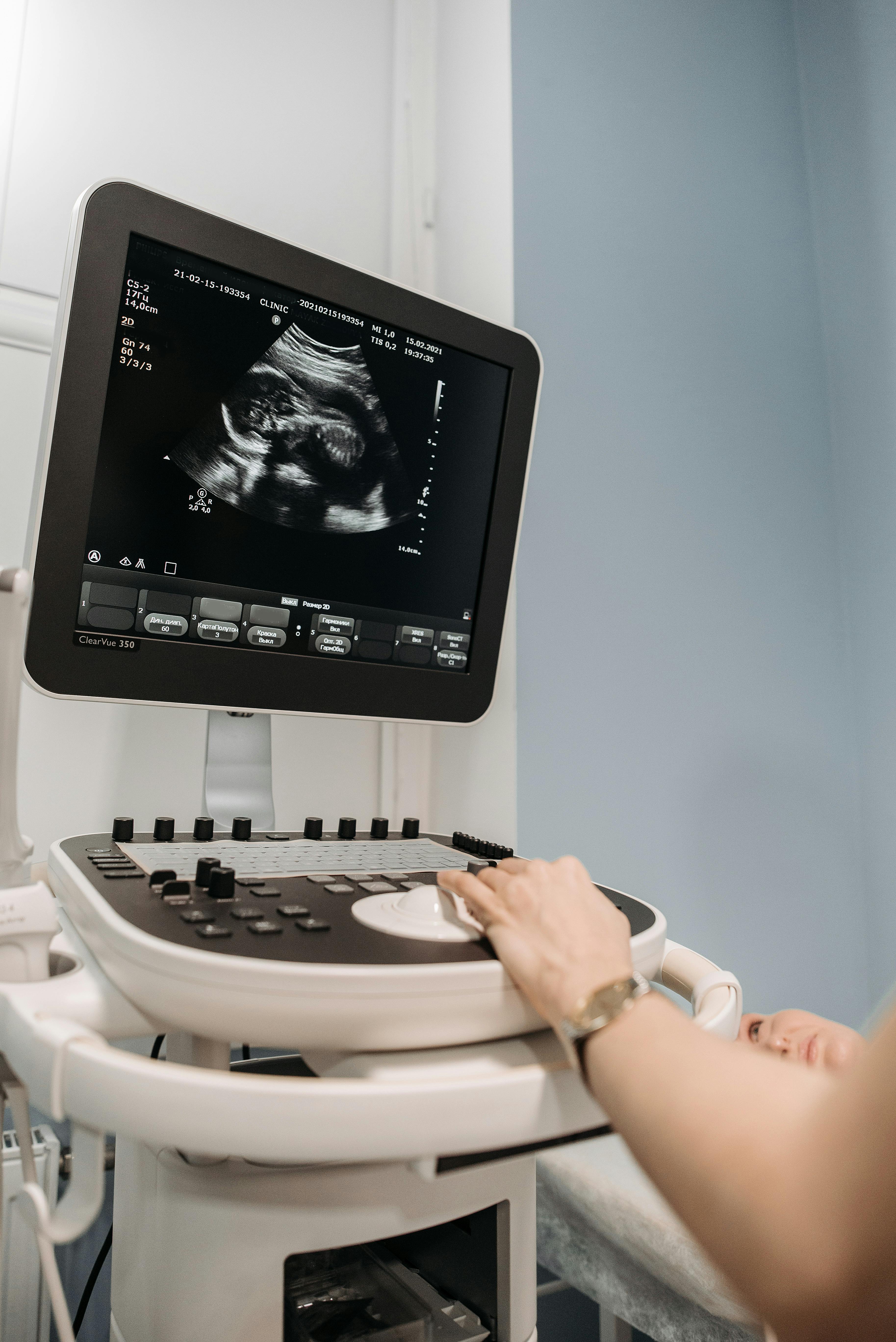
Repeat Visit Strategy: How It Works and What Drives It
The elective ultrasound industry has a natural multi-visit window built into it. A client who books an early gender determination session at 15 to 16 weeks, then returns for a 3D/4D session at 26 to 28 weeks, and comes back once more at 32 to 34 weeks for a clearer HD image has had three appointments in one pregnancy. That is three transactions, three opportunities to deliver a great experience, and three reference points the client carries into conversations with other expecting families.
Driving repeat visits requires timing awareness and proactive follow-up. Most clients do not spontaneously think “I should book another ultrasound appointment” — they respond to a reminder or an offer that arrives at the right moment in their pregnancy. An automated email sent at the 24-week mark to anyone who booked a gender session, reminding them that the 26 to 30-week window produces the best 3D and 4D images, can generate significant rebooking with minimal manual effort.
Package design also influences repeat visits. A studio that offers a “pregnancy journey package” at a bundled price for three sessions throughout the pregnancy removes the friction of the repeat-booking decision — the client commits at the beginning, you deliver three touchpoints across the pregnancy. The conversation about money is not a question mark hanging over every session; it is already settled.
The realistic constraint of the repeat visit strategy is biology. A client’s pregnancy window is finite. After delivery, the demand for prenatal elective ultrasound is gone until the next pregnancy — which may be one, two, or five years away, or may never happen again. Repeat visits within the pregnancy window are a high-return opportunity, but they cannot sustain growth on their own as a studio scales.
Referral Growth Strategy: How It Works and What Drives It
Referral growth in an elective ultrasound studio comes from two sources: organic word-of-mouth from satisfied clients, and structured referral relationships with professional partners. Both require a strong foundation of client experience, but they operate through different channels and at different speeds.
Organic word-of-mouth is largely a function of how your clients feel when they leave your studio. A family that had a genuinely memorable experience — a warm welcome, a session that went beautifully, images they were thrilled with, and a heartbeat stuffed animal their toddler immediately claimed — talks about it. They share it on social media. They tell the pregnant coworker who asks where to go. The single most effective referral marketing investment is in the experience itself: the warmth of the greeting, the quality of the images, the care taken throughout the session.
Structured referral relationships with OB-GYN offices, midwives, and doulas operate differently. These professionals are in regular contact with exactly your target client. When they recommend your studio by name, the conversion rate of that referral is far higher than most paid marketing channels because the recommendation comes from a trusted source. Building these relationships takes time and consistent professional outreach — dropping off business cards once rarely works. Regular check-ins, a professional referral card or rack card designed for medical waiting rooms, and the occasional thank-you for a referral that came through all build the relationship over time.
Who This Is Right For
Focus on repeat visits first if you are in the first six months of operation, your studio is in a market with a high birth rate, your first-impression experience is already strong and generating positive reviews, and you want the fastest possible revenue results from your existing client base. Repeat visits require no new marketing investment — they are revenue from clients who are already in your relationship.
Focus on referral growth if you have been operating for at least six months, have a strong enough track record to present yourself credibly to medical professionals, are in a smaller or more competitive market where new-client acquisition is the primary growth constraint, or want to build a client pipeline that is not entirely dependent on your own marketing channels.
Invest in both simultaneously if you have the operational capacity to deliver excellent experiences consistently (which is the foundation of both strategies), have staff handling administrative tasks so your attention is not entirely consumed by day-to-day operations, and have been in operation long enough to have a referral track record with at least a few medical professionals in your area.
Frequently Asked Questions
How many times do most elective ultrasound clients book during a single pregnancy?
On average, once or twice. Studios that actively promote multi-visit packages and follow up with clients at appropriate gestational ages see higher rates of three-session pregnancies. The gap between what clients would book with active follow-up and what they book without it is significant — most clients who would happily return simply do not think to reach out unless prompted.
What is a referral incentive and should I offer one?
A referral incentive is a benefit offered to clients who refer new bookings — commonly a discount on a future session or a small credit. They can increase referral rates but require careful design. An incentive that is too small is ignored. One that is too large trains clients to refer for the benefit rather than genuine enthusiasm. Many studios find that excellent client experience generates referrals without formal incentives, while others find a modest structured program useful for encouraging deliberate sharing.
How do I approach an OB-GYN office about a referral relationship?
A professional, in-person introduction is the most effective start. Bring a well-designed rack card or brochure that clearly positions elective ultrasound as a complement to prenatal care, not a replacement for it. The key message for medical partners is that you are not competing with their service — you are offering families an additional bonding experience that does not interfere with clinical care. Follow up periodically with new materials and a genuine thank-you when referrals arrive.
What is the most reliable indicator that my elective ultrasound studio client retention is working?
Track the percentage of new bookings that come from referrals — either client referrals or professional referrals. A studio where 30 percent or more of new bookings come from referrals has built meaningful retention and advocacy among existing clients. Below 15 percent usually signals that either the experience is not yet generating organic word-of-mouth or that structured referral systems are not in place.
Can a photographer or doula use their existing client base as a referral source for elective ultrasound?
Absolutely — and it is one of the strongest structural advantages for photographers and doulas adding elective ultrasound services. Your existing client base already trusts you in a professional context related to pregnancy. An announcement to your list and a brief personal note to clients currently in their pregnancy window converts faster than any cold outreach because the trust foundation is already there.
How does Google reviews fit into elective ultrasound studio client retention?
Reviews are both a retention signal and a referral driver. A studio with 50 or more strong reviews on Google looks established and trustworthy to new clients searching for services — which improves organic referral conversion. Reviews also provide ongoing social proof for your existing network and professional partners. A systematic post-appointment email asking for a review, sent 48 to 72 hours after a session, is the simplest high-return investment in your review profile.
Does offering a loyalty program make sense for an elective ultrasound studio?
Traditional loyalty programs are designed for high-frequency repeat purchases, which does not align well with the elective ultrasound model where the natural repeat window is one pregnancy. A better version for this industry is a return-client acknowledgment — a small discount or priority booking access for returning clients, applied automatically to a second or third booking. It rewards loyalty without requiring a formal points system and communicates that you value the returning relationship.
Is social media a useful tool for elective ultrasound studio client retention?
Yes, as a supplementary channel. A client who follows your Instagram after their appointment stays connected to your studio — they see your posts, may share them, and are reminded of you when a friend mentions they are expecting. Social media maintains top-of-mind awareness in between direct communications. It is not a primary retention tool on its own, but as part of a broader strategy that includes email and direct outreach, it adds value.
Our Recommendation
For most elective ultrasound studios, the right approach is sequenced: build your repeat visit infrastructure in the first six months by designing your packages, automating your follow-up emails, and delivering experiences that clients want to come back for. Then, as you accumulate reviews and satisfied clients, shift increasing attention to structured professional referral relationships with OB-GYNs, midwives, and doulas in your market.
The studios that grow most consistently over time are not the ones that chose one strategy and ignored the other. They are the ones that built both — using repeat visits to maximize revenue from every client and referrals to ensure a consistent flow of new clients who already arrive with trust.
If you are planning your marketing approach as part of launching a new studio, business training and consulting from Ultrasound Trainers covers both the studio experience side and the growth strategy in detail. The Small Business Administration also provides general resources on customer retention and referral marketing for small service businesses.
Want to Talk Through Your Growth Strategy?
Ultrasound Trainers works with studio owners at every stage — from launch to growth. If you want to think through how to approach retention and referrals in your specific market, reach out to start the conversation.
Contact Ultrasound TrainersAbout This Content: Ultrasound Trainers provides training, consulting, and equipment support for elective ultrasound studio owners across the United States. This article is informational in nature. Revenue and growth outcomes vary by market, operations, and execution.
Get the Inside Track
Training tips, business advice, and exclusive deals delivered straight to your inbox.

How to Get More Bookings for Your Elective Ultrasound Studio in Montana
Struggling to fill your elective ultrasound booking calendar in Montana? This guide covers what actually[...]

Buying an Elective Ultrasound Machine for an Arkansas Studio: What Actually Matters
Ready to buy an elective ultrasound machine for your Arkansas studio? This guide covers the[...]

How to Build a Pre-Launch Marketing Campaign for Your Elective Ultrasound Studio: A 60-Day Countdown Plan
Pre-launch marketing for an elective ultrasound studio begins 60 days before opening. This 60-day countdown[...]

What Career Changers in Hawaii Need to Know About Elective Ultrasound Training
Considering ultrasound training for a career change in Hawaii? This Q&A guide covers what training[...]

How to Find and Recruit Volunteer Scan Models for Elective Ultrasound Practice
Finding volunteer models for elective ultrasound practice is a skill in itself. Learn where to[...]

How to Write an Elective Ultrasound Business Plan That Actually Works
Writing an elective ultrasound business plan? This guide covers what to include, how to build[...]

How to Open an Elective Ultrasound Business in Honolulu: A Practical Startup Guide
Open an elective ultrasound business in Honolulu with confidence. This guide covers training, startup costs,[...]

Adding Elective Ultrasound to an Existing Photography or Doula Practice in Montana
Montana birth photographers and doulas: adding an elective ultrasound add-on business in Montana to your[...]

Starting an Elective Ultrasound Business in Cheyenne, Wyoming: First-Mover Advantage in the Least-Crowded Market in the Country
Thinking about starting an elective ultrasound business in Cheyenne, Wyoming? This guide covers the F.E.[...]

Elective Ultrasound Training for Career Changers in Sweden
Considering a career change into elective ultrasound in Sweden? Find out what training involves, whether[...]

What Career Changers in Fayetteville Should Know About Elective Ultrasound Training
Thinking about elective ultrasound training in Fayetteville, Arkansas as a career changer? This Q&A guide[...]

The Biggest Mistake Las Vegas Elective Ultrasound Studios Make With Their Marketing
Elective ultrasound studio marketing in Las Vegas prioritizes trust and reviews over ad spend. Here's[...]
Ready to open your own studio? Get the complete roadmap at our Start Your Own 3D/4D Ultrasound Studio page.
