

The best 4D or HD ultrasound machine is the one that fits your services, imaging style, operator skill, room, support needs and complete ownership budget. A thoughtful comparison turns a long feature list into a practical business decision.
This buyer’s guide provides a vendor-neutral framework for comparing new and professionally refurbished ultrasound systems for an elective studio. Use it to define what you need, structure demonstrations, compare written quotes and select equipment your team can operate confidently.

1. Define the job before comparing machines
Start with the appointments you plan to offer. List the expected mix of 2D viewing, gender determination, 3D images, real-time 4D, HD-style rendering, recordings and exported keepsakes. Note typical appointment length, projected weekly volume, number of operators and whether the system will remain in one room or move between locations.
This service profile becomes your buying standard. It keeps a premium feature that your studio may rarely use from outweighing dependable image quality, comfortable operation and responsive support.
- Services and image formats you intend to deliver
- Maximum machine dimensions and room layout
- Display, printer, network and export connections
- Operator experience and training needs
- Service-response expectations and downtime plan
- Maximum complete ownership budget
2. Compare performance with real-world scans
Marketing images can demonstrate what a platform is capable of, but a live demonstration shows how consistently you can produce those results. Ask to scan under conditions that resemble your future appointments. Work through 2D orientation, 3D acquisition, live 4D movement, rendering adjustments, saving, exporting and returning to a preferred preset.
Evaluate more than a single attractive still image. Look at 2D detail, volume acquisition, surface rendering, motion smoothness, depth performance and the time required to optimise a view. Notice whether the controls make sense to the intended operator and whether adjustments can be made without interrupting the client experience.
3. Match the transducer and configuration to the service
The probes included with a system matter as much as the console. Confirm the exact make, model, frequency range, condition and warranty of every transducer in the quote. For elective obstetric imaging, ask the seller to demonstrate the intended abdominal volume probe on the exact system and software configuration being offered.
Clarify which capabilities are installed and licensed. Two machines with the same model name may have different probes, software options, rendering packages or export functions. Record the system serial number, software version and installed options so the delivered machine can be matched to the proposal.
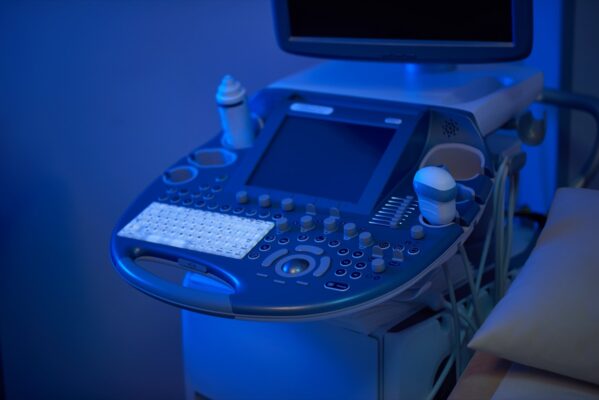
4. Decide between new and professionally refurbished
A new system may provide the newest interface, a manufacturer-backed warranty and a longer expected support horizon. A professionally refurbished system may offer a higher equipment class within the same budget. Either path can work when documentation, configuration and support are clear.
For a refurbished machine, ask who inspected it, what was tested, what was replaced, how image performance was verified and whether service records are available. Request current photographs or a live video of the actual unit. Confirm cosmetic condition, probe condition, warranty coverage, return terms and the process used if the delivered system differs from the agreed specification.
5. Evaluate workflow, comfort and client presentation
Small workflow differences become important across a full appointment day. Test boot time, preset selection, patient entry, annotation, image review, clip saving, export and shutdown. Check monitor position, control-panel reach, console height, probe-cable management and mobility in the planned room.
Also confirm how families will view the session. Review supported external displays, output resolution, required adapters and audio or recording options. If images are delivered digitally, test the complete path from capture to the studio’s approved delivery system.
6. Compare service support before the machine needs it
Ask each seller who provides technical support, where service personnel are located and what happens when remote troubleshooting is not enough. A useful support plan defines response times, covered parts, labour, travel, software assistance, probe coverage and whether a loaner or backup option is available.
Confirm how long the manufacturer or service organisation expects to support the model. Availability of parts, compatible probes and trained service engineers can matter more over time than a small difference in purchase price.
7. Calculate total ownership—not only purchase price
Build a multi-year ownership worksheet that includes the machine, transducers, enabled software, shipping, installation, electrical or room preparation, display equipment, training, financing, preventive service, warranty extensions, supplies and a reasonable downtime reserve.
Place every quote into the same worksheet. This makes it easier to see when one proposal includes training and probe coverage while another lists them separately. If financing is part of the plan, compare total repayment, term, ownership provisions and early-payoff language—not only the monthly payment. The elective ultrasound equipment financing guide explains that comparison in detail.
| Decision area | What to verify | Evidence to keep |
|---|---|---|
| Imaging | 2D, 3D/4D, rendering and motion on real scans | Demo notes and sample exports |
| Configuration | Probes, software, licenses and accessories | Itemised written quote |
| Condition | Actual unit, serial number and inspection | Photos, service history and test report |
| Support | Coverage, response, parts and loaner process | Warranty and service agreement |
| Ownership | All acquisition and operating costs | Three-to-five-year cost worksheet |
8. Connect equipment selection with hands-on training
A capable machine reaches its potential when the operator understands 2D orientation, probe handling, positioning, acquisition, optimisation and session flow. Ask whether training is performed on the same platform or whether instruction can be adapted to the machine you purchase.
Training before the final decision can also clarify which features matter to your workflow. Review the hands-on elective ultrasound training options and the current elective ultrasound equipment resources as part of one coordinated plan.

The 12-point buyer scorecard
- Fit for the services you will actually offer
- Consistent 2D performance and orientation
- 3D/4D acquisition and rendering quality
- Useful performance across varied imaging conditions
- Correct probe type, frequency range and condition
- Confirmed software options and transferable licenses
- Efficient saving, exporting and external display workflow
- Comfortable controls, monitor position and room fit
- Clear warranty, service response and downtime plan
- Documented condition and serial-number verification
- Training that matches the operator and equipment
- Complete ownership cost within the business budget
Frequently asked questions
Do I need the newest ultrasound model?
Not necessarily. The right choice depends on image performance, configuration, condition, support horizon, operator workflow and ownership cost. A well-supported system that meets the studio’s requirements can be more valuable than features that will not be used.
Should I buy a machine before taking training?
It is often helpful to understand the scanning workflow before finalising equipment. Training can make demonstrations more meaningful and help you recognise which controls, probes and image features support your intended services.
What should be included in a written quote?
The exact system and serial number when available, probes, software options, accessories, delivery, installation, training, warranty, service terms, payment terms and return or acceptance conditions.
Can Ultrasound Trainers help compare equipment?
Yes. Ultrasound Trainers can help connect machine selection with hands-on training, studio workflow and the services you intend to offer.
Choose equipment with a complete plan
Discuss your services, training needs, room and equipment options with a team experienced in elective ultrasound studios.
Discuss Your Equipment Goals