

Every elective ultrasound studio will eventually book a client with a high-risk pregnancy. High-risk pregnancy clients in an elective ultrasound studio present a specific policy and communication challenge that most owners are unprepared for when it happens the first time. The session itself may be entirely appropriate for the client’s situation – or it may not be – but the studio’s ability to handle the question professionally, document its policies clearly, and communicate with the client in a way that is both honest and supportive determines whether the outcome is a positive experience or a liability problem.
This is not a topic where improvisation is acceptable. Studios that handle high-risk client inquiries on a case-by-case basis without written policy tend to create inconsistency – and inconsistency in a healthcare-adjacent setting is where liability exposure grows. A clear written policy, a trained communication script, and a documentation habit protect the studio, protect the client, and establish the kind of professional credibility that referred medical providers respect.
Studios serving high-risk pregnancy clients in an elective ultrasound setting need a written intake policy that distinguishes elective keepsake services from diagnostic evaluation, a trained communication script for staff, a documentation process for client acknowledgment, and a clear referral protocol when a client’s situation warrants medical consultation rather than an elective session. Last Updated: June 2026
Why High-Risk Pregnancy Clients in Your Elective Ultrasound Studio Require a Written Policy
High-risk pregnancy clients in an elective ultrasound studio require a documented policy because staff need a consistent framework to apply in every case, regardless of who is working. When a client discloses a high-risk diagnosis during intake – placenta previa, multiple gestation, preterm labor history, cervical incompetence, or a fetal condition under monitoring – staff need to know exactly what the studio will do, what it will not do, and what language to use. Without a written policy, that decision falls to individual staff judgment in a moment of client interaction pressure, which is not a reliable system.
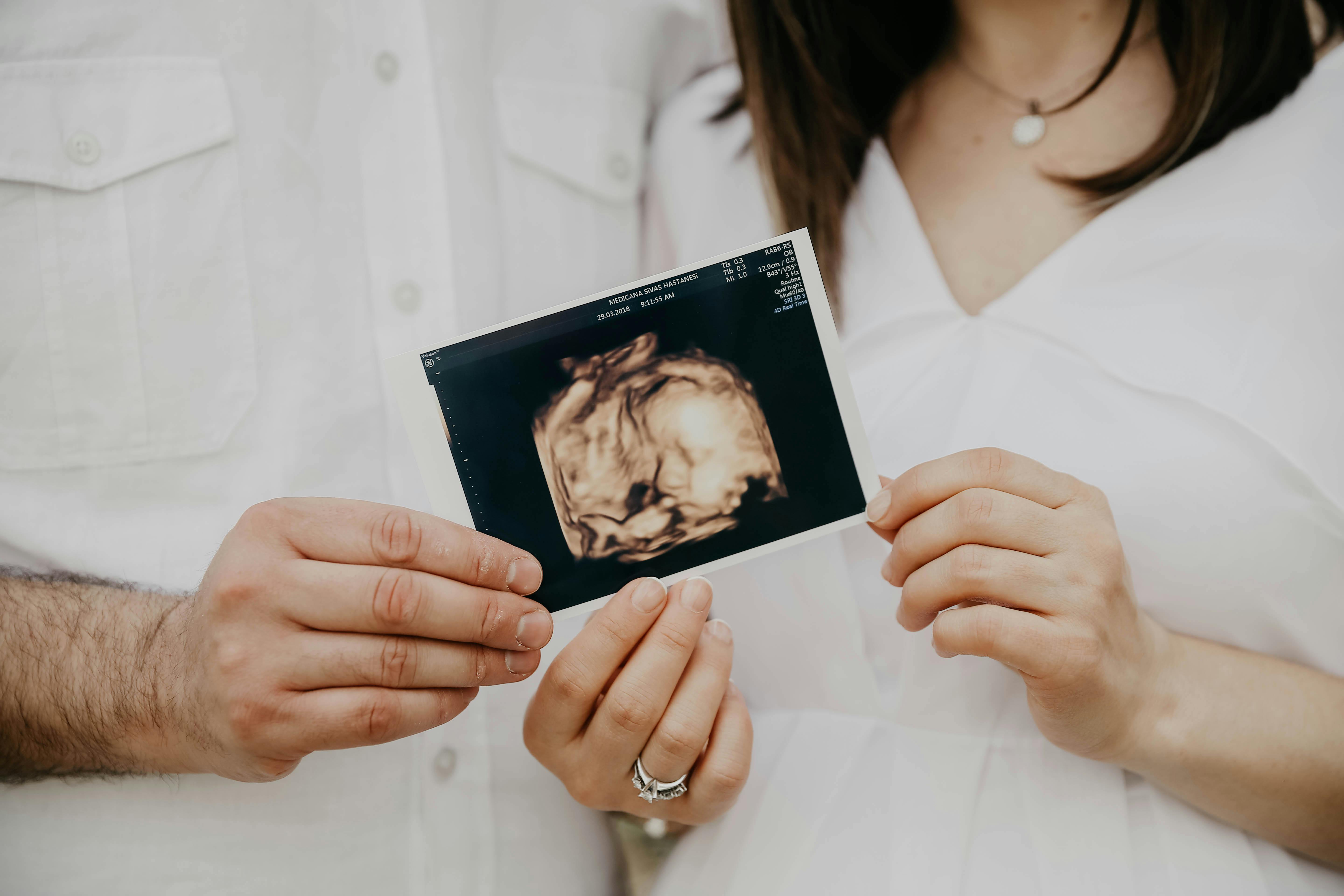
The American Institute of Ultrasound in Medicine (AIUM) publishes guidance distinguishing diagnostic medical ultrasound from non-diagnostic elective imaging. That distinction is the foundation of any studio’s high-risk policy: elective studios provide keepsake and bonding experiences using ultrasound imaging and do not perform diagnostic evaluation, monitor fetal conditions, or provide clinical interpretation of findings. That positioning must be consistent across every client interaction, and it becomes especially important when a client has a known high-risk condition under medical management.
What Your High-Risk Client Policy Should Cover
A well-written studio policy for high-risk clients does not need to be long. It needs to be specific, consistently applied, and clearly communicated to clients before any session takes place. The policy should address five areas.
Intake Disclosure Process
Your booking intake form should include a question that asks clients to disclose any high-risk diagnosis or pregnancy complication their physician is currently monitoring. This is not about screening clients out – it is about ensuring staff are informed before the session begins and can communicate with the client appropriately. The form should also include language explaining that elective ultrasound is a keepsake experience only and is not a substitute for diagnostic evaluation or prenatal care. According to the American Institute of Ultrasound in Medicine, operator knowledge, technique, and equipment appropriateness all affect image quality and safety in ultrasound use, underscoring why staffed studio policies matter.
Client Communication Script
When a client discloses a high-risk condition, staff need a consistent script. The script should acknowledge the client’s situation warmly and without alarm, confirm what the elective session does and does not include, and – if appropriate based on the studio’s policy decision about that category of high-risk condition – confirm whether the studio will proceed with the session. That script should be written, trained, and posted in the staff area rather than left to individual improvisation.
Categories of High-Risk Conditions and the Studio’s Position on Each
Not all high-risk diagnoses are equivalent from a studio policy perspective. Some studios choose to accept clients with certain managed high-risk conditions and decline others. Whatever decision a studio makes, it should be applied consistently across every client with that condition – not evaluated case by case on the day of the session. A tiered policy might distinguish between conditions that are actively monitored with restricted activity (where the studio declines to perform a session without physician clearance) versus conditions that are being managed but carry no specific restriction from the client’s provider.
Physician Clearance Documentation
For certain high-risk conditions, requiring written physician clearance before performing a session is a reasonable and professionally defensible policy. This protects the studio from performing a session that the client’s medical provider might have specific concerns about, and it puts the liability for the clearance decision with the appropriate licensed professional. A simple clearance form stating that the client’s provider has no objection to a non-diagnostic keepsake ultrasound session at this stage of pregnancy is sufficient. Build this requirement into your intake process rather than requesting it at the session.
Documentation After the Session
When a session is completed with a client who disclosed a high-risk condition, document the session in writing. Record the condition disclosed, the clearance documentation received (if required), the consent language the client acknowledged, and any notes about how the session was conducted. This documentation protects the studio in the event of any future question about the appropriateness of the session.
What Your Studio’s Policy Should Not Do
The policy should not attempt to evaluate or categorize the medical severity of a client’s high-risk condition. That is a clinical judgment that belongs to a licensed medical provider. The studio’s policy governs what the studio offers and how it communicates – not whether a high-risk pregnancy is safe or unsafe in a medical sense.
Staff should not attempt to reassure a high-risk client that their condition is “probably fine” or that the scan “won’t affect anything.” Both statements approach diagnostic territory that elective studio staff are not qualified to enter. According to the Bureau of Labor Statistics, diagnostic medical sonographers complete extensive clinical training specifically for interpreting and evaluating medical imaging – a distinction that underscores why elective studio operators and staff are positioned differently and should communicate accordingly.
The policy also should not create a blanket refusal of all high-risk clients without distinguishing between conditions. That approach is often unnecessary and may be perceived as discriminatory by clients who have received full clearance from their physician and have no restriction on non-diagnostic imaging. A thoughtful tiered policy serves both the studio’s liability interests and the clients who want access to a keepsake experience during a complicated pregnancy.
The Intake Form Language That Sets the Right Expectations
Intake form language is the first line of a studio’s communication about what it offers. For high-risk clients, the language matters significantly. The form should include a section that asks for disclosure of any pregnancy complications, states clearly that elective ultrasound is a keepsake bonding experience and not a medical evaluation, notes that the studio does not interpret findings or monitor fetal health, and acknowledges that clients should continue routine prenatal care with their licensed provider.
| What the intake form should ask | Are you currently under medical management for any pregnancy complication or high-risk diagnosis? If yes, has your provider restricted any activities? |
| What the intake form should state | This session is a keepsake bonding experience using ultrasound imaging. It does not include medical evaluation, clinical interpretation, or diagnostic assessment of any kind. |
| What the intake form should confirm | By booking this session, you acknowledge that elective ultrasound is not a substitute for diagnostic ultrasound or prenatal care and that you will continue routine care with your licensed provider. |
| When physician clearance is required | Clearly state in the form which conditions or categories trigger the clearance requirement before the session can proceed. |
Training Your Staff to Handle These Conversations
The policy is only as effective as the staff who apply it. Spend time in training specifically on high-risk client conversations. Role-play the scenario where a client calls to ask if they can book a session with a specific high-risk condition. Walk through the language that is appropriate and the language that is not. Practice the handoff language when a situation requires escalating to a studio owner decision rather than a front-line staff decision.
The goal is confidence. A staff member who is confident in the policy and the script handles these conversations professionally. A staff member who is uncertain tends to either over-reassure the client (inappropriate) or become visibly uncomfortable (also problematic). Written policy and trained scripts solve both problems.
Policy and compliance questions are some of the most important conversations a studio owner has in their first two years. If you want to talk through how to structure your client intake process, Ultrasound Trainers can help. Our business training program covers the operational foundations that protect studios from day one.
Reach out to Ultrasound TrainersPeople Also Ask: High-Risk Pregnancy Clients and Elective Ultrasound Studio Policy
Can an elective ultrasound studio refuse service to a high-risk pregnancy client?
Yes, and in certain circumstances doing so is the professionally appropriate decision. A studio’s policy may specify that certain high-risk conditions require physician clearance before a session proceeds, or that certain active complications fall outside what the studio can safely accommodate in an elective setting. Any refusal or clearance requirement should be applied consistently across all clients with that condition, documented in writing, and reviewed by a qualified attorney for your specific jurisdiction.
What should elective studio staff say when a client discloses a high-risk condition?
Staff should acknowledge the disclosure warmly, confirm what the elective session does and does not include, and follow the studio’s written policy for that category of condition. The most important things to avoid are any language that implies evaluation of the condition’s severity, any reassurance about safety or medical normalcy, and any improvisation that departs from the studio’s documented approach. When in doubt, staff should escalate to a studio owner decision rather than proceeding without clear guidance.
Do elective ultrasound studios need liability insurance that covers high-risk clients?
Elective ultrasound studios should carry appropriate general liability and professional liability coverage regardless of their client mix. The specific coverage question regarding high-risk clients is one for a licensed insurance professional familiar with healthcare-adjacent service businesses in your state. Studios should review their coverage with an agent before finalizing their high-risk client policy, as policy decisions and coverage terms need to be aligned.
What conditions are typically considered high-risk in pregnancy?
High-risk designations are made by licensed medical providers and include conditions such as preeclampsia, placenta previa, preterm labor history, multiple gestation, gestational diabetes requiring medication management, cervical incompetence, and fetal conditions under active monitoring. An elective studio does not diagnose or determine what constitutes high-risk – the client’s provider makes that determination. The studio’s policy covers how it responds when a client discloses an existing high-risk designation from their medical team.
Should a studio’s high-risk policy be reviewed by a lawyer?
Yes. Any studio policy that governs how the business responds to a client’s medical status has legal implications that vary by state and business structure. The framework provided in this guide is a starting point for thinking through your policy, not a substitute for qualified legal review. A business attorney familiar with healthcare-adjacent services in your state can identify state-specific risks and help you document your policy in a way that provides the strongest protection.
Disclaimer: This content is for general informational purposes and does not constitute legal or medical advice. Consult a qualified attorney for policy guidance specific to your business and jurisdiction.
Last Updated: June 2026
Get the Inside Track
Training tips, business advice, and exclusive deals delivered straight to your inbox.

How to Get More Bookings for Your Elective Ultrasound Studio in Montana
Struggling to fill your elective ultrasound booking calendar in Montana? This guide covers what actually[...]

Buying an Elective Ultrasound Machine for an Arkansas Studio: What Actually Matters
Ready to buy an elective ultrasound machine for your Arkansas studio? This guide covers the[...]

How to Build a Pre-Launch Marketing Campaign for Your Elective Ultrasound Studio: A 60-Day Countdown Plan
Pre-launch marketing for an elective ultrasound studio begins 60 days before opening. This 60-day countdown[...]

What Career Changers in Hawaii Need to Know About Elective Ultrasound Training
Considering ultrasound training for a career change in Hawaii? This Q&A guide covers what training[...]

How to Find and Recruit Volunteer Scan Models for Elective Ultrasound Practice
Finding volunteer models for elective ultrasound practice is a skill in itself. Learn where to[...]

How to Write an Elective Ultrasound Business Plan That Actually Works
Writing an elective ultrasound business plan? This guide covers what to include, how to build[...]

How to Open an Elective Ultrasound Business in Honolulu: A Practical Startup Guide
Open an elective ultrasound business in Honolulu with confidence. This guide covers training, startup costs,[...]

Adding Elective Ultrasound to an Existing Photography or Doula Practice in Montana
Montana birth photographers and doulas: adding an elective ultrasound add-on business in Montana to your[...]

Starting an Elective Ultrasound Business in Cheyenne, Wyoming: First-Mover Advantage in the Least-Crowded Market in the Country
Thinking about starting an elective ultrasound business in Cheyenne, Wyoming? This guide covers the F.E.[...]

Elective Ultrasound Training for Career Changers in Sweden
Considering a career change into elective ultrasound in Sweden? Find out what training involves, whether[...]

What Career Changers in Fayetteville Should Know About Elective Ultrasound Training
Thinking about elective ultrasound training in Fayetteville, Arkansas as a career changer? This Q&A guide[...]

The Biggest Mistake Las Vegas Elective Ultrasound Studios Make With Their Marketing
Elective ultrasound studio marketing in Las Vegas prioritizes trust and reviews over ad spend. Here's[...]
