

This is what most people get wrong about the keepsake ultrasound client experience: they think it is about the scan. It is not. The scan is the centerpiece, but the experience is everything around it — how clients feel when they arrive, what they see in the room, how the operator guides them through the session, and what they leave with. Get those elements right, and the scan delivers. Get them wrong, and even technically impressive imaging disappoints.
For studio operators, understanding the client experience from a business design perspective is one of the most consequential things you can do early in your planning. The decisions you make about room setup, session flow, communication scripts, and package structure are not aesthetic choices — they are operational choices that directly determine your reviews, your referrals, and your booking volume.
This post breaks down what clients actually expect from a keepsake ultrasound session, and more importantly, what those expectations mean for how you design and run your studio.
Clients expect a keepsake ultrasound session to feel warm, professional, and emotionally meaningful — not clinical. The keepsake ultrasound client experience is built through room environment, session pacing, operator communication, and the quality of the media they leave with. Studios that design around these expectations consistently earn better reviews and stronger referrals than those focused on imaging alone.
What Clients Are Actually Expecting Before They Arrive
Most clients arrive at their first elective ultrasound session having done some level of research — they have seen posts on Instagram, looked at studio photos, read reviews, and probably compared a few options in their area. By the time they book, they have a mental image of what they expect. Your job as a studio operator is to meet or exceed that image consistently.
What clients generally expect: a space that looks boutique and intentional rather than improvised or clinical, an operator who is warm and confident (not nervous or uncertain), a large and impressive display where they and their family can watch the session comfortably in real time, and a session that moves at a pace that lets the emotional moment land rather than rushing through. They also expect to leave with media — images, video clips, or printed photos — that they are excited to share.
What clients do not expect but will love: small touches that elevate the experience above the baseline. A towel warmer for the ultrasound gel. A thoughtful reveal moment when gender is confirmed. A display that is genuinely impressive in size. An operator who explains what they are seeing in accessible, warm language rather than either staying silent or using jargon. These details are easy to implement and have a disproportionate effect on the experience quality clients report in reviews.
Room Environment: What It Signals to Clients
The room your clients walk into communicates something before anyone says a word. A space that is clean, designed, and purpose-built signals that you take this seriously — that this is a real business run by a professional, not someone who bought a machine and set it up in a spare room. That signal matters for client confidence and for the emotional permission they give themselves to invest fully in the experience.
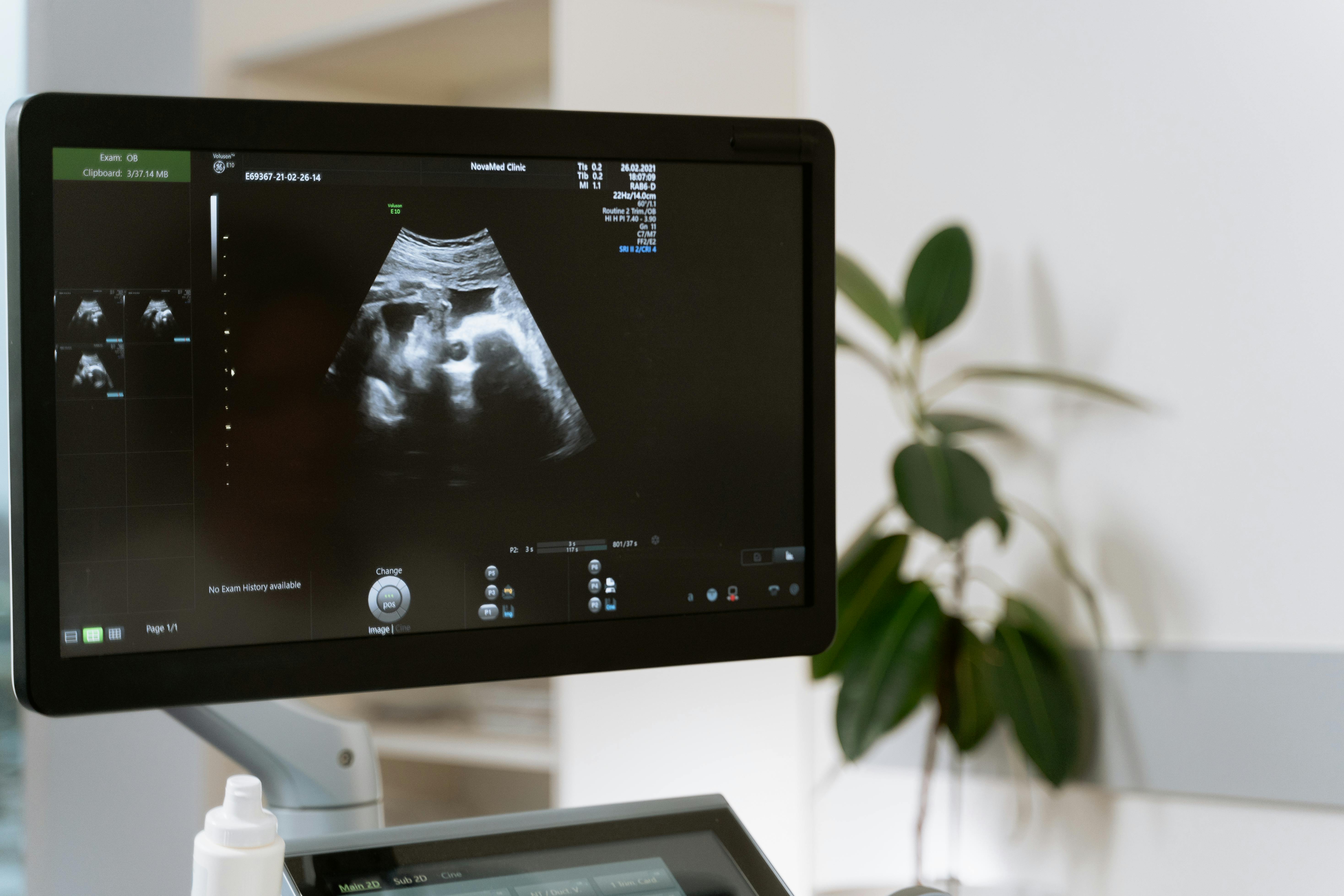
The examination table positioning relative to the display is one of the most practically important decisions in the room setup. The client needs to be able to see the display comfortably from the table without craning their neck. Family members need sight lines that allow them to watch without standing in the operator’s way. A 65 or 70-inch television mounted on the wall directly in the client’s sightline from the table — or a well-positioned projector setup — creates a genuinely impressive viewing experience that clients describe vividly in their reviews.
Lighting should be warm and controllable. Overhead fluorescent lighting feels clinical. Dimmable ambient lighting with targeted task lighting for the operator creates an environment that feels intentional and comfortable. Some studios dim the lights slightly during the session itself to enhance the display effect — the baby appears more vivid on a large screen in a darker room, and the visual drama of the moment lands more powerfully.
Session Pacing and Flow
A well-paced session moves deliberately but not slowly. Clients are emotionally primed for an experience, and an operator who seems rushed communicates that the experience is transactional. An operator who takes time to orient the family, explain what they are about to see, and create natural moments of pause during the session gives the emotional content room to land.
The flow of a standard 30-minute session typically looks something like this: brief welcome and check-in, waiver review and positioning, a 2D overview to orient the operator to baby’s position, transition to 3D/4D imaging, time spent capturing facial features and movements, gender confirmation if included in the package, final media capture and review, and conclusion with any printed or digital deliverables. Each of these moments has a natural pace. Operators who practice their session flow — not just their scanning — deliver more consistently excellent experiences than those who improvise.
| Session Element | What It Accomplishes | Common Operator Mistake |
|---|---|---|
| Welcome and orientation | Sets warm tone, confirms expectations | Skipping to scan too quickly |
| 2D overview | Locates baby’s position for efficient 3D scanning | Spending too long here without transitioning |
| 3D/4D imaging | Captures the emotional centerpiece of the session | Rushing through or staying silent |
| Gender reveal moment | Creates the most shareable moment of the visit | Announcing without building anticipation |
| Deliverable review and close | Reinforces the value of what they received | Rushing the handoff of media at the end |
Operator Communication: The Variable That Defines Reviews
How the operator communicates during a session — what they say, how they say it, when they speak and when they stay quiet — has more impact on client satisfaction than almost any other variable. Clients who feel guided, informed, and emotionally held throughout the session consistently give five-star reviews. Clients who feel like the operator was uncertain, quiet to the point of awkwardness, or too clinical in their descriptions leave less satisfied regardless of image quality.
Warm narration — describing what the family is seeing in accessible, celebratory language without veering into clinical territory — is a skill that develops through practice and preparation. Having a repertoire of language for common session moments (the first appearance of the baby’s face in 3D, the gender reveal, moments when the baby moves or yawns) allows the operator to be consistently engaging rather than improvising under pressure.
The non-diagnostic boundary stays firm throughout. Health questions get warmly redirected to the client’s medical provider. Comments about anatomy stay in keepsake territory — “Look at those cheeks,” not “I can see the facial structure clearly.” This line is both a legal necessity and a communication skill, and it gets easier with practice and proper training.
Package Structure and What Clients Actually Value
Most clients choose their package before they arrive, based on what they read on your website or booking page. The package structure you offer shapes not just revenue but the experience itself — what the session includes, how long it runs, and what clients leave with.
A tiered package structure (basic, standard, premium) gives clients agency while anchoring the value conversation. The most common pattern is a short basic package for gender confirmation or a quick first look, a standard package that covers the bulk of keepsake sessions, and a premium package that adds extended time, more deliverables, and upsell products like heartbeat animals or USB drives with video.
What clients value most, consistently, is the media they leave with. Images they can share on social media. Video clips they can watch repeatedly. Printed photos they can put in a frame. Operators who invest in quality media deliverables and present them thoughtfully at the close of the session reinforce the value of the experience in a tangible way that drives referrals.
The upsell moment — offering add-on products during the session — works when it is warm and natural and fails when it feels like a sales script. The heartbeat recording in a stuffed animal is genuinely something many families want when it is presented as an option. The key is offering it as a natural part of the conversation rather than a formal sales pitch.
Building the Experience Around Referrals and Reviews
The keepsake ultrasound client experience is your most powerful marketing tool. Families who have a great session do not need to be asked to share it — they want to. The images are inherently shareable. The emotional content is taggable. The experience is the kind of thing people post about, text to their best friend, and mention at their next OB appointment.
What operators can do to accelerate this natural behavior: make sharing easy (provide images in a digital format optimized for social, with the studio’s handle or watermark), ask directly and warmly for a review at the close of the session, and follow up with a thank-you message that includes a direct link to your Google review page. These simple steps convert a percentage of every satisfied client into an active word-of-mouth asset.
Ultrasound Trainers’ training programs cover session flow, client communication, and experience design as part of the core curriculum. If you want to understand what building a professional client experience looks like in practice, our business training program covers both the operational and marketing side of running a studio that consistently earns five-star experiences.
People Also Ask
What should be included in a standard keepsake ultrasound session?
A standard session typically includes a 30-minute scan time, real-time 3D and 4D imaging displayed on a large screen, gender confirmation if the client is within the appropriate gestational range, a set of printed or digital images, and any included media like a USB drive or photo print package. Session inclusions vary by studio and package tier — the most important thing is that what is included matches what clients were shown during booking.
How should operators handle a session where imaging is difficult?
Challenging sessions — where the baby is positioned awkwardly, facing away, or not moving — are a normal part of running an elective studio. The professional response is to communicate warmly with the family, try positional techniques to encourage fetal movement, and extend the session slightly if possible within the scheduled time. If a clear session is not achievable, a clear policy on rescheduling prevents difficult client conversations after the fact.
What is the ideal room setup for an elective ultrasound studio?
The ideal room has a comfortable examination table positioned so the client has a clear sightline to a large display (65 inches or larger, or a projector setup), comfortable seating for family members, warm controllable lighting, and a design that feels boutique and intentional rather than clinical. Practical details like a towel warmer for gel, a clean and organized equipment setup, and enough space for several family members to attend comfortably all contribute to the overall experience quality.
What add-on products do elective ultrasound clients value most?
Heartbeat animals (stuffed animals that play a recorded heartbeat from the session) are among the most popular add-on products at elective studios. USB drives with video clips and digital images, framed photo prints, gender reveal products, and live streaming links for family members who cannot attend are also strong sellers. The most effective upsells are ones that extend the experience beyond the session itself — something the client takes home that continues to hold emotional value.
How many people can typically attend a keepsake ultrasound session?
Most studios allow two to four guests in addition to the pregnant client. Some studios have larger viewing rooms that can accommodate more, which can be a differentiator for families who want to include extended family members. Whatever your room capacity, having a clear policy communicated at booking prevents the awkward situation of more people arriving than the space comfortably holds.
Should elective ultrasound studios offer live streaming?
Live streaming is a strong differentiator that has become increasingly popular since many families have relatives who cannot attend sessions in person. Offering a streaming link that grandparents, friends, or other family members can join remotely adds emotional depth to the session and is a feature that clients mention specifically in positive reviews. The technical setup is relatively straightforward and the perceived value to clients is high.
Build a Studio Experience Worth Talking About
If you are planning a studio and want help thinking through session design, package structure, and the operational decisions that drive great reviews, Ultrasound Trainers can help you build the foundation right from the start.
Contact Our TeamAbout Ultrasound Trainers: Ultrasound Trainers provides hands-on elective ultrasound training and comprehensive studio launch support for operators across the United States. Our training covers scanning technique, client communication, session design, and the business fundamentals that drive long-term studio success. Learn more at ultrasoundtrainers.com.
Last Updated: April 28, 2025
Get the Inside Track
Training tips, business advice, and exclusive deals delivered straight to your inbox.

How to Build a Pre-Launch Marketing Campaign for Your Elective Ultrasound Studio: A 60-Day Countdown Plan
Pre-launch marketing for an elective ultrasound studio begins 60 days before opening. This 60-day countdown[...]

What Career Changers in Hawaii Need to Know About Elective Ultrasound Training
Considering ultrasound training for a career change in Hawaii? This Q&A guide covers what training[...]

How to Find and Recruit Volunteer Scan Models for Elective Ultrasound Practice
Finding volunteer models for elective ultrasound practice is a skill in itself. Learn where to[...]

How to Write an Elective Ultrasound Business Plan That Actually Works
Writing an elective ultrasound business plan? This guide covers what to include, how to build[...]

How to Open an Elective Ultrasound Business in Honolulu: A Practical Startup Guide
Open an elective ultrasound business in Honolulu with confidence. This guide covers training, startup costs,[...]

Adding Elective Ultrasound to an Existing Photography or Doula Practice in Montana
Montana birth photographers and doulas: adding an elective ultrasound add-on business in Montana to your[...]

Starting an Elective Ultrasound Business in Cheyenne, Wyoming: First-Mover Advantage in the Least-Crowded Market in the Country
Thinking about starting an elective ultrasound business in Cheyenne, Wyoming? This guide covers the F.E.[...]
Elective Ultrasound Training for Career Changers in Sweden
Considering a career change into elective ultrasound in Sweden? Find out what training involves, whether[...]

What Career Changers in Fayetteville Should Know About Elective Ultrasound Training
Thinking about elective ultrasound training in Fayetteville, Arkansas as a career changer? This Q&A guide[...]

The Biggest Mistake Las Vegas Elective Ultrasound Studios Make With Their Marketing
Elective ultrasound studio marketing in Las Vegas prioritizes trust and reviews over ad spend. Here's[...]

Mobile Elective Ultrasound for Baby Shower Events: Packages, Pricing, and Logistics
Mobile ultrasound baby shower events guide for elective studio operators. Covers package structure, pricing frameworks,[...]
Birth Center and Midwife Referral Partnerships: Building a Consistent Lead Pipeline for Your Studio
A birth center referral partnership for an elective ultrasound studio builds a consistent, high-converting lead[...]
