

You do not have to quit your job to open an elective ultrasound studio. That is the direct answer to the question this post is going to work through — because it is the most common assumption people make, and it stops a lot of people from exploring something that could genuinely fit around their current life.
Running a part time elective ultrasound business is not the same as running a full-time studio with fewer hours. It requires a different approach to scheduling, pricing, marketing, and expectations. But for photographers, doulas, healthcare workers, and career changers who are not ready to leave a stable income behind, it is a legitimate and often smart way to enter this industry.
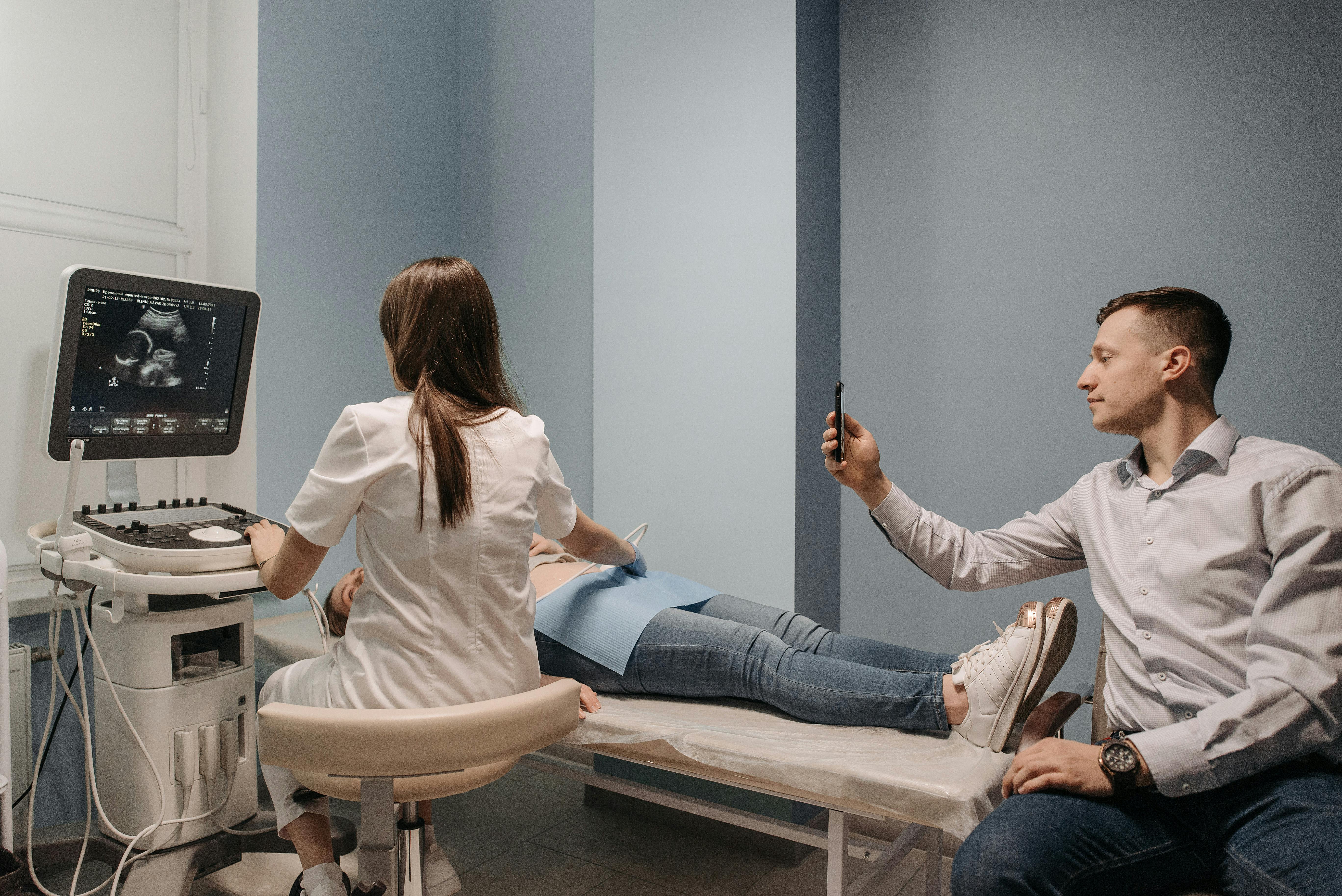
What Does “Part Time” Actually Mean for an Elective Ultrasound Studio?
In the elective ultrasound space, part time typically means operating your studio on a scheduled basis rather than by appointment every day of the week. Some owners set specific scan days — Saturdays only, weekday evenings, or two mornings per week — and book all clients within those windows. Others operate on a more open schedule but limit their weekly session count to what fits around their other work.
The good news about elective ultrasound specifically is that it is appointment-driven. You are not walking into a storefront where clients arrive unexpectedly. You are managing a booking calendar, which gives you a natural structure for defining when you are available and when you are not. That predictability makes part-time operation far more manageable than it might be in a retail or walk-in service model.
It is worth being honest, though, about what “part time” includes. The scanning sessions are the visible part of the work. But there is also client communication, booking management, equipment maintenance, social media, and the occasional follow-up with referral partners. Accounting for all of that in your available-hours estimate is important before you commit to a schedule.
Can You Build a Real Client Base Working Limited Hours?
Yes, but with realistic expectations on how long it takes. Building a consistent client base from part-time availability takes longer than it would from a five-day-a-week studio. That is not a deal breaker — it is just a planning reality. If you open on Saturdays only, for example, you can typically see four to six clients in a day depending on your session lengths. That is 16 to 24 clients per month before you even add an evening or second day.
The key question is whether your local market has enough pregnancy-stage clients at the gestational ages that produce the best elective ultrasound images. In most mid-size and larger markets, the answer is yes. In smaller rural communities, building to a sustainable volume may take more time and require more active referral outreach.
One thing we see consistently is that part-time owners who are intentional about their local referral relationships — building genuine connections with OB-GYN offices, midwives, birth photographers, and doulas — reach a sustainable client volume faster than those who rely on social media alone. Referral channels do not care whether you operate three days a week or five.
How Do Part-Time Studio Owners Handle Scheduling?
The most functional approach is to define your scan days upfront and publish your available booking windows clearly. Online scheduling systems make this straightforward — you set your available hours, and clients book within those windows without requiring back-and-forth communication. Setting that expectation from the start also helps manage client questions about availability before they become frustrating.
Weekend and evening demand for elective ultrasound services tends to be strong. Many expectant families both work during the week, which means Saturday morning appointments and Thursday evening slots fill quickly once you build some local visibility. If your current job gives you weekday flexibility, that opens additional options. But even a strict weekend-only model can produce meaningful revenue with consistent client volume.
What Does the Startup Investment Look Like for Part-Time Operators?
The startup investment for a part-time elective ultrasound business is not substantially different from a full-time studio. The equipment costs the same whether you use it two days a week or five. Training is the same. Your space costs are the main variable — a part-time operator might be able to work with a smaller, less expensive space, or even from a room in an existing business they already operate.
Some photographers and doulas who are already working with pregnant clients start by adding elective ultrasound services to their existing studio or home office space. That approach can significantly reduce startup overhead while still giving you a professional environment for client sessions. The equipment and training investment remains similar, but the space cost is either eliminated or already absorbed into your existing business.
For career changers who are starting from scratch, the calculus is similar but the space decision matters more. Leasing a small commercial space — even a single exam room in a shared wellness suite — gives you a professional setting without committing to a large overhead footprint. Many successful part-time studios operate from 200 to 400 square feet of purpose-designed space.
The business training component of any good startup program will walk you through the financial planning for your specific situation — including how to think about your startup costs relative to your expected part-time revenue. That planning step is worth taking seriously before you finalize your budget.
Do You Still Need Full Training If You Are Only Scanning a Few Days a Week?
Absolutely, yes. The number of days you operate per week has no bearing on the quality of training you need. Elective ultrasound clients are paying for a premium keepsake experience that depends entirely on your ability to produce quality images and guide them through a meaningful session. That skill requires proper hands-on training regardless of your operating schedule.
There is also a practical safety and professionalism argument here. Elective ultrasound is not diagnostic, but it does involve operating medical imaging equipment on pregnant clients. Understanding your machine, your technique, and the appropriate boundaries of the service requires real training. A weekend operator who has not been properly trained is exposed to the same professional and reputational risks as a full-time operator who has not been trained.
The training investment also pays returns that compound over time. Part-time operators who know what they are doing consistently produce better client experiences, generate better reviews, and build referral relationships faster. The training is not just about learning to scan — it is about building the confidence and competence that makes clients want to tell other people about their experience.
What Are the Biggest Challenges for Part-Time Studio Owners?
Consistency is the hardest thing to maintain when you are running a studio around another job or life responsibility. Marketing and social media in particular require regular attention to produce results, and that consistency can be difficult to sustain when your bandwidth is divided. Part-time owners who fall into the pattern of posting actively when they have time and going quiet when they are busy tend to see uneven booking volume as a result.
The other challenge is managing expectations — your own and your clients’. If you are only available on certain days and something comes up that prevents you from opening as scheduled, a part-time operator typically has less buffer capacity than a full-time studio. Clients who have booked appointments and then experience last-minute cancellations do not forget it easily, and they may not rebook.
Energy is a practical constraint that deserves honest attention. Performing elective ultrasound scans requires focus, physical positioning, and a warm client-facing presence. Doing that after a full day at your primary job takes a different kind of stamina than doing it as your only professional activity for the day. Most experienced part-time operators find a rhythm that works, but getting there takes a few months of adjustment.
Is Part-Time Studio Ownership a Realistic Path to Going Full Time?
For many people, yes — and intentionally so. Starting part time lets you validate your local market, build a client base, and generate real revenue before making the leap to full-time operation. It gives you a lower-risk entry point that does not require you to walk away from stable income on day one.
The transition from part time to full time usually happens when two conditions are met: the studio is consistently booked out further than your current available hours can absorb, and the revenue is tracking at a level that can support replacing the income from your primary job. Some operators reach that point in under a year. Others prefer to keep the part-time model permanently, particularly those who are already running a complementary business like photography or doula services.
Neither path is wrong. The question is what your actual goals are — and whether a part-time entry is the right first chapter for your situation.
Frequently Asked Questions
Can I open an elective ultrasound studio while keeping my current job?
Yes. Many people do exactly this when they enter the elective ultrasound space. The appointment-driven nature of the service makes it more compatible with a dual-work schedule than most service businesses. The startup process itself — business formation, equipment ordering, website setup — can largely happen in evenings and weekends. Training will require a few dedicated days, which can often be scheduled around your existing work calendar.
How many clients can a part-time elective ultrasound studio realistically see per week?
A studio operating on weekends only can comfortably see eight to twelve clients per week, depending on session length and how many days per week you are open. Adding even one weekday evening slot can push that number meaningfully higher. Session lengths vary by package, but planning for 45 to 60 minutes per appointment including room turnover gives you a realistic scheduling unit.
Do photographers and doulas have an advantage when adding elective ultrasound to their services?
They often do, yes. An existing relationship with pregnant clients is one of the most valuable things a new elective ultrasound studio can have. Photographers and doulas who add this service can introduce it to their existing client base immediately, which means faster traction on bookings and reviews than a studio starting from zero visibility. The business challenge shifts from finding clients to efficiently adding the new service to existing workflows.
What is the minimum space I need for a part-time elective ultrasound studio?
A single dedicated room large enough for an exam table, your ultrasound cart, a display screen for clients to watch, and comfortable seating for accompanying family members is the functional minimum. That can be as small as 150 to 200 square feet in a well-designed layout. Some part-time operators work within existing spaces — a photography studio, a wellness suite room, or a dedicated room in their home depending on local zoning — which further reduces the overhead commitment.
Do I need business insurance even if I am only operating part time?
Yes. Operating schedule does not change your exposure as a business. General liability coverage and any relevant professional coverage for service providers should be in place before you see your first client regardless of how many days per week you operate. The requirements vary by state and business structure, so consulting with a local insurance advisor or business attorney before opening is the right approach.
Bottom Line
A part-time elective ultrasound business is not a half-measure. For many people in the right circumstances, it is a genuinely smart way to enter an industry with real revenue potential while managing the transition carefully. The elective ultrasound model is well-suited to appointment-based scheduling, and the service is in consistent demand from a clear and definable local market.
The things that make it work are the same things that make a full-time studio work: proper training, quality equipment, a professional client experience, and consistent marketing. The difference is that a part-time operator builds those things more gradually and fits them around an existing life rather than leading with them.
If you are seriously considering this path and want to understand what the startup process looks like for your specific situation — hours, budget, space, and market — reach out to Ultrasound Trainers. We work with part-time operators and full-time starters alike, and the conversation is a good way to get a realistic picture of what is involved.
Thinking About Starting Part Time?
If you want to talk through what a part-time or flexible studio model could look like for your situation, the Ultrasound Trainers team is a good place to start. We can help you think through the realistic timeline, costs, and market factors for your specific location.
Contact Ultrasound TrainersAbout the Author and Process
This post was written by the Ultrasound Trainers team, which supports elective ultrasound studio owners across the United States through training, business consulting, and equipment guidance. We have worked with photographers, doulas, career changers, and healthcare professionals who have built thriving part-time and full-time elective ultrasound businesses.
Content is reviewed for accuracy and practical relevance before publication.
Last Updated: April 6, 2026
Get the Inside Track
Training tips, business advice, and exclusive deals delivered straight to your inbox.

How to Get More Bookings for Your Elective Ultrasound Studio in Montana
Struggling to fill your elective ultrasound booking calendar in Montana? This guide covers what actually[...]

Buying an Elective Ultrasound Machine for an Arkansas Studio: What Actually Matters
Ready to buy an elective ultrasound machine for your Arkansas studio? This guide covers the[...]

How to Build a Pre-Launch Marketing Campaign for Your Elective Ultrasound Studio: A 60-Day Countdown Plan
Pre-launch marketing for an elective ultrasound studio begins 60 days before opening. This 60-day countdown[...]

What Career Changers in Hawaii Need to Know About Elective Ultrasound Training
Considering ultrasound training for a career change in Hawaii? This Q&A guide covers what training[...]

How to Find and Recruit Volunteer Scan Models for Elective Ultrasound Practice
Finding volunteer models for elective ultrasound practice is a skill in itself. Learn where to[...]

How to Write an Elective Ultrasound Business Plan That Actually Works
Writing an elective ultrasound business plan? This guide covers what to include, how to build[...]

How to Open an Elective Ultrasound Business in Honolulu: A Practical Startup Guide
Open an elective ultrasound business in Honolulu with confidence. This guide covers training, startup costs,[...]

Adding Elective Ultrasound to an Existing Photography or Doula Practice in Montana
Montana birth photographers and doulas: adding an elective ultrasound add-on business in Montana to your[...]

Starting an Elective Ultrasound Business in Cheyenne, Wyoming: First-Mover Advantage in the Least-Crowded Market in the Country
Thinking about starting an elective ultrasound business in Cheyenne, Wyoming? This guide covers the F.E.[...]

Elective Ultrasound Training for Career Changers in Sweden
Considering a career change into elective ultrasound in Sweden? Find out what training involves, whether[...]

What Career Changers in Fayetteville Should Know About Elective Ultrasound Training
Thinking about elective ultrasound training in Fayetteville, Arkansas as a career changer? This Q&A guide[...]

The Biggest Mistake Las Vegas Elective Ultrasound Studios Make With Their Marketing
Elective ultrasound studio marketing in Las Vegas prioritizes trust and reviews over ad spend. Here's[...]
Ready to open your own studio? Get the complete roadmap at our Start Your Own 3D/4D Ultrasound Studio page.
