

The question of whether hands-on training is truly necessary comes up often among people exploring elective ultrasound as a business. Online programs are cheaper and easier to schedule. Video-based curricula look comprehensive on paper. And for someone who has never operated an ultrasound machine before, it can be hard to know in advance how much the difference in format will actually matter.
This guide answers the most common questions about hands-on elective ultrasound training directly — what it involves, how it compares to alternatives, whether your background matters, and how it connects to successfully opening a studio in markets like Duluth and St. Cloud.
Table of Contents
- What Does Hands-On Ultrasound Training Actually Involve?
- Why Does the Format Matter So Much?
- Do You Need a Medical Background?
- Online vs. In-Person Training: An Honest Comparison
- What Good Hands-On Training Should Deliver
- Duluth, St. Cloud, and Smaller Minnesota Markets
- What Happens After Training Ends?
- More Questions About Hands-On Training
- Interested in Learning More?
What Does Hands-On Ultrasound Training Actually Involve?
Q: When people say “hands-on” training, what does that mean in practice?
It means you are physically operating an ultrasound machine — not watching someone else do it. Hands-on training involves holding the transducer, positioning it on a real client or training phantom, reading the screen, adjusting settings, and trying again. The instructor is with you, watching what you do, offering correction and guidance in real time.
For a skill that is fundamentally physical and perceptual — like ultrasound scanning — this is the only way to actually develop competence. You can watch someone drive a car a hundred times and still not know how to parallel park. Scanning is similar. The intellectual understanding of what you should do and the physical ability to do it are two different things, and only practice builds the latter.
Q: What is a training phantom?
A training phantom is a physical model designed to simulate the scanning experience — it has properties that mimic tissue and allow transducer practice when a live client is not available. Phantoms are useful for initial skill-building before moving to real client sessions. A good training program uses both.
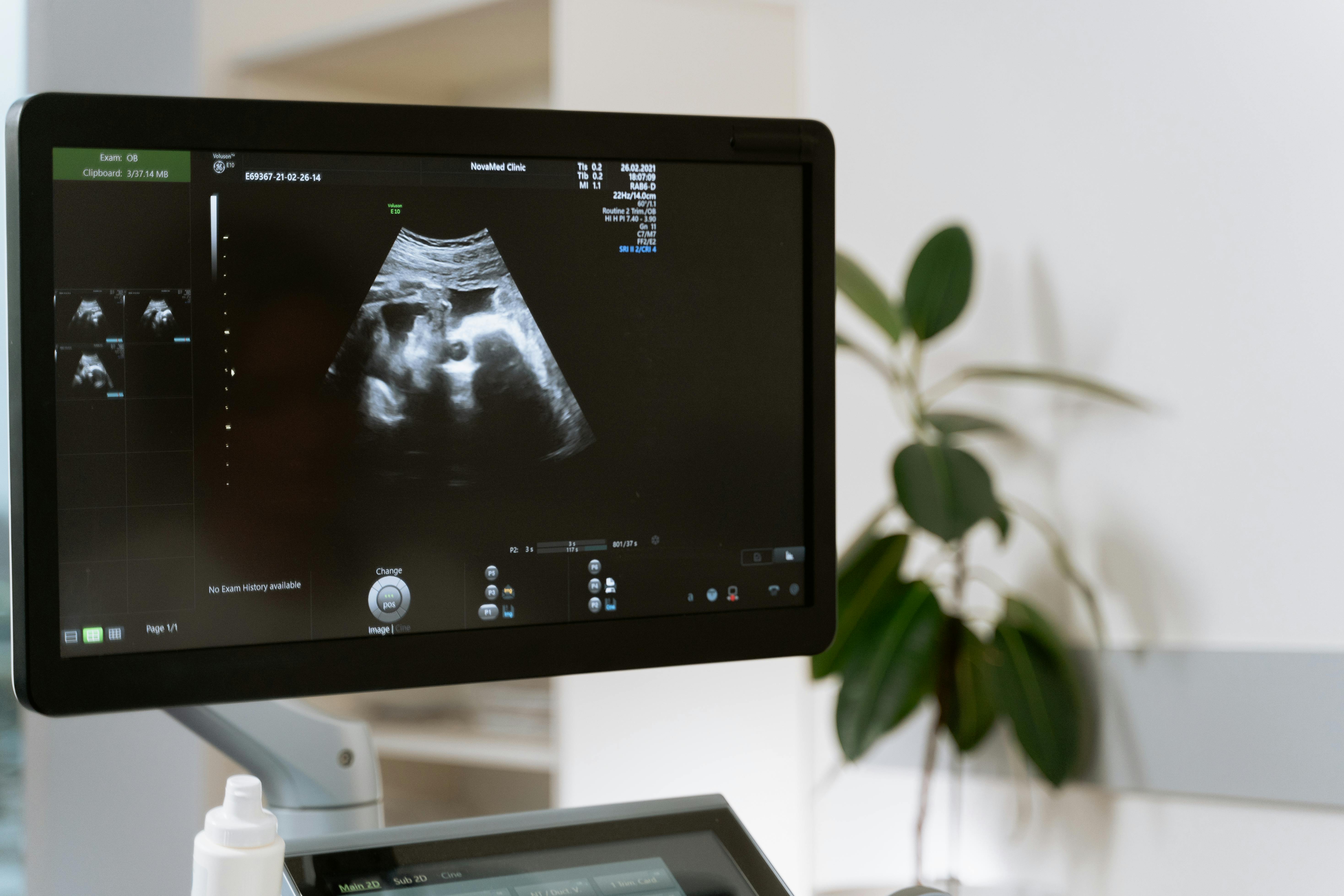
Hands-on training means operating the machine yourself — with real-time instructor feedback — not watching demonstrations.
Why Does the Format Matter So Much?
Q: Why can’t I get the same result from a well-produced online training course?
Online training can transfer knowledge — terminology, anatomy, machine settings, business fundamentals. What it cannot transfer is the physical skill of scanning. The ability to read what you see on screen, adjust probe angle, manage fetal positioning challenges, and optimize image quality in real time with a client in the room is built through repetition, not through watching video.
The gap shows up most clearly when a new operator encounters a difficult scan — a baby in an unfavorable position, a client with a higher BMI where transducer pressure and angle matter more, or a scan at an age where positioning is unpredictable. A trained operator who has worked through these situations under guidance knows how to problem-solve and keep the session moving. Someone who trained exclusively online may not.
Q: Is this difference really that noticeable to clients?
Yes. Clients who have done any research ahead of time — or who have friends who have booked at other studios — develop expectations quickly. Confident, fluid scanning that produces clear images looks and feels different from uncertain, effortful scanning that produces mediocre ones. In a business where your reputation is built one session at a time, the visible difference in skill level matters from your very first client.
Do You Need a Medical Background?
Q: I have no medical training at all. Is hands-on elective ultrasound training still accessible to me?
Yes — and this is one of the most common misconceptions about the industry. Elective ultrasound training is not a clinical credentialing program. It is designed to build practical scanning skills in a keepsake studio context, and it is accessible to people from a wide range of backgrounds.
People who successfully complete training and open studios include career changers from retail, hospitality, education, and creative industries, alongside people with healthcare backgrounds who are pivoting their skills toward a new business context. What matters is not what you knew before you started training — it is how well you apply yourself during training and how consistently you practice afterward.
Q: Does having a medical background give you an advantage?
It can help with some foundational anatomy concepts, but it is far from a requirement. Some operators from medical backgrounds actually find the adjustment from clinical to elective mindset takes deliberate effort — the skills are related but the context is quite different. Beginners without medical backgrounds often develop strong technique and client communication skills relatively quickly when training is well-structured and hands-on.
Online vs. In-Person Training: An Honest Comparison
| Factor | Hands-On In-Person | Online Only |
|---|---|---|
| Physical skill development | Direct — you develop real scanning competence | Limited — knowledge only, no physical practice |
| Real-time feedback | Yes — instructor corrects technique as you work | No — self-directed with no correction mechanism |
| Confidence on opening day | High — you have actual scanning hours | Low — theory without practice |
| Handling difficult scans | Better prepared — you have seen variation | Under-prepared — limited exposure to variation |
| Cost | Higher — reflects quality of instruction | Lower upfront — but limited return on investment |
| Value for business launch | High — directly supports client-ready performance | Low on its own — significant gap to bridge independently |
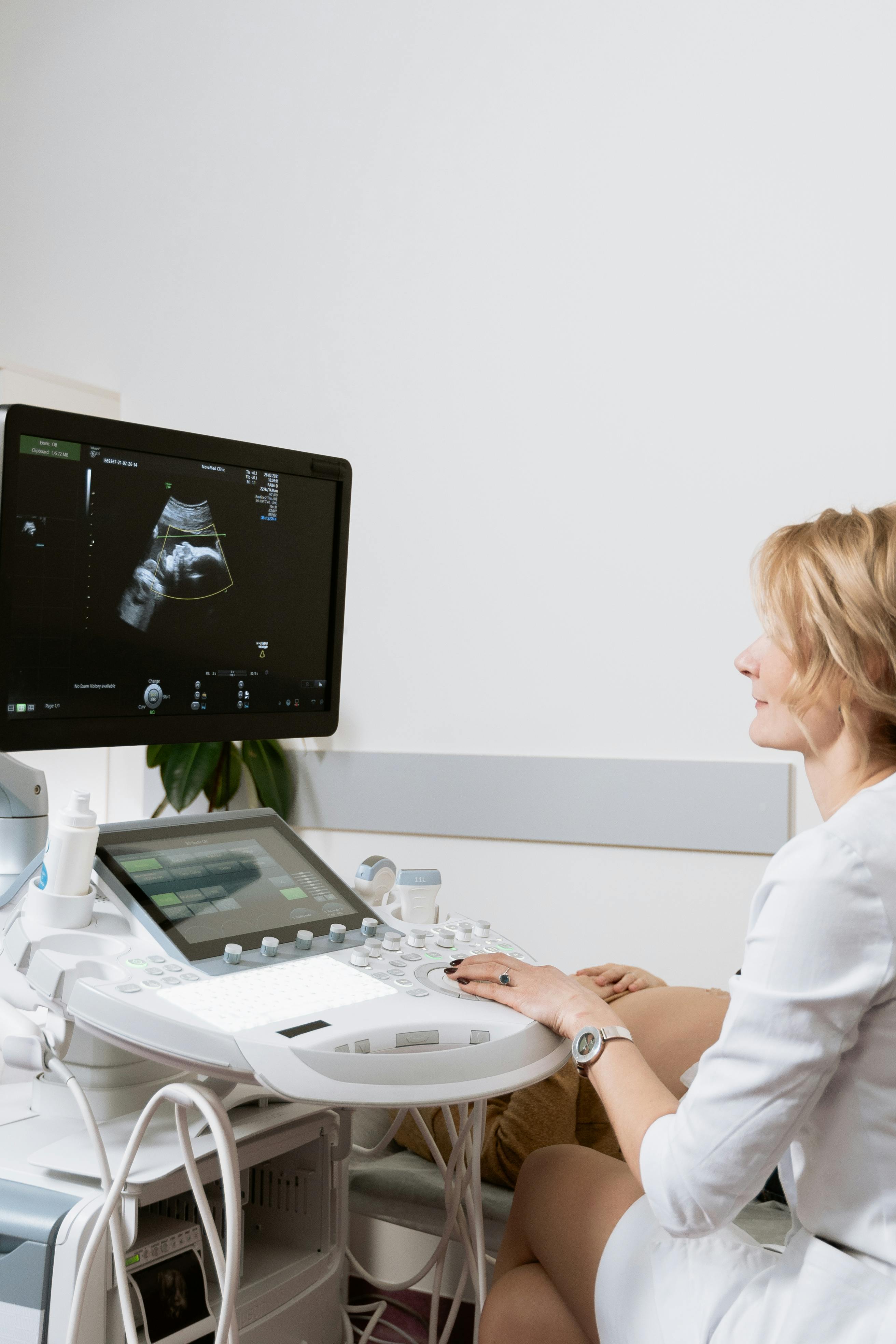
Entrepreneurs who invest in proper hands-on training open their studios with a real skill advantage.
What Good Hands-On Training Should Deliver
Q: What should I be able to do after completing a proper hands-on training program?
After a well-structured three-to-four-day hands-on program, you should be able to:
- Set up and configure your machine for a client session
- Perform a full 3D/4D scanning session with confidence
- Optimize image quality in real time by adjusting gain, depth, angle, and rendering settings
- Conduct early gender determination from approximately 15 to 16 weeks
- Manage common fetal positioning challenges
- Communicate clearly with clients throughout the session
- Structure a session professionally from greeting to image delivery
You will continue improving after training — experience compounds. But the goal of initial training is to make you capable and confident enough to run real sessions from day one, not to have you practicing on paying clients.
Q: What about business training — does the curriculum cover that too?
A strong elective ultrasound training program should cover both scanning and business fundamentals. Ultrasound Trainers integrates business operations guidance into the training curriculum — covering client management, studio workflow, pricing considerations, and the operational elements that scanning skill alone does not address. Learn more about what the training program includes.
Duluth, St. Cloud, and Smaller Minnesota Markets
Q: Is it realistic to open a keepsake ultrasound studio in a smaller Minnesota city like Duluth or St. Cloud?
Yes — and in some respects, smaller cities present a more straightforward business case than major metros. Duluth and St. Cloud are both cities with real birth populations, established family and community cultures, and limited existing elective ultrasound infrastructure.
St. Cloud, with a metro population approaching 200,000, is large enough to sustain a professional keepsake studio with a strong local client base. The city’s central location in the state also gives it reach into surrounding communities that may have even fewer premium service options.
Duluth’s position as a regional hub for northeastern Minnesota — drawing from a broad geographic area including the Iron Range communities and across the Wisconsin border — gives a Duluth-based studio more market reach than its city population of around 90,000 might suggest. Families from Two Harbors, Cloquet, Superior (Wisconsin), and outlying communities will travel to Duluth for a quality elective ultrasound experience when no closer option exists.
The key in both markets is building awareness early and investing in the local SEO and community presence that makes your studio discoverable to families who may not know the option exists.
What Happens After Training Ends?
Q: How long does it take to become genuinely confident after training?
Most operators report that their scanning confidence grows steadily over the first three to six months of operation — as long as they are consistent about continuing to practice and reflect on each session. The formal training period is the intensive foundation; real-world sessions are where the skill is consolidated.
Q: Is there any ongoing support after training?
It depends on the training provider. Ultrasound Trainers provides continued business and scanning support for clients in the training and turnkey packages. Having a resource to turn to when questions arise — whether about a challenging scan scenario or a business decision — is more valuable than many new operators anticipate before they have been running sessions for a few weeks.
More Questions About Hands-On Training
How long is the formal training period?
Ultrasound Trainers’ private hands-on training program is a focused three-day session. The turnkey business package extends this to four days and adds comprehensive business setup support. Both take place at your location, using your equipment.
Can I train on my own machine?
Yes — and this is an important advantage of on-site training. Training on the machine you will actually use in your studio means there is no adjustment period when you open. Every technique you develop during training applies directly to your sessions from day one.
What if I find scanning more difficult than expected?
Some people progress faster than others — this is normal with any physical skill. The benefit of in-person, hands-on training is that an instructor can identify where you are struggling and provide targeted correction rather than leaving you to diagnose your own technique gaps from a video.
Do I need to complete training before choosing equipment?
Ideally, equipment decisions and training decisions should be made together. Knowing which machine you will train on before training begins is the most efficient path — and training on the machine you own ensures your skills are calibrated to the specific system you will use with clients.
Interested in Learning More?
If you are exploring hands-on elective ultrasound training in Minnesota — whether you are based in Duluth, St. Cloud, or anywhere else in the state — Ultrasound Trainers can walk you through what training involves, what to expect, and how to connect training to a realistic studio launch plan.
Contact Ultrasound Trainers to ask your questions directly.
About This Content: Ultrasound Trainers is a Nashville-based company specializing in elective ultrasound training, turnkey studio startup packages, and equipment guidance for people opening keepsake ultrasound businesses across the United States. This content is for informational purposes and does not constitute medical, legal, or financial advice. Last Updated: April 2026.
Get the Inside Track
Training tips, business advice, and exclusive deals delivered straight to your inbox.

How to Get More Bookings for Your Elective Ultrasound Studio in Montana
Struggling to fill your elective ultrasound booking calendar in Montana? This guide covers what actually[...]

Buying an Elective Ultrasound Machine for an Arkansas Studio: What Actually Matters
Ready to buy an elective ultrasound machine for your Arkansas studio? This guide covers the[...]

How to Build a Pre-Launch Marketing Campaign for Your Elective Ultrasound Studio: A 60-Day Countdown Plan
Pre-launch marketing for an elective ultrasound studio begins 60 days before opening. This 60-day countdown[...]

What Career Changers in Hawaii Need to Know About Elective Ultrasound Training
Considering ultrasound training for a career change in Hawaii? This Q&A guide covers what training[...]

How to Find and Recruit Volunteer Scan Models for Elective Ultrasound Practice
Finding volunteer models for elective ultrasound practice is a skill in itself. Learn where to[...]

How to Write an Elective Ultrasound Business Plan That Actually Works
Writing an elective ultrasound business plan? This guide covers what to include, how to build[...]

How to Open an Elective Ultrasound Business in Honolulu: A Practical Startup Guide
Open an elective ultrasound business in Honolulu with confidence. This guide covers training, startup costs,[...]

Adding Elective Ultrasound to an Existing Photography or Doula Practice in Montana
Montana birth photographers and doulas: adding an elective ultrasound add-on business in Montana to your[...]

Starting an Elective Ultrasound Business in Cheyenne, Wyoming: First-Mover Advantage in the Least-Crowded Market in the Country
Thinking about starting an elective ultrasound business in Cheyenne, Wyoming? This guide covers the F.E.[...]

Elective Ultrasound Training for Career Changers in Sweden
Considering a career change into elective ultrasound in Sweden? Find out what training involves, whether[...]

What Career Changers in Fayetteville Should Know About Elective Ultrasound Training
Thinking about elective ultrasound training in Fayetteville, Arkansas as a career changer? This Q&A guide[...]

The Biggest Mistake Las Vegas Elective Ultrasound Studios Make With Their Marketing
Elective ultrasound studio marketing in Las Vegas prioritizes trust and reviews over ad spend. Here's[...]
