

The question deserves a direct answer. Starting any business involves real cost, real risk, and real uncertainty. An elective ultrasound studio in New Hampshire is no different in that fundamental respect.
What makes New Hampshire worth taking seriously is a specific combination of conditions: one of the country’s highest median household income levels, a business environment that is genuinely among the most favorable in the Northeast, a compact market where a single well-positioned studio can achieve meaningful reach, and — across most of the state — a real gap between the demand that exists for professional keepsake ultrasound and the studio infrastructure available to meet it. This guide addresses the real questions without the promotional framing that makes these assessments less useful.
Table of Contents
- What Makes This Business Work — or Not?
- Is There Genuine Demand in New Hampshire?
- What Are Realistic Startup Costs?
- How Does the Revenue Model Work?
- What Are the Real Risks?
- Is This Right for You?
- Concord and Portsmouth: Two Different NH Opportunities
- Frequently Asked Questions
- Ready for an Honest Conversation?
What Makes This Business Work — or Not?
Q: What honestly separates New Hampshire studios that succeed from those that struggle?
The same pattern that holds across markets: studios that succeed have invested seriously in hands-on training, chosen equipment that delivers consistent high-quality images, opened with a marketing presence already in motion, and committed to delivering an excellent client experience from the very first session.
In New Hampshire specifically, the stakes on training and equipment quality are elevated by the financial profile of the consumer base. Families in southern New Hampshire have Boston-comparable professional incomes and expectations calibrated accordingly. They are discerning buyers who read reviews, research options, and share their service experiences through active community networks. A studio that delivers consistently impressive HD sessions and a polished, professional client experience earns the referrals that build sustainable revenue in New Hampshire’s quality-conscious market. A studio that falls short earns a different kind of reputation, equally quickly.
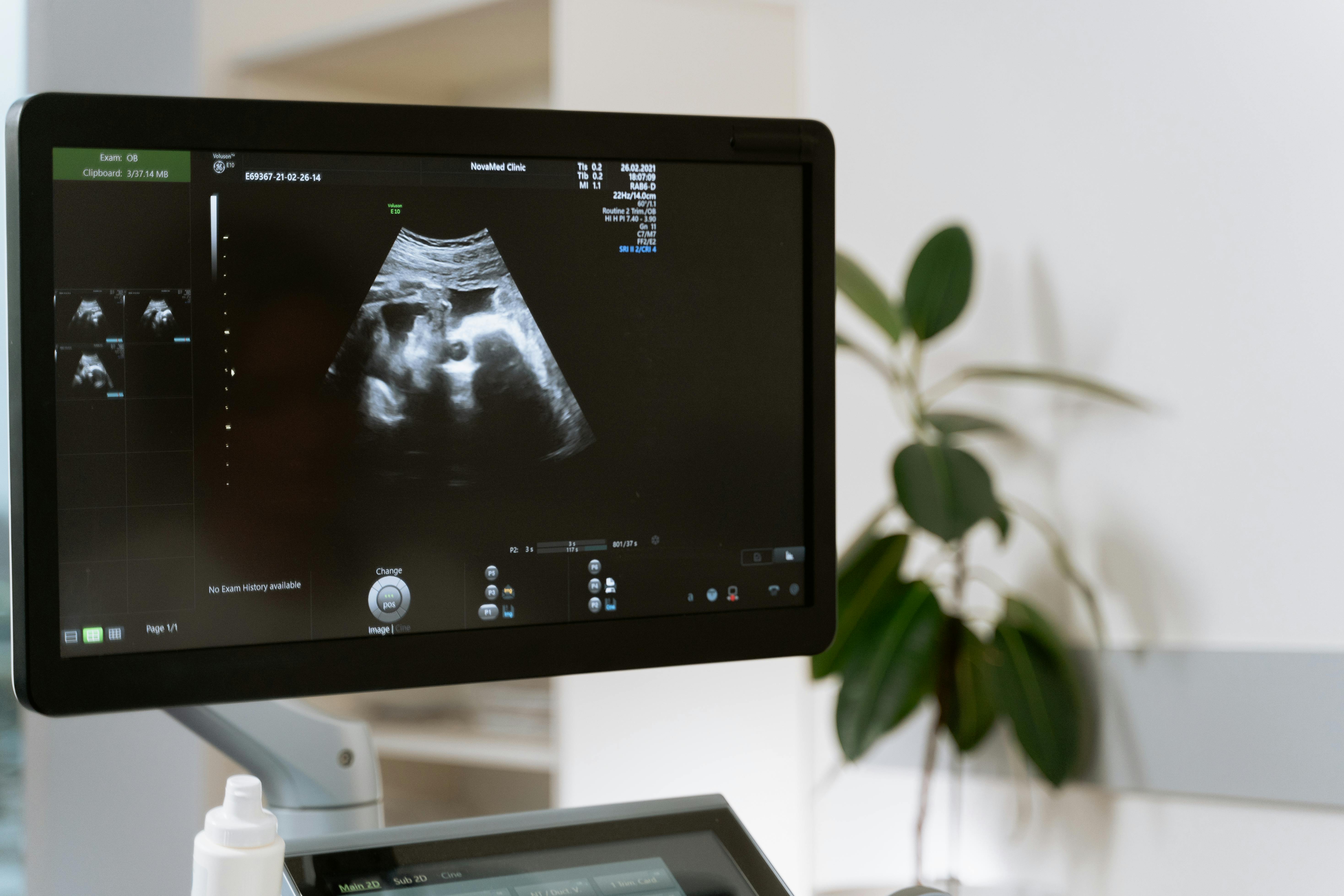
New Hampshire’s high household incomes, business-friendly environment, and limited existing studio competition create favorable conditions — for operators who invest in the quality that this market’s consumer base expects.
Is There Genuine Demand in New Hampshire?
Q: Is there actually enough client demand in New Hampshire to sustain an elective ultrasound business?
Yes — particularly in the Southern Tier. New Hampshire sees roughly 12,000 to 13,000 births annually — a modest number that reflects the state’s relatively small population. However, what New Hampshire lacks in raw volume it compensates for in financial depth: the state’s household income profile means that a smaller number of clients paying appropriately premium prices can sustain a studio that might require higher volume in a lower-income market.
The cross-border Massachusetts draw also meaningfully expands the effective market. A studio in Nashua or Salem has geographic access to northern Massachusetts communities — Methuen, Lawrence, Lowell, Chelmsford, Tyngsborough — that add significant birth volume to the potential catchment. New Hampshire’s no-sales-tax environment is already a cross-border draw for shopping and services; a quality keepsake ultrasound studio is a natural extension of that same pattern.
Q: Are there parts of New Hampshire where demand is limited?
In northern New Hampshire — the Lakes Region, White Mountains, and North Country — population density is low enough that sustaining a studio purely on local demand would be very difficult. These areas attract significant seasonal tourism, which creates some relevant demand, but year-round operational sustainability would require a very wide geographic catchment. The Southern Tier and Seacoast are the viable studio markets in New Hampshire.
What Are Realistic Startup Costs?
Q: What should I realistically expect to spend to start a keepsake ultrasound studio in New Hampshire?
Turnkey business package: Ultrasound Trainers‘ turnkey package — which includes four-day hands-on training at your New Hampshire location, equipment, website, logo, marketing materials, and 36 months of ongoing support with no royalties or franchise fees — ranges from $70,000 to $90,000. This is the most complete path to launch, with virtually all major startup costs included and coordinated.
Training-first path: Beginning with private hands-on training (approximately $10,000) and independently sourcing equipment, website, and marketing is possible — but the total cost of all components assembled independently often approaches or exceeds the turnkey range, while requiring more time and domain expertise across multiple unfamiliar areas simultaneously.
New Hampshire’s commercial real estate costs in the Southern Tier are meaningfully lower than comparable Massachusetts markets — which benefits the ongoing operational budget. However, this advantage in rent should be weighed against the state’s smaller total population when projecting booking volume and revenue ramp-up timelines.
Q: Is equipment financing available?
Equipment financing may be an option. Explore ultrasound financing options as part of your planning. In New Hampshire’s high-income market — where equipment quality is a significant factor in premium pricing capacity — financing the right setup is often a better investment decision than opening with lesser equipment to avoid borrowing.
How Does the Revenue Model Work?
Q: How does a New Hampshire keepsake ultrasound studio generate revenue?
Revenue comes from session packages — tiered service menus that include early gender determination, standard 3D/4D bonding sessions, HD portrait sessions, heartbeat recording add-ons, and return visit packages. New Hampshire’s Southern Tier — particularly Nashua, Bedford, and Salem — supports session pricing at the premium end of the Northeast regional market given the area’s household income levels.
The smaller total birth volume in New Hampshire compared to large metro markets is partially compensated by this premium pricing capacity. A studio generating strong revenue per session needs fewer sessions than a lower-priced studio to reach the same total revenue. This makes client quality — in terms of financial capacity and experience motivation — as important as client volume in the New Hampshire model.
Q: How long does it take to reach profitability?
This varies by situation. New Hampshire’s smaller overall market means the ramp-up period may be somewhat longer than in a high-volume large metro — but the premium pricing the market sustains accelerates per-session revenue from early in the studio’s operation. Realistic planning includes a ramp-up period and adequate capital reserves, recognizing that New Hampshire’s path to profitability is premium-pricing-driven rather than volume-driven.
What Are the Real Risks?
Q: What genuine risks should I plan for?
- Smaller total market: New Hampshire’s population is small relative to most US states. The Southern Tier is the viable studio market, and even there, the total birth volume is modest compared to major metro areas. This is the most fundamental risk to plan for — the market is real but not large, and success depends on capturing a meaningful share of a limited population.
- Training quality risk — elevated in a high-expectation market: New Hampshire’s discerning consumer base will notice and share the quality difference between excellent and mediocre scanning. Investment in proper hands-on training is not optional in this market.
- Equipment quality expectations: Southern Tier clients have Boston-comparable quality expectations. Equipment that cannot deliver HD-quality imaging limits your positioning and pricing in the market where your studio needs to be most competitive.
- Slower ramp-up than large metros: With fewer total births, building a full booking calendar takes longer than in markets with larger populations. Capital planning should account for a sustained ramp-up period.
- Regulatory awareness: Elective ultrasound operates within a regulatory environment that can evolve at the state level. Staying informed and compliant is an ongoing responsibility.
Is This Right for You?
Q: How do I honestly assess whether this business is right for me specifically?
New Hampshire’s studio opportunity is best suited to operators who understand and are comfortable with a premium, lower-volume business model — rather than those seeking high booking volume driven by a large population. If you are motivated by serving a financially capable, quality-conscious client base, building a premium brand in a compact market, and operating in one of the most business-friendly tax environments in the country, New Hampshire is a genuinely interesting fit.
If your business model depends on booking 15 or 20 sessions per week from the first months of operation, New Hampshire’s smaller total population may create challenges that a larger metro market would not. Calibrating expectations to the market size — and building a business model that works at the volume the market will generate — is the most important planning consideration for any New Hampshire studio.
Concord and Portsmouth: Two Different NH Opportunities
Concord and Portsmouth represent two of New Hampshire’s most interesting studio opportunities outside of the Nashua-Manchester Southern Tier — and they are as different from each other as any two New Hampshire cities.
Concord is the state capital and a city of roughly 45,000 — small in absolute terms but significant as the geographic and institutional center of New Hampshire. State government employment, Concord Hospital, and a growing professional services sector create a stable, educated professional population. The city sits at the center of the state’s geography, giving it access to a catchment that stretches from the Lakes Region communities south toward the Manchester metro. Concord is not the wealthiest New Hampshire market, but it is stable, underserved in the keepsake ultrasound category, and positioned to serve as a regional hub for central New Hampshire families who have no local option.
Portsmouth is a different story entirely. New Hampshire’s Seacoast city of roughly 22,000 consistently ranks among the most expensive and most desirable small cities in New England — with a thriving restaurant, arts, and small business economy that attracts affluent professionals and retirees alongside a surprisingly young and family-forming resident population. Portsmouth’s household income levels are among the highest in the state, and its consumer culture is oriented toward quality and experience in a way that is unusual for a city of its size. A keepsake ultrasound studio in Portsmouth would serve not just the city but the broader Seacoast region — Dover, Exeter, Hampton, and the surrounding communities — that has limited local premium service options in most categories.
Both Concord and Portsmouth represent genuine early-mover opportunities. Neither has significant existing professional keepsake ultrasound infrastructure. Both have population profiles and community characters that reward quality and professionalism with loyalty and referrals.
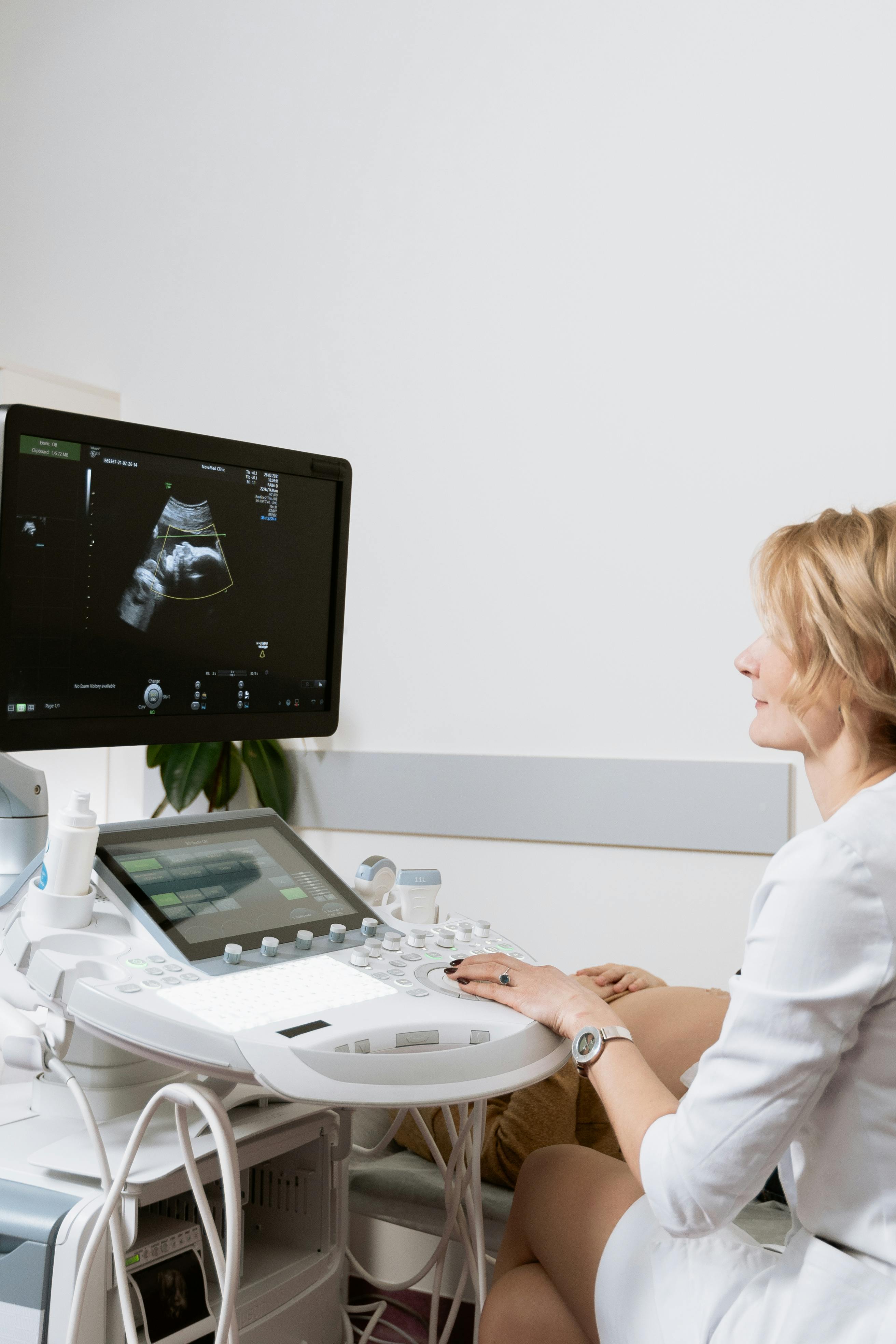
Concord and Portsmouth offer very different New Hampshire studio opportunities — one a stable institutional hub, the other a premium Seacoast lifestyle market — both with genuine underlying demand and limited existing competition.
Frequently Asked Questions
Is New Hampshire too small to sustain an elective ultrasound studio?
New Hampshire’s total population is small — but the Southern Tier, Seacoast, and central NH markets each have sufficient local and regional birth volume to sustain a well-positioned studio. The key is understanding that New Hampshire is a premium-pricing market rather than a volume market — the financial model should be built around strong revenue per session rather than very high session volume.
Does New Hampshire’s no-income-tax environment affect the studio business?
Yes, in two ways. First, studio profits are not subject to state income tax — which benefits the business economics compared to operating in a state with income tax. Second, New Hampshire consumers have higher disposable income than comparable Massachusetts households because they are not paying state income tax, which supports premium pricing. Both effects are genuine advantages for a New Hampshire studio operation.
Is the Massachusetts cross-border opportunity real?
Yes. New Hampshire’s border regions have an established pattern of Massachusetts residents crossing north for services, shopping, and experiences. A quality keepsake ultrasound studio in Nashua or Salem is a natural addition to that cross-border pattern — particularly for northern Massachusetts families in Methuen, Lawrence, Lowell, and surrounding communities who have no convenient local keepsake ultrasound option.
Can a New Hampshire studio eventually expand to cover multiple markets?
Yes. New Hampshire’s compact geography means a single studio in Manchester or Nashua can effectively market to the entire southern half of the state. As the business grows and stabilizes, a second location — in Portsmouth for the Seacoast, or in Concord for central NH — is a natural expansion path that most operators would consider only after the first studio is fully established and profitable.
Ready for an Honest Conversation?
If you are seriously evaluating whether to start an elective ultrasound business in New Hampshire — in Concord, Portsmouth, or anywhere else across the state — Ultrasound Trainers is available to talk through your specific situation directly. Our team is happy to have an honest conversation about what the path looks like and whether it is a fit for your goals.
Contact Ultrasound Trainers to start that conversation.
About This Content: Ultrasound Trainers is a Nashville, Tennessee-based company specializing in elective ultrasound training, turnkey studio startup packages, and equipment guidance for people opening keepsake ultrasound businesses across the United States. This content is for informational purposes and does not constitute medical, legal, or financial advice. Last Updated: April 2026.
Get the Inside Track
Training tips, business advice, and exclusive deals delivered straight to your inbox.

How to Get More Bookings for Your Elective Ultrasound Studio in Montana
Struggling to fill your elective ultrasound booking calendar in Montana? This guide covers what actually[...]

Buying an Elective Ultrasound Machine for an Arkansas Studio: What Actually Matters
Ready to buy an elective ultrasound machine for your Arkansas studio? This guide covers the[...]

How to Build a Pre-Launch Marketing Campaign for Your Elective Ultrasound Studio: A 60-Day Countdown Plan
Pre-launch marketing for an elective ultrasound studio begins 60 days before opening. This 60-day countdown[...]

What Career Changers in Hawaii Need to Know About Elective Ultrasound Training
Considering ultrasound training for a career change in Hawaii? This Q&A guide covers what training[...]

How to Find and Recruit Volunteer Scan Models for Elective Ultrasound Practice
Finding volunteer models for elective ultrasound practice is a skill in itself. Learn where to[...]

How to Write an Elective Ultrasound Business Plan That Actually Works
Writing an elective ultrasound business plan? This guide covers what to include, how to build[...]

How to Open an Elective Ultrasound Business in Honolulu: A Practical Startup Guide
Open an elective ultrasound business in Honolulu with confidence. This guide covers training, startup costs,[...]

Adding Elective Ultrasound to an Existing Photography or Doula Practice in Montana
Montana birth photographers and doulas: adding an elective ultrasound add-on business in Montana to your[...]

Starting an Elective Ultrasound Business in Cheyenne, Wyoming: First-Mover Advantage in the Least-Crowded Market in the Country
Thinking about starting an elective ultrasound business in Cheyenne, Wyoming? This guide covers the F.E.[...]

Elective Ultrasound Training for Career Changers in Sweden
Considering a career change into elective ultrasound in Sweden? Find out what training involves, whether[...]

What Career Changers in Fayetteville Should Know About Elective Ultrasound Training
Thinking about elective ultrasound training in Fayetteville, Arkansas as a career changer? This Q&A guide[...]

The Biggest Mistake Las Vegas Elective Ultrasound Studios Make With Their Marketing
Elective ultrasound studio marketing in Las Vegas prioritizes trust and reviews over ad spend. Here's[...]
