

Most people shopping for an elective ultrasound machine start in the obvious place: a manufacturer’s website, an authorized dealer, a broker who markets directly to new studio owners. Those channels have real value. But there’s a parallel market worth understanding — one where the machines are often priced lower, the availability is different, and the risks require more careful navigation.
Buying an elective ultrasound machine from a private seller or third-party dealer is neither inherently good nor inherently dangerous. Whether it works out depends almost entirely on how informed you are before you start and how thoroughly you evaluate what you’re buying before you commit.
What “Buying From a Third-Party Dealer” Actually Means
The term gets used loosely, so let’s be precise. In the elective ultrasound equipment market, third-party or private-party purchases typically fall into a few categories.
Independent equipment brokers are businesses that buy and resell used medical and clinical equipment, including ultrasound machines. They’re not the original manufacturer and not an authorized dealer. They may or may not have direct relationships with service technicians for the equipment they sell.
Private sellers are individual studios or practices that are closing, upgrading, or liquidating equipment. These transactions often happen through classified listings, industry forums, or direct word-of-mouth. The seller may have used the machine extensively, minimally, or somewhere in between.
Online marketplaces include platforms where medical equipment is bought and sold, ranging from specialized ultrasound equipment sites to broader commercial platforms. The condition and provenance of machines listed here varies widely.
Where Third-Party Purchases Have an Advantage
Price is the most obvious. Used machines sold outside authorized dealer networks often carry lower price tags than the same model through standard channels. For a studio on a startup budget, that difference can be meaningful — potentially freeing capital for training, marketing, or operational reserves that would otherwise go toward equipment cost.
Availability is another factor. Specific models that are no longer manufactured or are difficult to source through standard channels may be more accessible through independent brokers or private sales. If you’re looking for a particular machine that’s proven in elective ultrasound applications, third-party channels sometimes have more inventory than official ones.
Speed is occasionally a factor as well. Private sellers who need to move equipment quickly may be willing to close a sale faster than the standard procurement process through a larger organization.
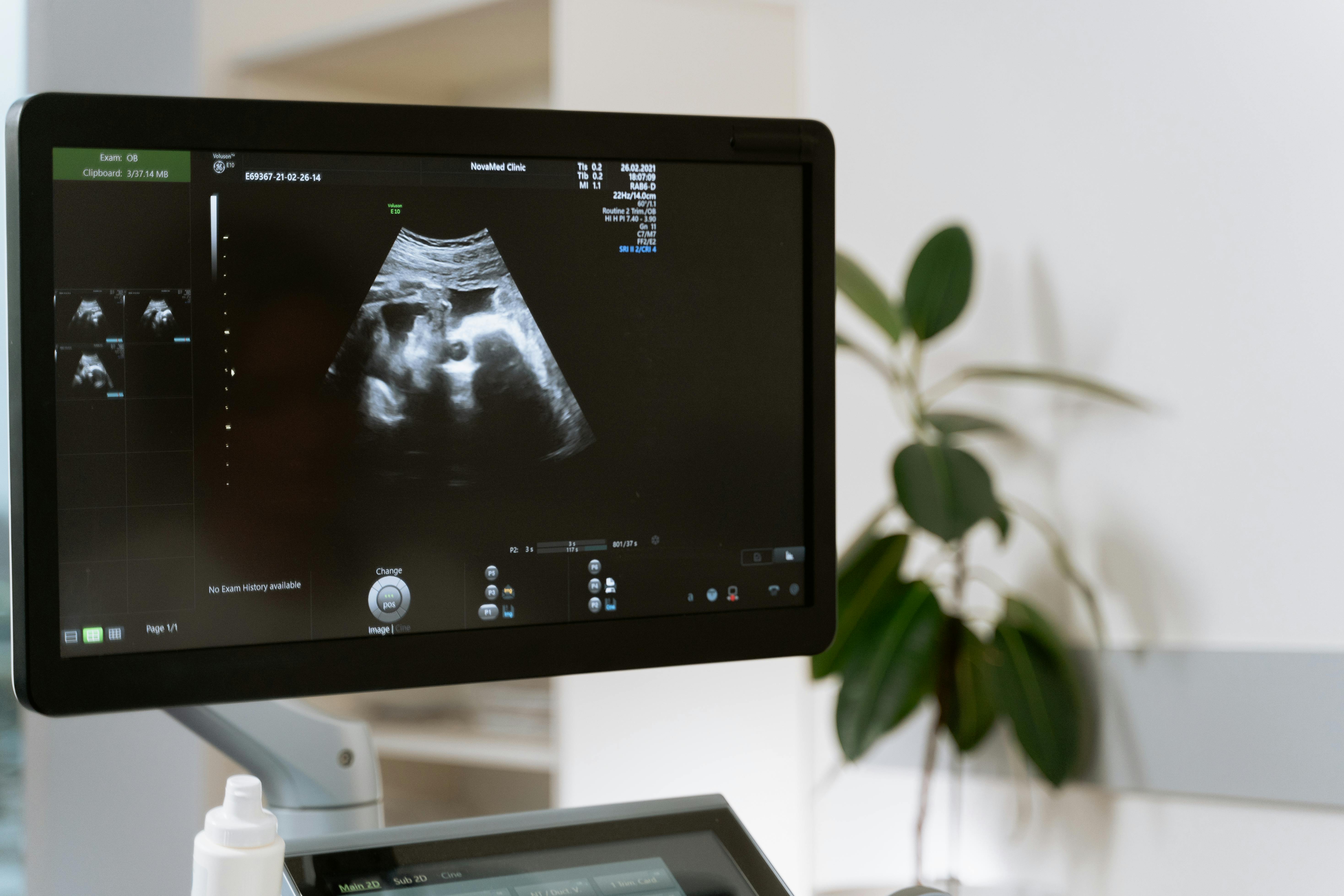
The Real Risks of Buying an Elective Ultrasound Machine From a Private or Third-Party Seller
Understanding the risks clearly is what allows you to navigate them, rather than being surprised by them after purchase.
Service history is the central concern. An ultrasound machine is a complex piece of equipment. How it’s been used, maintained, stored, and transported directly affects its current condition and remaining useful life. Machines that have been properly maintained at regular intervals and kept in temperature-controlled environments behave differently over time than those that haven’t. Without access to service records, you’re evaluating a machine with incomplete information.
Warranty is typically absent in third-party purchases. Authorized dealers often provide some form of warranty or post-purchase support on refurbished equipment. Private sellers and many independent brokers sell as-is. If something fails after purchase, the cost of repair is entirely yours. Some components in high-end ultrasound machines are expensive to replace.
Software version and probe compatibility require verification. Ultrasound machines run on specific software versions, and not all probes are compatible with all software builds. A machine running older firmware may not support the imaging modes you plan to use. Probes that were compatible with one software version may not function correctly after an update. Verifying compatibility before purchase, not after, is important.
Seller knowledge varies. A private seller who operated the machine personally in a studio context may give you an accurate picture of how it has performed. A broker who acquired the machine from a liquidation and has no operational history on it cannot tell you what you need to know. Ask how they know what they know about the machine’s history, and assess their answer carefully.
How to Evaluate a Third-Party Ultrasound Machine Before Buying
A real evaluation requires more than looking at photos. Follow this sequence for any machine you’re seriously considering from a third-party source.
Request the complete service history. This should show when the machine was last serviced, by whom, what was done, and whether any components have been replaced. A machine with no service records isn’t automatically disqualified, but you should price that gap into your offer and prepare for the possibility that service costs will be higher early on.
Verify the software version and confirm it supports the imaging capabilities you need. 3D, 4D, and HD Live imaging modes each require specific software support. Some machines running older builds have had HD-specific features locked or restricted. Know what version you’re getting and confirm what it enables.
Arrange a live demonstration. If the seller won’t demonstrate the machine in operation, that’s a red flag. A live demo lets you see how the machine starts up, how it handles basic functions, how quickly it produces images, and whether any error messages appear during operation. Bring someone with you who understands what good and bad scan performance looks like.
Request a professional inspection. For machines above a certain price threshold, hiring an independent ultrasound equipment service technician to inspect the machine before purchase is worth the cost. They can assess transducer condition, internal components, and give you a realistic estimate of the machine’s remaining service life.
Ask about probe condition specifically. Probes are expensive to replace and are often the first component to degrade with heavy use. Check for physical damage to the connector, cable, and lens. Ask when probes were last inspected. A machine in good shape with worn probes still requires significant additional investment.
Questions to Ask Any Third-Party Ultrasound Equipment Seller
| Question | What a Good Answer Looks Like |
|---|---|
| Where did this machine come from? | A specific, verifiable source with operational history, not a liquidation with unknown origin |
| Can you provide service records? | Yes, with documentation — not “we believe it was serviced regularly” |
| What software version is installed? | A specific version number, confirmed before sale |
| Will you allow an independent inspection? | Yes, without hesitation |
| Is there any warranty on this purchase? | Clearly stated — yes or no, with specific terms |
| What’s the probe condition? | Specific assessment, ideally with a recent test |
When to Walk Away
Some situations justify declining a purchase regardless of how attractive the price looks. Walk away when a seller cannot provide any service history and declines to allow an independent inspection. Walk away when the software version doesn’t support the imaging modes your studio requires and the seller can’t confirm upgradability. Walk away when the probe condition is poor and the seller hasn’t disclosed that proactively.
Price is not the only consideration in equipment buying. A cheaper machine that fails or performs below expectations in its first year of operation is not a bargain. The cost of extended downtime, emergency repair, or early replacement erases any savings quickly.
People Also Ask
Is buying an elective ultrasound machine from a private seller riskier than buying from a dealer?
It can be, but not automatically. The risk level depends on the specific machine, the seller’s knowledge of its history, and how thoroughly you evaluate it before buying. A private seller who operated the machine themselves and can document its history may represent a lower risk than a broker selling equipment from an anonymous liquidation.
Can I get training on a machine I bought from a private seller?
Yes. Ultrasound Trainers offers private hands-on training conducted at your location using your own equipment. The source of your machine doesn’t affect your ability to get proper training on it. What matters is having the machine on-site and operational before the training session begins.
What should I budget for repairs in the first year if I buy from a third party?
Without a warranty, building a maintenance reserve into your budget is prudent. The amount depends on the machine’s age and condition. For older machines with no service history, a larger reserve is appropriate. For machines with documented recent maintenance and a clean pre-purchase inspection, a smaller reserve may be sufficient. Treat it as insurance, not an expected cost.
How do I find a qualified technician to inspect a used ultrasound machine?
Look for biomedical equipment technicians (BMETs) or ultrasound service specialists in your area. Manufacturer-certified service centers can also provide inspections on machines they support. Some independent equipment brokers also offer inspection services, though for machines you’re buying from a broker, an independent technician is a safer choice for objectivity.
Are there specific elective ultrasound machine models that hold up better when bought used?
Models with strong service networks, widely available parts, and a long history in the elective ultrasound market tend to be safer used purchases because they’re easier and less expensive to service. Ultrasound Trainers can provide specific guidance on machine evaluation based on your budget and intended use — reach out before committing to any used purchase.
Should I buy a used machine or invest in new equipment for my first elective ultrasound studio?
Both approaches have merit depending on your budget, risk tolerance, and the specific machines available. New equipment comes with warranty protection, current software, and manufacturer support. Well-evaluated used equipment from a reputable source can offer comparable performance at a lower entry cost. The decision is less about new versus used and more about how thoroughly you’ve evaluated the specific option in front of you.
Evaluating Your Equipment Options?
Whether you’re considering new or used equipment, Ultrasound Trainers can help you evaluate your options intelligently. We sell and support elective ultrasound machines and can provide guidance on what to look for, what questions to ask, and how to make the right decision for your studio’s goals. Explore our elective ultrasound machine offerings or reach out directly.
Get Equipment GuidanceAbout Ultrasound Trainers: Ultrasound Trainers provides elective ultrasound training, equipment sales and guidance, and turnkey studio launch support. We help people make informed decisions at every stage of building a keepsake ultrasound business.
Last Updated: April 28, 2025
Get the Inside Track
Training tips, business advice, and exclusive deals delivered straight to your inbox.

How to Get More Bookings for Your Elective Ultrasound Studio in Montana
Struggling to fill your elective ultrasound booking calendar in Montana? This guide covers what actually[...]

Buying an Elective Ultrasound Machine for an Arkansas Studio: What Actually Matters
Ready to buy an elective ultrasound machine for your Arkansas studio? This guide covers the[...]

How to Build a Pre-Launch Marketing Campaign for Your Elective Ultrasound Studio: A 60-Day Countdown Plan
Pre-launch marketing for an elective ultrasound studio begins 60 days before opening. This 60-day countdown[...]

What Career Changers in Hawaii Need to Know About Elective Ultrasound Training
Considering ultrasound training for a career change in Hawaii? This Q&A guide covers what training[...]

How to Find and Recruit Volunteer Scan Models for Elective Ultrasound Practice
Finding volunteer models for elective ultrasound practice is a skill in itself. Learn where to[...]

How to Write an Elective Ultrasound Business Plan That Actually Works
Writing an elective ultrasound business plan? This guide covers what to include, how to build[...]

How to Open an Elective Ultrasound Business in Honolulu: A Practical Startup Guide
Open an elective ultrasound business in Honolulu with confidence. This guide covers training, startup costs,[...]

Adding Elective Ultrasound to an Existing Photography or Doula Practice in Montana
Montana birth photographers and doulas: adding an elective ultrasound add-on business in Montana to your[...]

Starting an Elective Ultrasound Business in Cheyenne, Wyoming: First-Mover Advantage in the Least-Crowded Market in the Country
Thinking about starting an elective ultrasound business in Cheyenne, Wyoming? This guide covers the F.E.[...]

Elective Ultrasound Training for Career Changers in Sweden
Considering a career change into elective ultrasound in Sweden? Find out what training involves, whether[...]

What Career Changers in Fayetteville Should Know About Elective Ultrasound Training
Thinking about elective ultrasound training in Fayetteville, Arkansas as a career changer? This Q&A guide[...]

The Biggest Mistake Las Vegas Elective Ultrasound Studios Make With Their Marketing
Elective ultrasound studio marketing in Las Vegas prioritizes trust and reviews over ad spend. Here's[...]
