

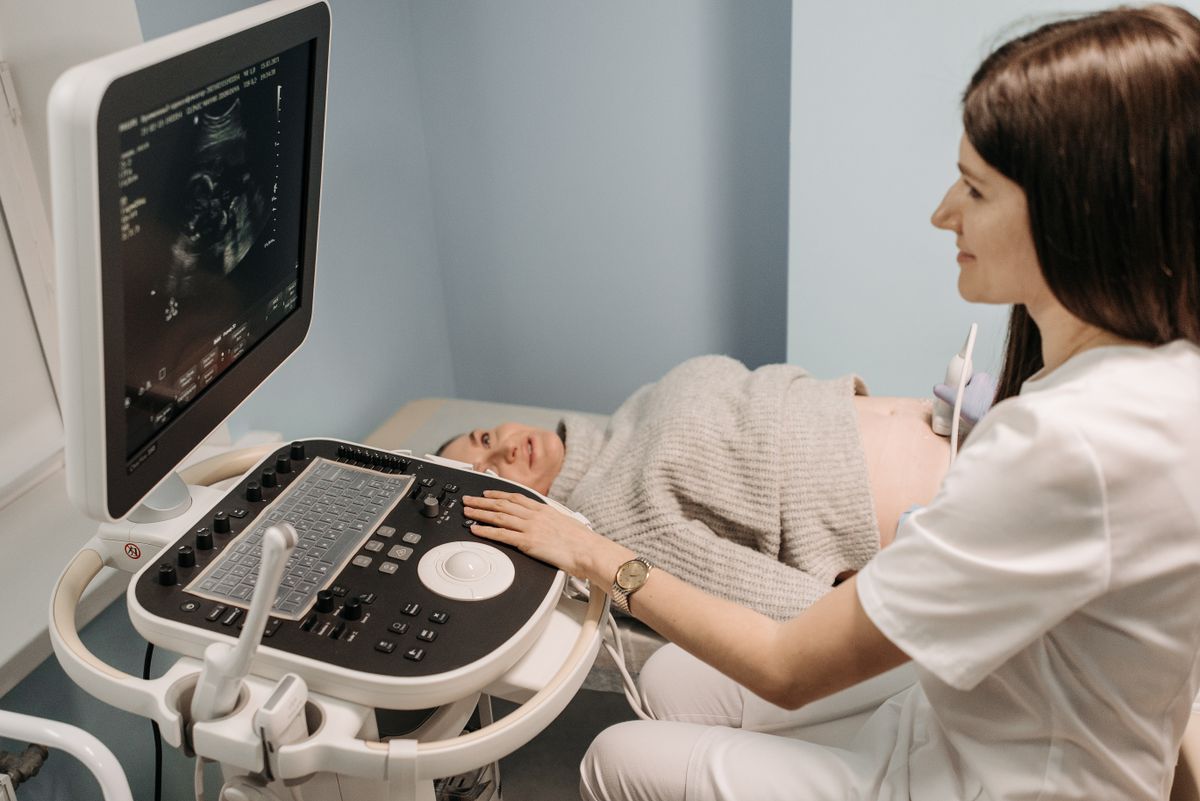
Mastering advanced scanning techniques for elective ultrasound operators means moving beyond basic probe placement into the precise skill set that consistently produces the high-detail 3D and HD images clients book your studio specifically to experience — including optimized gain management, targeted transducer angle control for fetal face positioning, amniotic fluid window maximization, and adaptive scanning protocols for challenging fetal positions. These are the techniques that separate operators who get decent images most of the time from operators who deliver exceptional images predictably, regardless of the fetal position or gestational window they encounter.
The Foundation Before “Advanced”: Baseline Excellence
Advanced technique builds on solid foundational competence. Before pursuing the skills in this guide, ensure you can consistently execute the following with confidence:
- Initial probe placement and image acquisition within 60 seconds of starting a session
- Accurate depth and gain settings for the gestational window you are scanning
- Basic image optimization using the preset modes on your specific machine
- Reliable fetal orientation identification (spine up/down/lateral)
- Clean still image capture without motion blur
If any of these fundamentals still require concentrated effort, continue building foundational consistency before adding the techniques below. Advanced skills compounded on an unstable foundation produce inconsistent results.
Advanced Technique 1: Optimizing Your Gain Management
Gain Management for Maximum 3D/4D Detail
Overall gain controls the brightness of the entire image, but experienced operators move beyond overall gain to time-gain compensation (TGC) adjustment — controlling brightness at different depths independently. The principle: structures close to the probe need less gain than structures deeper in tissue. A flat gain setting causes near-field overexposure (white out) and far-field underexposure simultaneously.
The technique: Set overall gain to approximately 70 percent, then use TGC sliders to reduce gain in the top third of the image and increase slightly in the bottom third. Reassess at every significant depth change. HD Live mode in particular benefits from precise gain adjustment because the surface rendering algorithm amplifies both the detail and the noise from incorrect gain settings.
Advanced Technique 2: Fetal Face Positioning Protocols
Reliable Face Acquisition in Challenging Positions
The single most common complaint from clients whose 3D session “did not go well” is that the baby’s face was not visible. Developing a systematic face acquisition protocol transforms a 40 percent success rate into a 90 percent success rate across varied fetal positions.
The protocol: First, identify spine position (up, down, left transverse, right transverse). Then determine which way the occiput is oriented. The face is always the opposite direction from the back of the skull. Position the probe at the level of the thorax and angle superiorly — the face will come into view as you sweep through the occiput-to-chin plane. When the spine is posterior (facing away from probe), have the client lie on the side corresponding to where the face is oriented for 5 to 10 minutes before attempting 3D acquisition. Gravity assists fetal rotation consistently.
According to instructional literature from the American Registry for Diagnostic Medical Sonography (ARDMS), fetal lie and position awareness is the primary competency distinguishing experienced obstetric sonographers from novice practitioners.
Advanced Technique 3: Amniotic Fluid Window Maximization
Using Fluid Pockets to Your Advantage
3D/4D image quality depends heavily on having a clear fluid window between the transducer and the fetal surface. Fluid transmits sound waves cleanly; placental tissue, umbilical cord loops, and fetal extremities all introduce acoustic shadows that degrade surface rendering quality.
The technique: Before initiating 3D acquisition, spend time in 2D mode identifying the largest clear fluid pocket in front of the fetal face. This is your acquisition window. Angle your transducer to center this pocket in your field of view before switching to 3D mode. When fluid is limited (typically in clients beyond 34 weeks or with oligohydramnios), adjust your volume box to be narrower and shallower — a smaller, well-positioned 3D box produces better surface rendering than a wide box with poor fluid coverage.
Advanced Technique 4: Adaptive Protocol for Posterior Spine Positioning
Working with the Most Common Challenging Position
Posterior spine (spine toward the table, face toward the probe) is the position that delivers the best 3D images — but clients do not arrive with this orientation on demand. When a client presents with a spine-up position (face buried), the following protocol produces reliable results:
- Confirm fetal position in 2D and identify which way the face is oriented relative to the client’s sides
- Have the client roll to the side corresponding to where the face is facing (not away from it) for 8 to 12 minutes
- While the client repositions, explain what you are looking for and why — this manages expectations and builds trust
- After repositioning, reassess fetal orientation before switching to 3D mode
- If position has not changed, have the client stand and walk for 3 to 5 minutes, then lie on the alternate side
Document your repositioning attempts in your session notes. If the fetal position does not change after two protocol attempts, communicate this to the client, show them the best available images, and offer a complimentary partial reschedule if this is part of your service policy.
Advanced Technique 5: HD Live and 5D Mode Optimization
HD Live and similar advanced rendering modes (Samsung’s Crystal Vue, GE’s HD Live Silhouette) use surface rendering algorithms that respond significantly to lighting direction settings. Most operators learn to set lighting but do not experiment systematically with light source position for different facial presentations.
| Fetal Presentation | Optimal Light Source Direction | Why It Works |
|---|---|---|
| Face directly toward probe | 10-11 o’clock (upper left) | Illuminates forehead, nose, and cheek structure; creates natural facial shadow depth |
| Face tilted right (your left) | 1-2 o’clock (upper right) | Light from the opposite side creates 3D depth on the near cheek and nose bridge |
| Face tilted left (your right) | 11 o’clock (upper left) | Same principle — light from opposite of the dominant surface creates depth contrast |
| Profile view (side face) | 12 o’clock (directly above) | Top lighting on profile creates dramatic, portrait-quality facial shadow definition |
Building an Advanced Technique Practice Routine
Advanced techniques require deliberate practice, not just more scanning hours. The distinction is important: deliberate practice means focusing on one specific technique per session, evaluating the result, and adjusting before the next attempt. Scanning more sessions with no technique focus produces experience but not advancement.
- Week 1: Gain management — practice TGC adjustment on every session, comparing before and after
- Week 2: Face acquisition protocol — time yourself from probe placement to first clear 3D face frame
- Week 3: Volume box optimization — experiment with box size and position on different gestational windows
- Week 4: HD Live lighting direction — systematically test multiple light positions on the same acquisition and document which produces best results
Continued skill development is one of the distinguishing characteristics of operators who build strong reputations and retain clients across pregnancies. To explore the foundation these advanced techniques are built on, review our comprehensive training programs and ongoing operator support resources.
Frequently Asked Questions
After your first 30 to 50 real client sessions with consistent foundational results. If you are still managing basic image acquisition challenges, advanced technique study is premature. Solid basics compounded with deliberate advanced practice produces the best long-term skill trajectory.
The underlying principles are universal (gain physics, fetal anatomy, fluid acoustics), but the controls, preset names, and rendering modes are machine-specific. Gain management looks the same conceptually on a GE Voluson and a Samsung HERA — but the interface for adjusting TGC sliders differs. Learn the universal technique principle first, then find the corresponding control on your specific machine.
Anterior placenta significantly attenuates ultrasound signal. Compensate by reducing your depth to keep the fetus as close to the probe as possible, increasing gain moderately to compensate for signal loss through the placenta, and choosing a frequency setting optimized for penetration rather than resolution if your machine offers this option. Accept that anterior placenta imposes image quality limits and communicate this proactively to the client during the session.
Online resources can supplement your learning, particularly for understanding conceptual techniques. However, real skill advancement requires practice on actual equipment with real clients under conditions that online videos cannot replicate. Video-based learning is most effective when paired with immediate hands-on practice applying the concept demonstrated.
Yes, particularly for HD Live and 5D rendering modes. Entry-level machines often have limited rendering algorithm sophistication and narrower volume box options. However, operator technique accounts for a larger share of real-world image quality variation than machine tier — a skilled operator on a mid-tier machine consistently outperforms an inexperienced operator on a premium system.
Train with Programs Built for Real Operator Excellence
Ultrasound Trainers develops operators who can deliver exceptional results consistently — not just during ideal conditions. Explore our training curriculum and see what advanced operator development looks like from day one.
Explore Our Training ProgramsGet the Inside Track
Training tips, business advice, and exclusive deals delivered straight to your inbox.

How to Get More Bookings for Your Elective Ultrasound Studio in Montana
Struggling to fill your elective ultrasound booking calendar in Montana? This guide covers what actually[...]

Buying an Elective Ultrasound Machine for an Arkansas Studio: What Actually Matters
Ready to buy an elective ultrasound machine for your Arkansas studio? This guide covers the[...]

How to Build a Pre-Launch Marketing Campaign for Your Elective Ultrasound Studio: A 60-Day Countdown Plan
Pre-launch marketing for an elective ultrasound studio begins 60 days before opening. This 60-day countdown[...]

What Career Changers in Hawaii Need to Know About Elective Ultrasound Training
Considering ultrasound training for a career change in Hawaii? This Q&A guide covers what training[...]

How to Find and Recruit Volunteer Scan Models for Elective Ultrasound Practice
Finding volunteer models for elective ultrasound practice is a skill in itself. Learn where to[...]

How to Write an Elective Ultrasound Business Plan That Actually Works
Writing an elective ultrasound business plan? This guide covers what to include, how to build[...]

How to Open an Elective Ultrasound Business in Honolulu: A Practical Startup Guide
Open an elective ultrasound business in Honolulu with confidence. This guide covers training, startup costs,[...]

Adding Elective Ultrasound to an Existing Photography or Doula Practice in Montana
Montana birth photographers and doulas: adding an elective ultrasound add-on business in Montana to your[...]

Starting an Elective Ultrasound Business in Cheyenne, Wyoming: First-Mover Advantage in the Least-Crowded Market in the Country
Thinking about starting an elective ultrasound business in Cheyenne, Wyoming? This guide covers the F.E.[...]
Elective Ultrasound Training for Career Changers in Sweden
Considering a career change into elective ultrasound in Sweden? Find out what training involves, whether[...]

What Career Changers in Fayetteville Should Know About Elective Ultrasound Training
Thinking about elective ultrasound training in Fayetteville, Arkansas as a career changer? This Q&A guide[...]

The Biggest Mistake Las Vegas Elective Ultrasound Studios Make With Their Marketing
Elective ultrasound studio marketing in Las Vegas prioritizes trust and reviews over ad spend. Here's[...]
