

Elective ultrasound training for midwives is one of the most underused professional development paths in the prenatal care space. Certified Nurse Midwives and Certified Midwives possess something that no other aspiring elective studio operator brings to the table: a fully developed clinical foundation in fetal anatomy, maternal physiology, gestational tracking, and patient communication. The technical scan skills that take a career changer six months of practice to internalize are skills midwives use professionally every day.
What most midwives have not considered is how directly those existing skills apply to elective keepsake scanning, and how quickly the gap from clinical background to confident elective operator closes when the foundational knowledge is already there.
Elective ultrasound training for midwives leverages existing anatomy knowledge, patient communication skills, and clinical scanning experience to accelerate the path to confident keepsake studio operation. Midwives typically require less foundational training time than career changers and often transition to confident scanning in fewer practice sessions. The primary learning focus for midwives is the shift from diagnostic clinical scanning to elective keepsake session management and business operation.
Last Updated: June 2026
What Midwives Already Know That Makes This Easier
Elective ultrasound training for midwives builds on a clinical foundation that makes the scanning skill component significantly more accessible than it is for operators without a healthcare background. Midwives already understand fetal positioning, gestational age standards, the acoustic principles that govern transducer angle, and how to communicate with pregnant patients in ways that build comfort and trust. These are not skills that can be taught quickly. They are the product of years of clinical practice, and they translate directly into the elective studio context.
The adjustment midwives do have to make is conceptual. Clinical ultrasound and elective keepsake scanning serve different purposes. Diagnostic scanning evaluates anatomy for clinical significance. Elective keepsake scanning creates a positive emotional experience for a family through high-quality 3D/4D imaging. A midwife transitioning to an elective studio must recalibrate away from the clinical assessment mindset and into the session experience mindset. This is typically a lighter lift than learning scanning from scratch, but it is a genuine mindset shift that deserves intentional attention during training.
The Clinical-to-Elective Mindset Shift
Here is what that shift actually looks like in practice. In a clinical setting, a midwife scanning a patient at 28 weeks is looking for specific fetal measurements, placental position, fluid levels, and structural indicators. The image quality serves the clinical data. In an elective session, the image quality is the product. The scan exists for the beauty and emotional resonance of the image, not for the data it contains.
This changes how you optimize. In clinical scanning, “good enough” image quality is acceptable if the clinical measurement is clear. In elective scanning, “good enough” is not the goal. Every minute of the session is an opportunity to capture an image that the family will share, frame, and remember for decades. That pursuit of the emotionally compelling image drives every decision during the session, from positioning to lighting angle to HD Live rendering mode selection.
Midwives who enter our training programs typically progress through the technical scanning component faster than any other background type we work with. The adjustment period is almost entirely on the business operations side, not the scanning side. A CNM who has never run a small business has more to learn about pricing, booking systems, and marketing than about how to move a transducer.
What Elective Ultrasound Training for Midwives Specifically Covers
A well-designed elective ultrasound training program for midwives addresses the gaps in their current knowledge rather than repeating what they already know well. For midwives, that means the training focus shifts heavily toward the business and studio operations side and the 3D/4D-specific imaging optimization that differs from standard 2D obstetric scanning.
3D/4D Imaging Modes and Rendering Optimization
Most midwives are fluent in 2D ultrasound but have limited exposure to the 3D surface rendering modes that define elective keepsake scanning. Learning to optimize gain, frequency, and surface rendering parameters for HD Live or Crystal Vue output requires hands-on time with the specific equipment you will be using in your studio. Training programs that use the equipment you will be purchasing, or the same model family, accelerate this learning significantly.
Session Management and Client Experience Design
Running an elective session is different from running a clinical appointment. You are managing an emotional experience, not just a procedure. How you narrate the scan, how you create anticipation before revealing the gender or a clear face image, how you accommodate a room full of family members, and how you pace the session to maximize the emotional moments are all skills that training should address directly.
Business Operations Fundamentals
Most midwives in private practice have some business experience, but the elective studio model has specific operational elements worth dedicated training time. Pricing and package structure, booking system selection, digital delivery workflows, marketing fundamentals, and legal considerations specific to elective ultrasound all represent areas where business training adds real value regardless of clinical background.
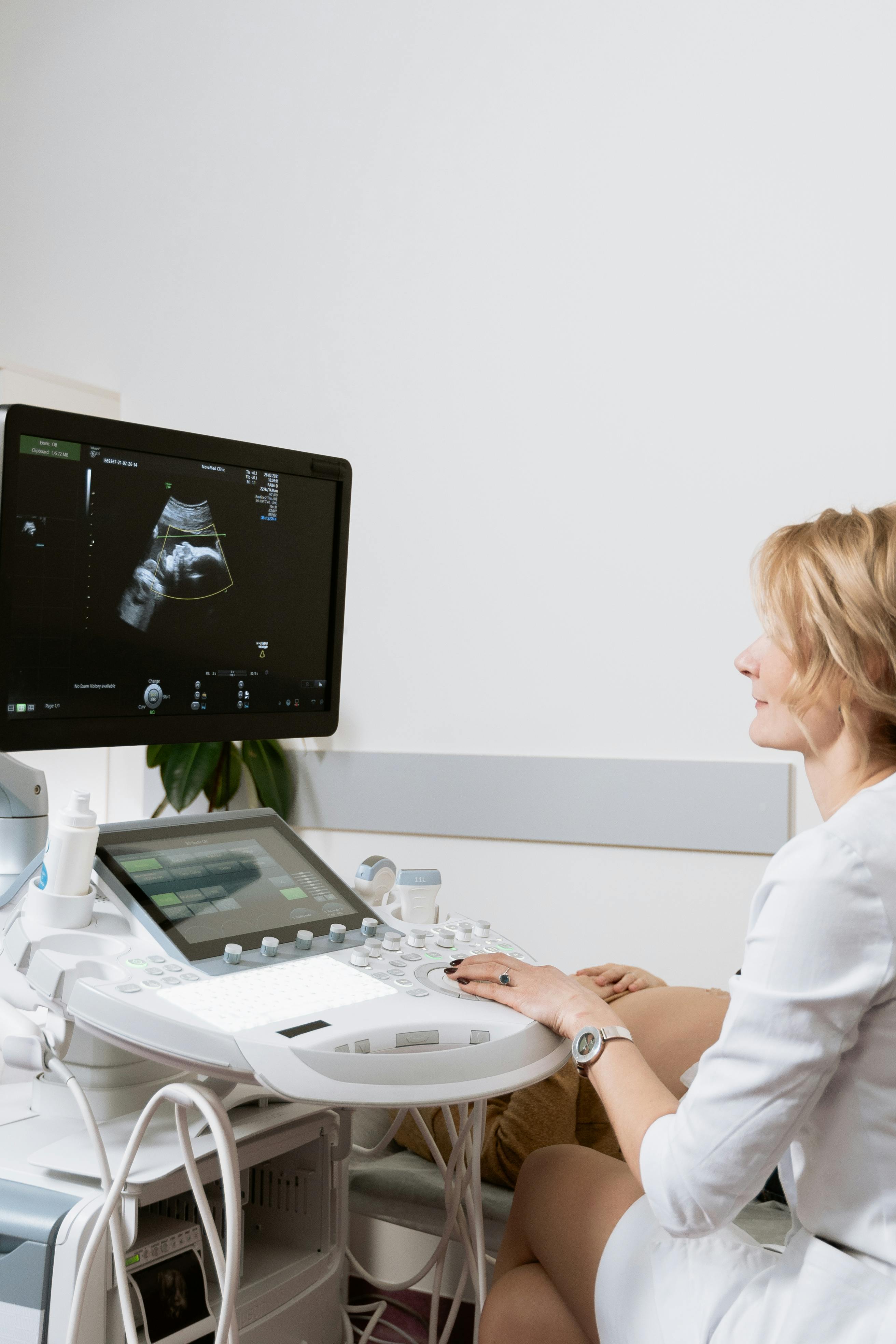
Positioning a Midwifery Background as a Studio Differentiator
A midwife-owned elective ultrasound studio has a credibility signal that no career changer can replicate. Clients booking a keepsake scan with an operator who is a CNM or CM understand immediately that this person has clinical expertise that most elective studio operators do not have. That credibility can support premium pricing, stronger referral relationships with clinical providers, and a professional positioning that stands out in a market of operators without clinical backgrounds.
This differentiator requires careful communication. The distinction between clinical services and elective keepsake scanning must remain clear. A midwife operating an elective studio is not providing clinical care during those sessions. Presenting the service as an elective bonding experience, with the midwifery background as a trust and professionalism signal rather than a clinical services claim, protects both the legal positioning of the business and the E-E-A-T credibility of the operator.
Regulatory Considerations for Clinically Licensed Operators
Midwives considering an elective studio should confirm how their professional licensure board views elective ultrasound operation in their state. Some states have clear frameworks for licensed practitioners offering elective services outside of a clinical context. Others have less defined guidance. This is not typically a prohibitive barrier, but it is worth a specific inquiry to your licensure board and a consultation with a healthcare attorney familiar with your state’s regulatory environment before opening.
Requirements vary by state, scope of practice definitions, and the structure of your business entity. A midwife who operates an elective studio as a separate business entity from their clinical practice typically has a cleaner regulatory position than one who attempts to operate elective scanning within a clinical practice framework.
The Timeline From Training to First Elective Client
Most midwives who complete a quality elective ultrasound training program can schedule their first paying elective clients within four to eight weeks of training completion. The scanning competency accelerates quickly because the foundational skills are already strong. The primary variable is how quickly the business setup elements, equipment purchase and delivery, studio space preparation, booking system setup, and initial marketing, come together.
According to the Bureau of Labor Statistics, healthcare professionals who transition to independent practice roles in adjacent service categories typically demonstrate faster time-to-revenue than individuals without clinical backgrounds, due to existing professional networks and established patient communication skills. For midwives entering the elective studio space, this pattern holds consistently.
Midwives: Your Skills Are Ready. Your Business Can Be Too.
Ultrasound Trainers has worked with healthcare professionals including midwives, nurses, and medical assistants who are building elective ultrasound studio businesses alongside or separate from their clinical careers. If you want to discuss what elective ultrasound training for midwives looks like specifically and how to structure the business side, reach out to the team.
Talk to Ultrasound TrainersPeople Also Ask
Can a certified nurse midwife operate an elective ultrasound studio?
Yes, in most states. Midwives have the clinical background that makes them well-suited to operate elective scanning studios. Regulatory requirements for elective ultrasound operation vary by state, and midwives should confirm with their licensure board and a healthcare attorney how their professional license interacts with elective studio operation in their specific state. The elective studio should typically be structured as a separate business from any clinical practice.
Do midwives need elective ultrasound training if they already know how to scan?
Yes. Existing clinical scanning skills are a significant advantage, but elective ultrasound training for midwives specifically addresses 3D/4D rendering optimization, elective session management, and business operations, all of which differ meaningfully from clinical practice. A midwife who skips structured elective training often discovers the gaps the hard way: a client session that underperforms because 3D rendering optimization was not developed, or a business setup that lacks structure because studio operations were not part of the preparation.
How does a midwife’s existing patient network affect a new elective studio?
A midwife’s patient network is a significant early studio asset. Clients who trust their midwife for clinical care and hear about an elective scanning studio she is opening are among the most warm and motivated early bookers imaginable. This network effect can accelerate a new studio’s initial revenue significantly compared to operators who are building their referral network from scratch. Clear communication about the distinction between clinical and elective services is important in any outreach to existing patients.
Is elective ultrasound scanning within a midwife’s scope of practice?
Scope of practice for elective ultrasound varies by state and depends on how the activity is classified. Elective keepsake scanning, not involving clinical diagnosis, generally falls outside traditional scope of practice frameworks, which regulate clinical services. Most states do not require a clinical license to operate an elective ultrasound studio. However, how a midwife’s clinical license interacts with an adjacent elective business is a state-specific question that a healthcare attorney in your state can clarify.
This content is produced by Ultrasound Trainers for healthcare professionals exploring the elective keepsake ultrasound industry. It does not constitute medical, legal, or financial advice. Regulatory requirements for elective ultrasound operation vary by state and professional licensure context. Consult a qualified healthcare attorney and your licensure board for guidance specific to your situation.
Get the Inside Track
Training tips, business advice, and exclusive deals delivered straight to your inbox.

How to Get More Bookings for Your Elective Ultrasound Studio in Montana
Struggling to fill your elective ultrasound booking calendar in Montana? This guide covers what actually[...]

Buying an Elective Ultrasound Machine for an Arkansas Studio: What Actually Matters
Ready to buy an elective ultrasound machine for your Arkansas studio? This guide covers the[...]

How to Build a Pre-Launch Marketing Campaign for Your Elective Ultrasound Studio: A 60-Day Countdown Plan
Pre-launch marketing for an elective ultrasound studio begins 60 days before opening. This 60-day countdown[...]

What Career Changers in Hawaii Need to Know About Elective Ultrasound Training
Considering ultrasound training for a career change in Hawaii? This Q&A guide covers what training[...]

How to Find and Recruit Volunteer Scan Models for Elective Ultrasound Practice
Finding volunteer models for elective ultrasound practice is a skill in itself. Learn where to[...]

How to Write an Elective Ultrasound Business Plan That Actually Works
Writing an elective ultrasound business plan? This guide covers what to include, how to build[...]

How to Open an Elective Ultrasound Business in Honolulu: A Practical Startup Guide
Open an elective ultrasound business in Honolulu with confidence. This guide covers training, startup costs,[...]

Adding Elective Ultrasound to an Existing Photography or Doula Practice in Montana
Montana birth photographers and doulas: adding an elective ultrasound add-on business in Montana to your[...]

Starting an Elective Ultrasound Business in Cheyenne, Wyoming: First-Mover Advantage in the Least-Crowded Market in the Country
Thinking about starting an elective ultrasound business in Cheyenne, Wyoming? This guide covers the F.E.[...]
Elective Ultrasound Training for Career Changers in Sweden
Considering a career change into elective ultrasound in Sweden? Find out what training involves, whether[...]

What Career Changers in Fayetteville Should Know About Elective Ultrasound Training
Thinking about elective ultrasound training in Fayetteville, Arkansas as a career changer? This Q&A guide[...]
The Biggest Mistake Las Vegas Elective Ultrasound Studios Make With Their Marketing
Elective ultrasound studio marketing in Las Vegas prioritizes trust and reviews over ad spend. Here's[...]
