
Most people planning to open an elective ultrasound studio spend a lot of time thinking about their startup investment. The equipment. The training. The initial launch budget. What gets less attention, and causes more problems, is the ongoing cost structure that shapes whether the business actually makes money month after month once it is open.
Elective ultrasound business overhead costs are not complicated, but they are specific. Understanding each line item before you launch means you can price your packages intelligently, know your break-even point precisely, and make decisions about location and staffing with a clear picture of what they actually cost you.
The Core Overhead Categories Every Studio Owner Needs to Know
Elective ultrasound business overhead costs fall into a predictable set of categories that apply to almost every studio regardless of size or market. Understanding each one before you open gives you the foundation for a realistic financial model.
Rent and Facility Costs
Rent is typically the largest fixed monthly overhead cost for a studio operating from a commercial space. In smaller markets and suburban areas, a well-located 300 to 500 square foot suite can often be found in the $800 to $1,400 per month range. In major metro areas, similar square footage can run $1,800 to $3,000 or more depending on the neighborhood and building. Some studios operate within medical office buildings, wellness centers, or alongside photography studios, which can affect rent structure and foot traffic in different ways.
Facility costs beyond base rent include utilities if not included in your lease, a monthly parking allocation if relevant, and any build-out costs that are being amortized. Some landlords offer tenant improvement allowances that reduce upfront build-out cost, but these terms vary significantly by market and building.
Equipment-Related Costs
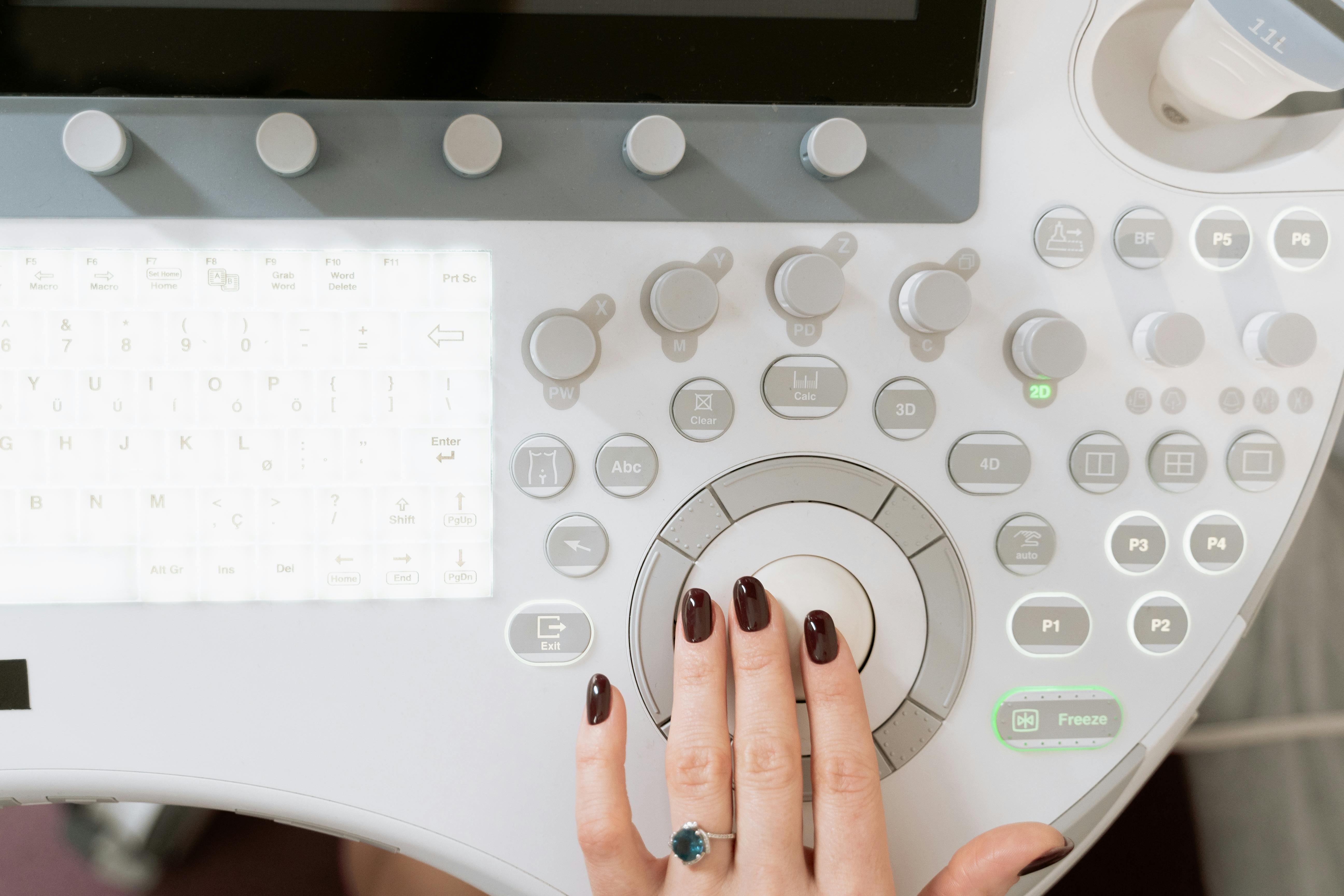
If your machine was purchased outright, your ongoing equipment cost is primarily maintenance and eventual replacement of consumable components. Probe maintenance and cleaning supplies are modest costs but should be budgeted. If your equipment was financed, the monthly payment becomes a fixed overhead line. Equipment financing payments for a mid-tier elective ultrasound machine commonly fall in the $600 to $1,200 per month range depending on the financing terms and the value of the equipment financed. Ultrasound Trainers can help buyers evaluate equipment financing options that fit different startup situations.
Supplies and Consumables
Session supplies include ultrasound gel, thermal paper for image printing, gloves, disposable probe covers, towels, and any packaging for heartbeat animals or keepsake products you provide. At moderate session volumes, supply costs commonly run $300 to $600 per month, scaling with volume. Studios that sell heartbeat animals or physical keepsake products have a cost-of-goods component that should be tracked separately from operational supplies.
Software, Booking, and Technology
A professional online booking platform, practice management software or basic CRM, accounting software, and a business phone line or virtual receptionist collectively cost most studios $150 to $350 per month. This is one of the most underestimated line items in early budget planning. The right booking system is essential for conversion, scheduling efficiency, and client communication, and it pays for itself many times over in reduced no-shows and admin time.
Marketing
Marketing is not pure overhead, it is an investment with a direct return. But it should be budgeted as a consistent line item, especially in the first one to two years. A realistic monthly marketing budget for a growing studio includes Google Business Profile management, local digital advertising or sponsored social posts, and any referral or community relationship building. Most studios that grow effectively budget $500 to $1,500 per month in their first year, scaling up or optimizing as they identify what channels actually drive bookings in their specific market.
Insurance
Business liability insurance and professional liability or errors and omissions coverage should both be in place before you open. Combined coverage for an elective ultrasound studio typically runs $100 to $250 per month depending on coverage levels and your state. Do not skip or undersize this. The service you provide is not medical, but you are working with a sensitive population in a professional service context, and proper insurance is a basic requirement of operating responsibly.
What a Realistic Monthly Overhead Looks Like
| Cost Category | Low End | High End |
|---|---|---|
| Rent and utilities | $800 | $3,000+ |
| Equipment (if financed) | $0 (if paid off) | $1,200 |
| Supplies and consumables | $300 | $600 |
| Software and technology | $150 | $350 |
| Marketing | $500 | $1,500 |
| Insurance | $100 | $250 |
| Total Overhead Range | ~$1,850 | ~$7,000+ |
How Staffing Changes the Overhead Equation
Adding a part-time or full-time technician to perform scans is one of the most significant financial decisions a studio owner can make. It reduces your personal time commitment, allows you to scale volume beyond what you can physically handle alone, and creates a path to eventually stepping back from day-to-day operations entirely.
It also adds meaningful cost. A part-time employee working weekend sessions might cost $800 to $1,500 per month in wages plus employer-side payroll taxes. A full-time technician can run $3,000 to $4,500 or more per month depending on your market and structure. That cost is only supportable if your session volume can generate enough gross revenue to cover it while maintaining an acceptable net margin for you.
Many studio owners find the right answer is a hybrid: operate solo through the early growth phase, then bring in part-time help on the highest-demand days once volume justifies it. This approach keeps overhead lean during the ramp period while providing a clear path to scaling.
Variable Versus Fixed Costs: Why the Distinction Matters
Understanding which costs are fixed and which are variable helps you make smarter decisions during slower periods. Rent, insurance, software subscriptions, and equipment financing are fixed costs, they occur regardless of how many sessions you complete in a given month. Supplies, certain marketing costs, and staffing are variable, they scale with activity.
A studio with $2,500 in fixed monthly overhead needs to generate at least $2,500 in gross revenue each month before it breaks even operationally. At a $185 average ticket, that requires 14 sessions. Every session beyond that contributes to net income. Knowing this number precisely is the foundation of smart pricing and scheduling decisions.
According to the Small Business Administration, maintaining clear visibility into fixed versus variable costs is a fundamental aspect of small business financial management. Tracking these separately from the beginning builds financial clarity that matters a great deal as the business scales.
Frequently Asked Questions
What are the typical monthly overhead costs for an elective ultrasound studio?
Owner-operated studios in mid-size markets typically run total monthly overhead between $2,500 and $4,500, excluding any staffing costs. Major metro studios with higher rent can run $5,000 to $7,000 or more. The biggest variables are rent and whether the equipment was purchased outright or is being financed.
How many sessions does a studio need to break even each month?
This depends on your specific overhead and pricing. A studio with $3,000 in fixed monthly overhead and a $185 average package price needs approximately 17 sessions to cover fixed costs. Add variable supply costs and you are looking at 18 to 22 sessions per month to break even operationally. Most studios can reach this threshold fairly quickly with consistent marketing effort.
Does location significantly affect overhead costs?
Yes, primarily through rent. A studio in a major metro area may pay twice or three times the rent of a comparable studio in a mid-size or suburban market. This affects your break-even point and the minimum session volume required to cover costs. Higher-cost markets often support higher package pricing, which partially offsets the rent premium, but the relationship is not always one-to-one.
Is marketing an overhead cost or an investment?
Practically, it should be treated as both. For budgeting purposes, treat it as a fixed monthly commitment so you do not reduce it when cash flow tightens. But evaluate it like an investment by tracking which channels actually produce bookings. Studios that know their cost per acquired client make much smarter marketing decisions than those who spend without measuring.
How do I reduce overhead costs as a new studio owner?
Start with right-sizing your space. You do not need a large suite to run a great studio, and a smaller, well-designed space in a well-located building outperforms a large, poorly located space every time. Consider shared office or wellness center arrangements that reduce base rent. Buy equipment outright if capital allows, as eliminating a financing payment meaningfully reduces fixed overhead. And operate without staff until session volume clearly justifies adding it.
Should I track overhead costs separately from cost of goods?
Yes. Overhead costs are the fixed and semi-variable expenses of running the business regardless of session volume. Cost of goods, which includes per-session supplies, heartbeat animals, and physical keepsake products, scales directly with volume. Tracking them separately gives you a much clearer picture of your true margin per session and how it changes as volume grows.
Want Help Building a Realistic Cost Model?
If you are planning an elective ultrasound studio launch, Ultrasound Trainers can help you think through the full cost picture, from training and equipment to ongoing overhead, as part of our business training and consulting support.
Get in TouchThis post was developed by the team at Ultrasound Trainers, a company that provides hands-on elective ultrasound training, turnkey studio launch packages, and equipment guidance for studio owners across the country.
Last Updated: April 28, 2026
Get the Inside Track
Training tips, business advice, and exclusive deals delivered straight to your inbox.

How to Get More Bookings for Your Elective Ultrasound Studio in Montana
Struggling to fill your elective ultrasound booking calendar in Montana? This guide covers what actually[...]

Buying an Elective Ultrasound Machine for an Arkansas Studio: What Actually Matters
Ready to buy an elective ultrasound machine for your Arkansas studio? This guide covers the[...]

How to Build a Pre-Launch Marketing Campaign for Your Elective Ultrasound Studio: A 60-Day Countdown Plan
Pre-launch marketing for an elective ultrasound studio begins 60 days before opening. This 60-day countdown[...]

What Career Changers in Hawaii Need to Know About Elective Ultrasound Training
Considering ultrasound training for a career change in Hawaii? This Q&A guide covers what training[...]

How to Find and Recruit Volunteer Scan Models for Elective Ultrasound Practice
Finding volunteer models for elective ultrasound practice is a skill in itself. Learn where to[...]

How to Write an Elective Ultrasound Business Plan That Actually Works
Writing an elective ultrasound business plan? This guide covers what to include, how to build[...]

How to Open an Elective Ultrasound Business in Honolulu: A Practical Startup Guide
Open an elective ultrasound business in Honolulu with confidence. This guide covers training, startup costs,[...]

Adding Elective Ultrasound to an Existing Photography or Doula Practice in Montana
Montana birth photographers and doulas: adding an elective ultrasound add-on business in Montana to your[...]

Starting an Elective Ultrasound Business in Cheyenne, Wyoming: First-Mover Advantage in the Least-Crowded Market in the Country
Thinking about starting an elective ultrasound business in Cheyenne, Wyoming? This guide covers the F.E.[...]

Elective Ultrasound Training for Career Changers in Sweden
Considering a career change into elective ultrasound in Sweden? Find out what training involves, whether[...]

What Career Changers in Fayetteville Should Know About Elective Ultrasound Training
Thinking about elective ultrasound training in Fayetteville, Arkansas as a career changer? This Q&A guide[...]

The Biggest Mistake Las Vegas Elective Ultrasound Studios Make With Their Marketing
Elective ultrasound studio marketing in Las Vegas prioritizes trust and reviews over ad spend. Here's[...]
