

By Steve LaVoise, Ultrasound Trainers
Reviewed by the Ultrasound Trainers education and business-consulting team. Ultrasound Trainers has provided elective ultrasound training, equipment guidance, and studio-launch support since 2005.
Updated September 10, 2026
Starting an elective ultrasound business requires more than purchasing a machine and finding a room. You need a workable local market, appropriate training, responsible safety policies, suitable equipment, accurate financial projections, and a consistent way to turn interest into booked appointments.
The short answer is that a strong launch follows five stages:
- Define the business model and validate local demand.
- Research legal requirements and establish responsible training and safety standards.
- Build the budget, select equipment, and prepare the location.
- Create the client experience, operating system, brand, and marketing plan.
- Launch carefully, measure results, and improve using real booking data.
Ultrasound Trainers has worked with more than 500 studio owners and aspiring owners since 2005. The most successful launches we have observed were not necessarily the ones with the largest budgets or most expensive equipment. They were the ones that made the major decisions in the right order and opened with realistic expectations.
This guide explains that order for entrepreneurs evaluating a non-diagnostic elective ultrasound business and seeking a professional path from initial planning to opening day.
First, understand the purpose of an elective ultrasound studio
An elective ultrasound studio typically offers non-diagnostic imaging experiences intended for bonding and keepsake purposes. Services may include 2D viewing, 3D images, live 4D imaging, HD-rendered images, gender-reveal experiences, digital media, printed photos, and related keepsakes.
Elective ultrasound complements a family’s prenatal journey by providing a memorable bonding experience. Medical assessment and prenatal care remain with the client’s licensed healthcare providers, while the elective studio specializes in the experience, images, recordings, and keepsakes described in its service menu.
This distinction affects nearly every part of the business: advertising, client communication, consent documents, operator training, insurance, referral procedures, and the language used during a session.
Professional studios strengthen client confidence through clear communication, suitable operator training, thoughtful session protocols, appropriate insurance, and operating standards tailored to the services offered. Researching the requirements that apply locally and obtaining qualified legal and insurance advice are valuable parts of building a respected business.
Step 1: Define the business model and validate local demand
Before comparing machines, leases, logos, or training programs, decide what kind of business you intend to operate.
Common models include:
- A dedicated elective ultrasound studio
- An elective service added to an established medical, wellness, doula, photography, or maternity business
- A mobile service, where permitted and operationally appropriate
- A small owner-operated studio
- A larger studio employing trained operators
- An independent startup assembled one service at a time
- A supported turnkey studio launch
Your model determines the size of the location, equipment requirements, staffing, insurance, pricing, scheduling capacity, marketing strategy, and amount of capital required.
Identify the actual customer
“Expecting parents” is too broad to be a useful market definition. A stronger plan identifies the people most likely to book, what they value, and why they would choose one studio over another.
Consider questions such as:
- How many pregnancies occur within a realistic driving distance?
- How far do local families currently travel for elective imaging?
- Which gestational stages and experiences generate the most interest?
- Are customers primarily looking for gender-reveal services, 3D images, premium HD experiences, family viewing, or repeat bonding sessions?
- What languages, schedules, accessibility needs, and payment preferences matter locally?
- Which maternity, photography, retail, wellness, or prenatal businesses already serve the same audience?
Evaluate demand and competition together. A larger population can support multiple established studios, while a smaller market may offer greater differentiation. The best opportunity is the one supported by realistic local booking potential.
Complete a practical competitor review
Review every relevant business within the distance customers are reasonably likely to travel. Record:
- Services and package prices
- Review count and recent review frequency
- Image quality shown publicly
- Location and parking convenience
- Appointment availability
- Website and booking quality
- Social-media activity
- Distinctive offers
- Recurring customer praise, questions, and requests
The goal is not to copy competitors. It is to discover whether the market has an unmet need you can serve credibly.
Examples of defensible positioning include more convenient evening appointments, a family-friendly viewing room, multilingual service, a premium HD experience, better accessibility, strong partnerships with maternity businesses, or a carefully designed add-on model inside an established practice.
Write the business plan before committing capital
Your plan should explain the customer, market, service menu, pricing, capacity, expenses, staffing, marketing, opportunities, and funding. The U.S. Small Business Administration recommends using market research and competitive analysis to identify customers and establish a competitive advantage.
Use our dedicated guide to writing an elective ultrasound business plan when you are ready to document the model in detail.
Confirm that the operating model fits the owner
A promising market does not automatically create the right business for every owner. Compare the proposed opening hours, evening and weekend demand, travel, administrative work, marketing responsibilities, staffing needs, and financial risk with the time and responsibilities you can realistically support.
Decide which duties the owner will perform, which require trained staff or outside professionals, and what happens when the owner is unavailable. A model that depends on one person for every scan, booking question, client issue, marketing task, and financial decision may need additional coverage before launch.
Build the business so it can operate consistently
Document recurring work from the beginning: inquiry handling, booking, consent, session preparation, image delivery, refunds, follow-up, equipment care, inventory, staff onboarding, and financial reporting. Clear processes make it easier to train a team, open another location, take time away, or eventually transfer the business.
Keep agreements, service records, equipment details, policies, brand assets, customer permissions, and financial statements organised. The objective is not to promise a future sale value; it is to create an operation whose responsibilities and results can be understood without relying entirely on the founder’s memory.
Step 2: Research requirements and establish training and safety standards
This step must happen before signing a lease or advertising an opening date.
Research the rules for the exact location and business model
Requirements vary by state, country, municipality, operator, and service model. A thorough startup review may include:
- State or provincial professional-practice rules
- Medical-imaging or radiation-control agencies
- Business-licensing requirements
- City or county permits
- Zoning and certificate-of-occupancy rules
- Privacy and record-retention obligations
- Consumer-protection and advertising rules
- Insurance requirements
- Employment and independent-contractor laws
- Device servicing, electrical, or facility requirements
Confirm the requirements for your own studio directly with the appropriate state and local agencies, document the answers, and consult an attorney familiar with healthcare-adjacent businesses in the jurisdiction.
Our legal-requirements guide provides a research framework. Our separate article about whether an elective studio may require a medical license explains why ownership, operation, scanning, interpretation, and advertising should not be treated as the same legal question.
Decide who will perform the scans
Owning the business and performing scans are different roles. Some owners have professional sonography experience. Some hire qualified personnel. Others pursue focused elective-ultrasound training where their jurisdiction and business model permit it.
Experienced sonographers can begin with our guide for sonographers considering studio ownership. Newcomers can begin with our guide for people entering the field and the commercial overview for entrepreneurs starting with no medical background.
Training should cover more than obtaining an attractive image. A responsible program should address:
- Equipment controls and image optimization
- Probe handling and positioning
- Thermal and mechanical index awareness
- Prudent exposure and session-duration practices
- Client communication and informed consent
- Clear non-diagnostic service standards
- Documentation and privacy procedures
- Cleaning and infection-control procedures
- A professional response process when a client reports a concern
- Appropriate referral procedures that direct medical questions to the client’s healthcare professional
- Efficient image-quality troubleshooting and prudent session practices
Private, hands-on elective 3D/4D ultrasound training can also help an owner evaluate equipment and develop repeatable operating standards before opening.
Create written operating policies
At minimum, document:
- Eligibility and scheduling rules
- Confirmation that the client is receiving prenatal care
- Required consent and acknowledgment language
- Clear non-diagnostic disclosures
- Session-duration and repeat-attempt policies
- Image-quality and fetal-position expectations
- Cleaning procedures
- Privacy and media-delivery practices
- Refund, rescan, lateness, and cancellation policies
- Emergency and escalation procedures
- A process for concerns or unexpected observations
- Staff training and competency documentation
Have the appropriate attorney and insurance professional review the policies before use so the studio’s website, documents, insurance, training, and day-to-day practices work together consistently.
Step 3: Build the budget, choose equipment, and prepare the location
The machine is usually one of the largest expenses, but it is not the complete startup budget.
Separate one-time costs from monthly costs
One-time or pre-opening costs may include:
- Training
- Ultrasound equipment and probes
- Delivery, installation, configuration, and testing
- Furniture and studio buildout
- Guest display, computer, printer, and media-delivery equipment
- Initial legal and accounting work
- Permits, registrations, and deposits
- Branding, signage, photography, and website development
- Booking and payment-system setup
- Initial supplies and retail inventory
- Pre-launch marketing
Recurring expenses may include:
- Rent and common-area charges
- Equipment financing or lease payments
- Insurance
- Utilities and internet
- Booking, customer-relationship, accounting, and media software
- Merchant-processing fees
- Cleaning and consumable supplies
- Equipment service and maintenance
- Payroll and employment costs
- Advertising
- Professional services
- Taxes and required renewals
The SBA recommends organizing startup expenses into one-time and monthly categories. Use the detailed cost of starting an ultrasound business resource to build the working estimate. The separate commercial cost page explains how Ultrasound Trainers can help evaluate equipment and launch-package options.
Calculate break-even booking volume
Build revenue projections from the number of paid appointments needed to cover the monthly cost structure.
The SBA’s service-unit break-even formula is:
Monthly fixed costs ÷ (average price per appointment − variable cost per appointment) = monthly break-even appointments
Use a realistic average collected price, not the highest package on the menu. Include discounts, payment fees, included products, refunds, and variable supplies. Then test conservative, expected, and strong booking scenarios.
Our article covering elective ultrasound revenue, costs, and growth provides the appropriate place for detailed revenue scenarios. Keeping those calculations in one resource creates consistent financial guidance across the website.
Match equipment to the service menu
Start with the experiences you intend to sell. Then evaluate equipment capable of delivering those experiences consistently.
Compare:
- 2D, 3D, 4D, and HD-rendering capabilities
- Volume-probe compatibility
- Software version and upgrade options
- Image quality across relevant gestational stages
- Ease of use and training time
- Reliability and service history
- Warranty and technical support
- Replacement-probe availability and cost
- Export, printing, storage, and guest-display workflow
- New, used, and certified-refurbished options
- Total cost of ownership rather than purchase price alone
The strongest equipment choice balances reliable image quality, service support, useful features, and a payment that fits realistic booking volume.
Review current elective ultrasound machine options with the complete budget and service menu in front of you.
Choose the location based on operations
A visually attractive room is valuable, but the location must work operationally. Evaluate:
- Zoning and permitted use
- Accessibility
- Parking and safe entry
- Privacy
- Room dimensions and guest capacity
- Electrical and internet requirements
- Restroom access
- Sound transfer
- Lease restrictions
- Signage visibility
- Proximity to the target customer
- Expansion options
Before signing a long lease, confirm permitted use, total occupancy cost, buildout responsibility, and the practical equipment workflow.
Step 4: Build the client experience, operating system, and marketing plan
People may discover the studio because of imaging technology, but they recommend it because of the complete experience.
Design a simple service menu
An effective menu is easy to understand and easy to deliver. Many studios begin with a small set of clearly differentiated packages rather than a long list of nearly identical options.
For every package, define:
- Intended experience
- Session length
- Included image formats
- Digital and printed deliverables
- Guest policy
- Rescan policy
- Optional products or upgrades
- Price
- Expected variable cost
- Required room-reset time
Set welcoming, accurate expectations about how fetal position, gestational stage, fluid, maternal factors, and other natural conditions can influence each unique session.
Build the workflow before opening
Map the complete client journey:
- Search or referral
- Website visit
- Package selection
- Booking and payment
- Confirmation and preparation instructions
- Arrival and consent
- Session
- Media delivery and checkout
- Review request
- Follow-up, rebooking, or referral
Test each step with practice bookings. Confirm that forms work on mobile devices, reminders arrive, payments reconcile, files are delivered securely, and staff know how to handle common exceptions.
Build trust into the website
The website should make it easy to understand:
- What the studio offers
- The studio’s non-diagnostic focus
- Who performs the service and what training they have
- What clients should expect
- Package prices and policies
- How elective sessions relate to prenatal care
- Where the studio is located
- How to book or ask a question
Use authentic photos of the studio, equipment, team, and client experience with appropriate consent. Real evidence helps prospective clients picture the experience and builds confidence.
Start marketing before opening day
Build local awareness before the first appointment so opening-day promotion becomes part of a complete marketing system.
Priorities usually include:
- A complete website and booking flow
- An accurate Google Business Profile when the business is eligible
- Consistent business name, address, phone, and hours
- Relationships with relevant local maternity and family businesses
- Authentic social content showing the space, process, and people
- A review-request procedure ready for the first clients
- Email and text follow-up for legitimate inquiries and customers who have consented
- Clear source tracking for every inquiry and booking
Build one strong resource for each major customer need, then publish supporting content when it contributes a genuinely distinct and useful answer.
Step 5: Launch carefully, measure results, and improve
Opening day should be the beginning of the learning process, not the end of the plan.
Run practice sessions and a controlled soft launch
Before accepting a full schedule:
- Test every piece of equipment
- Verify written policies and forms
- Practice the complete check-in and checkout workflow
- Confirm cleaning and room-reset procedures
- Test image, video, and print delivery
- Verify payment and refund processes
- Practice difficult client conversations
- Review escalation procedures
- Allow enough time between early appointments to correct problems
Document the results, refine the workflow, and expand appointment volume as the team becomes ready.
Our 90-day ultrasound business launch plan provides a time-based implementation schedule. This guide remains the strategic overview; the 90-day resource should own the detailed calendar.
Measure business outcomes, not vanity metrics
Track at least:
- Inquiries by source
- Booking conversion rate
- Completed appointments
- Average collected revenue per appointment
- Variable cost per appointment
- Rescans, refunds, and cancellations
- Review-request and review-completion rates
- Repeat and referral bookings
- Advertising cost per booked client
- Monthly fixed costs
- Break-even progress
Qualified website visitors who are actively considering training, equipment, or studio-launch support are especially valuable because they are more likely to become clients.
Improve one constraint at a time
If the studio wants more inquiries, strengthen visibility and market positioning. If it wants to convert more inquiries into bookings, strengthen the offer, pricing, trust signals, and booking process. If it wants to improve profitability, refine package mix, variable costs, capacity, and overhead. Identifying the highest-impact opportunity helps the business invest confidently.
Practices that strengthen an elective ultrasound business
Match equipment to a validated business model
Choose a machine that supports the service menu, financial plan, client experience, and growth goals.
Make training an ongoing advantage
Practice, feedback, documented standards, and continued development support confident operators, consistent sessions, and excellent image quality.
Use location-specific professional guidance
Because requirements can differ by location, service, operator, advertising, and ownership structure, use advice tailored to the studio’s exact market and model.
Communicate the elective experience clearly
Describe the studio as a non-diagnostic bonding and keepsake experience that complements the client’s established prenatal care.
Maintain comfortable working capital
A realistic runway helps cover rent, insurance, software, marketing, financing, and other operating costs while the booking base grows.
Keep the service menu clear
A focused set of well-differentiated packages makes choosing easy for clients and supports consistent delivery by the team.
Build a balanced marketing presence
Combine social platforms with search visibility, reviews, referrals, direct relationships, and an effective website.
Build a locally relevant model
Use local research and your own financial model to create pricing, policies, equipment choices, and marketing suited to your community.
Frequently asked questions
Can someone without a medical background open an elective ultrasound business?
Many people enter the elective ultrasound industry from non-medical backgrounds. The right path depends on the location, business structure, services offered, who performs the scans, and the requirements that apply to each role. Research the jurisdiction, obtain appropriate professional advice, and ensure that operators receive suitable training. Start with our guide for people without prior experience.
Do you need to be a sonographer?
Professional sonography experience can provide valuable skills, and ownership and operation requirements vary. An owner may also employ qualified personnel. Our sonographer-specific business guide explains the opportunities and business paths available to trained sonographers.
How much does it cost to open an elective ultrasound studio?
Startup investment varies based on equipment, training, rent, buildout, insurance, software, working capital, marketing, and local requirements. Build a location-specific estimate using the complete startup-cost guide.
How much can the business make?
Revenue depends on the number of completed appointments, average collected price, package mix, products, cancellations, competition, and operating capacity. Profit depends on those factors after fixed and variable expenses. Use the revenue and operating-economics guide instead of relying on a headline earnings promise.
What is the best ultrasound machine for a new studio?
The best system is the one that reliably supports the intended services, budget, workflow, image-quality expectations, operator skill level, and service requirements. Compare total ownership cost, warranty, probes, software, support, and training—not only the purchase price.
How long does it take to open?
The timeline depends on location readiness, permits, training, financing, equipment availability, buildout, and marketing preparation. Some models can move quickly; others benefit from several months of preparation. A milestone-based schedule keeps each part of the launch coordinated.
Is elective ultrasound a franchise business?
Studios may operate independently, under a franchise, or with non-franchise turnkey support. Compare the initial investment, ongoing fees, brand restrictions, training, equipment, marketing, support, and ownership terms. Ultrasound Trainers provides independent business training and consulting and turnkey support without requiring owners to operate under an Ultrasound Trainers franchise brand.
A practical next step
Before purchasing equipment or signing a lease, complete these five actions:
- Define the exact business model and customer.
- Document local demand and competitors.
- Obtain location-specific legal and insurance guidance.
- Build one-time, monthly, and working-capital budgets.
- Decide what training, equipment, and launch support are required.
If you want help evaluating those decisions, Ultrasound Trainers provides private elective-ultrasound training, equipment guidance, business consulting, and complete turnkey studio-launch support. We have worked with more than 500 studio owners and aspiring owners since 2005.
Explore ultrasound business consulting or contact Ultrasound Trainers to discuss your market, goals, experience, and budget.
Sources and further reading
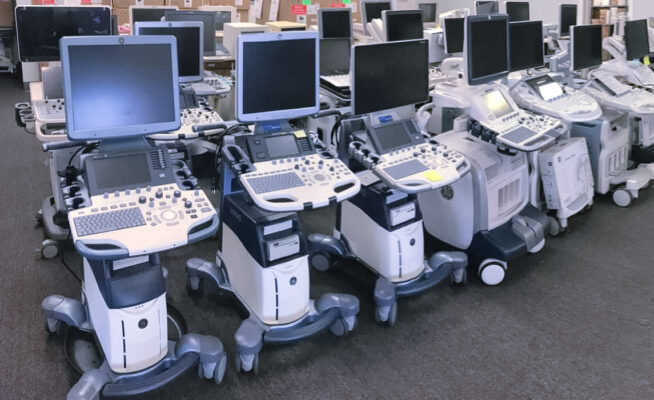
What 4D/HD ultrasound machine should I buy?
What is the best 3D/4D HD ultrasound machine to buy for my elective ultrasound business?
Jan
Opening an elective ultrasound studio
Are you wanting to open your own 3D/4D elective ultrasound studio? Not sure how to[...]
How to Open a 3D 4D HD Ultrasound Studio
How do you open a 3D 4D HD Ultrasound Business? Ultrasound Trainers can assist you[...]
6 Comments

New Loan Program – Up to 10 Year Terms!!! No Prepayment Penalty, No Collateral!
New Loan Program – Up to 10 Year Terms!!! No Prepayment Penalty, No Collateral! Are[...]
Dec
Ready to open your own studio? Get the complete roadmap at our open an elective ultrasound studio page.

Just interested in learning about how to start
Hello Obejah,
Thank you for reaching out to us with your interest. At Ultrasound Trainers, we are dedicated to providing a comprehensive suite of services designed to cater to a wide array of needs within the ultrasound field. Whether you are seeking to enhance your skills, acquire state-of-the-art ultrasound equipment, or even embark on establishing your own ultrasound business, we have tailored solutions just for you.
Our offerings include specialized hands-on ultrasound training programs, which are structured to equip participants with the practical skills and theoretical knowledge necessary to excel in ultrasound technology. These programs are perfect for individuals at all levels of expertise, from beginners to advanced practitioners seeking to update their skills with the latest advancements in the field.
In addition to training, we take pride in supplying top-tier ultrasound equipment. Our selection includes the latest models and technologies, ensuring that you have access to the best tools in the industry to provide exceptional service to your clients or to enhance your practice.
For those aspiring to start their own venture, we offer custom full turn-key ultrasound business solutions. This comprehensive package is designed to streamline the process of establishing a successful ultrasound business. From conceptualization to launch, we provide guidance on business planning, equipment selection, training, and operational strategies, all tailored to your specific vision and goals.
We understand that you may have further questions or need more detailed information to make an informed decision. Please don’t hesitate to contact us directly at 877-943-7335. Our knowledgeable team is here to provide you with the assistance you need, answer any questions you may have, and discuss how we can best support your goals in the ultrasound field.
We look forward to the opportunity to assist you on your ultrasound journey.
Warm regards,
The Ultrasound Trainers Team
I am interested in open ultrasound centre in firozabad
We’re happy to answer any questions you may have about our ultrasound services. As specialists in hands-on elective ultrasound training, we offer personalized training sessions designed to provide you with an excellent hands-on experience using both training phantoms and live patients.
Our packages are flexible and can be tailored to fit your unique needs. Here are some options:
Private Hands-on Ultrasound Training:
Price: $10,000
Duration: Three-day training session at your location
Description: Our private 3D/4D ultrasound training is conducted at your location, using your own equipment to ensure the best learning experience. You’ll be trained to operate your 3D/4D ultrasound machine and optimize it for high-quality images. The training covers a variety of topics, including early gender determination (15-16 weeks), 2D ultrasound techniques, identifying common abnormalities, and advanced 3D/4D scanning techniques. This hands-on training uses both real clients and training phantoms, and by the end, you’ll have the skills necessary to perform elective ultrasounds with confidence.
If you’re considering one of our training packages instead, we can also assist you with purchasing a 3D/4D ultrasound machine. We offer a range of machines from trusted brands like GE, Samsung-Medison, and Mindray, with models ranging from portable to full-sized HD systems. Please don’t hesitate to reach out if you’d like more information.
We’re committed to guiding you through every step of owning and operating a 3D/4D ultrasound business, making the process smooth and straightforward. We look forward to supporting you in building a successful business.
Do you have to be a sonographer to have an elective ultrasound business? I would like more info
Hello Amy,
I’m delighted to inform you that having prior medical experience or a background as a sonographer is not a requirement for performing elective ultrasounds. At Ultrasound Trainers, we understand the importance of comprehensive training and the need to make it accessible to a wide audience, regardless of their prior experience in the medical field. Our program, which you can explore in detail at ultrasoundtrainers.com, is meticulously designed to cover all aspects of performing elective ultrasounds.
Our training curriculum is structured to ensure that each participant gains a deep understanding of ultrasound technology, safety protocols, and the nuances of performing ultrasounds effectively. From the basics of ultrasound physics to the subtleties of patient interaction and image interpretation, our program covers it all. We pride ourselves on our hands-on approach, allowing you to practice and hone your skills in a supportive and educational environment.
Moreover, our program at Ultrasound Trainers is continually updated to reflect the latest advancements in ultrasound technology and practices, ensuring that you’re learning the most current and relevant techniques. Our team of experienced instructors is dedicated to providing personalized guidance and support to each trainee, ensuring that you leave our program feeling confident and proficient in conducting elective ultrasounds.
Are you U.S based? And I am a Sonographer already and interested in getting to know about how to successfully start my own ultrasound business, so will you charge me for that info?