

Last Updated: April 15, 2026
This article answers the most important questions about ultrasound transducer types for elective studio owners — the component questions buyers often overlook until after a purchase is made.
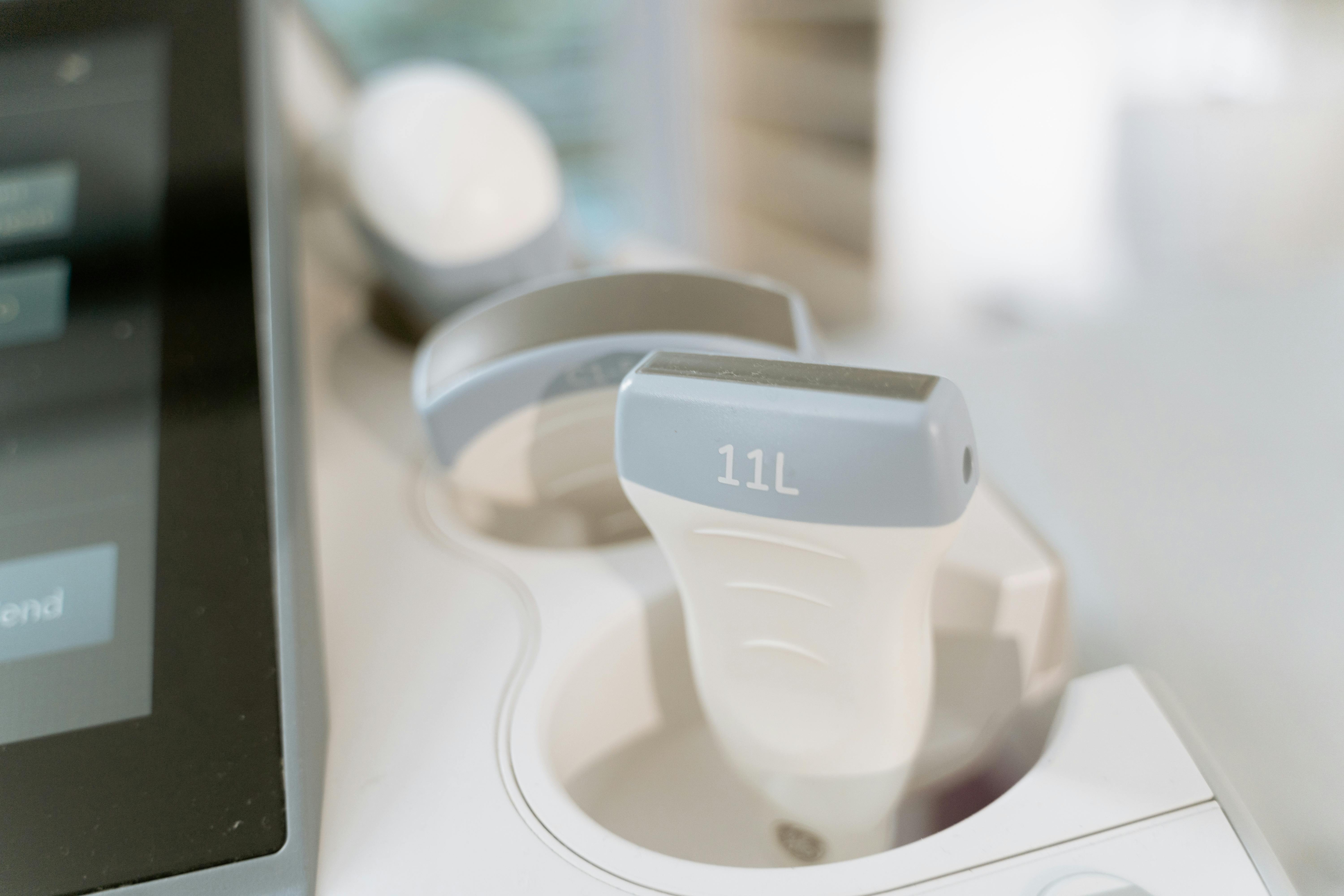
The ultrasound machine gets most of the attention when buyers research elective studio equipment. The transducer — the handheld probe that actually touches the client and produces the image — gets far less. That is a problem, because the transducer is what determines image quality in practice. Two studios running the same machine with different probes will produce noticeably different results. Understanding ultrasound transducer types for elective studio owners is not advanced knowledge. It is foundational.
What Is a Transducer and Why Does It Determine Image Quality?
The transducer is the probe you hold during a scan. It emits high-frequency sound waves into the body and receives the returning echoes, which the machine then converts into the image you see on screen. The transducer determines how well those sound waves penetrate tissue and how much detail the returning signal carries.
A high-quality transducer matched correctly to the machine and the application produces sharp, detailed images with good depth and contrast. A mismatched or worn transducer produces exactly the opposite. The machine processes whatever signal the transducer sends it — garbage in, garbage out. This is why understanding ultrasound transducer types for elective studio owners matters before you buy, not after.
What Type of Transducer Do Elective Studios Need?
The vast majority of elective ultrasound studios use a convex array transducer — also called a curvilinear or curved array probe — for their 3D and 4D fetal imaging. This probe type has a curved face that provides a wide field of view at depth, which is ideal for imaging a fetus in the second and third trimester at the distances typically involved in obstetric scanning.
The convex probe’s wide angle captures the broad anatomical field needed for face, profile, and body images. The curved footprint allows good contact over the curved surface of a pregnant abdomen. For elective fetal imaging, this probe type is the standard choice and what most 3D/4D-capable machines include as their primary probe.
Some studios also acquire a linear array transducer for early gender determination scanning, which involves imaging at shallower depths where the linear probe’s superior resolution at lower depths can be advantageous. If your business model includes early gender determination sessions as a service, this is worth discussing with your equipment vendor.
What Does Transducer Frequency Mean and Why Does It Matter?
Every transducer operates at a characteristic frequency range, measured in megahertz (MHz). Frequency directly affects the trade-off between depth of penetration and image resolution: lower frequencies penetrate deeper but produce less detail; higher frequencies produce sharper images but cannot reach as deep.
For fetal imaging in elective ultrasound settings, convex probes typically operate in the 2 to 6 MHz range. A probe used for third-trimester imaging needs sufficient penetration to reach the fetus through the maternal abdomen, making the lower end of this range more commonly appropriate as pregnancy advances. Early pregnancy imaging, where the fetus is closer to the surface, can benefit from slightly higher frequencies. Most modern probes designed for obstetric use are broadband, meaning they operate across a range of frequencies and can adjust automatically based on depth settings.
When evaluating a machine and probe combination, ask the vendor specifically about the probe’s frequency range and how it performs at the gestational ages you plan to image most often. This is a specific, technical question that a knowledgeable vendor should be able to answer clearly.
How Many Transducers Does a Studio Typically Need?
Most elective studios operate with one primary convex probe plus at least one backup. The reason for the backup is practical: if your primary probe develops a fault or is damaged, having a backup means you can continue serving clients while the primary is serviced rather than closing until the repair is complete. For a business whose revenue depends on scan appointments, downtime is a direct financial loss.
Studios that offer multiple session types — 3D/4D face imaging and early gender determination, for example — may benefit from having both a convex and a linear probe on hand to optimize image quality for each service type. The additional investment is relatively modest compared to the total cost of the machine and can meaningfully improve your imaging results for specific session types.
How Do You Care for and Clean Transducers Properly?
Transducer care directly affects probe longevity and image quality. The face of a transducer — the acoustic lens — is the most sensitive part of the probe and the most likely to be damaged by improper cleaning or handling. It should be cleaned with a soft, damp cloth or the cleaning agents specifically approved by the manufacturer. Using harsh solvents, abrasive materials, or unapproved disinfectants can degrade the lens surface and reduce image quality over time, or damage the probe outright.
Ultrasound gel should be removed from the probe face and cable after each use. Cable care matters as well: coiling the cable tightly, allowing the probe to hang by its cable, or storing it in a way that stresses the cable connector all contribute to premature wear. Most probe failures are not sudden failures of the transducer elements themselves — they are progressive degradations caused by poor handling and cleaning practices that accumulate over months.
The American Institute of Ultrasound in Medicine publishes cleaning and disinfection guidelines for ultrasound transducers that apply broadly to elective studio use. Following manufacturer-specific guidance for your probe model is the best starting point, but AIUM guidance provides useful context.
When Should a Transducer Be Replaced?
Transducers do not have a fixed lifespan, but they do degrade over time and use. Signs that a probe may need replacement include: visible physical damage to the lens or cable, image artifacts that appear consistently and cannot be resolved through machine settings adjustments, image quality that has progressively worsened without an obvious cause, and acoustic dead zones — areas where the image appears blank or unusually noisy.
Not all image quality issues mean the probe needs replacement. A probe can be tested by a qualified service technician to assess its element integrity and overall condition. If you notice a persistent image quality problem that you cannot attribute to settings or operator technique, having the probe professionally evaluated before purchasing a replacement is a reasonable step.
Bottom Line: What Studio Owners Actually Need to Know
Ultrasound transducer types for elective studio owners come down to a few practical points. For fetal 3D/4D imaging, you need a convex array probe matched to your machine and rated for obstetric use. You want to know its frequency range, understand how to care for it correctly, and have a backup plan if it needs repair or replacement.
The transducer deserves as much attention in your equipment evaluation as the machine itself. Ask your vendor specific questions about probe specifications, compatibility, replacement costs, and care requirements. A vendor who cannot answer those questions clearly may not be the right source for equipment that your business will depend on every day.
If you are evaluating elective ultrasound machine options and want help understanding what probe combinations make sense for your intended services, Ultrasound Trainers can walk you through the decision.
Frequently Asked Questions
Can I use a probe from a different manufacturer than my machine?
In most cases, no. Ultrasound probes are designed to communicate with specific machine platforms and typically use proprietary connectors and signal processing protocols. Cross-brand compatibility is rare and generally not supported by manufacturers. Always confirm probe compatibility with your specific machine model before purchasing any probe separately from the main system.
Does a more expensive probe always produce better images?
Not automatically. A more expensive probe may offer wider bandwidth, more transducer elements, or advanced features — but these advantages only matter if they match your specific imaging application. For elective fetal imaging, a well-maintained probe from a reputable manufacturer that is correctly matched to your machine will outperform a premium probe used on an incompatible system or in poor condition.
How much does a replacement convex probe typically cost?
Replacement probe costs vary considerably by brand and model, and pricing is not always publicly listed. New OEM probes for 4D-capable systems can range from a few thousand dollars to over ten thousand depending on the platform. Third-party refurbished probes are available at lower price points but with varying quality and warranty coverage. Understanding replacement costs before you buy your machine helps you plan for this eventual expense.
What is a broadband transducer and do I need one?
A broadband transducer operates across a range of frequencies rather than a fixed single frequency, allowing the machine to optimize penetration and resolution based on depth settings. Most modern 3D/4D probes designed for obstetric use are broadband. If you are purchasing a current-generation machine from a major manufacturer, the included probe is very likely broadband — but confirming this with your vendor is a reasonable question to ask.
Questions about which machine and probe combination is right for your studio? Ultrasound Trainers sells elective ultrasound equipment and can help you evaluate options based on your specific service offerings, budget, and long-term business goals.
Reach out to Ultrasound TrainersAbout This Content: Ultrasound Trainers provides elective ultrasound equipment, training, and business consulting. This article is for informational purposes. Equipment specifications vary by model and manufacturer.
Get the Inside Track
Training tips, business advice, and exclusive deals delivered straight to your inbox.

How to Get More Bookings for Your Elective Ultrasound Studio in Montana
Struggling to fill your elective ultrasound booking calendar in Montana? This guide covers what actually[...]

Buying an Elective Ultrasound Machine for an Arkansas Studio: What Actually Matters
Ready to buy an elective ultrasound machine for your Arkansas studio? This guide covers the[...]

How to Build a Pre-Launch Marketing Campaign for Your Elective Ultrasound Studio: A 60-Day Countdown Plan
Pre-launch marketing for an elective ultrasound studio begins 60 days before opening. This 60-day countdown[...]

What Career Changers in Hawaii Need to Know About Elective Ultrasound Training
Considering ultrasound training for a career change in Hawaii? This Q&A guide covers what training[...]

How to Find and Recruit Volunteer Scan Models for Elective Ultrasound Practice
Finding volunteer models for elective ultrasound practice is a skill in itself. Learn where to[...]

How to Write an Elective Ultrasound Business Plan That Actually Works
Writing an elective ultrasound business plan? This guide covers what to include, how to build[...]

How to Open an Elective Ultrasound Business in Honolulu: A Practical Startup Guide
Open an elective ultrasound business in Honolulu with confidence. This guide covers training, startup costs,[...]

Adding Elective Ultrasound to an Existing Photography or Doula Practice in Montana
Montana birth photographers and doulas: adding an elective ultrasound add-on business in Montana to your[...]

Starting an Elective Ultrasound Business in Cheyenne, Wyoming: First-Mover Advantage in the Least-Crowded Market in the Country
Thinking about starting an elective ultrasound business in Cheyenne, Wyoming? This guide covers the F.E.[...]

Elective Ultrasound Training for Career Changers in Sweden
Considering a career change into elective ultrasound in Sweden? Find out what training involves, whether[...]

What Career Changers in Fayetteville Should Know About Elective Ultrasound Training
Thinking about elective ultrasound training in Fayetteville, Arkansas as a career changer? This Q&A guide[...]

The Biggest Mistake Las Vegas Elective Ultrasound Studios Make With Their Marketing
Elective ultrasound studio marketing in Las Vegas prioritizes trust and reviews over ad spend. Here's[...]
