
The Elective Ultrasound Scanning Skills Every New Studio Operator Needs to Build
The most important thing nobody tells you before your first real client session is that the skill you need goes far beyond knowing how to turn the machine on.
Every week, people finish elective ultrasound training programs and open their doors feeling ready. Some of them genuinely are. Others discover within their first five sessions that there are capabilities they did not build — ways of thinking about the probe, managing the room, reading an image that is not cooperating, communicating under pressure — that no one addressed in the program they completed.
This is not a failure of intelligence or effort. It is usually a failure of curriculum specificity. Not every training program covers what every studio operator actually needs. This post is about closing that gap — naming the scanning skills that matter for a successful elective ultrasound business and being honest about what it takes to build them.
Probe Mechanics: The Foundation Everything Else Depends On
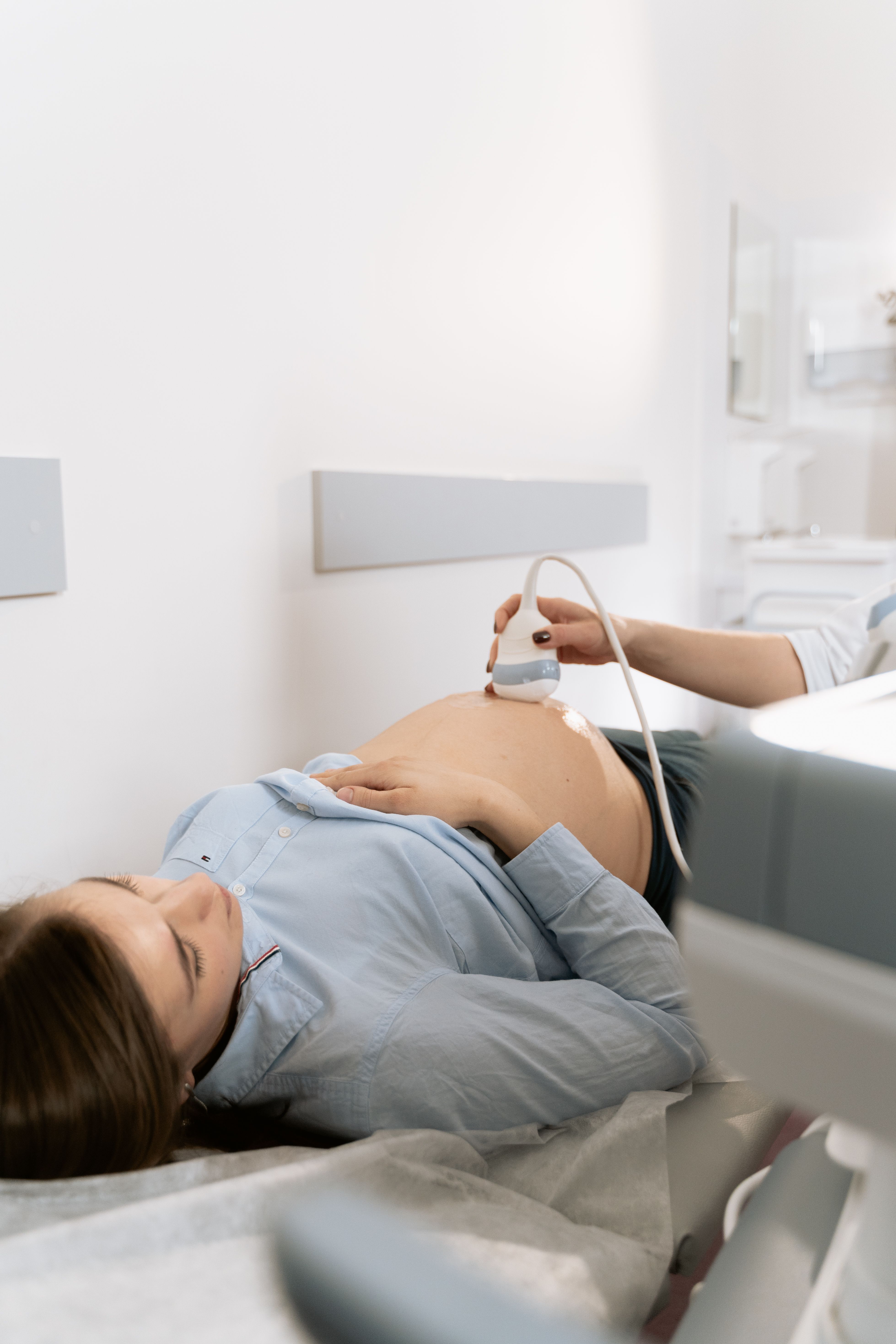
The first scanning skill — the one that determines the ceiling of everything else — is probe handling. Not just placing the probe and pressing scan, but understanding how small movements of your wrist, the angle of the transducer, the pressure you apply, and your positioning relative to the client all affect what appears on the screen. Probe mechanics is what allows an experienced operator to find a clear view in thirty seconds when a beginner spends ten minutes hunting for the same image.
The problem with probe mechanics is that it is hard to learn from description. It is a physical skill that develops through repetition — through scanning dozens of clients at different gestational ages, in different positions, with different body compositions, until the adjustments you make to improve an image become automatic rather than deliberate. You can understand the theory in a training program. You build the actual skill in your first several weeks of live sessions.
Image Optimization: More Than Pushing the HD Button
Most operators leave training knowing how to turn on their machine and start a scan. Fewer leave understanding how to optimize image quality in real time as conditions change during a session. Gain, depth, focal zone, frequency, and the specific presets your machine uses for 3D and 4D rendering all affect what the client sees on the screen. Knowing which of those to adjust — and in what direction, and by how much — when an image is not where you want it is a specific technical skill that training should address and practice builds.
The question we often hear from newer operators is: why does my machine produce great images on some clients and frustrating ones on others? The answer is usually a combination of fetal positioning, client anatomy, and gestational age — factors you cannot fully control — and image optimization settings, which you can control if you understand them. Training should cover what each control does and why. Experience shows you how to apply that knowledge under real session pressure.
Gender Determination: The Service With the Smallest Margin for Error
“Early gender determination at 15 to 16 weeks is the service that clients are most excited about and the one that requires the most specific technical training. The operator who can do it confidently and accurately builds a reputation that fills their appointment calendar.”
Gender determination is one of the most requested elective ultrasound services, and it is also the one that exposes skill gaps most quickly. When a client comes in for a bonding scan and the image is not perfect, they generally accept that with grace. When a client comes in for a gender scan and the operator is clearly uncertain about what they are seeing, the trust erodes immediately.
The specific skills gender determination requires include anatomical recognition at different gestational ages, the probe angles that produce the clearest views of genital anatomy, the client repositioning techniques that help when the initial position is not cooperating, and the honest, calm communication for when a clear determination is not possible in the session. All of those skills are teachable. None of them develop without real-client practice.
Session Management: The Invisible Skill That Determines Client Experience
Session management is the collection of skills that turns a technically competent scan into a genuinely memorable client experience. It includes how you communicate what is happening on the screen, how you manage the energy in the room when family members are present and excited, how you handle the moment when fetal positioning is not cooperating, and how you close a session in a way that leaves clients feeling warm about their experience regardless of how straightforward the scan was.
Most training programs do not spend enough time on this. They teach operators how to scan. They teach the mechanics. What they often skip is the professional experience layer — the skills that separate a studio with good word-of-mouth from one that technically performs scans but does not build the kind of loyalty and referral base that makes a business grow. Seek out programs and mentors who address this side of the work, and build it with the same intentionality you bring to your technical development.
When to Stop and Refer
There is a scanning skill that is rarely discussed in training materials but matters enormously in elective ultrasound: knowing when something on the screen warrants a conversation with the client about seeing their medical provider. This is not about diagnosing. It is about professional responsibility. Elective ultrasound is explicitly not diagnostic imaging, and operators are not medical providers making clinical assessments. But operators who regularly scan pregnant clients may occasionally see something that looks unusual, and knowing how to handle that moment — calmly, without causing alarm, without making a medical judgment — is part of operating professionally in this field.
Good training addresses this directly. Operators should always be positioned as a bonding and keepsake service, and should always maintain clear language that reinforces the client’s relationship with their medical provider rather than positioning the elective scan as a substitute for it. When uncertainty arises during a scan, the right response is to recommend the client mention what they saw to their provider — not to interpret it, speculate about it, or reassure the client that everything is medically normal when you are not qualified to make that assessment.
What It Actually Takes to Build These Skills
Every skill described here has two components: the conceptual foundation, which good training can build, and the practical fluency, which only comes from consistent real-client practice. The training program you choose is the starting line. Your first 30 to 50 live client sessions are where the actual skill set develops.
The studio operators who build the strongest scanning skills fastest are the ones who approach their early sessions with deliberate focus rather than just trying to get through them. They notice what worked and what did not. They keep notes on specific probe positioning challenges and what resolved them. They use every available post-training support resource when specific questions come up. And they give themselves permission to improve gradually rather than expecting immediate fluency from the first week of live operation.
The best path to building elective ultrasound scanning skills starts with quality training — on your own equipment, with real clients, covering all the services you plan to offer — and continues through the intentional practice that follows. Both parts matter. Neither alone is enough.
Ready to Start Building Your Scanning Skills?
If you are exploring how to develop the elective ultrasound scanning skills you need to run a successful studio, contact Ultrasound Trainers to discuss training options. Private on-site training covers probe mechanics, image optimization, gender determination, session management, and hands-on practice — at your location, on your own equipment.
People Also Ask
What are the most important skills for a new elective ultrasound operator?
The core skills are probe handling mechanics, image optimization on your specific machine, gender determination technique (including early scanning at 15 to 16 weeks), professional session management and client communication, and the judgment to know when to recommend a client speak with their medical provider. Technical skills and client experience skills are both critical — a studio that scans competently but manages sessions poorly will not build the reputation that sustains long-term growth.
How long does it take to feel confident as an elective ultrasound operator?
Most operators begin to feel meaningfully confident after 30 to 50 real client sessions beyond training. Early sessions often reveal specific skill gaps that training did not fully address — probe positioning challenges, image optimization situations you have not encountered before, client communication moments that feel uncertain. Each one is a genuine learning opportunity. Expect a genuine growth curve rather than immediate fluency, and use post-training support resources when specific questions arise.
Can you learn elective ultrasound scanning without medical experience?
Yes. The elective ultrasound industry includes many successful operators with no medical background. What they all have in common is quality hands-on training, consistent real-client practice after training, and a willingness to build skills methodically rather than rushing to offer every service immediately. The learning curve is real but manageable for people who approach it with the right preparation and the right training foundation.
What makes a good elective ultrasound training program?
A strong program includes hands-on practice with real pregnant clients at appropriate gestational ages, specific instruction in both technical and client management skills, coverage of gender determination technique including early scanning, machine optimization instruction on the equipment you will actually use, and access to support after training ends. Programs that are theory-heavy, phantom-only, or short on real-client practice time produce operators who are less ready for live sessions than the program hours suggest.
What should I practice most after completing elective ultrasound training?
Focus your early post-training sessions on the services with the most direct impact on client experience: gender determination scanning and standard 3D/4D bonding sessions. Pay attention to probe positioning instincts and image optimization in real situations. Practice client communication during sessions when positioning is challenging. Document what you learn after each session so that patterns in your development become visible rather than random. The feedback loop from real sessions is your most valuable learning tool after training ends.
Ultrasound Trainers supports new and experienced elective ultrasound operators with hands-on training, business startup guidance, and equipment selection advice. Programs are designed around the full range of skills operators actually need — technical, experiential, and professional. Explore ultrasound training options.
Last Updated: March 2026

The Complete Elective Ultrasound Studio Launch Timeline
A detailed month-by-month launch timeline for opening an elective ultrasound studio — covering training, equipment,[...]

The Elective Ultrasound Scanning Skills Every New Studio Operator Needs to Build
Not sure where to start with elective ultrasound scanning skills? Here is what every new[...]

Can You Run an Elective Ultrasound Business from Home? What to Know First
Running an elective ultrasound business from home is possible in some markets, but the decision[...]

Ultrasound Franchise vs Independent Studio: Understanding the Real Costs
Comparing a keepsake ultrasound franchise to starting an independent studio? Here is an honest look[...]

New vs Refurbished Elective Ultrasound Machine: Which Is the Better Buy?
New vs refurbished elective ultrasound machine - which is better for your studio? Compare costs,[...]

Refurbished 4D Ultrasound Machine: Is It the Right Choice for Your Studio?
A refurbished 4D ultrasound machine can be a cost-effective starting point for a new elective[...]

Can You Run an Ultrasound Business from Home?
Can you run an ultrasound business from home? Get a practical guide to legal planning,[...]

How to Learn Gender Determination Scanning for Elective Ultrasound: A Complete Guide
Ready to learn gender determination scanning for elective ultrasound? This guide covers training, practice techniques,[...]

Do You Need a Certification to Open an Elective Ultrasound Business
Certification requirements for elective ultrasound businesses are widely misunderstood. Here is what is actually required,[...]

How Much Does an Elective Ultrasound Machine Cost? Full Breakdown for New Studios
Wondering about elective ultrasound machine cost? Get a full breakdown of pricing tiers, accessories, training,[...]

The Cheapest Way to Buy an Elective Ultrasound Machine Without Cutting the Corners That Matter
Looking for the cheapest way to buy an elective ultrasound machine? This guide compares every[...]

Starting a 3D 4D Ultrasound Business: Myths That Slow Most People Down
Planning to start a 3D 4D elective ultrasound business? These common myths cost entrepreneurs time[...]
