
Starting an Elective Ultrasound Business Part-Time: A Realistic Guide
Picture this: you’re sitting at your desk on a Tuesday afternoon, three hours into a job that pays the bills but doesn’t go anywhere near what you actually want to be doing. Somewhere in the last few months, you started seriously researching elective ultrasound. You’ve watched the videos. You’ve looked at the numbers. And the thing that keeps stopping you isn’t doubt about whether the idea is good. It’s the gap between here and there, between what you have now and what it would take to get a studio open and actually running.
That gap is exactly what a part-time start is designed to bridge. You don’t walk away from your income. You build the business alongside it, carefully and deliberately, until the studio has enough momentum to carry its own weight. At that point, the decision to go full-time becomes a choice you make from a position of actual evidence rather than hope.
This is how a significant number of people successfully enter the elective ultrasound industry. Not with a leap. With a plan.
What Part-Time Actually Means for an Elective Ultrasound Studio
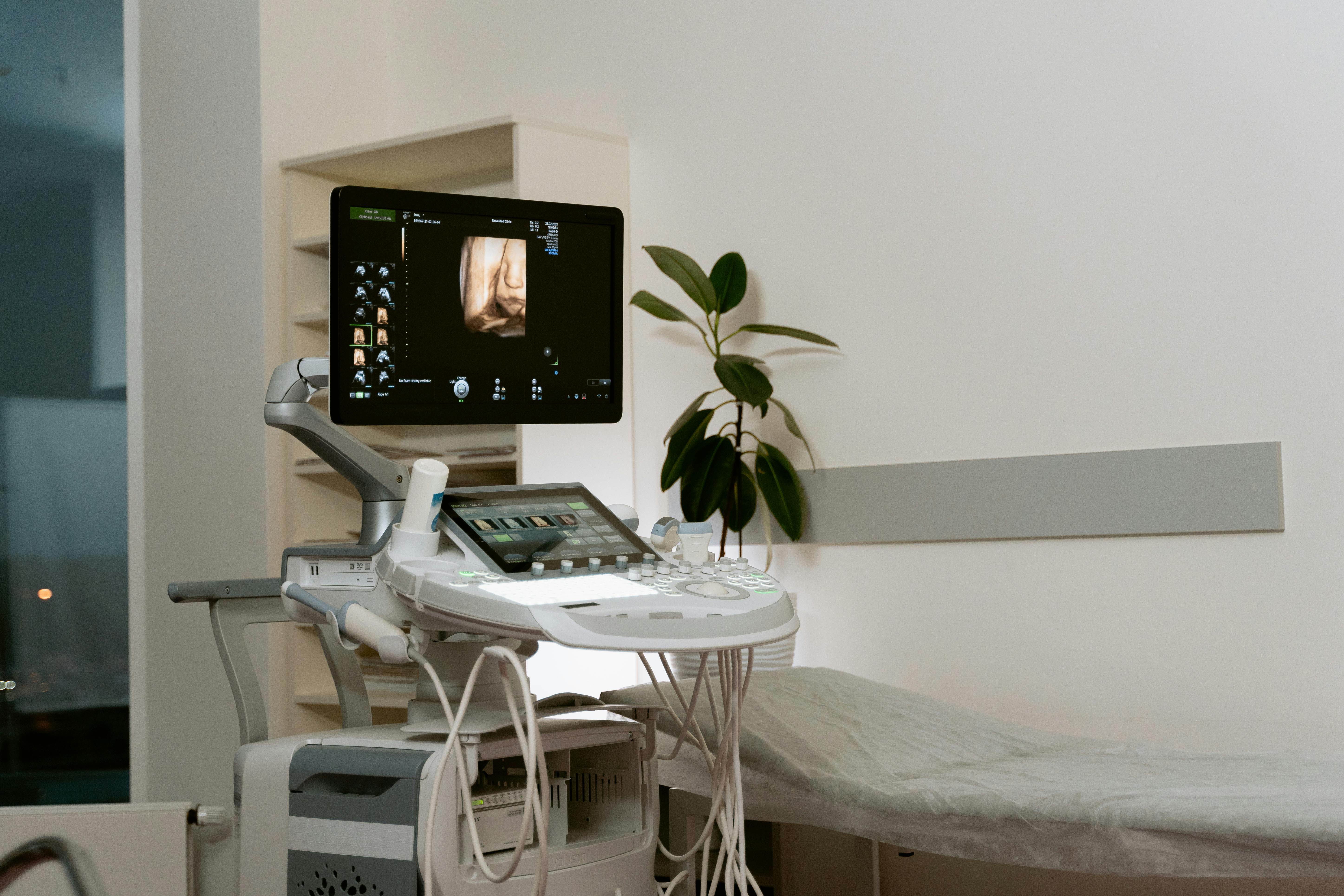
Running a studio part-time doesn’t mean operating a half-built business. It means structuring your appointment availability around your existing schedule, usually evenings and weekends in the early months, while building the business infrastructure, the booking system, the package menu, the local visibility, and the scan skills that eventually support a full schedule.
The studios that do this well are the ones that open with everything in place even though their hours are limited. A professional website with online booking. A complete package menu. A polished studio space. An established Google Business Profile. A clear session protocol. These things don’t require a full-time schedule to build. They require deliberate preparation before your first client walks in.
What limited hours do mean is that your early growth comes more slowly in raw numbers. But the reviews you earn, the referrals those clients send, and the local reputation you build are just as real as if you were running sessions five days a week. The foundation compounds at the same rate regardless of how many sessions you start with.
The Part-Time Path That Tends to Work
The most common pattern for successful part-time starts is a 12-to-18-month runway from training to full-time transition. Not because that’s a rule, but because that’s generally how long it takes in most markets to build enough consistent session volume, enough reviews, and enough local word-of-mouth that the revenue justifies replacing the income you’ve been keeping from your primary job.
In the first three months, most of the work is building the systems and completing your training. You are setting up the booking process, getting the studio space right, learning the scan technique under guidance, and making your presence visible locally before you start seeing regular clients. In months four through nine, you’re taking appointments on your available schedule, earning reviews, and learning what your clients respond to. The package that drives the most upgrades. The timing of your gender determination promotion. The add-ons that sell themselves versus the ones that need explanation.
By month ten or twelve, you have a real operating picture. You know what your average revenue per session looks like, what your session volume is building toward, and whether the trajectory justifies the decision to go full-time. That kind of evidence-based decision is far more reliable than projections on a spreadsheet made before you’d ever scanned a paying client.
The Training Side of a Part-Time Start
One of the advantages of a part-time launch is that you can complete your training without the pressure of needing to monetize it immediately. Ultrasound Trainers’ private hands-on training program is a three-day session conducted at your location, which means you can complete it on a weekend without taking extended time away from your current job. You train using your own equipment in your actual studio space, which means the skills you build are directly applicable to the environment you’ll be working in from day one.
The turnkey business package, which includes training plus full business setup support, is also designed to be completed within a concentrated window. Four days of training alongside website, branding, and equipment setup handled together means you come out of the training period with a business that is actually ready to take appointments, not one that still needs months of build-out before the first client can be booked.
Managing the Transition From Part-Time to Full-Time
The decision to go full-time should be made on evidence, not on a fixed timeline. The evidence worth paying attention to includes consistent session volume over at least three to four months, a review profile strong enough to compete effectively in your market, a clear revenue trajectory that replaces your current income at your natural growth rate, and a waiting list or booking lead time that suggests demand is outpacing your available hours.
When those signals are present, the transition is a practical step, not a leap of faith. When they are not present yet, staying part-time a little longer is not failure. It is smart risk management. The goal of the part-time approach is to build the foundation that makes the full-time decision obvious, not to force it on a schedule.
What to Set Up Before Your First Part-Time Session
- Complete hands-on elective ultrasound training with live client practice
- Studio space set up with equipment installed and tested
- Booking software live and tested end-to-end before accepting any appointment
- Package menu and pricing finalized with payment processing in place
- Google Business Profile complete with categories, photos, and contact information
People Also Ask
Can you realistically build an elective ultrasound business while working full time? Yes, and many operators do exactly that in the startup phase. The key is being intentional about the hours you offer, building strong systems before you open, and being patient with the growth curve during a part-time schedule. Most successful part-time starts take 12 to 18 months before generating enough volume to replace a full-time income.
How many appointments can you realistically take on a part-time schedule? It depends on your available hours and how you structure your session length. A Saturday-Sunday schedule might accommodate six to ten sessions per week in the early months. Even at four to six sessions per week, you are building reviews, referrals, and local reputation that compounds over time. Revenue and growth happen on the part-time path. They just happen at a pace matched to your availability.
Does a part-time studio affect how clients perceive you? Only if your availability creates friction in the booking process. Studios that have professional online booking, respond to inquiries quickly, and deliver excellent session experiences are perceived as professional businesses regardless of whether they are open five days a week or two. What erodes client perception is slow response times, limited booking availability with no clear schedule, or a website that looks like a side project. The studio’s quality is what clients experience. Your hours are secondary to that.
How do you know when to go full-time from a part-time elective ultrasound studio? Look for consistent session volume over three to four consecutive months, a revenue trajectory that replaces your current income at current growth rates, and demand that is outpacing your available hours. Those three signals together suggest the transition is practical rather than premature. Going full-time before those signals are present adds financial risk without adding clarity.
Is the training for elective ultrasound compatible with a working schedule? Yes. Ultrasound Trainers’ private training is a concentrated two to four day program that can be completed over a weekend or a short leave period. You are not committing to a semester-long program. The training is designed to be intensive, hands-on, and immediately applicable so that you come out of it ready to work, not needing months of additional practice before you’re client-ready.
You don’t have to gamble everything on a leap to make this work. The part-time path is a real, tested approach that has produced successful studios across the country. What it requires is preparation, patience, and the discipline to build the right systems before your first client walks through the door. If you’re ready to explore what that looks like in practice, Ultrasound Trainers can help you map out a realistic plan for your situation and timeline.
Ready to Map Out Your Part-Time Start?
If you want to understand exactly what a part-time startup looks like in practice, including training options, equipment, and what to have in place before your first session, contact Ultrasound Trainers to talk through your timeline and goals. We can help you build a plan that fits where you are right now.
Ultrasound Trainers provides hands-on elective ultrasound training, startup consulting, and equipment guidance to people entering the elective ultrasound industry. Our clients include photographers, doulas, career changers, and healthcare professionals at every stage of the startup process. Content reflects practical, experience-based guidance from working inside this industry.

Starting an Elective Ultrasound Business Part-Time: A Realistic Guide
Starting an elective ultrasound business while keeping another income source is a smart approach for[...]

How to Finance an Elective Ultrasound Machine: A Step-by-Step Guide for Studio Owners
Learn exactly how to finance an elective ultrasound machine. This step-by-step guide covers loan types,[...]

Can a Med Spa Add Elective Ultrasound Services? What It Actually Takes
Med spas considering elective ultrasound as an add-on service need to understand training, equipment, compliance,[...]

Ultrasound Business Income Breakdown by Location and Pricing: What Changes Your Monthly Revenue
Ultrasound business income breakdown by location and pricing. See how market, packages, overhead, and positioning[...]

How Profitable Is a Keepsake Ultrasound Business? What Really Drives Profit
How profitable is a keepsake ultrasound business? See what affects revenue, margins, overhead, and long-term[...]

How to Open an Elective 4D Ultrasound Studio Step by Step
Open a 4D ultrasound studio with this step by step guide covering training, equipment, setup,[...]

Elective Ultrasound Business Break-Even Guide: When Does a Startup Pay Off?
Elective ultrasound business break even depends on startup costs, pricing, bookings, and overhead. Use this[...]
How Long Does It Take to Start an Elective Ultrasound Business?
Planning to open an elective ultrasound studio? This guide breaks down every stage of the[...]

How Fast Can a Keepsake Ultrasound Business Make Money? A Realistic Timeline
How fast can a keepsake ultrasound business make money? See a realistic timeline based on[...]

How Hard Is It to Start an Elective Ultrasound Business? The Truth Behind Five Common Assumptions
Wondering how hard it is to start an elective ultrasound business? Here are five assumptions[...]

What Is the Best 4D Ultrasound Machine for a Small Elective Studio?
Looking for the best 4D ultrasound machine for a small elective studio? Find out which[...]

Adding Elective Ultrasound to an Existing Practice vs Starting a New Studio
Deciding between adding elective ultrasound to your existing practice or opening a separate studio? Here[...]
