

How to Scale an Elective Ultrasound Business from $5K to $20K Per Month
Last Updated: March 2026
This post answers the question a lot of elective ultrasound studio owners reach eventually: how do you get from a functioning business to a thriving one? Specifically, how do you push revenue from the early-stage $5K per month range toward the kind of consistent monthly income that makes this feel like a real business rather than a side project?
The jump is achievable, but it doesn’t happen by doing more of the same things. It requires deliberate changes in how you price, what you offer, how you market, and at some point, how you structure your operations. What follows is a direct answer to each of the key questions that shape that transition.
What Does a $5K/Month Elective Ultrasound Studio Actually Look Like?
Understanding where you’re starting from matters. A studio generating around $5K per month in gross revenue is typically running somewhere between 25 and 40 sessions per month, depending on its pricing. At a base session rate around $130 to $150 with moderate add-on attachment, that volume produces gross revenue in that range. The owner is often doing all or most of the scanning themselves, managing bookings personally, and handling most marketing on their own time. The business is real. It is generating income. But it is also nearly entirely dependent on one person’s time and energy to function.
That structure has a natural ceiling. A solo operator can only scan so many clients per week without sacrificing the quality of the experience or their own sustainability. And a business where the owner’s absence means zero revenue is not yet a scalable business. Recognizing this ceiling clearly is the first step toward thinking about what has to change to move past it.
Why Do So Many Studios Stall Instead of Scale?
The stalling pattern is more common than most people talk about, and the cause is almost never a lack of market demand. It is almost always a structural problem — the business was built for the level it’s currently at, and nothing in the structure is designed to grow beyond it. Pricing is often the first culprit. Studios that priced low to attract early bookings find themselves at or near capacity at a price point that produces limited net income, with no obvious path to raising prices without risking client relationships built on the expectation of that rate.
Marketing is another common stall point. Studios that grew initially through word-of-mouth and organic posts often plateau once they’ve exhausted the immediate social network. Without a consistent marketing system that generates new client discovery on an ongoing basis, booking volume stops growing even when demand in the broader market is there. The business isn’t shrinking. It just stopped being able to attract new clients efficiently enough to fuel growth.
The third stall cause is operational dependency. When the owner is the business in every functional sense — doing the scanning, answering the phones, posting on Instagram, managing scheduling — there is no capacity to do the work of growth on top of the work of operations. Growth requires some amount of available attention, and in a fully owner-operated studio running at near-capacity, that attention is entirely consumed by execution.
The studios that break through the stall point almost always do it by addressing pricing first, not last. Raising prices is uncomfortable, especially when early clients have come to expect a certain rate. But it is the single move with the largest immediate impact on both net income and the capacity to reinvest in growth. We’ve seen studios increase revenue by 25% or more simply by adjusting their pricing to better reflect the quality of the experience they were already delivering, with no change to booking volume.
How Does Pricing Affect Your Ability to Scale?
Pricing and scalability are more directly connected than most people realize when they’re in early-stage mode. At low prices, you need a very high booking volume to reach strong revenue, which means you need a very high booking volume just to pay the bills, which means your operational ceiling arrives quickly and leaves little room to grow. At well-calibrated prices, the same gross revenue target is reachable with a more manageable booking volume, which means you have more time and energy to invest in the activities that actually drive growth.
This is not an argument for pricing out of your market. It is an argument for pricing at the top of what your market confidently supports, rather than at the bottom. There is usually more room than new studio owners expect. Elective ultrasound is an emotional, experiential service. Clients are not primarily price-shopping in the same way they comparison-shop for a commodity. The family that is 28 weeks pregnant and wants a beautiful bonding experience with their baby is not going to decline a session because the price is $180 instead of $140. The experience is what they’re buying.
For studios already operating at below-market pricing, a gradual increase is often more manageable than a single large adjustment. Raising prices for new bookings while honoring existing relationships at the previous rate for a defined period gives you a transition path that protects client relationships without freezing your pricing indefinitely.
What Changes When You Expand Your Service Menu?
A single session price with no add-ons is a ceiling on your average transaction value. When a client books your base package, that is the maximum they can spend with you in that visit. An expanded service menu with meaningful add-on options removes that ceiling. Families who want more can spend more, and they often do when the additional options are presented naturally and framed around making the experience more complete rather than as a pure upsell.
The most effective service expansions are the ones that require minimal additional operational effort per session while adding genuine value. Heartbeat animals with the recorded heartbeat, extended viewing time, digital delivery packages, and gender reveal add-ons all meet that description. They enhance what the client receives without adding significant complexity to your scheduling or delivery. A well-designed menu can raise average transaction value substantially above the base session price, which improves revenue without requiring more bookings.
Beyond per-session add-ons, some studios have found success with experience packages that combine services: a maternity photography partnership, a multi-visit bundle covering different pregnancy stages, or a family keepsake package that includes a sibling session. These structures increase both the total transaction value and the client’s sense of ongoing relationship with the studio, which drives loyalty and referral activity over a longer horizon.
Expanding the service menu without considering the operational impact is a common mistake at the growth stage. Adding too many options too quickly can create confusion for clients during the booking process and slow down session delivery in ways that negatively affect the experience. The best add-on menus are clear, well-priced, and easy to say yes to. A tightly curated list of five strong options outperforms a sprawling menu of twelve mediocre ones almost every time.
When Does Hiring Staff Make Financial Sense?
This is the question where most owner-operators hesitate, and the hesitation is understandable. Hiring someone feels like risk. It introduces a fixed cost you’re now responsible for regardless of booking volume, and it requires you to trust another person with the experience your clients are coming for. Both concerns are legitimate. But the financial case for hiring at the right moment is also real, and missing that moment often means staying stuck at the capacity ceiling indefinitely.
The financial case depends on two things: whether your booking demand consistently exceeds what you can personally deliver, and whether the additional revenue generated by that capacity would exceed the cost of the hire by a meaningful margin. If you are regularly turning away bookings or feeling the strain of back-to-back sessions at the expense of service quality, the demand condition is met. If your pricing is calibrated well enough that additional sessions generate strong per-session contribution to overhead and net income, the economics condition is likely met too.
A part-time or per-diem arrangement is a lower-risk first step than a full-time hire. Bringing in a trained technician for specific session blocks lets you test the operational model — client handoff, quality consistency, booking management — before committing to a permanent staffing structure. Studios that have navigated this successfully often describe the first successful hire as the moment the business started feeling like it had a future beyond their own time and energy.
Which Marketing Moves Actually Move the Needle on Bookings?
Marketing for an elective ultrasound studio is a local business problem, not a national brand problem. The moves that produce bookings are the ones that build visibility within a geographic radius and a specific life-stage audience. Platforms and tactics that work well for physical product companies or national brands do not necessarily translate. The priorities that consistently drive bookings in this industry are worth understanding specifically.
Local search visibility is the most durable long-term driver. A well-optimized Google Business Profile with strong reviews, accurate information, and regular photo updates consistently generates discovery from pregnant women in your area who are searching for studios. The effort required to maintain this is low relative to the return. Studios that have invested in local SEO — their website ranking for searches like “3D ultrasound studio near me” or “4D ultrasound in [city]” — report that organic search is their most reliable ongoing source of new client bookings.
Social media, particularly Instagram and Facebook, works well when the content is experiential rather than promotional. Post-session images (with client permission), family reactions, studio ambiance, and short video content generate the kind of emotional resonance that drives shares and referrals. A consistent posting cadence matters more than production quality. The family who sees a touching video of a cousin’s ultrasound experience on Instagram and books an appointment two weeks later is a real and common conversion path in this industry.
Referral partnerships deserve more attention than most studios give them. OB-GYNs, midwives, doulas, maternity photographers, and prenatal yoga instructors all serve the same client base. A genuine referral relationship — not just a flyer in a waiting room — can generate consistent bookings from providers who are already in regular contact with your target audience. Building these relationships takes time and personal investment, but the studios that have done it well report that it becomes one of their most reliable booking sources over time.
Review generation is one of the highest-ROI marketing activities for a local elective ultrasound studio, and it’s consistently underinvested. A studio with 50 strong Google reviews reaches potential clients with a trust signal that advertising cannot replicate. Building a systematic process for asking satisfied clients to leave a review — not just hoping they will — can meaningfully accelerate both visibility and booking conversion over a relatively short period.
Is a Second Location the Right Path to $20K Per Month?
For some studios, the path to $20K per month runs through a second location. For others, it runs through maximizing the performance of a single location before adding complexity. The distinction matters because opening a second location before the first is fully optimized is a common way to create operational problems that reduce profitability rather than increasing it.
A second location makes sense when the first is genuinely at capacity, the operational model is running smoothly without constant owner involvement, the financial performance of the first location clearly supports the overhead of a second, and the owner has the bandwidth to manage two operations simultaneously — or the staffing to allow that without degrading either. Meeting all of those conditions before expanding is a higher bar than most people expect, but it’s also why studios that expand at the right moment tend to succeed and those that expand too early often struggle.
For studios that are not yet at the natural ceiling of their current location, the path to $20K per month may be simpler than adding a second site. Better pricing, expanded service menu, stronger marketing, and improved add-on conversion can move a single-location studio through the $10K and $15K thresholds before location number two ever becomes relevant. That path is less complex, less capital-intensive, and less operationally demanding. It is worth pursuing fully before adding the overhead and management complexity of a second location.
Bottom Line: Is Scaling from $5K to $20K a Realistic Goal?
Yes, and studios have done it. But the realistic path to $20K per month is not a single breakthrough move. It is the result of getting several things right in sequence: pricing calibrated to reflect what the experience is genuinely worth, a service menu designed to support strong average transaction values, marketing systems that generate consistent new client discovery, and at some point the operational infrastructure to deliver volume without depending entirely on the owner’s personal time.
The transition rarely happens all at once. Studios that reach $20K per month typically move through intermediate stages, from $5K to $8K, from $8K to $12K, from $12K to $15K and beyond, with each stage requiring a specific set of improvements. The early stages are usually driven by better pricing and marketing. The later stages increasingly depend on operational changes: smarter staffing, systemized processes, and the ability to deliver quality at higher volume without the owner’s direct involvement in every session.
If scaling is a serious goal for your studio, business training that covers the operational and growth side of running a studio is worth considering as part of your development plan. And if you want to talk through where your studio is now and what the most direct path forward looks like for your specific situation, the Ultrasound Trainers team is available to help you think it through. The $20K threshold is not a fantasy. It is a business planning problem with a specific set of solutions — and working through those solutions clearly is where the real progress begins.
About Ultrasound Trainers
Ultrasound Trainers works with people at every stage of building an elective ultrasound business, from pre-launch planning through active growth and scaling. The team provides hands-on training, turnkey startup packages, equipment guidance, and business development support for studio owners across the country. This content is written from direct experience working with studio owners who have navigated the exact challenges described here, and is intended to give you an honest, practical view of what scaling actually requires.

How to Start a 3D 4D Elective Ultrasound Business: Complete Reference Guide
Everything you need to know to start a 3D 4D elective ultrasound business: costs, training,[...]

Ultrasound Franchise Myths That Cost First-Time Studio Owners Before They Even Start
Many first-time studio owners have the wrong idea about ultrasound franchises. Here is the truth[...]

Elective Ultrasound Package Ideas That Actually Sell
Strong elective ultrasound packages combine session length, printed and digital deliverables, and keepsake add-ons into[...]

How to Scale an Elective Ultrasound Business from $5K to $20K Per Month
Scaling an elective ultrasound business from $5K to $20K per month requires specific moves in[...]

Is an Elective Ultrasound Business Worth It in 2026? An Honest ROI Breakdown
Is an elective ultrasound business worth it in 2026? Here's an honest look at startup[...]

Elective Ultrasound Business Profit Margins Explained: How to Estimate Real Profit
Elective ultrasound business profit margins explained with practical margin math, expense categories, package strategy, and[...]

How Photographers Can Add Elective Ultrasound Services to Their Business
Photographers can add elective ultrasound services by completing hands-on training, purchasing the right 3D/4D equipment,[...]
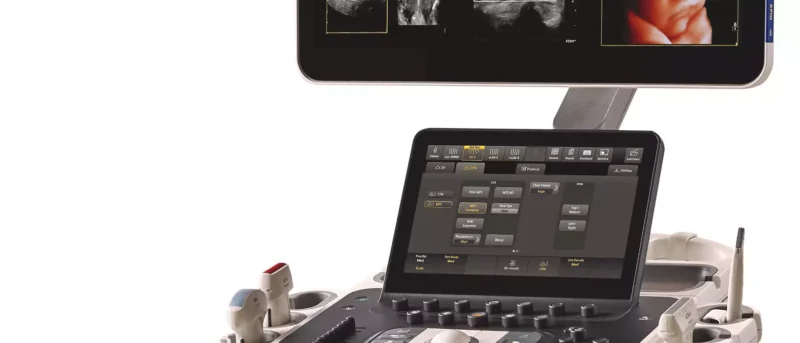
New vs Refurbished Elective Ultrasound Machine: Which Should You Buy?
Comparing a new vs refurbished elective ultrasound machine? Use this guide to weigh image quality,[...]
How Much Can You Make Owning an Ultrasound Studio Per Month? A Practical Income Guide
How much can you make owning an ultrasound studio per month? See how revenue, overhead,[...]

How Many 3D/4D Ultrasound Clients Do You Need to Make $10K a Month?
How many 3D/4D ultrasound clients do you need to make $10K a month? See the[...]

Should Doulas Add Elective Ultrasound Services? Here’s the Honest Answer
Doulas are naturally positioned to add elective ultrasound services. You already have client relationships, a[...]

How to Get OB-GYN Referrals for Your Elective Ultrasound Studio
Building OB-GYN referral relationships starts with understanding that providers do not officially endorse elective studios,[...]
