

The question of whether hands-on training is truly necessary — compared to a cheaper online alternative — comes up consistently among people researching elective ultrasound as a business in Kentucky. This guide answers the most important questions directly and honestly, without promotional framing, so you can make a sound training decision before committing time and money.
Table of Contents
- What Does Hands-On Training Actually Involve?
- Why Does the Training Format Matter?
- Do You Need a Medical Background?
- Online vs. Hands-On: An Honest Comparison
- What Good Training Should Leave You Able to Do
- Bowling Green and Elizabethtown: South-Central Kentucky Opportunity
- What Comes After Training?
- More Questions Answered
- Interested in Learning More?
What Does Hands-On Training Actually Involve?
Q: What does “hands-on” actually mean in elective ultrasound training?
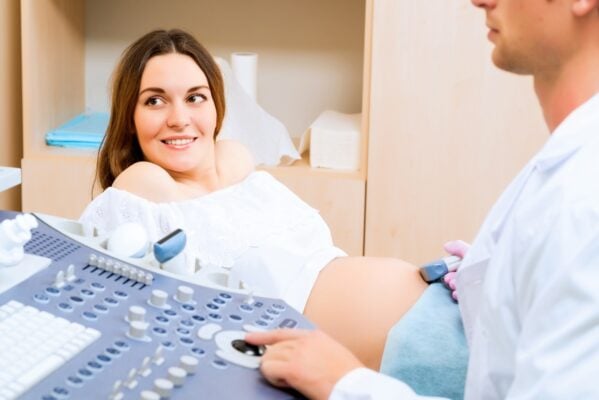
It means you are physically operating an ultrasound machine — not watching someone else demonstrate. You hold the transducer, position it on a real client or training phantom, read what appears on the monitor, make real-time adjustments, and practice again. The instructor is present throughout, watching your technique, identifying where correction is needed, and helping you understand why specific adjustments produce the results they do.
This is the only way to develop the physical and perceptual competence that scanning requires. Knowing conceptually what to do and being able to do it consistently under real conditions with a client in the room are two different things — and only guided practice builds the second.
Q: What is a training phantom?
A training phantom is a physical model that simulates tissue acoustic properties, allowing transducer practice when a live client is not available. Quality training programs use both phantom practice and live client scanning to build technique progressively before you encounter the full variability of real sessions.

Hands-on training means operating the equipment yourself with real-time instructor feedback — not watching recorded demonstrations at your own pace.
Why Does the Training Format Matter?
Q: Online courses are available at a fraction of the cost. Why does the format matter enough to justify the difference?
Online training transfers knowledge — terminology, anatomy concepts, machine settings, business information. What it cannot transfer is physical skill. Ultrasound scanning is tactile and perceptual: probe pressure, angle, movement, and the ability to read and adjust what you see on screen in real time are all developed through practice, not through watching.
In Kentucky’s community-oriented markets — where word-of-mouth travels through church networks, family connections, and neighborhood Facebook groups at high rates — the quality difference between a hands-on-trained operator and an online-only-trained one shows up visibly in image quality and scanning confidence. It shapes the reviews clients write, the conversations they have with friends, and ultimately the reputation a studio builds in its early months of operation.
Q: Will Kentucky clients actually notice?
Yes — and particularly in Kentucky’s tightly networked community environments. In Bowling Green, Elizabethtown, and the state’s mid-size regional cities, everyone knows someone who knows someone. A studio that opens with consistent, excellent scanning earns referrals that travel rapidly through family and church networks. A studio that opens with uncertain technique earns a different kind of reputation just as quickly.
Do You Need a Medical Background?
Q: I have no medical background whatsoever. Is hands-on elective ultrasound training still accessible to me?
Yes — and this is one of the most important points to understand. Elective ultrasound training is not a clinical credentialing program. It does not require prior medical knowledge. It is a practical, skills-based path designed to be accessible to people from a wide range of professional backgrounds.
Kentucky studio owners come from backgrounds in healthcare, education, real estate, retail, photography, and many other non-medical fields. What they share is not medical training — it is a commitment to learning the skill properly and delivering a professional client experience consistently.
Q: Does a healthcare background give you an advantage in training?
Some familiarity with anatomy can be helpful during the conceptual portions. But it is neither required nor a reliable predictor of scanning aptitude. Instruction is designed to meet students where they are regardless of prior professional background.
Online vs. Hands-On: An Honest Comparison
| Factor | Hands-On In-Person | Online Only |
|---|---|---|
| Physical skill development | Direct — you build real scanning competence through guided practice | Absent — knowledge only, no physical skill development |
| Real-time instructor feedback | Yes — technique corrected as mistakes happen | No — no correction mechanism exists |
| Confidence on opening day | High — you have real scanning hours behind you | Low — theoretical knowledge without physical practice |
| Handling difficult scans | Better prepared — you have worked through variation under guidance | Under-prepared — limited real-world exposure |
| Cost | Higher — reflects genuine instructional value | Lower upfront — limited return on investment for a Kentucky studio launch |
| Kentucky community market readiness | High — directly supports the quality standard community word-of-mouth markets reward | Low — significant skill gap to bridge in markets where reputation travels fast |

Kentucky entrepreneurs who invest in proper hands-on training open their studios with the skill foundation that Kentucky community word-of-mouth markets reward immediately.
What Good Training Should Leave You Able to Do
Q: What should I realistically be able to do after completing a quality hands-on program?
After three to four days of well-structured hands-on training, you should be able to:
- Set up and configure your machine for a client session
- Perform a complete 3D/4D scanning session with genuine confidence
- Optimize image quality in real time by adjusting gain, depth, angle, and rendering settings
- Conduct early gender determination from approximately 15 to 16 weeks
- Manage common fetal positioning challenges without visible uncertainty
- Communicate clearly and warmly with clients throughout the session
- Structure a session professionally from greeting to image delivery
Your skills will continue developing through real-world client sessions after training. But the goal of the training period is to make you capable and confident enough to run excellent sessions from day one — not to be learning on paying clients in your first weeks.
Q: Does training cover business operations as well as scanning?
A strong program should cover both. Ultrasound Trainers integrates business fundamentals — client management, pricing, studio workflow, and operational planning — into the curriculum alongside scanning instruction. Learn more about business training and consulting.
Bowling Green and Elizabethtown: South-Central Kentucky Opportunity
Q: I am considering Bowling Green or Elizabethtown rather than Louisville or Lexington. Does hands-on training matter just as much in a smaller Kentucky market?
Yes — and in some ways the stakes are higher in smaller markets. In communities where your reputation is the entire market, the quality difference between excellent and merely adequate is more visible and more consequential than in larger cities where volume can partially compensate for inconsistency.
Bowling Green is Kentucky’s third-largest city and one of the state’s fastest-growing, anchored by Western Kentucky University, a significant manufacturing sector including the Corvette assembly plant, and a regional healthcare economy. The WKU community creates a young, health-aware demographic at peak family-formation age, and the broader Warren County population adds meaningful birth volume to what the university alone would generate. Bowling Green has very limited dedicated professional keepsake ultrasound infrastructure — the early-mover opportunity here is genuine and clear.
Elizabethtown sits along I-65 between Louisville and Bowling Green — a regional hub for Hardin County that is home to the Hardin Memorial Health system, a significant military community connected to Fort Knox, and a growing professional and residential population that looks to Elizabethtown for services unavailable in the surrounding smaller communities. The Fort Knox connection specifically is relevant: military families have high birth rates and a strong culture around pregnancy milestone experiences. A studio in Elizabethtown with authentic connections to the Fort Knox community can build a consistent and loyal military family client base alongside the broader Elizabethtown civilian market.
What Comes After Training?
Q: What do I do after the formal training period ends?
Training establishes the foundation. Real-world operation is where that foundation becomes a skill set and eventually a reputation. For people who want structured support across the full launch process, Ultrasound Trainers’ turnkey business package extends beyond training to include equipment, website, branding, marketing materials, and 36 months of ongoing business and scanning support with no royalties or franchise fees.
Q: Is there ongoing support after training?
Yes — for clients in Ultrasound Trainers’ training and turnkey packages, ongoing support is available after the formal training period concludes. Questions arise in the early weeks and months of studio operation, and having a knowledgeable resource to turn to is among the most practically valuable aspects of a quality training relationship.
More Questions Answered
How long is the formal training program?
Ultrasound Trainers’ private hands-on training program is a focused three-day session. The turnkey business package extends this to four days and adds comprehensive business setup support. Both take place at your Kentucky location, using your own equipment.
Can I train before I have my studio space confirmed?
Training happens at your location — ideally the space where you plan to operate, or at your home if a commercial space has not yet been secured. The important thing is training on the equipment you will use with real clients.
What if I find certain aspects of scanning harder than expected?
This is normal — any physical skill has a learning curve. The advantage of in-person instruction is that a qualified instructor can identify specifically where you are struggling and provide targeted correction, rather than leaving you to diagnose your own technique gaps from a recording.
Interested in Learning More?
If you are exploring hands-on elective ultrasound training in Kentucky — whether you are based in Bowling Green, Elizabethtown, or anywhere else across the Commonwealth — Ultrasound Trainers can walk you through what training involves, what to expect, and how it connects to a realistic studio launch plan.
Contact Ultrasound Trainers to ask your questions directly.
About This Content: Ultrasound Trainers is a Nashville, Tennessee-based company specializing in elective ultrasound training, turnkey studio startup packages, and equipment guidance for people opening keepsake ultrasound businesses across the United States. This content is for informational purposes and does not constitute medical, legal, or financial advice. Last Updated: April 2026.
Get the Inside Track
Training tips, business advice, and exclusive deals delivered straight to your inbox.

How to Build a Pre-Launch Marketing Campaign for Your Elective Ultrasound Studio: A 60-Day Countdown Plan
Pre-launch marketing for an elective ultrasound studio begins 60 days before opening. This 60-day countdown[...]

What Career Changers in Hawaii Need to Know About Elective Ultrasound Training
Considering ultrasound training for a career change in Hawaii? This Q&A guide covers what training[...]

How to Find and Recruit Volunteer Scan Models for Elective Ultrasound Practice
Finding volunteer models for elective ultrasound practice is a skill in itself. Learn where to[...]

How to Write an Elective Ultrasound Business Plan That Actually Works
Writing an elective ultrasound business plan? This guide covers what to include, how to build[...]

How to Open an Elective Ultrasound Business in Honolulu: A Practical Startup Guide
Open an elective ultrasound business in Honolulu with confidence. This guide covers training, startup costs,[...]

Adding Elective Ultrasound to an Existing Photography or Doula Practice in Montana
Montana birth photographers and doulas: adding an elective ultrasound add-on business in Montana to your[...]

Starting an Elective Ultrasound Business in Cheyenne, Wyoming: First-Mover Advantage in the Least-Crowded Market in the Country
Thinking about starting an elective ultrasound business in Cheyenne, Wyoming? This guide covers the F.E.[...]

Elective Ultrasound Training for Career Changers in Sweden
Considering a career change into elective ultrasound in Sweden? Find out what training involves, whether[...]

What Career Changers in Fayetteville Should Know About Elective Ultrasound Training
Thinking about elective ultrasound training in Fayetteville, Arkansas as a career changer? This Q&A guide[...]

The Biggest Mistake Las Vegas Elective Ultrasound Studios Make With Their Marketing
Elective ultrasound studio marketing in Las Vegas prioritizes trust and reviews over ad spend. Here's[...]

Mobile Elective Ultrasound for Baby Shower Events: Packages, Pricing, and Logistics
Mobile ultrasound baby shower events guide for elective studio operators. Covers package structure, pricing frameworks,[...]
Birth Center and Midwife Referral Partnerships: Building a Consistent Lead Pipeline for Your Studio
A birth center referral partnership for an elective ultrasound studio builds a consistent, high-converting lead[...]
