

Most beginners who pick up an ultrasound probe for the first time have the same experience. They know roughly what they are supposed to see. But getting the image to actually appear the way it is supposed to, positioned correctly, clear enough to share with a client, consistently from session to session, feels much harder in practice than it looked in any video or diagram.
That gap between knowing and doing is what makes elective ultrasound scanning skills development a genuine process rather than a quick checklist. This post is for beginners who want a clear picture of what skills actually matter, what the learning curve honestly looks like, and what you should be working on to build real scanning confidence faster.
Why Elective Ultrasound Scanning Skills Are Different From What You Expect
Elective ultrasound scanning skills are not primarily about understanding the technology. The machine does most of the technical work. What you are learning is a physical, spatial skill more similar to learning to play an instrument than to learning how software works. You develop an intuition for how probe angle, pressure, and positioning combine to produce a clear image. That intuition is built through repetition, not theory.
Beginners often underestimate how much of the skill is about hand-probe control. Moving the probe smoothly without losing image quality, maintaining consistent pressure, adjusting orientation quickly when the client shifts position, and knowing which direction to move the probe when the image degrades are all physical skills that improve with practice. You cannot read your way to them.
The Core Scanning Skills Every Beginner Needs to Build
Probe Orientation and Image Plane Control
The first skill that matters is understanding how the probe’s orientation corresponds to what appears on the screen. A small rotation or tilt of the probe changes the image plane significantly. Beginners frequently spend too much time making large movements when small, controlled adjustments would produce better results. Learning to make fine, deliberate corrections rather than sweeping the probe broadly is one of the first habits that separates developing operators from beginners.
Acoustic Window Identification
In elective ultrasound, you are working through the abdomen to image the fetus. The quality of your acoustic window, the path the sound travels through, is affected by the client’s position, the fullness of their bladder, body composition, fetal position, and how far along they are. Learning to identify when your acoustic window is limiting image quality, and what adjustments to try, is a skill that develops through real session experience and is not easily taught from a manual.
Image Optimization Settings
Every ultrasound machine has depth, gain, focus, and preprocessing controls. Elective ultrasound scanning skills include knowing how to use these settings responsively to improve image quality in real time. A face that looks washed out may need a gain adjustment. A face that appears too deep in the image may benefit from a depth reduction. Beginners often accept the image they see rather than recognizing that a quick settings change would improve it significantly.
Fetal Anatomy Recognition
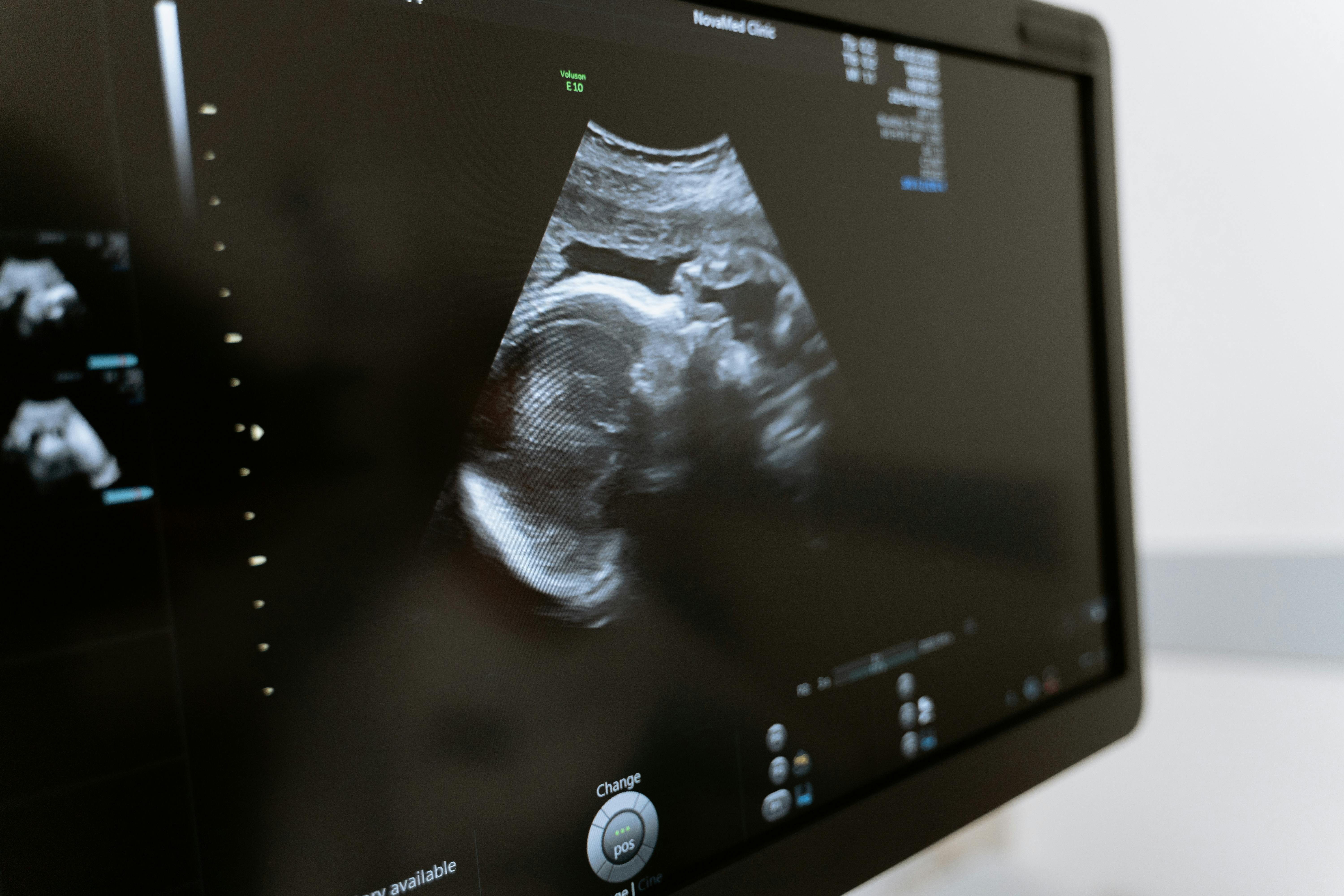
You do not need to perform a medical anatomy scan to practice elective ultrasound. But you do need to reliably recognize what you are looking at when the fetus is in different positions. Identifying the face orientation, recognizing a good position for a keepsake image, distinguishing between a profile view and a three-quarter view, and knowing when the fetal position is unlikely to yield great images are practical scanning skills that directly affect session quality and client satisfaction.
Client Communication While Scanning
This is a skill beginners rarely think about but that directly affects the quality of every session. Scanning while explaining what you are seeing, managing the client’s position, keeping the family engaged, and handling an unexpected outcome like suboptimal fetal position requires you to maintain mental bandwidth for two simultaneous tasks. Developing this multi-tasking capacity takes real session practice and is one of the clearest markers of an experienced versus inexperienced operator.
What the Learning Curve Honestly Looks Like
Most beginners find the first few sessions feel chaotic. There is a lot to manage simultaneously and the probe does not seem to cooperate. This is normal and expected. The learning curve in elective ultrasound follows a pattern that almost every new operator experiences: slow initial progress, then a distinct point where it starts to click, then accelerating competence as pattern recognition develops.
The typical timeline, assuming regular practice after initial training, is that basic scanning competence feels achievable within the first 20 to 30 real client sessions. Confidence with varied client presentations, difficult positions, and smooth session management generally develops between sessions 30 and 60. Operators who practice on training phantoms and willing volunteers between paid sessions build that competence significantly faster than those who only practice during actual bookings.
How Hands-On Training Accelerates the Skill-Building Process
The single most effective accelerator for elective ultrasound scanning skill development is high-quality, hands-on training with real-time feedback from an experienced operator. This is what separates a three-day private training program from self-directed learning. You get immediate correction when your probe technique is off, immediate context when image quality drops, and guidance that is specific to your actual hands on an actual machine in a real session environment.
The elective ultrasound training programs at Ultrasound Trainers are structured around exactly this principle. Hands-on time with real clients and training phantoms, direct feedback during scanning, and practice on the specific machine you will operate in your studio are all part of building the kind of scanning confidence that translates directly to client satisfaction and strong reviews.
The American Institute of Ultrasound in Medicine (AIUM) supports the view that supervised hands-on practice is foundational to competent ultrasound operation. While their guidelines are developed primarily for medical applications, the principle that physical skill develops through supervised repetition applies directly to elective ultrasound skill development as well.
How to Keep Improving Your Skills After Initial Training
Training gives you the foundation. What you do in the weeks immediately following training determines how quickly that foundation becomes reliable skill. The most effective post-training practice approaches are: scanning on a phantom at least several times per week during your first month, offering discounted or complimentary sessions to friends and family to increase early session volume, reviewing your own session recordings to observe your probe technique objectively, and staying in contact with your trainer for specific feedback on challenging situations you encounter.
Studios that grow their reputation quickly are almost always run by operators who invested seriously in skill development before launching publicly. Clients share their experiences. A smooth, confident session with beautiful images generates word of mouth and reviews. A session where the operator visibly struggled and produced mediocre images does not.
Frequently Asked Questions
How long does it take to develop basic elective ultrasound scanning skills?
Basic scanning competence, meaning the ability to consistently produce acceptable images across typical client presentations, generally develops within the first 20 to 30 real client sessions for operators who practice regularly after initial training. Confidence with difficult presentations and smooth session management typically follows between sessions 30 and 60.
Do I need a medical background to learn elective ultrasound scanning?
No. Elective ultrasound scanning is a practical physical skill that people from many backgrounds learn successfully. Medical professionals may find certain anatomical concepts more intuitive, but scanning technique itself is learned through hands-on practice regardless of background. Most people who operate elective ultrasound studios successfully have no prior medical training.
What is the best way to practice elective ultrasound scanning between training sessions?
Regular practice on a scanning phantom, offering complimentary sessions to willing volunteers, and reviewing recordings of your own sessions are the three most effective approaches. Phantom practice allows you to work on probe technique without client interaction demands. Volunteer sessions provide realistic experience with varied presentations in a low-stakes environment.
What scanning skills matter most for client satisfaction?
Image quality and session communication are the two factors that most directly affect how clients rate their experience. A technically skilled operator who produces clear, beautiful images and explains what they are seeing naturally and warmly will consistently receive strong reviews. Clients rarely evaluate probe technique directly, but they respond strongly to the quality of the images and the experience of being cared for during the session.
Why does hands-on training matter more than online training for ultrasound?
Scanning is a physical skill. Online learning can teach you concepts, anatomy, and machine settings in theory, but it cannot develop the hand-probe coordination and real-time problem-solving that actual scanning requires. A trainer watching your probe technique in real time and correcting it immediately accelerates skill development in ways that no amount of video-based learning replicates.
Are some people naturally better at learning elective ultrasound scanning?
People with backgrounds in other precision hand-motor skills, such as musicians, artists, surgeons, or physical therapists, sometimes find the physical coordination aspect more intuitive initially. But the overwhelming driver of scanning skill development is practice volume, not natural aptitude. Consistent, deliberate practice consistently produces competent operators across a wide range of starting backgrounds.
If you are building toward an elective ultrasound studio and want to develop real scanning confidence, the training format you choose matters. Ultrasound Trainers provides hands-on, on-site training designed to build practical skill in a realistic environment.
Learn more about our ultrasound training programThis post was developed by the team at Ultrasound Trainers, a company that provides hands-on elective ultrasound training, turnkey studio launch packages, and equipment guidance. Our training programs are designed to build practical scanning skills alongside the business knowledge needed to operate a successful elective ultrasound studio.
Last Updated: April 28, 2026
Get the Inside Track
Training tips, business advice, and exclusive deals delivered straight to your inbox.

How to Build a Pre-Launch Marketing Campaign for Your Elective Ultrasound Studio: A 60-Day Countdown Plan
Pre-launch marketing for an elective ultrasound studio begins 60 days before opening. This 60-day countdown[...]

What Career Changers in Hawaii Need to Know About Elective Ultrasound Training
Considering ultrasound training for a career change in Hawaii? This Q&A guide covers what training[...]

How to Find and Recruit Volunteer Scan Models for Elective Ultrasound Practice
Finding volunteer models for elective ultrasound practice is a skill in itself. Learn where to[...]

How to Write an Elective Ultrasound Business Plan That Actually Works
Writing an elective ultrasound business plan? This guide covers what to include, how to build[...]

How to Open an Elective Ultrasound Business in Honolulu: A Practical Startup Guide
Open an elective ultrasound business in Honolulu with confidence. This guide covers training, startup costs,[...]

Adding Elective Ultrasound to an Existing Photography or Doula Practice in Montana
Montana birth photographers and doulas: adding an elective ultrasound add-on business in Montana to your[...]

Starting an Elective Ultrasound Business in Cheyenne, Wyoming: First-Mover Advantage in the Least-Crowded Market in the Country
Thinking about starting an elective ultrasound business in Cheyenne, Wyoming? This guide covers the F.E.[...]

Elective Ultrasound Training for Career Changers in Sweden
Considering a career change into elective ultrasound in Sweden? Find out what training involves, whether[...]

What Career Changers in Fayetteville Should Know About Elective Ultrasound Training
Thinking about elective ultrasound training in Fayetteville, Arkansas as a career changer? This Q&A guide[...]

The Biggest Mistake Las Vegas Elective Ultrasound Studios Make With Their Marketing
Elective ultrasound studio marketing in Las Vegas prioritizes trust and reviews over ad spend. Here's[...]

Mobile Elective Ultrasound for Baby Shower Events: Packages, Pricing, and Logistics
Mobile ultrasound baby shower events guide for elective studio operators. Covers package structure, pricing frameworks,[...]
Birth Center and Midwife Referral Partnerships: Building a Consistent Lead Pipeline for Your Studio
A birth center referral partnership for an elective ultrasound studio builds a consistent, high-converting lead[...]
Explore all training formats, durations, and programs in our complete elective ultrasound training guide.
