
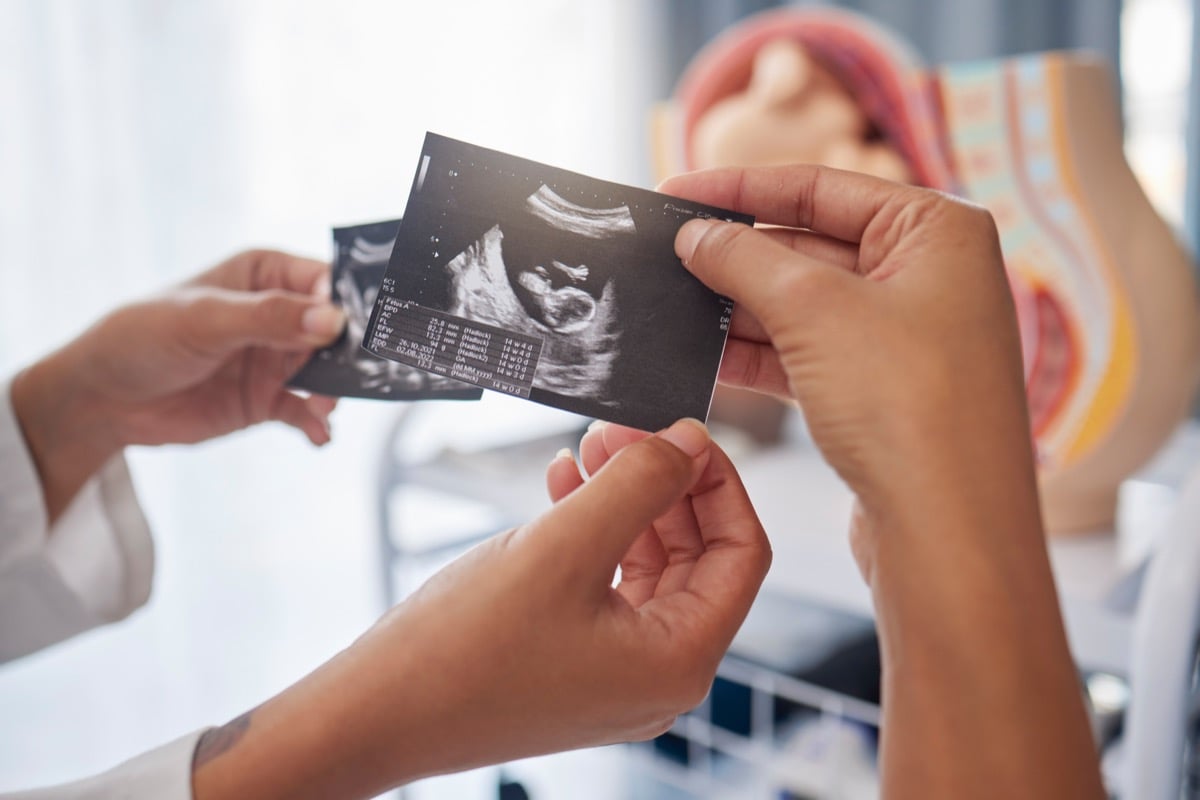
A non-diagnostic ultrasound business offers elective imaging sessions for bonding and keepsake purposes — not medical evaluation. Understanding this distinction is what makes the business legally accessible to non-clinicians and commercially viable as a standalone studio model.
Most people assume ultrasound is purely a medical tool. Walk into any hospital and that assumption holds. But there is a separate, growing category of ultrasound businesses built entirely outside the clinical world — studios where families come to bond with their unborn child through 3D and 4D imaging, not to receive a diagnosis.
If you are evaluating elective ultrasound as a business opportunity, the first thing you need to understand is exactly what makes this category different, why that difference matters legally and operationally, and what it actually looks like to build a business around it. That is what this guide covers.
The question we hear most often from people entering this space is some version of: “Is this even a real business, and can I do it without a medical background?” The answer to both is yes — but only if you understand what non-diagnostic ultrasound actually means and how studio owners operate within it responsibly.
What Non-Diagnostic Ultrasound Actually Means
Non-diagnostic ultrasound refers to imaging sessions conducted for elective, keepsake, or bonding purposes only. The operator is not evaluating fetal anatomy for clinical findings, not identifying conditions, and not rendering any medical opinion. The scan is a viewing experience — a chance for a family to see their baby in three dimensions before birth.
This is the foundational distinction. Diagnostic ultrasound is performed by a credentialed medical professional within a clinical setting and used to assess fetal development, identify potential abnormalities, and inform medical decision-making. Non-diagnostic ultrasound does none of that. It is explicitly not a substitute for prenatal care, and responsible studio owners communicate that clearly to every client.
Why This Business Model Works Without a Medical License
Because non-diagnostic ultrasound makes no medical claims and delivers no clinical findings, it generally falls outside the scope of medical practice laws that require licensure. This is why entrepreneurs, photographers, doulas, and career changers have been able to enter this industry — the business is structured around an entertainment and keepsake experience, not healthcare delivery.
That said, requirements vary by state. Some states have no specific regulations around elective ultrasound studios. Others have addressed it through guidance, legislation, or medical board positions. Before launching, every prospective studio owner should research their specific state’s rules and consult with a local attorney familiar with healthcare adjacent businesses. This is not a step to skip.

What makes the business model viable is this: families genuinely want this experience. The bonding value of seeing a 3D or 4D image of their child is real. Studios that deliver a professional, warm, and visually impressive session create loyal clients who return, refer friends, and share on social media. The product sells itself when the experience is done well.
What the Client Experience Actually Looks Like
A typical elective ultrasound session runs between 20 and 45 minutes depending on the package. Clients arrive at a purpose-built studio — often designed to feel warm and boutique rather than clinical — and are greeted by the operator. The session is conducted on a comfortable table, usually with family members present, and the imaging is displayed on a large monitor so everyone in the room can watch in real time.
The operator scans to capture the best possible images of the baby’s face and movements. Sessions often include gender confirmation, heartbeat recordings, and printed or digital keepsake imagery. Some studios offer add-ons like stuffed animals with a recorded heartbeat, USB drives with photos and video clips, and live streaming for family members who cannot attend.
What the operator does not do is narrate the scan with clinical observations, identify anything of medical concern, or suggest the client adjust their prenatal care. If anything unusual appears during a session, the standard and appropriate response is to recommend the client follow up with their medical provider — not to interpret what was seen.
The Business Structure Behind a Keepsake Studio
Most elective ultrasound businesses operate as small independent studios. Some owners run solo operations out of a dedicated studio space. Others build small teams with trained operators. A few operate as mobile services, bringing equipment to clients’ homes or venues.
Revenue comes primarily from tiered session packages. A basic package might include a shorter session with a handful of printed images. Premium packages add longer scan time, more media deliverables, and add-on products. Studios typically offer gender reveal packages as a separate high-demand service, often marketed to the growing gender reveal event market.
| Package Type | Typical Duration | Common Inclusions |
|---|---|---|
| Basic / Peek | 15-20 min | Images, gender confirmation |
| Standard | 30 min | Images, video, printed photos |
| Premium / VIP | 45-60 min | Full media package, add-ons, streaming |
| Gender Reveal | 20-30 min | Gender confirmation, reveal products |
Who Is Opening These Studios
The people entering this industry represent a wide range of backgrounds. Some come from healthcare — medical assistants, nurses, or imaging professionals who want to leave the clinical setting and build something of their own. Others come from completely unrelated careers and are drawn to the business opportunity and the emotional reward of the work.
Photographers and doulas make up a meaningful portion of new studio owners. They already have relationships with pregnant clients and understand the emotional weight of the prenatal period. Adding elective ultrasound to their service offerings can be a natural extension with strong cross-selling potential.
Entrepreneurs with no connection to healthcare or pregnancy services also enter this space. For them, it is a business evaluation: recurring demand, low competition in many markets, modest overhead compared to most retail businesses, and a product that clients genuinely value. The training required to operate professionally is accessible and does not demand years of clinical education.
What Training Is Required to Operate
No universal federal licensure requirement governs who can operate an elective ultrasound studio. But operating without proper training is both risky and inadvisable. Learning to use ultrasound equipment well — to consistently capture quality images, handle the machine efficiently, and manage the client experience professionally — takes hands-on practice and real instruction.
Quality training programs teach machine operation, image optimization, scanning technique, gestational timing for different services, and how to communicate appropriately with clients. They also cover the business side: how to set up your studio, structure your packages, market effectively, and handle client interactions in a way that keeps the service clearly within non-diagnostic boundaries.
At Ultrasound Trainers, we provide hands-on training at your location using your equipment, as well as full turnkey business packages for those who want comprehensive launch support. The training is designed for people coming from all kinds of backgrounds — not just those with clinical experience.
The Market Opportunity
Elective ultrasound is not a niche novelty — it is a well-established service category with consistent demand. Birth rates in the United States generate millions of potential clients annually. A meaningful percentage of expectant families are willing to pay for the bonding experience an elective studio session provides, especially in markets where the service is not yet widely available.
The business also benefits from strong word-of-mouth. Families who have a great experience share their images on social media, tag the studio, and recommend it to friends and family members who are also expecting. A single satisfied client can generate multiple future bookings with no additional marketing spend.
Competition varies significantly by geography. Some urban markets have several studios. Many mid-size cities and smaller communities have none. For entrepreneurs willing to establish themselves as the local authority in this service, first-mover advantage is still very real in a large number of markets across the country.
People Also Ask
Do I need a medical license to open a non-diagnostic ultrasound business?
In most states, a medical license is not required to operate an elective ultrasound studio because the service is non-diagnostic — no medical findings are rendered. Requirements vary by state, so it is important to research your specific location and consult with a local attorney before launching. The business operates within a keepsake and bonding context, not a clinical one.
What is the difference between diagnostic and elective ultrasound?
Diagnostic ultrasound is performed within a medical setting by a credentialed professional to assess fetal health and inform clinical decisions. Elective ultrasound is a keepsake experience — families come to see and bond with their baby through 3D or 4D imaging. No clinical evaluation or medical opinion is provided in an elective session.
How do studio owners make money in this business?
Revenue comes primarily from tiered session packages ranging from short basic scans to premium experiences with full media deliverables. Many studios offer gender reveal packages, add-on products, and membership or return-visit incentives. Pricing and profitability vary based on local market conditions, package structure, and marketing effectiveness.
Can I start an elective ultrasound business without any medical background?
Yes. Many successful studio owners have no clinical background whatsoever. What you need is quality hands-on training that teaches you to operate the equipment well, manage sessions professionally, and structure the business correctly. Entrepreneurs, photographers, doulas, and career changers have all built successful studios from a non-medical starting point.
What equipment does an elective ultrasound studio need?
The core equipment is the ultrasound machine itself, typically a 3D/4D capable unit with a convex probe. Studios also need a display monitor or projector so clients and family members can watch the session, a thermal printer for on-site image printing, and a comfortable, welcoming room setup. Equipment choices should align with your service offerings, budget, and business goals.
Is there enough demand to support an elective ultrasound studio in my area?
Demand depends on your local birth rate, competition, and how effectively you market. Many markets — especially mid-size cities and suburbs — have little to no established competition. Before opening, it is worth evaluating how many births occur in your area annually, what competing studios (if any) offer, and how visible you can make your business through local marketing and online presence.
What should elective ultrasound studio operators never say during a session?
Studio operators should never comment on fetal anatomy in a clinical context, suggest a diagnosis, or imply that what they observe during a session indicates anything medically. Phrases like “everything looks normal” or “I see something concerning” are both inappropriate. If something unusual is noticed, the correct response is to recommend the client consult their medical provider — nothing more.
How long does it take to get a non-diagnostic ultrasound business up and running?
Timeline depends on training, equipment procurement, location setup, and business registration. Some operators launch within a few months of completing training. Others take longer to prepare their studio space and marketing materials. Having a clear plan before you start — covering training, equipment, branding, and launch marketing — tends to compress the timeline significantly.
Ready to Explore This Business Category?
If you are evaluating elective ultrasound as a business opportunity, Ultrasound Trainers can help you understand what the model involves, what training looks like, and how to set up a studio that operates professionally from day one. Reach out to start the conversation.
Start the ConversationAbout Ultrasound Trainers: Ultrasound Trainers provides hands-on elective ultrasound training and comprehensive business launch support for people entering the keepsake ultrasound industry. From private on-site training to full turnkey studio packages, we work with entrepreneurs, career changers, photographers, doulas, and healthcare professionals building studios across the country. Learn more at ultrasoundtrainers.com.
Last Updated: April 28, 2025
Get the Inside Track
Training tips, business advice, and exclusive deals delivered straight to your inbox.

How to Build a Pre-Launch Marketing Campaign for Your Elective Ultrasound Studio: A 60-Day Countdown Plan
Pre-launch marketing for an elective ultrasound studio begins 60 days before opening. This 60-day countdown[...]

What Career Changers in Hawaii Need to Know About Elective Ultrasound Training
Considering ultrasound training for a career change in Hawaii? This Q&A guide covers what training[...]

How to Find and Recruit Volunteer Scan Models for Elective Ultrasound Practice
Finding volunteer models for elective ultrasound practice is a skill in itself. Learn where to[...]

How to Write an Elective Ultrasound Business Plan That Actually Works
Writing an elective ultrasound business plan? This guide covers what to include, how to build[...]

How to Open an Elective Ultrasound Business in Honolulu: A Practical Startup Guide
Open an elective ultrasound business in Honolulu with confidence. This guide covers training, startup costs,[...]

Adding Elective Ultrasound to an Existing Photography or Doula Practice in Montana
Montana birth photographers and doulas: adding an elective ultrasound add-on business in Montana to your[...]

Starting an Elective Ultrasound Business in Cheyenne, Wyoming: First-Mover Advantage in the Least-Crowded Market in the Country
Thinking about starting an elective ultrasound business in Cheyenne, Wyoming? This guide covers the F.E.[...]
Elective Ultrasound Training for Career Changers in Sweden
Considering a career change into elective ultrasound in Sweden? Find out what training involves, whether[...]

What Career Changers in Fayetteville Should Know About Elective Ultrasound Training
Thinking about elective ultrasound training in Fayetteville, Arkansas as a career changer? This Q&A guide[...]
The Biggest Mistake Las Vegas Elective Ultrasound Studios Make With Their Marketing
Elective ultrasound studio marketing in Las Vegas prioritizes trust and reviews over ad spend. Here's[...]

Mobile Elective Ultrasound for Baby Shower Events: Packages, Pricing, and Logistics
Mobile ultrasound baby shower events guide for elective studio operators. Covers package structure, pricing frameworks,[...]
Birth Center and Midwife Referral Partnerships: Building a Consistent Lead Pipeline for Your Studio
A birth center referral partnership for an elective ultrasound studio builds a consistent, high-converting lead[...]
Ready to open your own studio? Get the complete roadmap at our Start Your Own 3D/4D Ultrasound Studio page.
