

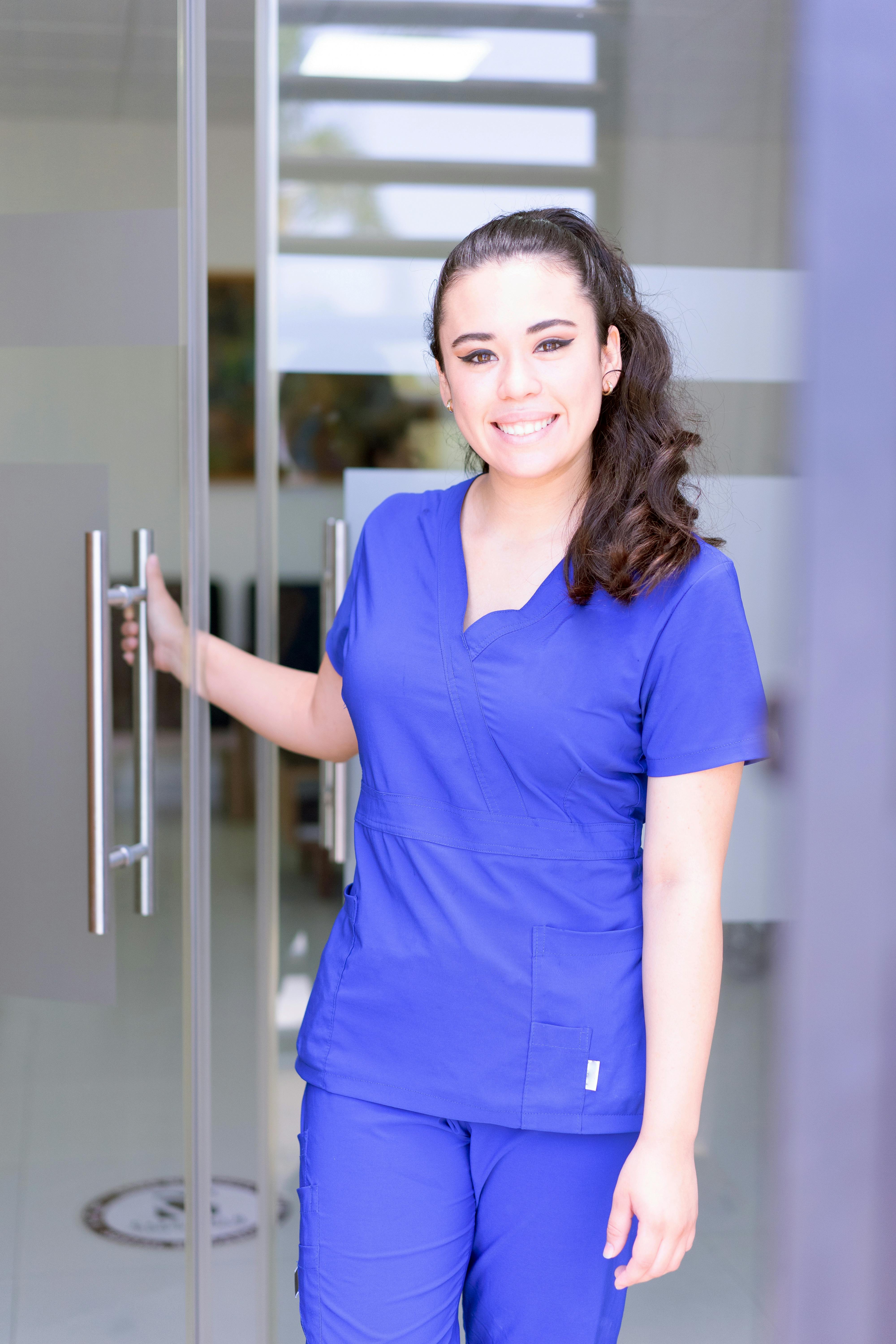
Elective ultrasound training for career changers in the Netherlands is accessible regardless of your professional background. No medical degree or prior clinical experience is required. A high-quality hands-on training programme will give you the scanning skills, business knowledge, and ongoing support needed to build a keepsake ultrasound studio that works — whether you are based in Eindhoven, Tilburg, or anywhere else in the country.
Every week, people across the Netherlands arrive at the same crossroads: they are experienced, capable, and good at their work — but they are ready for something that feels more meaningful, more personal, or more their own. Elective ultrasound training is not the obvious destination most of them would have predicted. But for a growing number of career changers, it turns out to be the right one.
This guide is written specifically for people considering a career move into elective ultrasound from a non-clinical background — addressing the questions, concerns, and practical considerations that matter most for making that transition well.
Who Is Making the Switch Into Elective Ultrasound?
The profile of people entering elective ultrasound training has become more diverse over the years. While healthcare professionals were once the primary audience, the field has expanded significantly — and today’s trainees come from a remarkably broad range of backgrounds:
- Former teachers and coaches who want to work more independently and build something of their own
- Entrepreneurs with experience in retail, hospitality, or service businesses who recognise a gap in the market
- Birth photographers and doulas who already work closely with expectant families and want to expand their services
- HR professionals, marketers, and office workers who are done with corporate environments and want work that connects them directly to people
- Healthcare-adjacent professionals — physiotherapists, beauty therapists, and complementary health practitioners — who want to work in a medically adjacent but non-clinical setting
What most of these career changers have in common is not a clinical background — it is curiosity, discipline, a desire to do meaningful work, and the willingness to learn something genuinely new.
Does Your Professional Background Actually Matter?
This is the question most career changers want answered directly. The honest answer is: less than you think.
Elective ultrasound is a skill — like any other skill, it can be learned through proper instruction and deliberate practice. The mechanics of operating a 3D/4D ultrasound machine, adjusting image settings, positioning a client correctly, and producing a high-quality keepsake image are all teachable. None of them require years of clinical training or a medical degree.
What matters is the quality of the training programme you choose. A hands-on programme that puts you at the machine with experienced instruction — where you practice on real clients and training phantoms rather than just watching videos — will equip you to work with confidence regardless of where you started professionally.
Strong interpersonal skills, patience, attention to detail, and a genuine interest in the client experience all translate directly into success as an elective ultrasound operator. If you have spent your career working with people and caring about the quality of what you deliver, those instincts will serve you well here.
What Training Actually Delivers for Career Changers
Career changers often approach training with two concerns: whether they will be able to learn the technical side, and whether training will equip them to run a business, not just operate a machine. A well-designed programme should address both.
On the Technical Side
Comprehensive training covers:
- How to set up and optimise a 3D/4D ultrasound machine
- 2D and 3D/4D scanning techniques and probe handling
- Image quality optimisation — adjusting settings to produce clear, detailed keepsake images
- Early gender determination at approximately 15 to 16 weeks of pregnancy
- Identifying when a client should be referred to their medical provider
- Hands-on scanning with real clients and training phantoms
On the Business Side
Strong elective 3D/4D ultrasound training programmes go beyond the scanning room. Business education should cover:
- Studio setup and equipment selection
- Service menu and pricing strategy
- Client experience design
- Basic marketing — social media, Google reviews, local referral relationships
- Compliance awareness — understanding the distinction between elective and diagnostic scanning
A career changer who leaves training equipped with both technical scanning skills and practical business knowledge is in a fundamentally different position from someone who has only learned how to operate a machine.

Common Questions Career Changers Ask Before Enrolling
Here are the questions that come up most frequently from career changers exploring elective ultrasound training:
Q: Will I be able to produce professional-quality images from the start?
Not from the very start — and any programme that promises otherwise is not being honest with you. Scanning confidence develops with practice. A well-designed training programme gives you the foundation and the supervised practice needed to reach professional competence; the rest comes from continuing to scan regularly after you complete training.
Q: What if I find the equipment intimidating?
Modern 3D/4D ultrasound machines used for elective studio purposes are designed with accessibility in mind. With hands-on instruction, most trainees find the interface becomes intuitive relatively quickly. The first session is always the most uncertain — it improves steadily from there.
Q: Do I need to understand anatomy in depth?
You need a working understanding of foetal positioning, basic anatomical orientation, and how to position the probe to capture the images clients are expecting. This is covered in training — you do not need a medical school-level understanding of anatomy to operate an elective studio competently.
Q: What happens if I see something during a scan that concerns me?
Training covers how to recognise situations where a client should be referred to their medical provider, and how to handle that conversation sensitively. Elective ultrasound operators are not diagnosticians — but responsible training prepares you for the moments where you need to direct a client back to their care team.
The Opportunity in Eindhoven and Tilburg
Eindhoven and Tilburg sit in the south of the Netherlands — in the Noord-Brabant province — approximately 30 kilometres apart. Together, they represent a combined population of well over 500,000 people, with a further substantial catchment across the broader Brabant region.
Eindhoven is best known internationally for its technology and design industries — home to ASML, Philips, and the Design Academy. It has a young, internationally connected population with a strong private services economy. Tilburg, slightly smaller, has a significant university presence and a growing young professional community.
Neither city has a well-established dedicated keepsake ultrasound studio scene. That is not a sign of weak demand — it is a sign that the market opportunity has not yet been properly served. For a career changer willing to invest in proper training and setup, Eindhoven and Tilburg offer exactly the kind of early-mover advantage that is harder to find in larger, more saturated markets. A studio that builds a strong reputation in one city will naturally draw clients from the other — the distance is short enough that families will travel for an experience they trust.
A Realistic Timeline for Career Changers
| Phase | Timeframe | Focus |
|---|---|---|
| Research and Planning | 2–4 weeks | Evaluate training options, start thinking about studio location, research equipment costs |
| Training | 3–4 days intensive | Hands-on scanning instruction, machine operation, business education |
| Setup | 4–8 weeks | KVK registration, equipment procurement, studio preparation, website and marketing setup |
| Pre-Launch | 2–4 weeks | Social media presence, referral outreach, first bookings |
| Open and Grow | Ongoing | Take bookings, gather reviews, refine service, build reputation |
Most career changers who take the process seriously — investing in proper training and giving themselves adequate setup time — are able to take their first client bookings within two to three months of beginning the process. Building sustainable revenue typically takes another six to twelve months of consistent operation and marketing.
People Also Ask
Ready to Explore Elective Ultrasound as Your Next Career?
Ultrasound Trainers works with career changers from all professional backgrounds, helping them build the scanning skills and business foundation needed to open a keepsake studio. If you are based in Eindhoven, Tilburg, or anywhere else in the Netherlands, reach out to discuss your next steps.
Explore Elective Ultrasound TrainingThis article was produced by the team at Ultrasound Trainers, a Nashville-based company that provides hands-on elective 3D and 4D ultrasound training, business startup consulting, and equipment support for studio owners across the United States and internationally. We help career changers and entrepreneurs build successful keepsake ultrasound businesses from the ground up.
Last updated: April 2025
Get the Inside Track
Training tips, business advice, and exclusive deals delivered straight to your inbox.

How to Build a Pre-Launch Marketing Campaign for Your Elective Ultrasound Studio: A 60-Day Countdown Plan
Pre-launch marketing for an elective ultrasound studio begins 60 days before opening. This 60-day countdown[...]

What Career Changers in Hawaii Need to Know About Elective Ultrasound Training
Considering ultrasound training for a career change in Hawaii? This Q&A guide covers what training[...]

How to Find and Recruit Volunteer Scan Models for Elective Ultrasound Practice
Finding volunteer models for elective ultrasound practice is a skill in itself. Learn where to[...]

How to Write an Elective Ultrasound Business Plan That Actually Works
Writing an elective ultrasound business plan? This guide covers what to include, how to build[...]

How to Open an Elective Ultrasound Business in Honolulu: A Practical Startup Guide
Open an elective ultrasound business in Honolulu with confidence. This guide covers training, startup costs,[...]

Adding Elective Ultrasound to an Existing Photography or Doula Practice in Montana
Montana birth photographers and doulas: adding an elective ultrasound add-on business in Montana to your[...]

Starting an Elective Ultrasound Business in Cheyenne, Wyoming: First-Mover Advantage in the Least-Crowded Market in the Country
Thinking about starting an elective ultrasound business in Cheyenne, Wyoming? This guide covers the F.E.[...]
Elective Ultrasound Training for Career Changers in Sweden
Considering a career change into elective ultrasound in Sweden? Find out what training involves, whether[...]

What Career Changers in Fayetteville Should Know About Elective Ultrasound Training
Thinking about elective ultrasound training in Fayetteville, Arkansas as a career changer? This Q&A guide[...]

The Biggest Mistake Las Vegas Elective Ultrasound Studios Make With Their Marketing
Elective ultrasound studio marketing in Las Vegas prioritizes trust and reviews over ad spend. Here's[...]

Mobile Elective Ultrasound for Baby Shower Events: Packages, Pricing, and Logistics
Mobile ultrasound baby shower events guide for elective studio operators. Covers package structure, pricing frameworks,[...]
Birth Center and Midwife Referral Partnerships: Building a Consistent Lead Pipeline for Your Studio
A birth center referral partnership for an elective ultrasound studio builds a consistent, high-converting lead[...]
Explore all training formats, durations, and programs in our complete elective ultrasound training guide.
