

Running a mobile elective ultrasound operation sounds like the low-cost, flexible path into this industry. Sometimes it is. But the assumption that mobile is automatically simpler or cheaper misses some real operational realities that catch people off guard once they are actually trying to run a business.
This post puts both models side by side honestly — the mobile elective ultrasound business and the fixed studio location — so you can make a decision based on what actually fits your goals, your market, and your situation rather than on an assumption.
Both models can work. Both have genuine advantages. The question is which one works for you specifically.
How the Two Models Compare: A Side-by-Side View
| Factor | Mobile Ultrasound Business | Fixed Studio Location |
|---|---|---|
| Initial Overhead | Lower — no lease required at start | Higher — lease, setup, and furnishing costs |
| Ongoing Costs | Variable — transport, venue fees possible | Fixed — monthly rent and utilities |
| Equipment Needs | Must use portable or compact unit | Any machine type works |
| Client Experience | More variable depending on venue | Consistent, controlled, premium feel |
| Scheduling | More complex — logistics per location | Simpler — clients come to you |
| Flexibility | High — can serve multiple areas | Lower — tied to one location |
| Branding Potential | Harder to build local recognition | Clearer, more consistent brand presence |
| Scalability | Limited without adding staff and vehicles | Easier — add hours, staff, or a second location |
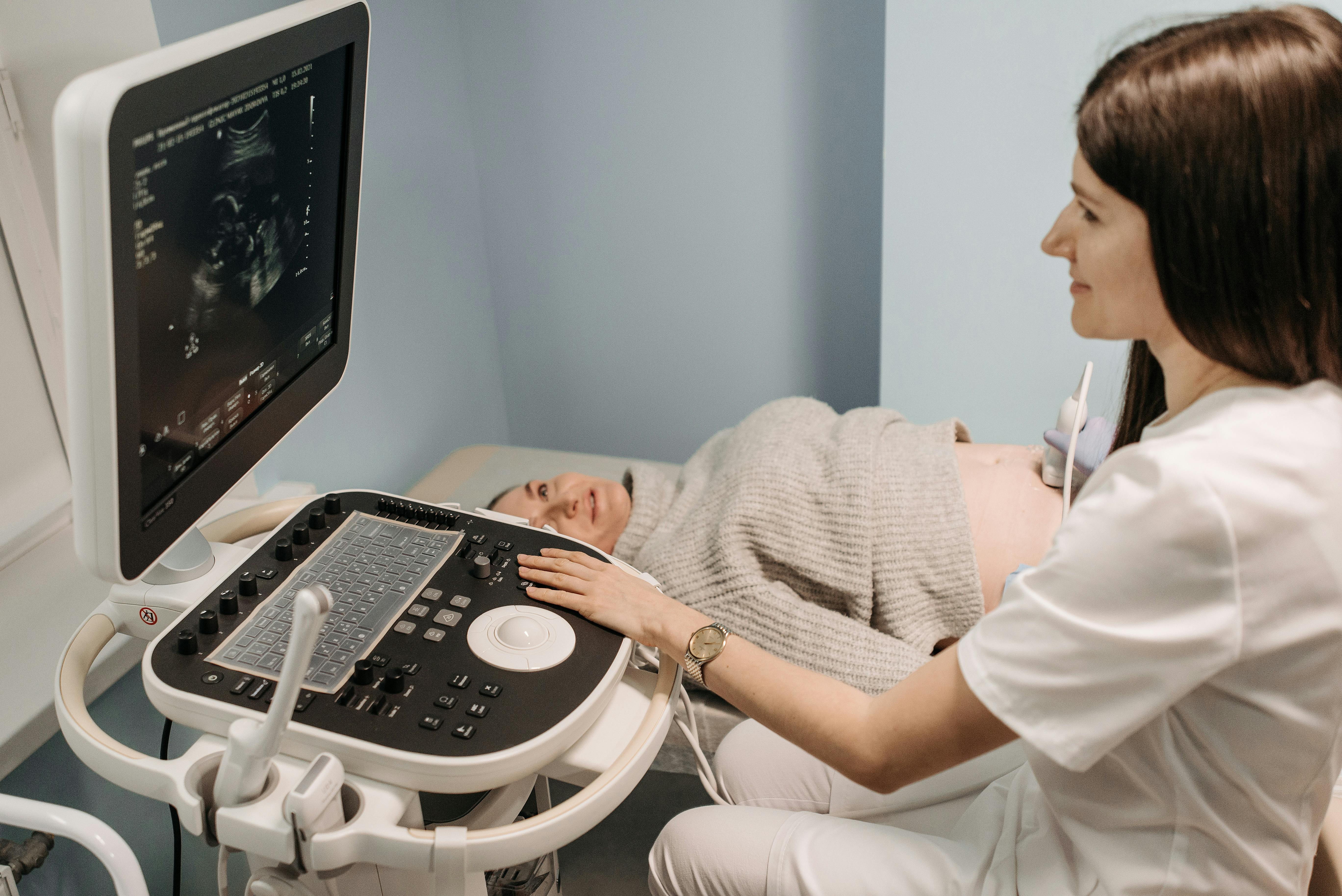
The Mobile Elective Ultrasound Business Model
A mobile elective ultrasound operation means you travel to clients or to partner venues — a salon, a wellness center, a photography studio, a client’s home — rather than having them come to a fixed space you rent and control. The appeal is real: lower initial overhead, geographic flexibility, and the ability to serve clients in multiple communities without committing to a single lease.
The strength of this model is in its flexibility. If you are a photographer or doula who already travels to clients, adding a mobile ultrasound component to your existing workflow can feel like a natural extension. You are already moving between locations; adding a compact ultrasound machine to your equipment does not fundamentally change how you operate.
The limitations of mobile operation tend to show up in three places. First, the client experience is harder to control. A premium keepsake ultrasound session in a client’s living room — with varying lighting, furniture arrangements, and whatever else is happening in the household — is a fundamentally different experience from a purpose-designed studio environment. Some clients love the home visit format; others find it less special than they expected.
Second, logistics complexity scales faster than most people anticipate. Managing travel time, parking, equipment transport, venue setup and breakdown, and all of this across multiple locations per day is genuinely demanding. Equipment calibration can also be affected by transport, and a compact portable machine — which is what the mobile model typically requires — may not deliver the same image quality as a full-size 3D/4D system in a controlled studio environment.
Third, building consistent local brand recognition is harder when your business has no fixed address. Referral partners want to send their clients somewhere they can point to clearly. Social media and local search work better for businesses with a specific location. A mobile operation can overcome this with effort, but it requires more deliberate marketing work than a fixed studio does naturally.
The Fixed Location Elective Ultrasound Studio
A fixed studio gives you a permanent, branded environment that you design for exactly the client experience you want to deliver. Clients know where you are, you control every element of the experience from the moment they walk in, and your space becomes a central part of your brand identity in a way that a mobile operation simply cannot replicate.
The operational simplicity of a fixed location is often underestimated. When clients come to you, every logistical variable — equipment placement, lighting, ambient environment, technology setup — is solved once and stays solved. You do not spend part of every workday setting up and breaking down your equipment in unfamiliar spaces. Your machine lives where it should, calibrated and ready.
The fixed model also scales more cleanly. Adding a second staff member, extending your hours, or eventually opening a second location are all straightforward moves from a fixed base. Growing a mobile operation typically means adding a second vehicle, a second portable machine, and a second operator who can manage their own logistics — a meaningfully more complex scaling path.
The honest downside of a fixed location is the overhead commitment. Monthly rent, utilities, and the initial cost of setting up a properly designed space add up before you have seen your first client. For someone who is starting with limited capital or who wants to test demand before committing, that overhead feels like real risk. It is real risk — though it is the kind of risk that comes with building a business designed to last.
Explore elective ultrasound equipment options that fit a fixed studio environment, including machines designed for high-volume keepsake imaging in a controlled setting.
Who Each Model Is Actually Right For
The mobile model tends to fit best for: photographers and doulas who already travel to clients and want to add elective ultrasound as a complementary revenue stream without opening a separate location; people testing demand in a new market before committing to a lease; operators in areas where a fixed space is genuinely unavailable or prohibitively expensive; and part-time operators who want to keep overhead minimal during the early validation phase.
The fixed studio model tends to fit best for: entrepreneurs building a standalone elective ultrasound business with the intent to grow it into a primary income source; operators who want to create a premium brand experience that commands higher pricing; anyone planning to hire staff or scale to multiple sessions per day; and career changers or healthcare professionals who are committing to this as their main professional focus.
There is also a hybrid path that some operators use successfully: starting mobile to build demand and cash flow, then transitioning to a fixed location once the market is validated. This approach works, but it requires two distinct setup investments — once for the mobile phase and once for the studio phase — so it is worth thinking through the full financial picture before defaulting to it as a “best of both” solution.
Frequently Asked Questions
Is a mobile elective ultrasound business cheaper to start than a fixed studio?
The upfront overhead is lower because you avoid lease costs and space setup expenses. However, portable ultrasound machines suited for repeated transport may carry their own cost considerations, and the ongoing logistics of mobile operation add time costs that are real even if they are not direct expenses. The true cost comparison depends on your specific equipment choices, your travel area, and how much your time is worth.
What equipment do you need for a mobile elective ultrasound operation?
A compact or portable 3D/4D ultrasound machine that can handle repeated transport without calibration issues is the core requirement. You will also need a portable display setup so clients can watch their scan, a reliable power supply or battery backup, and a transport solution that protects your equipment during transit. Not all ultrasound machines are designed for this kind of use, so discussing your mobile plans specifically with an equipment advisor before purchasing is important.
Can you run both a mobile and a fixed location ultrasound business?
Yes, and some operators do. A fixed studio as the primary operating base with occasional mobile sessions for special events — baby showers, gender reveal parties, home visits for mobility-limited clients — is a model that some studios find works well. The operational complexity of managing both simultaneously is real, but it can be sustainable once your fixed studio is running smoothly and generating consistent revenue.
Which model generates more revenue in the long run?
Fixed location studios tend to generate more revenue over time because they can scale more efficiently. Higher session volumes per day, simpler staffing, and stronger brand recognition in a local market all contribute to revenue growth. Mobile operations can be quite profitable per session, but volume growth is constrained by travel logistics and the limits of one operator covering a geographic area. The long-term revenue potential is higher with a fixed base.
Do I need a different license or permit for a mobile elective ultrasound business?
Regulatory requirements vary by state and sometimes by county or municipality. Some jurisdictions that permit fixed-location elective ultrasound businesses may have different requirements or ambiguities for mobile operations. Before launching a mobile model, researching your specific state’s approach — and consulting with a local business attorney — is the right move. Do not assume that what applies to a fixed studio automatically applies to a mobile operation.
What are the biggest risks of going mobile from the start?
Equipment transport risk is the most immediate — a machine that is damaged in transit or loses calibration between sessions is a real operational problem. Client experience inconsistency is the second major risk, particularly if clients expect a premium keepsake environment and get something that feels improvised. The third risk is the difficulty of building local brand recognition without a fixed address, which makes marketing harder and referral relationships less clear for partners who want to send you clients reliably.
The Recommendation
For most people building an elective ultrasound business with real growth intentions, a fixed studio is the stronger foundation. The client experience is more consistent, the operational day is simpler, the brand is clearer, and the path to scaling is more straightforward. The higher upfront investment reflects the stronger long-term platform.
The mobile model has genuine value as a supplementary channel or a low-overhead starting point for photographers and doulas testing demand before committing to a lease. But as a primary model for a growth-focused elective ultrasound business, its limitations tend to show up faster than the early overhead savings justify.
If you are genuinely undecided, the best move is a direct conversation about your specific market, budget, and goals with someone who has helped launch both types of operations.
Not Sure Which Model Fits Your Situation?
Ultrasound Trainers has worked with both mobile operators and fixed studio owners. We can help you think through which model makes sense for your market, budget, and goals before you make any equipment or space commitments.
Contact Ultrasound TrainersAbout the Author and Process
This post was written by the Ultrasound Trainers team, which specializes in elective ultrasound training, studio launch consulting, and equipment guidance for people entering the keepsake ultrasound industry. We have worked with photographers, doulas, healthcare professionals, career changers, and entrepreneurs across the United States in both mobile and fixed studio configurations.
Content is reviewed for accuracy, practical relevance, and compliance with Ultrasound Trainers brand standards before publication.
Last Updated: April 6, 2026

How to Build a Pre-Launch Marketing Campaign for Your Elective Ultrasound Studio: A 60-Day Countdown Plan
Pre-launch marketing for an elective ultrasound studio begins 60 days before opening. This 60-day countdown[...]

What Career Changers in Hawaii Need to Know About Elective Ultrasound Training
Considering ultrasound training for a career change in Hawaii? This Q&A guide covers what training[...]

How to Find and Recruit Volunteer Scan Models for Elective Ultrasound Practice
Finding volunteer models for elective ultrasound practice is a skill in itself. Learn where to[...]

How to Write an Elective Ultrasound Business Plan That Actually Works
Writing an elective ultrasound business plan? This guide covers what to include, how to build[...]

How to Open an Elective Ultrasound Business in Honolulu: A Practical Startup Guide
Open an elective ultrasound business in Honolulu with confidence. This guide covers training, startup costs,[...]

Adding Elective Ultrasound to an Existing Photography or Doula Practice in Montana
Montana birth photographers and doulas: adding an elective ultrasound add-on business in Montana to your[...]

Starting an Elective Ultrasound Business in Cheyenne, Wyoming: First-Mover Advantage in the Least-Crowded Market in the Country
Thinking about starting an elective ultrasound business in Cheyenne, Wyoming? This guide covers the F.E.[...]
Elective Ultrasound Training for Career Changers in Sweden
Considering a career change into elective ultrasound in Sweden? Find out what training involves, whether[...]

What Career Changers in Fayetteville Should Know About Elective Ultrasound Training
Thinking about elective ultrasound training in Fayetteville, Arkansas as a career changer? This Q&A guide[...]
The Biggest Mistake Las Vegas Elective Ultrasound Studios Make With Their Marketing
Elective ultrasound studio marketing in Las Vegas prioritizes trust and reviews over ad spend. Here's[...]

Mobile Elective Ultrasound for Baby Shower Events: Packages, Pricing, and Logistics
Mobile ultrasound baby shower events guide for elective studio operators. Covers package structure, pricing frameworks,[...]
Birth Center and Midwife Referral Partnerships: Building a Consistent Lead Pipeline for Your Studio
A birth center referral partnership for an elective ultrasound studio builds a consistent, high-converting lead[...]
Sign up for our newsletter
Sign up for our newsletter and be the first to get the latest updates and exclusive discounts delivered directly to your inbox!
Ready to open your own studio? Get the complete roadmap at our Start Your Own 3D/4D Ultrasound Studio page.
